
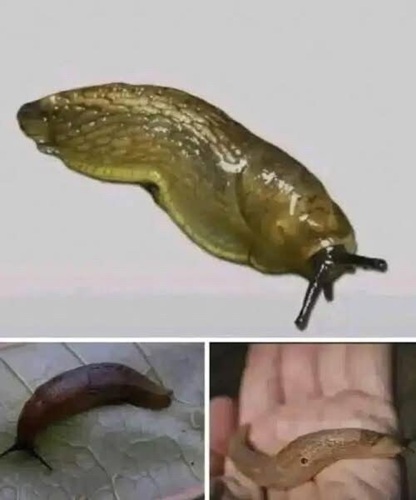
For many people, encountering a slug triggers an instinctive reaction of discomfort. Their soft, elongated bodies, slow movements, and glistening trails of mucus often provoke grimaces rather than curiosity.
Slugs are commonly associated with damp sidewalks, shaded gardens, and decaying leaves—hardly the image of a creature worthy of admiration. Children squeal at their appearance, while adults often view them as unwelcome intruders, especially when vegetable plants show signs of damage.
Yet this widespread aversion hides a deeper truth. Beneath their unassuming and often misunderstood exterior, slugs play a crucial role in ecosystems around the world.
Far from being insignificant or purely destructive, they are integral contributors to soil health, nutrient cycling, biodiversity, and even scientific research.

Their biological adaptations have inspired advances in medicine, materials science, and neuroscience, demonstrating that even the most overlooked organisms can offer profound value.
Understanding slugs requires a shift in perspective—from disgust to ecological awareness.
What Are Slugs? A Brief Biological Overview
Slugs are terrestrial gastropod mollusks, closely related to snails. Unlike snails, slugs lack a prominent external shell, although many species retain a small internal shell or vestigial structure. This evolutionary trait has shaped nearly every aspect of their biology, forcing slugs to develop unique survival strategies to compensate for their vulnerability.
There are thousands of slug species worldwide, inhabiting a wide range of environments—from temperate forests and grasslands to tropical regions and even semi-arid ecosystems. Most species prefer moist habitats, as their soft bodies require hydration to function properly. Without sufficient moisture, slugs risk dehydration, which is one of their greatest threats.
Despite their delicate appearance, slugs are highly adaptable organisms that have persisted for millions of years. Their success lies in their versatility, ecological usefulness, and efficient biological design.
Ecological Role: Nature’s Silent Recyclers
One of the most important roles slugs play in the natural world is decomposition. Slugs primarily feed on decaying plant matter, fungi, algae, and organic debris. In doing so, they help break down dead material that would otherwise accumulate on forest floors, gardens, and grasslands.
Decomposition is not merely a cleanup process—it is essential to life on Earth. When slugs consume decomposing matter, they fragment it into smaller particles, accelerating the work of bacteria and fungi. This process releases essential nutrients such as nitrogen, phosphorus, and potassium back into the soil, where they become available to plants.
Without decomposers like slugs, ecosystems would quickly become overwhelmed with organic waste. Nutrient cycles would slow, soil fertility would decline, and plant growth would suffer. In this sense, slugs function as biological recyclers, quietly maintaining the balance that allows ecosystems to thrive.

Their contribution is especially significant in forest ecosystems, where fallen leaves and decaying wood accumulate rapidly. By feeding on this material, slugs help ensure that nutrients are efficiently returned to the soil rather than locked away in undecomposed debris.
Slugs and Soil Health
Beyond nutrient recycling, slugs influence soil structure in subtle but meaningful ways. As they move through leaf litter and topsoil, their bodies create tiny channels in the ground. These channels improve soil aeration, allowing oxygen, water, and microorganisms to penetrate deeper layers of the soil.
Well-aerated soil is essential for healthy plant roots. It prevents compaction, enhances water absorption, and supports beneficial microbial communities. In natural ecosystems, this process occurs continuously, contributing to long-term soil stability and fertility.
Slug droppings, though often overlooked or regarded with disgust, are another important factor in soil health. Their feces contain partially digested organic material rich in nutrients and beneficial microbes. This natural fertilizer supports bacteria, fungi, and plants, effectively enriching the soil without any chemical input.
In ecological terms, slugs act as living composters—transforming waste into resources that sustain life.
A Vital Link in the Food Web
Slugs are also an essential food source for many animals. Birds such as thrushes, blackbirds, and robins rely on slugs, particularly during breeding seasons when high-protein food is critical for raising chicks. Amphibians like frogs, toads, and salamanders regularly consume slugs as part of their diet.
Small mammals, including hedgehogs, shrews, and some rodents, also depend on slugs for nourishment. Even certain insects and beetles prey on slugs or their eggs.
By supporting these predators, slugs contribute to the stability and diversity of food webs. Removing or significantly reducing slug populations can disrupt these relationships, leading to imbalances that affect multiple species. Their role, therefore, extends far beyond their immediate environment, influencing broader ecological dynamics.
The Remarkable Biology of Slug Mucus
Perhaps the most distinctive feature of slugs is their mucus. While humans often associate slime with discomfort or uncleanliness, slug mucus is a highly specialized biological substance with multiple functions.
First, it allows movement. Slugs glide by secreting mucus that reduces friction while simultaneously providing traction. This dual property enables them to traverse rough, vertical, or sharp surfaces without injury.

Second, mucus prevents dehydration. Slugs lose water rapidly through their skin, and mucus helps retain moisture, especially in dry or windy conditions.
Third, mucus serves as a defense mechanism. Some species produce thick, sticky secretions that can immobilize predators or deter attacks. In certain cases, the mucus contains mildly toxic compounds that further discourage predation.
The complexity of slug mucus has attracted scientific interest for decades, making it one of the most studied biological adhesives in nature.
Scientific Inspiration: From Nature to Innovation
Researchers have discovered that slug mucus possesses exceptional adhesive properties, particularly on wet surfaces. This characteristic has inspired studies in biomedical engineering, where scientists seek alternatives to stitches, staples, and synthetic glues.
Experimental medical adhesives modeled after slug mucus are being explored for wound care, surgical repair, and burn treatment. These bio-inspired materials aim to adhere securely while remaining flexible and biocompatible—qualities that conventional adhesives often lack.
In dermatology and cosmetics, compounds found in slug and snail mucus, such as glycoproteins and antioxidants, have been studied for their skin-protective and moisturizing properties. When ethically and sustainably sourced, these substances have been incorporated into skincare products designed to support hydration and skin barrier repair.
Importantly, these applications are grounded in laboratory research and controlled use, not folklore or exaggerated claims.
Setting the Stage for Deeper Understanding
Despite their modest size and slow pace, slugs demonstrate how nature’s simplest organisms can provide complex benefits. They recycle nutrients, maintain soil health, support food webs, and inspire scientific progress. Their value is not immediately obvious, but it is profound.
This first part has explored the ecological and biological foundations that make slugs indispensable to natural systems. In the second part, we will examine their role in neurological research, survival strategies, regeneration abilities, cultural perceptions, and what humans can learn from their resilience and adaptability.
Among the most unexpected contributions of slugs to human knowledge lies in the field of neuroscience. While slugs may appear biologically simple, certain species—particularly marine slugs such as Aplysia californica—have played a foundational role in understanding how learning and memory function.
Unlike mammals, which possess billions of neurons, Aplysia has a relatively small and well-organized nervous system. What makes it invaluable to scientists is that its neurons are unusually large and easily identifiable. This allows researchers to observe individual neurons and synapses directly, something that is extremely difficult in complex brains like the human brain.

Research involving Aplysia has led to groundbreaking discoveries about synaptic plasticity—the process by which connections between neurons strengthen or weaken over time. This mechanism underlies learning, memory formation, and adaptation in all animals, including humans.
Studies on slugs have helped scientists understand how short-term memories become long-term memories, how repeated stimulation alters neural pathways, and how molecular processes regulate behavior. These findings have influenced research into neurological disorders such as Alzheimer’s disease, dementia, and post-traumatic stress disorder.
While slugs do not replicate human cognition, they provide a simplified biological model that reveals universal principles of brain function. In this way, these humble creatures have helped unlock some of the deepest mysteries of the human mind.
Regeneration and Survival: Built for Persistence
Slugs possess remarkable survival abilities that further distinguish them from many other invertebrates. Some species can regenerate damaged tissues, including portions of their tentacles and body surface. While this regenerative ability is not unlimited, it demonstrates a high degree of biological resilience.
Their survival strategies extend beyond regeneration. Slugs are masters of adaptation, capable of thriving in a wide range of environmental conditions. During dry periods, many species retreat underground, hide beneath stones or logs, or enter a state of reduced metabolic activity to conserve moisture. Some can seal themselves within protective mucus layers, reducing water loss until conditions improve.
Cold climates pose another challenge, yet slugs have evolved mechanisms to survive low temperatures. Certain species produce antifreeze-like compounds that reduce cellular damage during freezing conditions. Others overwinter deep in the soil, where temperatures remain more stable.
These adaptations illustrate a fundamental principle of evolution: survival does not depend on speed or strength alone, but on flexibility, efficiency, and persistence.
The Human–Slug Conflict: Pests or Participants?
Despite their ecological importance, slugs often come into conflict with humans, particularly in agricultural and garden settings. They may feed on young seedlings, leafy greens, and soft fruits, leading many people to label them as pests.
However, this perception often overlooks the broader context. Slugs typically target weakened plants, decaying material, or crops grown in environments with reduced biodiversity. In natural systems, their populations are regulated by predators and environmental conditions.
Problems arise primarily when ecosystems are simplified—such as monoculture gardens or chemically treated landscapes where natural predators are absent. In these settings, slug populations can increase disproportionately.
Sustainable garden management offers effective ways to coexist with slugs without disrupting ecosystems. Encouraging birds, amphibians, and beneficial insects naturally limits slug numbers. Organic deterrents, habitat diversity, and healthy soil conditions help maintain balance without relying on harmful chemicals.
Viewing slugs not as enemies but as participants in ecological systems allows for more effective and environmentally responsible solutions.

Slugs in Biomimicry and Material Science
One of the most exciting modern applications inspired by slugs comes from biomimicry—the practice of studying nature to design innovative technologies. Slug mucus, with its unique combination of adhesion, elasticity, and moisture resistance, has become a model for developing new materials.
Engineers and material scientists are exploring slug-inspired adhesives that can bond in wet conditions, a challenge that traditional glues struggle to overcome. Potential applications include medical bandages, surgical sealants, underwater construction materials, and protective coatings.
Robotics researchers have also examined slug locomotion to design soft robots capable of navigating tight or hazardous environments. Slugs move efficiently without rigid skeletons, making them ideal models for flexible machines used in disaster response, medical procedures, or exploration.
These innovations demonstrate how observing even the simplest organisms can lead to technological breakthroughs with real-world impact.
Cultural Perceptions: From Disgust to Appreciation
Throughout history, slugs have often symbolized slowness, decay, or laziness in popular culture. These associations, however, reflect human bias rather than biological reality. Slugs are slow not because they are inefficient, but because their physiology prioritizes energy conservation and environmental interaction.
In literature and education, attitudes toward slugs are gradually shifting. Children’s books, documentaries, and environmental programs increasingly present slugs as fascinating organisms rather than objects of fear or ridicule. This shift plays an important role in fostering ecological literacy and respect for biodiversity from an early age.
Artists and designers have also drawn inspiration from slugs, exploring themes of texture, movement, and transformation. Their slime trails, often dismissed as messes, have been studied for their geometric patterns and fluid dynamics, influencing visual art and design research.
By challenging negative stereotypes, culture can help reshape how humans relate to the natural world.
Ethical and Environmental Considerations
As scientific interest in slugs increases, ethical considerations become essential. Research involving slugs, particularly in laboratories, follows strict guidelines to ensure humane treatment and minimal harm. Sustainable practices are critical when harvesting slug or snail mucus for cosmetic or medical research.
Environmental conservation also plays a role. Habitat destruction, pollution, and excessive pesticide use threaten slug populations alongside countless other organisms. While slugs are resilient, they are not immune to ecological disruption.
Protecting biodiversity means recognizing the importance of all species—not just those that are visually appealing or economically valuable. Slugs remind us that ecosystems rely on cooperation among organisms of all sizes and appearances.
Lessons Humans Can Learn from Slugs
Beyond their scientific and ecological value, slugs offer subtle lessons relevant to human life:
- Resilience: Slugs survive through adaptation, not aggression.
- Efficiency: They waste little energy, moving deliberately and purposefully.
- Interdependence: Their existence supports countless other species.
- Persistence: Despite vulnerability, they endure in challenging environments.
These lessons reinforce a broader ecological truth: success in nature often comes from balance rather than dominance.
A Broader Perspective on Biodiversity
Slugs exemplify why biodiversity matters. Every organism, regardless of size or popularity, contributes to the stability and functionality of ecosystems. Removing or ignoring these contributions can lead to unintended consequences that ripple through food webs and nutrient cycles.
In an era of environmental change, understanding and respecting these relationships is more important than ever. Slugs are not anomalies; they are representatives of the countless overlooked species that quietly sustain life on Earth.
Conclusion: Rethinking the Slug
Slugs may never be admired for beauty or speed, but their importance is undeniable. They recycle organic matter, enrich soil, support wildlife, inspire scientific innovation, and deepen our understanding of life itself.
What appears slimy and insignificant at first glance is, upon closer examination, a sophisticated organism with far-reaching influence. Slugs challenge us to question our assumptions and recognize value beyond appearances.
By embracing a more informed and balanced view of slugs, we take a step toward a deeper appreciation of nature’s complexity. They remind us that progress—both ecological and scientific—often depends on the quiet work of creatures we rarely notice.
In the end, slugs are not merely inhabitants of damp gardens and forest floors. They are essential participants in the story of life, proving that even the humblest organisms can shape ecosystems, advance knowledge, and inspire innovation.
Among the most unexpected contributions of slugs to human knowledge lies in the field of neuroscience. While slugs may appear biologically simple, certain species—particularly marine slugs such as Aplysia californica—have played a foundational role in understanding how learning and memory function.
Unlike mammals, which possess billions of neurons, Aplysia has a relatively small and well-organized nervous system. What makes it invaluable to scientists is that its neurons are unusually large and easily identifiable. This allows researchers to observe individual neurons and synapses directly, something that is extremely difficult in complex brains like the human brain.
Research involving Aplysia has led to groundbreaking discoveries about synaptic plasticity—the process by which connections between neurons strengthen or weaken over time. This mechanism underlies learning, memory formation, and adaptation in all animals, including humans.
Studies on slugs have helped scientists understand how short-term memories become long-term memories, how repeated stimulation alters neural pathways, and how molecular processes regulate behavior. These findings have influenced research into neurological disorders such as Alzheimer’s disease, dementia, and post-traumatic stress disorder.
While slugs do not replicate human cognition, they provide a simplified biological model that reveals universal principles of brain function. In this way, these humble creatures have helped unlock some of the deepest mysteries of the human mind.
Regeneration and Survival: Built for Persistence
Slugs possess remarkable survival abilities that further distinguish them from many other invertebrates. Some species can regenerate damaged tissues, including portions of their tentacles and body surface. While this regenerative ability is not unlimited, it demonstrates a high degree of biological resilience.
Their survival strategies extend beyond regeneration. Slugs are masters of adaptation, capable of thriving in a wide range of environmental conditions. During dry periods, many species retreat underground, hide beneath stones or logs, or enter a state of reduced metabolic activity to conserve moisture. Some can seal themselves within protective mucus layers, reducing water loss until conditions improve.
Cold climates pose another challenge, yet slugs have evolved mechanisms to survive low temperatures. Certain species produce antifreeze-like compounds that reduce cellular damage during freezing conditions. Others overwinter deep in the soil, where temperatures remain more stable.
These adaptations illustrate a fundamental principle of evolution: survival does not depend on speed or strength alone, but on flexibility, efficiency, and persistence.
The Human–Slug Conflict: Pests or Participants?
Despite their ecological importance, slugs often come into conflict with humans, particularly in agricultural and garden settings. They may feed on young seedlings, leafy greens, and soft fruits, leading many people to label them as pests.
However, this perception often overlooks the broader context. Slugs typically target weakened plants, decaying material, or crops grown in environments with reduced biodiversity. In natural systems, their populations are regulated by predators and environmental conditions.
Problems arise primarily when ecosystems are simplified—such as monoculture gardens or chemically treated landscapes where natural predators are absent. In these settings, slug populations can increase disproportionately.
Sustainable garden management offers effective ways to coexist with slugs without disrupting ecosystems. Encouraging birds, amphibians, and beneficial insects naturally limits slug numbers. Organic deterrents, habitat diversity, and healthy soil conditions help maintain balance without relying on harmful chemicals.
Viewing slugs not as enemies but as participants in ecological systems allows for more effective and environmentally responsible solutions.
Slugs in Biomimicry and Material Science
One of the most exciting modern applications inspired by slugs comes from biomimicry—the practice of studying nature to design innovative technologies. Slug mucus, with its unique combination of adhesion, elasticity, and moisture resistance, has become a model for developing new materials.
Engineers and material scientists are exploring slug-inspired adhesives that can bond in wet conditions, a challenge that traditional glues struggle to overcome. Potential applications include medical bandages, surgical sealants, underwater construction materials, and protective coatings.
Robotics researchers have also examined slug locomotion to design soft robots capable of navigating tight or hazardous environments. Slugs move efficiently without rigid skeletons, making them ideal models for flexible machines used in disaster response, medical procedures, or exploration.
These innovations demonstrate how observing even the simplest organisms can lead to technological breakthroughs with real-world impact.
Cultural Perceptions: From Disgust to Appreciation
Throughout history, slugs have often symbolized slowness, decay, or laziness in popular culture. These associations, however, reflect human bias rather than biological reality. Slugs are slow not because they are inefficient, but because their physiology prioritizes energy conservation and environmental interaction.
In literature and education, attitudes toward slugs are gradually shifting. Children’s books, documentaries, and environmental programs increasingly present slugs as fascinating organisms rather than objects of fear or ridicule. This shift plays an important role in fostering ecological literacy and respect for biodiversity from an early age.
Artists and designers have also drawn inspiration from slugs, exploring themes of texture, movement, and transformation. Their slime trails, often dismissed as messes, have been studied for their geometric patterns and fluid dynamics, influencing visual art and design research.
By challenging negative stereotypes, culture can help reshape how humans relate to the natural world.
Ethical and Environmental Considerations
As scientific interest in slugs increases, ethical considerations become essential. Research involving slugs, particularly in laboratories, follows strict guidelines to ensure humane treatment and minimal harm. Sustainable practices are critical when harvesting slug or snail mucus for cosmetic or medical research.
Environmental conservation also plays a role. Habitat destruction, pollution, and excessive pesticide use threaten slug populations alongside countless other organisms. While slugs are resilient, they are not immune to ecological disruption.
Protecting biodiversity means recognizing the importance of all species—not just those that are visually appealing or economically valuable. Slugs remind us that ecosystems rely on cooperation among organisms of all sizes and appearances.
Lessons Humans Can Learn from Slugs
Beyond their scientific and ecological value, slugs offer subtle lessons relevant to human life:
- Resilience: Slugs survive through adaptation, not aggression.
- Efficiency: They waste little energy, moving deliberately and purposefully.
- Interdependence: Their existence supports countless other species.
- Persistence: Despite vulnerability, they endure in challenging environments.
These lessons reinforce a broader ecological truth: success in nature often comes from balance rather than dominance.
A Broader Perspective on Biodiversity
Slugs exemplify why biodiversity matters. Every organism, regardless of size or popularity, contributes to the stability and functionality of ecosystems. Removing or ignoring these contributions can lead to unintended consequences that ripple through food webs and nutrient cycles.
In an era of environmental change, understanding and respecting these relationships is more important than ever. Slugs are not anomalies; they are representatives of the countless overlooked species that quietly sustain life on Earth.
Conclusion: Rethinking the Slug
Slugs may never be admired for beauty or speed, but their importance is undeniable. They recycle organic matter, enrich soil, support wildlife, inspire scientific innovation, and deepen our understanding of life itself.
What appears slimy and insignificant at first glance is, upon closer examination, a sophisticated organism with far-reaching influence. Slugs challenge us to question our assumptions and recognize value beyond appearances.
By embracing a more informed and balanced view of slugs, we take a step toward a deeper appreciation of nature’s complexity. They remind us that progress—both ecological and scientific—often depends on the quiet work of creatures we rarely notice.
In the end, slugs are not merely inhabitants of damp gardens and forest floors. They are essential participants in the story of life, proving that even the humblest organisms can shape ecosystems, advance knowledge, and inspire innovation.
