
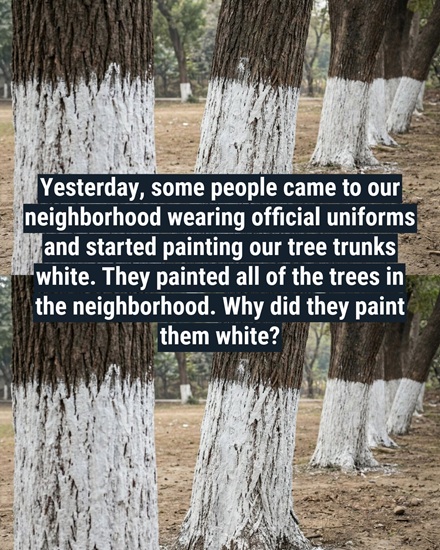
If you have ever driven past a large commercial orchard or a suburban garden in winter and noticed a line of trees with their lower trunks painted white, it might look purely decorative.
Yet in the field of arboriculture, this seemingly simple white coat is a vital intervention known as trunk whitewashing. It protects trees from environmental stress and biological threats that can damage or even kill them during cold months.
The primary threat this protective paint addresses is sunscald, a condition that affects trees when sunlight warms dormant bark. On bright winter days, dark bark absorbs heat, potentially waking active tissue that is meant to remain dormant.
Dormancy is a survival mechanism for trees. In freezing temperatures, cellular activity slows, conserving energy and preventing internal damage. However, sudden warmth from winter sun can confuse cells, causing them to become active prematurely.

When temperatures drop again, these active cells freeze instantly, rupturing the bark and creating frost cracks. Such damage can expose the vascular system, allowing fungi, bacteria, and insects to invade and weaken the tree structurally.
Young trees are particularly vulnerable because their bark is thin, and they have less insulation against temperature swings. Fruit trees, maples, and thin-barked saplings are often at the highest risk during late fall and winter months.
By applying reflective white paint to the trunks, gardeners and arborists reduce heat absorption. This stabilizes temperature fluctuations and prevents the dangerous “freeze-thaw” cycles that cause tissue damage, making whitewashing a crucial preventive measure.
The paint used is almost always water-based latex rather than oil-based alternatives. Oil paints can clog lenticels, the pores through which trees breathe, potentially suffocating the plant and leading to rot or long-term health issues.
Typically, the latex is diluted 50/50 with water. Some expert orchardists mix in joint compound or antifungal additives to provide a thicker, more protective barrier against insects and fungal infections, enhancing long-term durability.

Manual application with a heavy brush is preferred over sprayers. This allows the paint to penetrate all cracks and crevices in the bark, creating a uniform coating that shields the tree from extreme sunlight and insect access.
Whitewashing is a centuries-old practice, historically used in European orchards to prevent trunk splitting during winter. Farmers observed that trunks exposed to sunlight were prone to cracking and disease, and painting became a protective standard over time.
In the United States, the technique was adapted for fruit orchards to ensure consistent crop yield. Sunscald and frost cracks were causing premature tree failure, and whitewashing became a low-cost method to extend orchard productivity and lifespan.
The reflective paint not only prevents sunscald but also reduces the risk of insect infestation. Many pests, such as wood-boring beetles, prefer unprotected bark for egg-laying, so a painted trunk provides a physical and visual deterrent.
Applying paint at the correct time of year is essential. Gardeners typically whitewash after leaves drop but before the first hard freeze. This timing protects bark during the most vulnerable phase without interfering with natural dormancy.
Whitewashing also provides a practical monitoring tool. Caretakers can easily spot damage, cracking, or paint wear during routine inspections, allowing them to intervene early, reducing the likelihood of severe injury or disease spreading throughout the orchard.

Beyond functional benefits, whitewashed trunks are symbolic. They communicate diligence, expertise, and care, signaling that the trees are actively managed and that the caretakers understand their unique biological needs during winter months.
In urban forestry, the practice is equally important. Young trees along streets, in parks, or near reflective surfaces like driveways face elevated sun exposure, and whitewashing protects them from both heat damage and sudden temperature fluctuations.
Orchardists often combine whitewashing with mulching, controlled irrigation, and pruning. This integrated approach reduces mechanical stress, maintains moisture levels, and protects bark integrity, ensuring trees remain healthy, productive, and resilient against environmental challenges.
Whitewashing also provides indirect environmental benefits. Healthy trees are less prone to disease and pest infestations, reducing the need for chemical treatments. This approach aligns with sustainable horticultural practices and long-term ecological stewardship.
The science behind the practice is straightforward yet elegant. White paint reflects sunlight, limiting heat absorption. This prevents premature cellular activity in dormant bark and protects the cambium layer, which is critical for nutrient transport and tree growth.

Several variations exist depending on regional climate and tree species. Some growers use lime-based paints, which also have mild antifungal properties, while others employ latex or clay-based mixtures for enhanced UV reflection and adhesion in windy conditions.
Advanced whitewashing techniques incorporate antifungal additives or insect repellents. These protect against a wider array of biological threats while maintaining reflective and breathable qualities, ensuring the tree remains healthy throughout the dormant period.
The practice has practical economic benefits for commercial growers. Preventing bark damage reduces tree replacement costs, increases fruit yield and quality, and minimizes losses caused by structural weakness, disease, or pest infestation.
Even ornamental trees benefit. Young maples, oaks, or fruit trees planted in urban or suburban environments are exposed to reflective surfaces, high sun exposure, or human activity. Whitewashing ensures longevity, aesthetic appeal, and structural integrity.
Whitewashing is a seasonal ritual that reinforces understanding of plant biology. Observers learn about dormancy, cellular activity, vascular function, and environmental stress responses, connecting practical horticulture with scientific principles in a visible, hands-on way.
Moreover, painted trunks serve as an early warning system. Caretakers notice any cracking, insect activity, or fungal growth quickly. This allows for timely interventions that can prevent minor problems from escalating into significant damage.
The benefits extend to fruit quality as well. Trees with protected trunks remain physiologically stable, maintaining proper nutrient and water transport. This directly supports consistent fruit size, flavor, and yield across the growing season.
The practice also has safety and visibility benefits. White trunks are easier to see in low light or fog, reducing accidental damage from vehicles, lawn equipment, or construction activity while signaling maintained and monitored trees.
Proper technique is critical. Brushes should be clean, paint mixed thoroughly, and coverage uniform. Inadequate application can leave unprotected zones where sunscald, frost cracks, or pests can attack, compromising tree health and longevity.

Experienced orchardists often integrate whitewashing into a broader winter care program that includes pruning, mulching, fertilization, and monitoring. This holistic approach addresses mechanical, biological, and environmental challenges simultaneously for optimal tree performance.
Whitewashing is a simple yet profound intervention. It demonstrates that basic principles of physics and biology can be applied effectively to prevent complex physiological damage, protecting trees from environmental stress and ensuring their continued growth.
Annual application is necessary because paint wears over time due to weather, sun exposure, and mechanical abrasion. Renewing the coating each year maintains consistent protection and reinforces the caretaker’s commitment to tree health.
Ultimately, a white-painted trunk symbolizes knowledge, foresight, and stewardship. It is a visual statement of care that balances biology, physics, and horticultural expertise, reflecting the dedication of those who manage and preserve trees.
In conclusion, whitewashing is more than paint—it is a strategic, evidence-based intervention with scientific, historical, and practical value. It prevents sunscald, stabilizes temperature, deters pests, and enhances tree longevity and productivity.
