

Life is unpredictable, and even the most carefully maintained household appliances can be affected by unexpected disruptions. Freezers, which many people rely on to preserve food safely for weeks or even months, are not immune to these events.
Power outages, severe weather, equipment failure, or simple human error can all compromise freezer performance—sometimes without immediate signs that anything is wrong.
Frozen food often represents a significant investment of money, time, and planning. Many households store meat, seafood, dairy products, frozen vegetables, and prepared meals in their freezers, assuming these items will remain safe as long as they stay frozen.
However, when temperatures rise unexpectedly, even for a short period, the safety of these foods can be compromised in ways that are not always obvious.
Why Freezer Safety Matters More Than It Seems
The primary risk associated with freezer malfunctions is bacterial growth. While freezing temperatures slow or stop the multiplication of most bacteria, freezing does not destroy all microorganisms. Some bacteria can survive frozen conditions and become active again once temperatures increase.

Food safety experts generally agree that bacteria such as Salmonella, Listeria monocytogenes, and Escherichia coli (E. coli) can multiply rapidly when food temperatures rise above 40°F (4°C). This temperature range is often referred to as the “danger zone” for food safety.
What makes freezer-related food risks particularly concerning is that thawed or partially thawed food may still look, smell, and feel normal. There may be no visible signs of spoilage, no unpleasant odor, and no obvious texture changes—yet harmful bacteria may already be present at unsafe levels.
As a result, people may unknowingly consume food that poses a serious risk of foodborne illness.
Common Causes of Freezer Malfunctions
Freezer problems are more common than many people realize. They can occur for a variety of reasons, including environmental factors, mechanical issues, and human oversight.
Power Outages
Power outages are one of the most frequent causes of freezer temperature fluctuations. Even a short loss of electricity can cause the internal temperature of a freezer to rise. In a fully stocked freezer, food may remain safely frozen for approximately 48 hours if the door stays closed. In a half-full freezer, that time may drop to 24 hours or less.
Older appliances or freezers with worn seals may lose cold air more quickly, shortening these timeframes.
Severe Weather and Natural Disasters
Storms, heat waves, snowstorms, and hurricanes can disrupt electrical infrastructure, sometimes for extended periods. During prolonged outages, freezers may warm enough for frozen food to thaw partially or completely.
High outdoor temperatures can further accelerate warming, particularly if the freezer is located in a garage or basement without climate control.
Mechanical and Equipment Failure
Freezers can also fail due to mechanical issues such as compressor malfunction, thermostat failure, or refrigerant leaks. These problems may develop gradually, allowing food to thaw slowly without triggering immediate concern.
Because the freezer may still appear to be running—lights on, fan noise present—household members may not realize that the internal temperature is no longer safe.
Accidental Human Error
Human error is another common factor. Unplugging a freezer during cleaning, leaving the door open too long, overloading the appliance, or placing warm food inside can all cause localized or widespread thawing.
In some cases, a breaker may trip, or a plug may be accidentally dislodged, leaving the freezer without power for hours.
The Hidden Dangers of Thawing and Refreezing Food
One of the most misunderstood aspects of freezer safety is the belief that refreezing food makes it safe again. While refreezing may preserve the appearance and texture of food, it does not eliminate bacteria that may have multiplied during the thawing process.
According to guidance from food safety authorities, including the U.S. Department of Agriculture (USDA), perishable foods that have been above 40°F (4°C) for more than two hours should generally be discarded. In hot environments—above 90°F (32°C)—that window can shrink to one hour.
Protein-rich foods such as meat, poultry, fish, shellfish, dairy products, and prepared meals are especially vulnerable. These foods provide ideal conditions for bacterial growth once temperatures rise.
While some low-moisture foods—such as bread or certain frozen fruits—may tolerate thawing better, no frozen food is entirely immune to safety risks if temperature control is lost.
Why Visual and Smell Tests Are Unreliable
Many people rely on smell, appearance, or taste to judge whether food is safe. Unfortunately, these senses are not reliable indicators of bacterial contamination.
Pathogens that cause foodborne illness do not always produce noticeable odors or visible spoilage. Food may appear perfectly normal yet still be unsafe to consume.
This uncertainty has led many households to seek simple, reliable ways to determine whether their freezer maintained safe temperatures during a power outage or malfunction.
The Coin-in-a-Cup Method: A Practical Household Solution
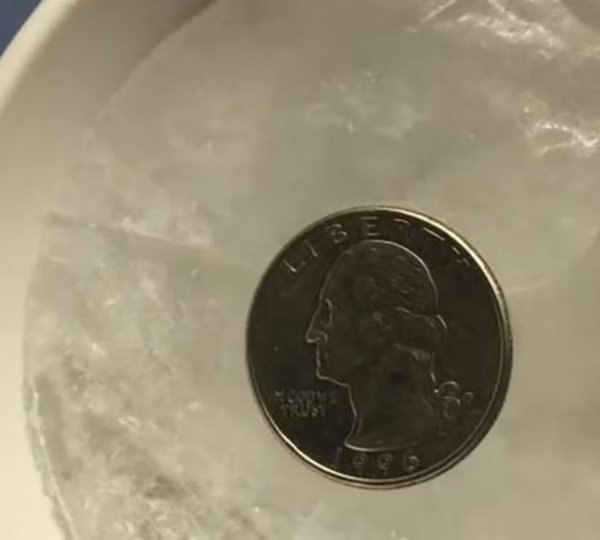
One simple technique that has gained widespread attention is known as the coin-in-a-cup method. This method provides a visual indication of whether a freezer has experienced significant thawing during a period when no one was monitoring it.
The idea gained popularity through social media, where it was shared as a practical tip for families, travelers, and people living in areas prone to power outages. While not a replacement for professional monitoring equipment, the method offers a low-cost and accessible way to assess freezer safety.
The Science Behind the Method
The coin-in-a-cup method relies on basic physical principles:
- Water expands when it freezes.
- Water contracts when it melts.
- Objects placed on top of ice will sink if the ice melts into liquid water.
- When water refreezes, objects remain frozen in their new position.
By observing the position of a coin embedded in ice, it becomes possible to determine whether the ice—and potentially the food in the freezer—has melted and refrozen.
How to Set Up the Coin-in-a-Cup Method
Setting up this method is simple and requires only a few household items.
- Select a Container
Choose a small cup or container that fits easily in your freezer. A disposable plastic cup, glass jar, or sturdy reusable container works well. - Fill With Water
Add water to the container, leaving some space at the top to allow for expansion during freezing. - Freeze Completely
Place the container in the freezer and allow the water to freeze solid, preferably overnight. - Add a Coin
Once the water is fully frozen, place a small coin—such as a penny, dime, or nickel—on top of the ice. - Return to Freezer
Put the container back into the freezer and leave it there permanently as a monitoring tool.
How to Interpret the Results
After a suspected power outage or freezer malfunction, check the position of the coin:
- Coin on Top of Ice
The ice never fully melted. This suggests the freezer likely remained at a safe temperature. - Coin Embedded in Ice or at the Bottom
The ice melted at least partially and refroze. This indicates that the freezer temperature rose enough for thawing to occur, and food safety should be carefully evaluated.
The method provides a clear visual cue that does not rely on memory, smell, or guesswork.
While the coin-in-a-cup method is remarkably simple, its value lies in how effectively it addresses one of the biggest challenges in household food safety: uncertainty. When a freezer experiences a power interruption or mechanical issue, people are often left guessing whether their food is still safe. This uncertainty can lead either to unnecessary food waste or, worse, to consuming food that may pose a health risk.
Understanding both the strengths and limitations of this method helps households use it responsibly as part of a broader food safety strategy.
Advantages of the Coin-in-a-Cup Method
The popularity of the coin-in-a-cup test is not accidental. Its benefits align well with real-world household needs, especially in situations where advanced monitoring tools are unavailable.
Simple and Accessible
One of the biggest advantages of this method is its accessibility. It requires no technical knowledge, no batteries, no calibration, and no ongoing maintenance. A cup, water, and a coin are items found in nearly every household.
This simplicity makes it especially valuable for older adults, renters, travelers, or anyone who wants a straightforward way to monitor freezer conditions without investing in specialized equipment.

Continuous Passive Monitoring
Unlike thermometers that require regular checking or digital alerts that depend on batteries or internet connectivity, the coin-in-a-cup method works passively. Once set up, it remains in place at all times, silently recording whether thawing has occurred.
Even if no one is home during a power outage, the cup provides a record of what happened in the freezer.
Clear Visual Indicator
Human memory can be unreliable, especially when it comes to estimating how long a power outage lasted or how warm a freezer became. The coin provides an objective visual reference.
If the coin is still resting on top of the ice, the freezer likely maintained safe temperatures. If it has sunk or become embedded in the ice, there is a strong indication that thawing occurred.
Useful During Travel or Extended Absence
The method is particularly valuable for people who travel frequently or leave home for extended periods. Freezer failures often go unnoticed when a house is empty.
By leaving the coin-in-a-cup setup in place before traveling, homeowners can immediately assess freezer safety upon returning, reducing the risk of consuming compromised food.
Limitations and Important Considerations
While the coin-in-a-cup method is helpful, it is not perfect. Understanding its limitations ensures it is used appropriately and not relied upon as the sole safety measure.
It Does Not Measure Exact Temperature
The method indicates whether thawing occurred, but it does not reveal how warm the freezer became or how long temperatures remained elevated.
For example, brief partial melting could cause a coin to sink slightly, even if food temperatures did not remain in the danger zone long enough to pose significant risk. Conversely, food could warm unevenly in certain areas of the freezer without fully melting the ice in the cup.
Temperature Variation Within the Freezer
Freezers do not maintain uniform temperatures throughout. Items near the door, top shelves, or walls may warm faster than items in the center.
In large or chest freezers, placing a single cup may not capture all temperature fluctuations. Using multiple cups in different areas can improve reliability.
Not All Foods Carry the Same Risk
The method should be interpreted alongside an understanding of food types. High-risk foods—such as raw meat, poultry, seafood, dairy products, and cooked meals—should always be treated cautiously.

Even if the coin remains on top, these foods should be discarded if there is reason to believe they were exposed to unsafe temperatures for extended periods.
Potential for Accidental Disturbance
If someone moves the cup, bumps it, or removes it temporarily, the visual indicator may be compromised. To avoid confusion, the cup should be placed in a consistent, clearly labeled location.
Enhancing the Coin-in-a-Cup Method
Households that want greater confidence in freezer safety can enhance the method with a few simple additions.
Combine With a Freezer Thermometer
A freezer thermometer provides precise temperature readings, while the coin-in-a-cup method provides historical context. Used together, they offer a more complete picture.
Ideally, freezers should maintain a temperature of 0°F (-18°C) or lower. If a thermometer shows temperatures above this range, food safety should be evaluated carefully.
Use Multiple Cups
In large freezers, placing two or three cups in different areas—such as near the door, in the center, and at the bottom—can help identify uneven thawing.
Improve Visibility
Using a brightly colored coin, adding a small sticker, or marking the ice level on the cup can make position changes easier to detect at a glance.
Best Practices During Power Outages
The coin-in-a-cup method works best when combined with established food safety practices.
Keep the Freezer Door Closed
Opening the freezer door allows cold air to escape, significantly accelerating warming. During an outage, keeping the door closed can preserve safe temperatures for many hours.
Group Frozen Items Together
Packed food stays colder longer than loosely arranged items. Grouping frozen foods tightly reduces exposure to warm air.
Use Ice Packs or Dry Ice When Necessary
For extended outages, dry ice or frozen gel packs can help maintain safe temperatures. Dry ice should be handled carefully and used according to safety guidelines.
Know When to Discard Food
When in doubt, it is safer to discard potentially compromised food. While food waste is unfortunate, foodborne illness can have serious health consequences, especially for children, older adults, pregnant individuals, and those with weakened immune systems.
Reducing Food Waste Through Awareness
Ironically, one of the benefits of the coin-in-a-cup method is that it can help reduce unnecessary food waste. Without clear information, many people discard entire freezer contents after an outage out of caution.
The visual evidence provided by the coin allows for more informed decisions, helping households identify when food likely remained safe.
This balance between caution and conservation is especially important as food costs rise and sustainability becomes a growing concern.
Educational Value and Household Awareness
Beyond its practical use, the method promotes awareness of food safety principles. It encourages people to think critically about temperature control, bacterial growth, and proper food handling.
For families with children, it can also serve as an educational tool, teaching basic science concepts such as freezing, melting, and physical change.
Scientific Validity and Real-World Acceptance
While the coin-in-a-cup method is not an official regulatory standard, it aligns with established scientific principles and food safety guidance. Water’s behavior during freezing and melting is well documented, and the method provides a physical record of temperature changes.
Food safety authorities consistently emphasize the importance of monitoring freezer temperatures and avoiding refreezing thawed food. The coin method complements these recommendations by offering a simple way to detect when temperature control may have been lost.
Long-Term Benefits of Using the Method
Incorporating the coin-in-a-cup test into regular household practices offers long-term advantages:
- Improved decision-making during power outages
- Reduced health risks associated with foodborne illness
- Greater confidence in frozen food safety
- Less reliance on guesswork or memory
- Increased awareness of proper food storage habits
Over time, this small habit can lead to safer kitchens and better food management.
A Simple Tool With Lasting Impact
In a world filled with smart appliances and digital monitoring systems, it is easy to overlook the power of simple solutions. The coin-in-a-cup method stands out because it relies on fundamental science rather than technology.
It requires no updates, no electricity, and no technical expertise—yet it delivers meaningful information when it matters most.
While it should never replace proper food safety guidelines or professional judgment, it serves as an effective supplemental tool that empowers households to make informed decisions.
Conclusion
Freezer malfunctions are an unavoidable reality of modern life, but the risks they pose can be managed with awareness and preparation. The coin-in-a-cup method offers a practical, low-cost way to determine whether frozen food may have thawed during an interruption.
By understanding how and when to use this method—and by combining it with established food safety practices—families can protect their health, reduce waste, and gain peace of mind.
Sometimes, the most effective solutions are also the simplest. A single coin resting on a block of ice can quietly stand guard over your freezer, ready to tell its story when you need it most.
While the coin-in-a-cup method is remarkably simple, its value lies in how effectively it addresses one of the biggest challenges in household food safety: uncertainty. When a freezer experiences a power interruption or mechanical issue, people are often left guessing whether their food is still safe. This uncertainty can lead either to unnecessary food waste or, worse, to consuming food that may pose a health risk.
Understanding both the strengths and limitations of this method helps households use it responsibly as part of a broader food safety strategy.
Advantages of the Coin-in-a-Cup Method
The popularity of the coin-in-a-cup test is not accidental. Its benefits align well with real-world household needs, especially in situations where advanced monitoring tools are unavailable.
Simple and Accessible
One of the biggest advantages of this method is its accessibility. It requires no technical knowledge, no batteries, no calibration, and no ongoing maintenance. A cup, water, and a coin are items found in nearly every household.
This simplicity makes it especially valuable for older adults, renters, travelers, or anyone who wants a straightforward way to monitor freezer conditions without investing in specialized equipment.
Continuous Passive Monitoring
Unlike thermometers that require regular checking or digital alerts that depend on batteries or internet connectivity, the coin-in-a-cup method works passively. Once set up, it remains in place at all times, silently recording whether thawing has occurred.
Even if no one is home during a power outage, the cup provides a record of what happened in the freezer.
Clear Visual Indicator
Human memory can be unreliable, especially when it comes to estimating how long a power outage lasted or how warm a freezer became. The coin provides an objective visual reference.
If the coin is still resting on top of the ice, the freezer likely maintained safe temperatures. If it has sunk or become embedded in the ice, there is a strong indication that thawing occurred.
Useful During Travel or Extended Absence
The method is particularly valuable for people who travel frequently or leave home for extended periods. Freezer failures often go unnoticed when a house is empty.
By leaving the coin-in-a-cup setup in place before traveling, homeowners can immediately assess freezer safety upon returning, reducing the risk of consuming compromised food.
Limitations and Important Considerations
While the coin-in-a-cup method is helpful, it is not perfect. Understanding its limitations ensures it is used appropriately and not relied upon as the sole safety measure.
It Does Not Measure Exact Temperature
The method indicates whether thawing occurred, but it does not reveal how warm the freezer became or how long temperatures remained elevated.
For example, brief partial melting could cause a coin to sink slightly, even if food temperatures did not remain in the danger zone long enough to pose significant risk. Conversely, food could warm unevenly in certain areas of the freezer without fully melting the ice in the cup.
Temperature Variation Within the Freezer
Freezers do not maintain uniform temperatures throughout. Items near the door, top shelves, or walls may warm faster than items in the center.
In large or chest freezers, placing a single cup may not capture all temperature fluctuations. Using multiple cups in different areas can improve reliability.
Not All Foods Carry the Same Risk
The method should be interpreted alongside an understanding of food types. High-risk foods—such as raw meat, poultry, seafood, dairy products, and cooked meals—should always be treated cautiously.
Even if the coin remains on top, these foods should be discarded if there is reason to believe they were exposed to unsafe temperatures for extended periods.
Potential for Accidental Disturbance
If someone moves the cup, bumps it, or removes it temporarily, the visual indicator may be compromised. To avoid confusion, the cup should be placed in a consistent, clearly labeled location.
Enhancing the Coin-in-a-Cup Method
Households that want greater confidence in freezer safety can enhance the method with a few simple additions.
Combine With a Freezer Thermometer
A freezer thermometer provides precise temperature readings, while the coin-in-a-cup method provides historical context. Used together, they offer a more complete picture.
Ideally, freezers should maintain a temperature of 0°F (-18°C) or lower. If a thermometer shows temperatures above this range, food safety should be evaluated carefully.
Use Multiple Cups
In large freezers, placing two or three cups in different areas—such as near the door, in the center, and at the bottom—can help identify uneven thawing.
Improve Visibility
Using a brightly colored coin, adding a small sticker, or marking the ice level on the cup can make position changes easier to detect at a glance.
Best Practices During Power Outages
The coin-in-a-cup method works best when combined with established food safety practices.
Keep the Freezer Door Closed
Opening the freezer door allows cold air to escape, significantly accelerating warming. During an outage, keeping the door closed can preserve safe temperatures for many hours.
Group Frozen Items Together
Packed food stays colder longer than loosely arranged items. Grouping frozen foods tightly reduces exposure to warm air.
Use Ice Packs or Dry Ice When Necessary
For extended outages, dry ice or frozen gel packs can help maintain safe temperatures. Dry ice should be handled carefully and used according to safety guidelines.
Know When to Discard Food
When in doubt, it is safer to discard potentially compromised food. While food waste is unfortunate, foodborne illness can have serious health consequences, especially for children, older adults, pregnant individuals, and those with weakened immune systems.
Reducing Food Waste Through Awareness
Ironically, one of the benefits of the coin-in-a-cup method is that it can help reduce unnecessary food waste. Without clear information, many people discard entire freezer contents after an outage out of caution.
The visual evidence provided by the coin allows for more informed decisions, helping households identify when food likely remained safe.
This balance between caution and conservation is especially important as food costs rise and sustainability becomes a growing concern.
Educational Value and Household Awareness
Beyond its practical use, the method promotes awareness of food safety principles. It encourages people to think critically about temperature control, bacterial growth, and proper food handling.
For families with children, it can also serve as an educational tool, teaching basic science concepts such as freezing, melting, and physical change.
Scientific Validity and Real-World Acceptance
While the coin-in-a-cup method is not an official regulatory standard, it aligns with established scientific principles and food safety guidance. Water’s behavior during freezing and melting is well documented, and the method provides a physical record of temperature changes.
Food safety authorities consistently emphasize the importance of monitoring freezer temperatures and avoiding refreezing thawed food. The coin method complements these recommendations by offering a simple way to detect when temperature control may have been lost.
Long-Term Benefits of Using the Method
Incorporating the coin-in-a-cup test into regular household practices offers long-term advantages:
- Improved decision-making during power outages
- Reduced health risks associated with foodborne illness
- Greater confidence in frozen food safety
- Less reliance on guesswork or memory
- Increased awareness of proper food storage habits
Over time, this small habit can lead to safer kitchens and better food management.
A Simple Tool With Lasting Impact
In a world filled with smart appliances and digital monitoring systems, it is easy to overlook the power of simple solutions. The coin-in-a-cup method stands out because it relies on fundamental science rather than technology.
It requires no updates, no electricity, and no technical expertise—yet it delivers meaningful information when it matters most.
While it should never replace proper food safety guidelines or professional judgment, it serves as an effective supplemental tool that empowers households to make informed decisions.
Conclusion
Freezer malfunctions are an unavoidable reality of modern life, but the risks they pose can be managed with awareness and preparation. The coin-in-a-cup method offers a practical, low-cost way to determine whether frozen food may have thawed during an interruption.
By understanding how and when to use this method—and by combining it with established food safety practices—families can protect their health, reduce waste, and gain peace of mind.
Sometimes, the most effective solutions are also the simplest. A single coin resting on a block of ice can quietly stand guard over your freezer, ready to tell its story when you need it most.
