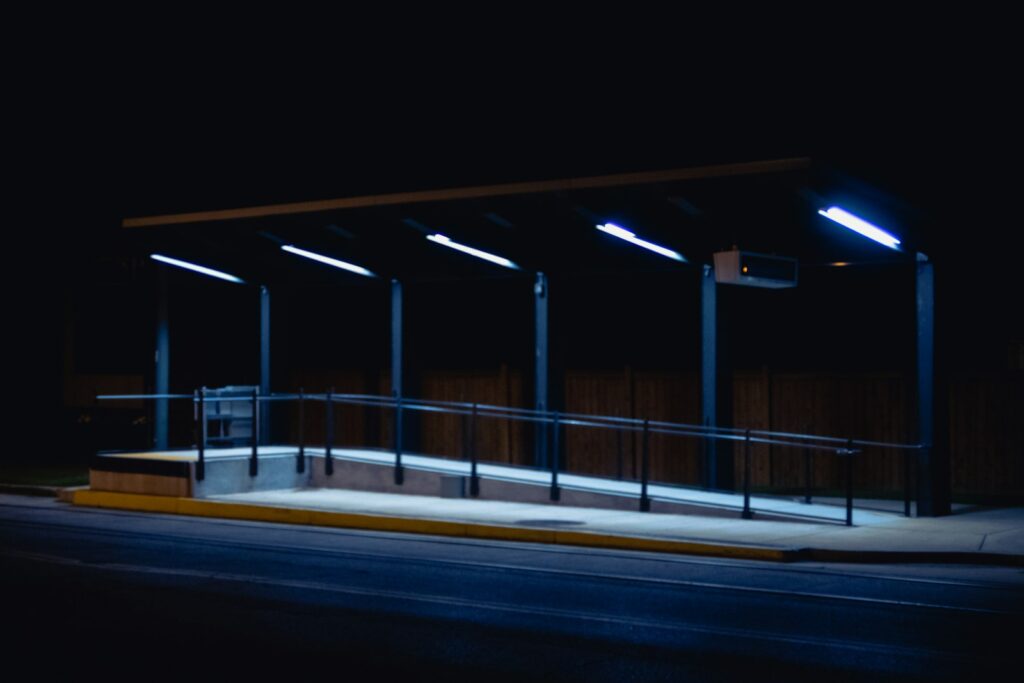
The lost and found at the Millbrook bus depot was a single steel shelf behind the ticket counter, and for thirty-one years it had belonged to Walter Bradley.
Not officially. Officially, it belonged to the regional transit authority, which had sent a letter in March announcing that the depot would close on the last Friday of October and all routes would move to the new transit center across the river. But in practice, the shelf was Walter's. He was the one who tagged every umbrella, every orphaned glove, every paperback left face down on a seat. He kept a ledger in green ink: date, route, item, and in the last column, either Claimed or a blank space.
Most things were claimed within a week. A surprising number never were. Walter had a theory that people only came back for what they could not replace, and it was rarely the expensive things. Phones were usually claimed within hours. Expensive coats sat for months. But he had once watched a grown man nearly cry with relief over a chewed-up stuffed rabbit.
In the final week, Walter cleared the shelf. Gloves and umbrellas went to the shelter on Fifth Street. Books went to the library sale. He photographed the odder items for the local paper, which ran a small piece under the headline Last Call for Lost Things, and a few people came by to collect a scarf or a set of keys they had long given up on.
By Friday, only one item remained.
It was a small wooden box, hand-carved, with a little bird on the lid, its wings folded and its head tilted as if listening. The tag, in Walter's younger, neater handwriting, read: March 1995, Route 9, found on rear seat. The last column was blank.
It had arrived during his first week on the job. He had always meant to send it to storage with the other old items, and every year he had found a reason not to. It had become, without his quite admitting it, a kind of companion. Some mornings he would pick it up and turn it over while the coffee brewed. Whoever had made it had been patient. You could see each individual feather.
At four o'clock, as the last scheduled bus pulled away and Walter was taping up boxes, a woman came to the counter. She was perhaps in her early forties, holding a folded copy of the newspaper.
I know this is strange, she said. But I lost something on a bus here when I was eleven. A wooden box with a bird on it. My dad made it.
Walter did not say anything. He reached behind him and set the box on the counter between them.
She put both hands over her mouth.
She told him the story in pieces. Her father had carved birds in the evenings, at the kitchen table, and this was the last one he finished. After his funeral she had taken the bus to her grandmother's house, holding the box the whole way, and fallen asleep against the window. When she woke at the last stop, it was gone. Her mother called the depot the next morning. A man there said nothing had been turned in.
It came in the day after, Walter said quietly. My first week. I suppose nobody told the man who answered the phone.
She opened the lid. Inside, carved so small Walter had never noticed it, were three letters and a date. She traced them with one finger and laughed, the kind of laugh that is mostly something else.
He put my initials in it, she said. I never even saw.
She tried to pay him, which he refused, and then tried to give him the newspaper clipping, which he accepted. After she left, Walter stood for a long time looking at the empty shelf.
Then he opened the green ledger to the last line, uncapped his pen, and in the final column, after thirty-one years, wrote Claimed.
He locked the depot at five. It was the first time the shelf had ever been completely empty, and he found, to his surprise, that he did not mind at all.
This story is a work of fiction. Names, characters, and events are products of imagination.