
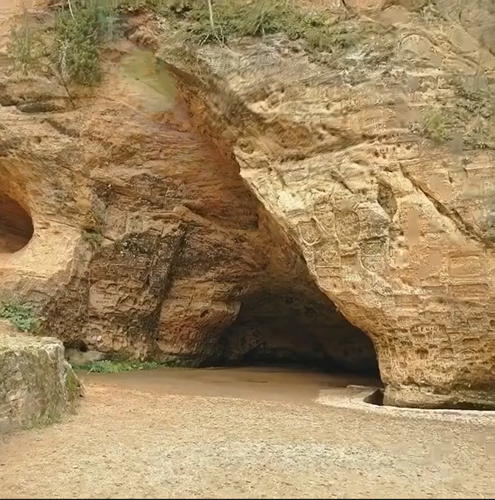
In a world increasingly dominated by digital screens, rapid technological advances, and instant gratification, the work of Ra Paulette stands as a remarkable counterpoint — a testament to patience, dedication, and the timeless value of human craftsmanship.
At 67 years old, Paulette has dedicated nearly four decades of his life to creating extraordinary subterranean art in the sandstone hills of Northern New Mexico.
His medium is simple — the natural rock beneath the earth — but his approach transforms it into something far beyond mere stone.
With nothing more than hand tools, physical labor, and a keen artistic vision, Paulette turns raw sandstone into immersive underground spaces that evoke awe, contemplation, and a deep sense of human connection to nature.

From Raw Stone to Living Spaces
To describe Paulette’s work as “cave carving” is to undersell the experience entirely. Each project is less a construction than a revelation — the process of unveiling what already exists within the stone.
Visitors and critics alike have noted the organic flow of his designs: walls that curve like waves, columns that seem to grow naturally from the floor, alcoves that invite quiet reflection, and archways that draw the eye upward as if leading to another dimension.
Sunlight, guided by carefully planned openings, penetrates the subterranean chambers, casting warm, golden glows that shift throughout the day.
This interplay of natural light and shadow gives each space a living quality, making it feel like a sanctuary rather than a simple excavation.
Walking through one of Paulette’s caves is to experience architecture as living art. Every detail is meticulously planned yet seamlessly organic.
Benches emerge naturally from the rock, providing space for meditation and contemplation. Niches and alcoves hold the imagination, sometimes carved to cradle a person in private reflection.
The smooth surfaces of sandstone are juxtaposed with the raw texture of untouched stone, creating a tactile dialogue that invites exploration.
Visitors report feelings of serenity, even reverence, and describe a sense of timelessness, as if the caves exist outside the ordinary constraints of time.
Guided by Nature, Not Force
Paulette’s philosophy is rooted in respect for the natural world. He doesn’t approach sandstone with the intent to dominate it; rather, he seeks to reveal its inherent beauty.
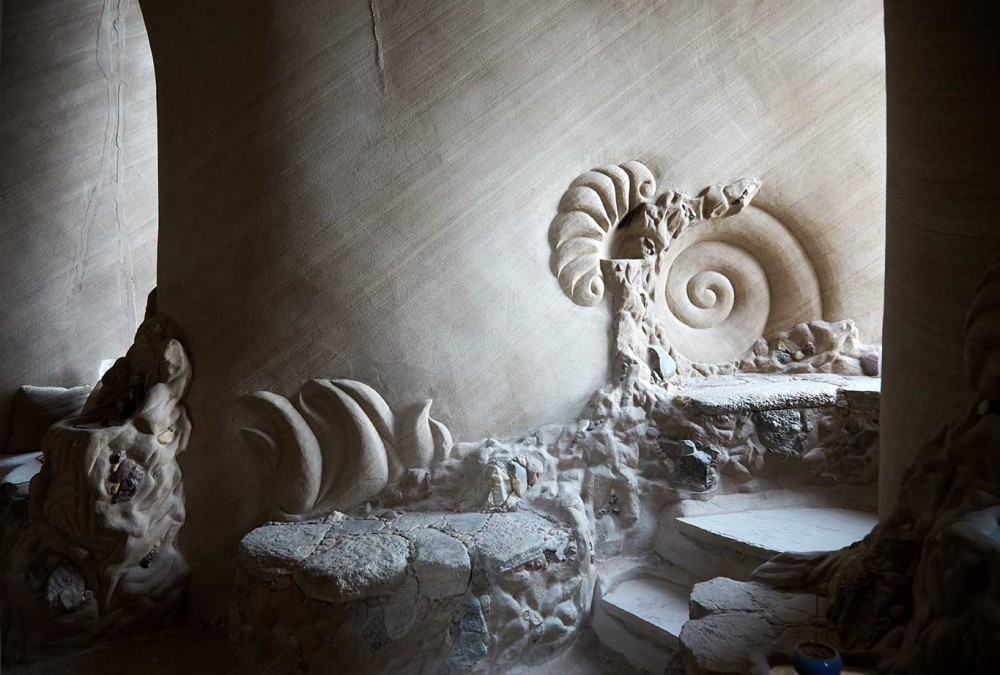
“I’m not carving the cave,” he says in interviews. “I’m revealing it.” This approach requires an extraordinary level of patience, observation, and adaptability.
Each project begins with the stone itself — the natural contours, faults, and patterns dictate the flow of his design.
Paulette studies these features, often spending days walking the site, tapping walls, and envisioning the light and shadow play before a single chisel strikes the rock.
His tools are simple: chisels, hammers, and hand drills. There is no heavy machinery, no explosives, no shortcuts. Every curve and detail is executed through painstaking manual labor.
This commitment to hand craftsmanship gives the caves their unique character. Even in the most intricate sections, there is a subtle imperfection — a human touch that blends seamlessly with the natural irregularities of the stone.
In a way, the caves are co-created: the stone suggests shapes, and Paulette listens, shaping the final result in harmony with the earth.
Water, too, often becomes part of the design. Paulette incorporates natural streams or channels within the rock, guiding water to flow gently through the space, creating the soft sound of trickling streams.
This integration enhances the sensory experience, producing a multisensory environment where sight, sound, and touch are all engaged.
Visitors frequently remark on the meditative quality of these spaces: the soft light, the organic lines, and the gentle sounds together create an atmosphere conducive to contemplation, spiritual reflection, and emotional release.
Art Beyond Recognition
Despite his extraordinary talent, Paulette has never sought fame or fortune. His work is not meant to be exhibited in galleries or sold in conventional art markets. Instead, it exists to be experienced directly — to be walked through, touched, and lived within.
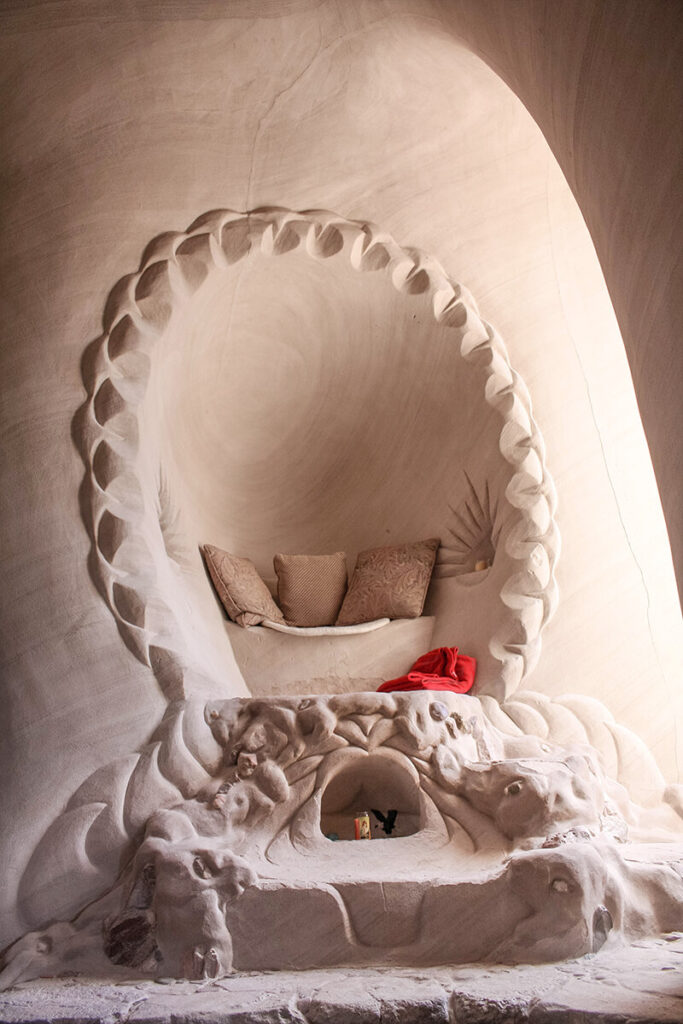
The caves are “living art,” as many have described them, because they invite interaction, not passive observation.
Each curve and alcove encourages visitors to move through the space in their own rhythm, discovering details that reveal themselves only through careful attention.
International recognition eventually came, in part through the documentary Cavedigger, which captures both Paulette’s process and the physical toll of his work.
Watching him labor in these videos, one sees not only the beauty emerging from stone but also the raw effort, sweat, and patience required to achieve it.
Yet, even with this exposure, Paulette remains modest. He continues to work primarily for the joy of creation, the pleasure of crafting spaces that inspire introspection, and the satisfaction of engaging deeply with both stone and earth.
Challenges and Innovation
Working exclusively by hand in sandstone is not without challenges. Sandstone is soft enough to carve yet unpredictable, prone to cracking if misjudged.
Paulette must carefully assess the integrity of the rock before shaping it, ensuring that his designs remain structurally sound while also aesthetically compelling.
Each cave is a problem-solving exercise, requiring not only artistic vision but also engineering insight. Sometimes the stone itself seems to resist, forcing him to innovate and adapt.
Each project pushes the boundaries of what he believes is possible, fostering both technical growth and creative expansion.
Paulette has completed more than a dozen caves, and each project is treated as a journey rather than a destination. He approaches each site with curiosity and humility, acknowledging that the process often teaches as much as the final product.
Mistakes or unexpected challenges are not setbacks; they are opportunities for discovery, revealing new ways to interact with stone, light, and space.
This iterative, responsive approach underscores the philosophy that art is not static — it is transformative, evolving both the creator and the audience through experience.
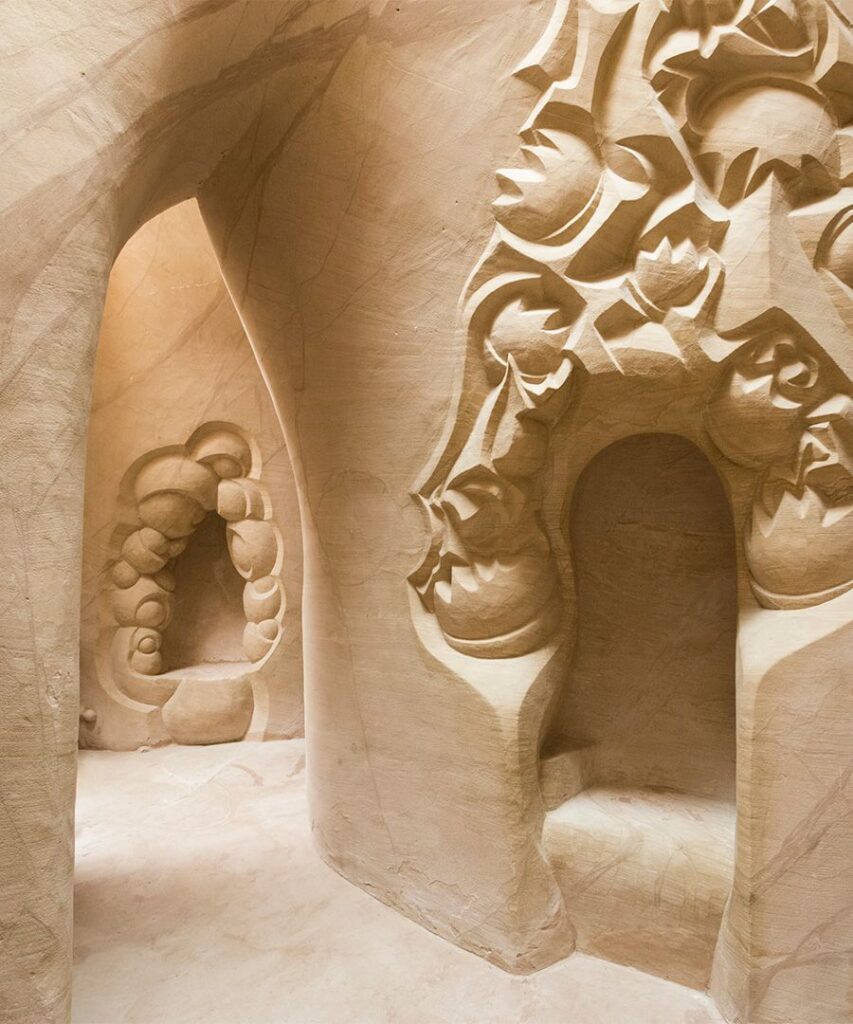
While Ra Paulette’s process is painstaking, the impact of his creations extends far beyond the rock itself. Each cave he carves has its own story, a narrative written not in words but in forms, curves, textures, and the interplay of light and shadow.
Visitors often describe entering a Paulette cave as stepping into another world — a place where time slows, where the modern distractions of life fade, and where one becomes deeply aware of both the artistry and the natural environment surrounding them.
Caves as Personal and Communal Sanctuaries
Some of Paulette’s caves have been commissioned privately, often by individuals seeking a meditative or spiritual retreat.
Others were created for public appreciation, allowing wider audiences to experience the sense of wonder that comes from descending into subterranean spaces filled with flowing organic lines, softly illuminated chambers, and hidden alcoves.
Every project, regardless of size or audience, shares a common thread: the creation of sanctuary.
For instance, in one of his early projects, Paulette transformed a small sandstone hill into a spiraling cave with vaulted ceilings and twisting corridors.
Visitors walking through this space often pause mid-step, overwhelmed by the sheer tactile beauty of the stone and the natural choreography of light and shadow.
The cave feels alive; the curves seem to guide one’s movement, almost as if the space itself is inviting reflection and introspection. Benches carved directly from the rock allow for quiet contemplation, and niches positioned strategically provide space for meditation, reading, or prayer.
Another notable cave incorporates water channels flowing from natural springs, carefully guided to move gently through carved grooves in the rock.
The sound of trickling water enhances the sensory experience, blending with the subtle echoes of footsteps and the occasional soft rustle of wind entering through the openings.
In these caves, visitors report a profound sense of connection — not only to the art itself but to nature, time, and a greater sense of calm that is increasingly rare in today’s fast-paced world.
The Emotional and Psychological Impact of Paulette’s Work
One of the most remarkable aspects of Paulette’s art is its emotional resonance. Visitors often describe feelings of awe, calm, and humility.
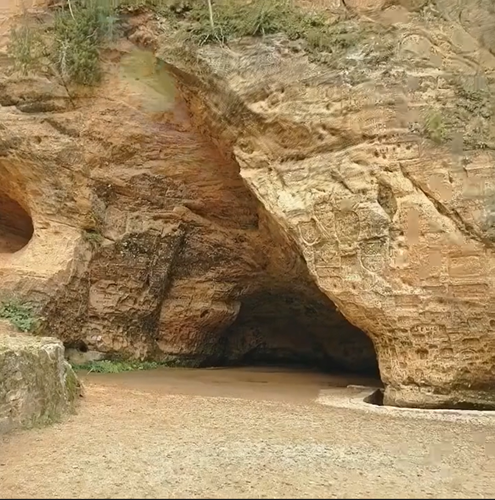
For some, entering a Paulette cave is akin to a meditative retreat without words — a space that allows for personal reflection, emotional release, and spiritual grounding.
Researchers studying human responses to natural and architectural beauty have found that environments incorporating organic forms, soft curves, and natural light can reduce stress, lower blood pressure, and enhance mental well-being.
Paulette’s caves, though not designed as therapeutic spaces, naturally embody these principles.
The psychological impact is further enhanced by the tactile nature of his work. Smoothly carved surfaces invite touch, while raw, textured areas remind visitors of the cave’s natural origins.
Visitors often find themselves moving slowly, intentionally, to fully experience the nuances of the space — a stark contrast to the hurried pace of modern life. In essence, Paulette’s art cultivates mindfulness, whether or not one is consciously practicing it.
Preserving Traditional Craftsmanship in a Mechanized World
In an era dominated by machines, power tools, and mass production, Paulette’s dedication to hand tools and manual labor stands as a celebration of traditional craftsmanship.
He demonstrates that human skill, patience, and intimate knowledge of materials can produce work of a quality and depth that machines alone cannot replicate.
His approach is painstakingly slow: chiseling, sanding, and smoothing by hand requires endurance, precision, and an extraordinary connection to the rock.
The result is a space that embodies both human creativity and the inherent beauty of nature, blending the two seamlessly.
Paulette’s commitment to traditional methods also serves as a quiet but powerful critique of modern culture. In a society where speed and efficiency are often prioritized above all else, his caves remind us that true artistry cannot be rushed.
Each space requires weeks, months, or even years of labor, demanding an investment of time, energy, and attention to detail that is increasingly rare.
By creating in this way, Paulette preserves a lineage of craftsmanship that emphasizes quality, integrity, and personal engagement over mass consumption and instant gratification.
The Transformative Nature of Creativity
Ra Paulette’s journey demonstrates the transformative power of creativity — not only for those who experience his caves but for the artist himself.
Carving each cave requires deep focus, physical stamina, and an intimate awareness of the medium. The act of creation becomes a meditative practice, a dialogue with stone that demands patience, humility, and intuition.
Paulette often describes moments when the cave itself “speaks” to him, guiding the next curve, arch, or niche.
This transformation is not purely physical. Visitors often emerge from his caves with a renewed sense of possibility and inspiration, recognizing the potential for beauty, patience, and care in their own lives.
Paulette’s work shows that art is not merely an object to be admired but an experience that reshapes perception, evokes emotion, and connects individuals to the natural world.
Legacy and Cultural Significance
Over nearly four decades, Paulette has created more than a dozen caves, each one unique yet sharing a common ethos of harmony between human intent and natural form.
His work has influenced artists, architects, and designers, inspiring a new appreciation for spaces that integrate organic forms, natural light, and tactile experiences.
Scholars of art and architecture note that Paulette’s caves challenge conventional notions of space, form, and utility.
They exist not as structures for habitation or commerce but as immersive environments that prioritize sensory experience, emotional engagement, and connection to nature.
The documentary Cavedigger brought Paulette’s artistry to international audiences, showcasing both the laborious process and the ethereal beauty of the final product.
The film captures the sweat, muscle, and precision required to carve stone by hand, as well as the profound joy that arises from creating spaces that elevate human experience.
While many artists seek validation through fame or financial reward, Paulette’s motivation is rooted in intrinsic fulfillment — the satisfaction of creating beauty, the joy of sharing it with others, and the deep respect for the material he works with.
A Call to Reflection in Modern Life
Paulette’s caves offer more than aesthetic pleasure; they provide a counter-narrative to the rapid, digital, and often superficial rhythm of contemporary life.
In his spaces, one can pause, reflect, and reconnect with both the earth and the creative process itself. They remind us that true art requires time, patience, and a willingness to listen — to the material, the environment, and one’s own intuition.
In today’s fast-paced world, where experiences are often reduced to brief moments of digital engagement, Paulette’s work invites a slower, more mindful interaction.
Visitors are encouraged to move deliberately, notice details, and experience the interplay of natural light and handcrafted form.
In these subterranean sanctuaries, the ordinary rules of time and technology dissolve, leaving only the essential: a dialogue between human creativity and the natural world.
Conclusion: Transforming Stone and Souls
Ra Paulette’s life work stands as a testament to the enduring power of human creativity, patience, and respect for the natural world.
His caves are not merely structures; they are living, breathing spaces that transform both the rock and the people who enter them.
By blending technical mastery with intuition, by listening to the stone rather than imposing upon it, Paulette demonstrates that art is a collaborative process between creator and medium, between humanity and nature.
His work reminds us that in a world of instant results and digital imitation, there remains profound value in the patient, deliberate act of creation.
His caves invite us to slow down, to engage with the environment, to recognize beauty in imperfection, and to understand the transformative potential of art on both physical spaces and human hearts.
Ultimately, Ra Paulette teaches us that true artistry transcends aesthetics. It is about creating experiences that elevate, inspire, and connect us to something larger than ourselves — whether that be nature, the earth, or the human spirit.
His sandstone sanctuaries stand as a quiet but powerful call to reflection, a reminder that the deepest beauty often lies not in speed or scale, but in patience, care, and the reverent act of revealing what has always been there.
