
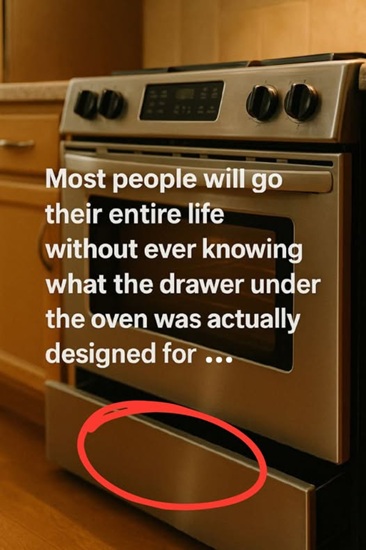
The kitchen is often described as the heart of the home, a place where meals are prepared, stories are shared, and daily life unfolds quietly. Every appliance, cabinet, and countertop contributes, but few notice the drawer beneath the oven.
For decades, many homeowners have treated this lower drawer as little more than convenient storage. Baking sheets, pots, pans, and other bulky cookware are typically stashed inside, reinforcing the misconception that this feature exists solely for extra storage space.
Yet the true purpose of this drawer often goes unrecognized. Historically, many ovens—especially older gas and electric models—incorporated a warming drawer designed to keep food at a gentle, controlled temperature while other dishes finished cooking.
The warming drawer operates at a steady range, usually between 140°F and 200°F, allowing meals to remain ready to serve without additional cooking. This gentle heat preserves moisture, flavor, and texture, preventing dishes from drying or burning.

Unlike conventional ovens, which rely on high heat for cooking, baking, or roasting, warming drawers provide a more delicate, controlled warmth. This ensures that prepared foods remain at ideal serving temperatures, especially during large meals or holiday feasts.
Professional chefs and serious home cooks often rely on warming drawers for precise culinary tasks. They can preheat plates, hold side dishes, proof dough, or maintain delicate items like pastries without compromising quality or overcooking.
In modern ovens, the line between storage drawers and true warming drawers can be confusing. Many contemporary models include drawers that serve only as storage, while others retain the original warming function, complete with heating elements and controls.
Visually, storage and warming drawers often appear identical. Without clear labeling or user guidance, it’s easy for homeowners to mistakenly treat a warming drawer as storage or vice versa, leading to safety risks or appliance inefficiency.
The internal structure is key. A true warming drawer contains insulation, heating elements, and sometimes temperature controls connected to the oven’s main system. Storage drawers lack these features, serving only as convenient compartments for cookware or utensils.
Some warming drawers are equipped with markings such as “Warm,” “Proof,” or “Keep Warm,” clearly indicating their intended purpose. Consulting the oven manual or manufacturer specifications is always the safest way to confirm functionality and prevent misuse.
Using a warming drawer incorrectly, particularly for storing flammable materials, can present safety hazards. Even when switched off, heat from the oven above can elevate internal temperatures, potentially damaging items or creating fire risks.

Obstructed airflow inside the drawer can also reduce appliance efficiency. Items placed incorrectly may prevent heat from circulating, causing uneven warming, increased energy consumption, and accelerated wear of both the drawer and oven over time.
Warming drawers are surprisingly versatile when used correctly. They allow plates to be preheated, side dishes to remain at serving temperatures, bread to stay fresh, and even dough to rise, reflecting their thoughtful design for multi-tasking kitchens.
For bakers, warming drawers create an ideal environment for proofing yeast dough, providing low, steady heat that encourages proper rising without drying the dough or forming a crust prematurely. This is a technique widely used in professional kitchens.
The widespread misunderstanding of oven drawers reflects a broader trend in kitchen appliance design. Many features remain underutilized simply because their purpose is unclear, causing homeowners to miss out on potential convenience and safety benefits.
In family kitchens, warming drawers are particularly useful. They allow simultaneous preparation of multiple dishes, staging of plates for serving, and maintenance of consistent food temperatures, reducing stress during busy weeknights or large gatherings.
The ergonomic placement of oven drawers provides another advantage. Positioned at a low height, they reduce the need to reach into a hot oven, lowering the risk of burns or accidents and making food handling safer for cooks of all ages.

Warming drawers were originally developed to complement multi-course cooking. They allow multiple dishes to be staged at different temperatures, providing flexibility in serving sequences, whether during formal dinners, casual meals, or holiday gatherings.
Many modern warming drawers include adjustable racks or temperature zones. These allow different items to be heated at varying temperatures simultaneously, such as keeping roasted meats warm while maintaining crisp textures on vegetables or pastries.
Regular cleaning and maintenance are crucial for optimal performance. Residue or spills can impede heating efficiency, while consistent cleaning preserves insulation and heating elements, extending the life of both the drawer and the oven.
Historically, warming drawers were particularly popular in European ovens before gaining widespread use in North America. They reflected a culinary culture that valued sequential courses, precise timing, and family-style dining, where keeping food warm was essential.
Misuse of the drawer, such as storing items inside a warming compartment, may lead to overheating, potential fires, or damage to cookware. Awareness of its function ensures safety and prevents unnecessary wear or energy waste.
The benefits of warming drawers extend beyond safety and convenience. By preheating plates and holding food at optimal temperatures, they improve overall dining quality, keeping meals flavorful, visually appealing, and consistent from kitchen to table.

Some modern ovens integrate smart technology with warming drawers, including timers, temperature presets, and digital alerts. These features allow users to automate food warming while maintaining precision and confidence, supporting modern, busy lifestyles.
Bakers and home chefs alike benefit from the drawer’s controlled environment. Beyond proofing dough, it can be used to soften chocolate, maintain delicate sauces, or keep baked goods at serving temperature without additional cooking.
Families may find the drawer especially useful for child-friendly kitchens. Keeping food warm without exposing children to hot oven interiors minimizes risk, while supporting safe, efficient multitasking during meal preparation and family routines.
Even casual cooks benefit from warming drawers. Staging dishes, maintaining temperature, and coordinating meal timing can transform mealtime efficiency, reduce stress, and improve overall satisfaction for both hosts and guests.
Some appliances combine warming and storage functions, allowing drawers to serve dual purposes. When warming is not needed, they act as storage compartments, optimizing space and ensuring the kitchen remains organized and versatile.
Not all oven drawers are the same. Identifying whether a drawer is designed for warming ensures safe use, prevents damage, and allows full utilization of its intended functionality, maximizing the appliance’s value and efficiency.
The widespread misconception of oven drawers highlights a broader issue in home kitchens: understanding multifunctional appliances. Educating users improves safety, convenience, and culinary performance, ensuring that all features are used as intended.
Professional chefs value warming drawers for consistent heat retention, plate staging, and minimizing food safety risks. In commercial kitchens, these drawers help manage multiple dishes efficiently, emphasizing their importance beyond casual home use.
The drawer beneath the oven demonstrates thoughtful appliance design. Whether serving as a warming compartment or storage, it exemplifies the integration of function, safety, and usability in kitchen innovation.
By learning its purpose, homeowners can improve timing, food quality, and workflow efficiency. What once seemed like an ordinary storage drawer can become an essential tool for meal preparation, serving, and hosting.
The warming drawer highlights how even small appliance features can enhance the culinary experience. Understanding its proper use ensures safer, more efficient, and more enjoyable cooking for both professional and home chefs.
Knowledge transforms usability. What appears to be a simple storage drawer may be one of the most practical and versatile tools in the kitchen, supporting safer, smoother, and more controlled meal preparation.
Even experienced cooks may underestimate the drawer’s impact. Its gentle heat allows precise control over food temperatures, elevates presentation, and ensures dishes reach the table in their optimal state, improving overall dining experiences.
For home chefs, the warming drawer also supports multitasking. It enables concurrent preparation of multiple dishes, ensures proper temperature management, and helps streamline cooking processes without compromising food quality or safety.
During holidays or large gatherings, warming drawers become indispensable. They keep food ready for staggered serving, prevent cold dishes, and allow hosts to manage timing efficiently, showcasing the drawer’s unique contribution to modern kitchens.
Ultimately, the oven drawer represents more than storage or warmth. Its proper identification, understanding, and use unlock its full potential, improving kitchen safety, meal quality, and daily cooking efficiency for households of any size.
By integrating knowledge, care, and proper use, the warming drawer becomes a critical component of a well-functioning kitchen, demonstrating how small design elements can transform the cooking and dining experience.
In conclusion, the drawer beneath your oven is a quiet hero of the kitchen. Recognizing whether it is a warming drawer or storage compartment enables safe, efficient, and versatile use, elevating everyday cooking to a professional level.
