
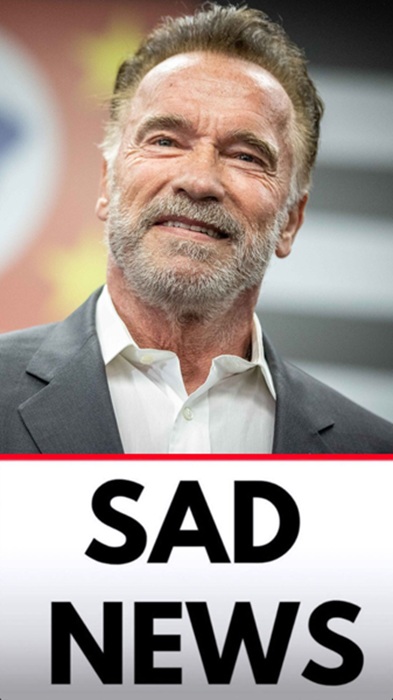
Arnold Schwarzenegger is no stranger to the extraordinary. From his early beginnings in Austria to becoming a global icon in bodybuilding, Hollywood, and politics, he has consistently confronted challenges and pursued excellence with relentless discipline.
Yet behind the public persona of strength, charisma, and ambition lies a man deeply engaged with some of life’s most profound questions—questions that go beyond fame, power, or success. One of the most compelling aspects of Schwarzenegger’s reflections emerges when he confronts the ultimate certainty: death.
In a rare and deeply personal conversation with his longtime friend and frequent collaborator Danny DeVito for Interview Magazine, Schwarzenegger opened up about his perspective on mortality, the afterlife, and the intrinsic value of life itself.
What makes this discussion especially striking is not only the subject matter, but the honesty with which he approaches it.
Rather than offering comforting platitudes or traditional spiritual assurances, Schwarzenegger provides a frank, realistic, and at times sobering account of what he believes happens when life ends—and, more importantly, why that reality underscores the preciousness of living fully.

A Frank Perspective on Death
Schwarzenegger’s reflections on death are rooted in both personal experience and rational observation. While many public figures tend to couch their views in spirituality or religious rhetoric, Schwarzenegger takes a more grounded approach.
He has never claimed to possess metaphysical knowledge, nor does he profess certainty about the mysteries that lie beyond life. Instead, he focuses on the tangible and observable reality: the body, as we know it, ceases to function, and the physical presence that defines human life ultimately returns to the earth.
In recounting a conversation with radio host Howard Stern, Schwarzenegger vividly remembers being asked what he thinks happens after death.
His response, as he has explained, was direct and unambiguous: “From my perspective, nothing physical remains. There’s no evidence that consciousness survives in the form we understand it. Anyone claiming absolute knowledge about what happens beyond death is speaking without proof.”
While this may sound stark or even harsh, Schwarzenegger’s intent is not to provoke despair; rather, it is to distinguish between belief and observable fact. He acknowledges the limits of human understanding, emphasizing that certainty about the afterlife is beyond the reach of empirical evidence.
In this conversation, Schwarzenegger’s clarity is mirrored by Danny DeVito, whose grounded humor and realism provide a complementary perspective. DeVito’s simple statement—“We deteriorate”—captures the unavoidable truth of human existence.
Aging, decline, and death are biological processes, inevitable for every living being. The exchange between these two lifelong friends, marked by warmth and honesty, underscores a shared acceptance of life’s impermanence.
The Emotional Weight of Life’s Transience
Even though Schwarzenegger’s worldview is rational, it is far from emotionally detached. He openly admits that the thought of death is deeply unsettling—not because of fear of punishment, divine judgment, or the unknown, but because of the irreplaceable experiences that will inevitably be lost.

Schwarzenegger has consistently conveyed that what he loves most about life is its richness: the camaraderie of friendship, the joy of shared laughter, the fulfillment of physical exertion, the thrill of travel, the discovery of new cultures, and the simple pleasures that bring meaning to each day.
For Schwarzenegger, life is not merely a series of tasks to be completed or goals to be achieved; it is an immersive experience to be savored in all its complexity.
The idea that every cherished moment—whether it is a quiet conversation with a loved one, the exhilaration of cycling along a sun-drenched beach, or the satisfaction of pushing one’s limits in the gym—will one day come to an absolute end is what he finds profoundly heartbreaking.
He speaks with a rare vulnerability, acknowledging that his love of life makes the inevitability of death not only a biological fact but also an emotional challenge.
DeVito’s response to Schwarzenegger’s reflection is both simple and profound: “Life! It’s the best!” In these four words, he captures the essence of their shared philosophy.
Rather than dwelling on abstract notions of an afterlife, both men emphasize the importance of living fully in the present. It is in this focus on tangible experiences—relationships, passions, and moments of connection—that their conversation gains its remarkable depth and resonance.
A Catholic Upbringing and Moral Foundations
Schwarzenegger’s approach to death and the afterlife may appear unconventional, particularly given his Catholic upbringing. Born and raised in Austria, he attended church regularly, studied religious texts, and was educated in Catholic schools.
This early exposure instilled in him a moral framework that has endured, even as his beliefs have evolved. While he no longer strictly adheres to traditional doctrines about heaven or the afterlife, he retains a deep respect for the ethical and philosophical principles he absorbed during his youth.
In a 2021 YouTube video, Schwarzenegger reflected on these formative years, highlighting the enduring influence of the Catholic concept of a “servant’s heart.” To him, this idea transcends religious dogma; it embodies the principle of dedicating oneself to causes greater than personal ambition.

Schwarzenegger interprets it as an imperative to serve others, contribute positively to society, and exercise responsibility in one’s actions. This moral compass, shaped by faith yet adaptable to his lived experience, continues to inform both his public and private life.
Service and Fulfillment
Central to Schwarzenegger’s philosophy is the belief that true fulfillment comes not from fame, wealth, or power, but from service. Throughout his career—whether as a politician, philanthropist, or actor—he has emphasized the importance of giving back.
Schwarzenegger has often expressed concern about contemporary politics and leadership, arguing that society demands individuals who are committed to serving the public rather than advancing personal agendas.
In his view, genuine leadership requires a devotion to higher ideals: the principles upon which nations are founded and the values that earn the respect of people worldwide.
This ethos of service, drawn from both his religious upbringing and personal reflection, permeates Schwarzenegger’s approach to life. It illustrates a remarkable synthesis of realism and moral purpose: he accepts the limits of human knowledge, including the uncertainty of an afterlife, yet channels his energies into actions that positively impact the present world.
In this way, the absence of certainty about what comes after death does not diminish the meaning of life; rather, it reinforces the imperative to act with purpose, kindness, and intention here and now.
Reconciling Faith and Reality
What makes Schwarzenegger’s worldview particularly compelling is the balance he strikes between inherited faith and empirical realism. While he does not subscribe to conventional notions of heaven or spiritual continuity after death, he has not abandoned the ethical and philosophical lessons of his upbringing.
Instead, he reframes these teachings to suit a life philosophy grounded in observable reality and lived experience. The focus shifts from abstract expectations of rewards or punishments after death to the tangible ways in which people can live ethically, meaningfully, and joyfully in the present moment.
This reconciliation is both subtle and powerful. Schwarzenegger acknowledges the allure of comforting illusions—promises of reunion with loved ones, eternal joy, or spiritual immortality—but he resists them, choosing instead to confront life’s impermanence head-on.
This perspective does not diminish the value of spirituality; rather, it reorients it. Spirituality, in Schwarzenegger’s interpretation, becomes less about unverified posthumous assurances and more about cultivating a life of integrity, gratitude, and conscious engagement.

While Part One explored Arnold Schwarzenegger’s grounded views on death and the afterlife, Part Two delves into how these reflections manifest in his everyday life, his career choices, and his public philosophy.
Schwarzenegger’s approach to life is not merely theoretical—it is intensely practical, woven into the routines, habits, and decisions that have defined him from childhood to the present. His insights reveal a man who understands that the impermanence of life is not a source of despair, but a powerful motivation to live with purpose, intensity, and joy.
The Body as a Temple and a Teacher
Arnold Schwarzenegger’s journey began far from Hollywood’s bright lights, in the small village of Thal, Austria. Born into a post-World War II society marked by scarcity and strict discipline, Schwarzenegger’s early life was shaped by challenges that demanded resilience and determination.
His father, Gustav Schwarzenegger, was a police officer with rigid expectations, and his mother, Aurelia, instilled the values of hard work, responsibility, and modesty. From a young age, Arnold learned to face adversity with resolve, a trait that would define his later life.
It was during these formative years that Schwarzenegger discovered bodybuilding—a pursuit that would become both his profession and a lifelong philosophy. Bodybuilding, for him, was never only about physical appearance; it was a metaphor for life itself.
Through the discipline of daily workouts, careful nutrition, and continuous self-improvement, Schwarzenegger learned that growth—whether physical, emotional, or intellectual—requires consistency, sacrifice, and an unwavering focus on long-term goals.
In his reflections on life’s impermanence, Schwarzenegger often emphasizes the importance of the body as a vessel for experiencing the world. He acknowledges that aging inevitably alters physical capabilities, but he also celebrates what the body can achieve when nurtured and respected.
In this way, physical strength becomes both a practical tool and a philosophical lesson: life’s experiences are richer when one engages fully, with energy, curiosity, and vitality. The deterioration DeVito mentioned is not a cause for despair, but a reminder to maximize the time we have in this body.

Hollywood, Politics, and the Pursuit of Purpose
Arnold Schwarzenegger’s rise to international fame was extraordinary, yet it was never purely about celebrity. After achieving global recognition as a seven-time Mr. Olympia, he leveraged his platform to enter Hollywood, becoming a cultural icon through roles in films like The Terminator, Predator, and Total Recall.
Yet Schwarzenegger’s approach to stardom was guided by the same principles that governed his early life: discipline, vision, and a commitment to pushing boundaries.
Even in the midst of cinematic success, Schwarzenegger did not lose sight of what he deemed truly important: the pursuit of meaning beyond fame. His career choices reflected an understanding that influence and visibility come with responsibility.
Rather than resting solely on the allure of Hollywood, he embraced opportunities to inspire others, promote health and fitness, and address societal issues. In this, Schwarzenegger exemplifies a central tenet of his philosophy: life gains significance not through the accumulation of accolades, but through the positive impact one can make while living it.
This principle extended naturally into politics. Schwarzenegger served as the Governor of California from 2003 to 2011, navigating a complex political landscape while emphasizing public service over partisan gain.
Throughout his tenure, he frequently highlighted the importance of responsibility, ethics, and long-term vision—values he traces back to his Catholic upbringing and his commitment to a “servant’s heart.”
In his political work, as in his personal life, Schwarzenegger’s goal has consistently been to use his position and influence to contribute meaningfully, rather than to secure personal advantage.
Cherishing Relationships and Shared Moments
A recurring theme in Schwarzenegger’s reflections on death is the irreplaceable value of human relationships. He frequently recounts the profound joy and comfort derived from friendships, family connections, and shared experiences. His lifelong friendship with Danny DeVito is emblematic of this philosophy.
The two men have collaborated professionally for decades, but more importantly, they share a candid, honest, and deeply human bond. Their conversations about life and death illustrate how meaningful connections provide context, purpose, and joy in a world defined by impermanence.
Schwarzenegger’s family life further underscores his commitment to cherishing relationships. He speaks openly about the importance of being present with loved ones, celebrating milestones, and supporting each other through challenges.
While his public image often highlights his achievements and physical prowess, he consistently emphasizes that these accomplishments gain true value only when shared with others. The knowledge that life is finite intensifies, rather than diminishes, the significance of these moments.
Travel, Culture, and the Joy of Discovery
Another pillar of Schwarzenegger’s philosophy is a relentless curiosity about the world. Travel has been an essential component of his life, not only as a personal pleasure but as a way to engage deeply with diverse cultures and experiences.
Whether cycling along scenic coastlines, exploring historic cities, or immersing himself in the arts and cuisine of foreign lands, Schwarzenegger approaches each experience with deliberate presence and appreciation.
In interviews, he has often described how travel and exposure to different perspectives deepen one’s understanding of life and humanity. For him, these experiences are a reminder that life’s richness lies in its diversity and unpredictability.
The impermanence of life makes such experiences even more precious; the awareness that each moment is fleeting encourages a heightened sense of engagement, gratitude, and wonder.
Philosophy in Action: Service and Legacy
Schwarzenegger’s reflections on life and death are inseparable from his commitment to service. This philosophy manifests in numerous ways: supporting charitable causes, advocating for environmental initiatives, promoting health and fitness, and inspiring others to pursue personal growth.
He views service as both a moral responsibility and a practical path to fulfillment, aligning his actions with the values instilled during his Catholic upbringing.
Moreover, Schwarzenegger’s notion of legacy is intimately tied to his understanding of mortality. He recognizes that personal achievements—no matter how spectacular—cannot outlast the impermanence of life.
Therefore, he measures success not by fame, wealth, or titles, but by the positive influence one leaves behind: the ways in which one’s actions elevate others, create opportunities, and foster meaningful connections.
This perspective reflects a profound wisdom: the inevitability of death enhances the significance of living ethically, generously, and intentionally.
Embracing Uncertainty and the Present Moment
Central to Schwarzenegger’s outlook is an acceptance of uncertainty. He does not claim to know what happens after death, nor does he rely on comforting myths to mitigate fear or sorrow.
Instead, he embraces the unknown as an inherent part of life, a recognition that amplifies the value of the present. In his own words, the absence of certainty about the afterlife does not diminish life’s significance—it magnifies it. Every interaction, every adventure, and every act of kindness becomes more urgent, meaningful, and precious precisely because they are finite.
This philosophy also informs his approach to personal growth. Schwarzenegger is unafraid to acknowledge mistakes, learn from failures, and continuously pursue self-improvement.
By confronting life without illusions, he cultivates resilience, adaptability, and authenticity. His message is clear: the inevitability of death is not a barrier to joy or purpose; it is an invitation to live boldly, love deeply, and act meaningfully.
Reflections That Resonate
Arnold Schwarzenegger’s candid reflections have struck a chord with many people precisely because they are both honest and relatable. In a culture that often avoids discussions about death or sanitizes the topic with platitudes, Schwarzenegger’s willingness to speak openly is refreshing.
He acknowledges human vulnerability without succumbing to despair, highlighting the paradoxical truth that life’s transience is what gives it beauty, urgency, and value.
His insights offer practical guidance for anyone seeking a more intentional, fulfilling life:
- Cherish relationships and prioritize human connection over material accumulation.
- Engage fully with the world, whether through travel, learning, or creativity.
- Serve others and contribute to society, finding purpose in actions rather than external rewards.
- Recognize the impermanence of life as a catalyst for gratitude and mindful presence.
- Embrace uncertainty without fear, allowing it to inspire courage, curiosity, and authenticity.
Conclusion: A Life Lived Fully
Arnold Schwarzenegger’s conversation with Danny DeVito, and his broader reflections on life and death, provide more than a personal philosophy—they offer a guide for living fully in the face of inevitability. He reminds us that mortality is not a limitation, but a lens through which the beauty and significance of life become clear.
By rejecting comforting illusions of the afterlife, yet embracing ethical principles, joy, and service, Schwarzenegger presents a worldview that is simultaneously grounded, inspiring, and profoundly human.
Ultimately, Schwarzenegger’s message is both simple and transformative: life is fleeting, unpredictable, and deeply precious. Rather than waiting for meaning to arrive from an unknown future, he urges us to seek it here and now—through relationships, experiences, acts of service, and the relentless pursuit of passion.
Even in the absence of certainty about what comes after death, life itself offers extraordinary opportunities for growth, love, and fulfillment.
By living with awareness, integrity, and appreciation for the present moment, we can honor the very principle that Schwarzenegger embodies: that the measure of a life well-lived is not what comes after, but how fully and meaningfully it is lived today.
In embracing this philosophy, we confront mortality not with fear, but with courage, gratitude, and an unwavering commitment to experience life in all its richness.
In this way, Arnold Schwarzenegger’s reflections are more than the musings of a public figure; they are an invitation to examine our own lives, to embrace the present with vigor, and to recognize that, while death is inevitable, a life of purpose, love, and adventure can transcend fear and leave an enduring impact on the world.
