
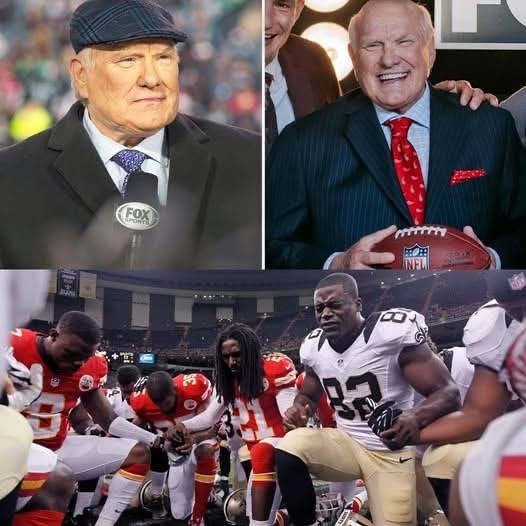
On any given Sunday in the 1970s, Terry Bradshaw represented the very embodiment of American athletic determination, a quarterback whose cannon arm, grit, and unflinching focus helped define the Steelers’ legendary “Steel Curtain” era of dominance.
Fans admired his four Super Bowl victories, gap-toothed grin, and iconic blonde hair, but behind the celebratory façade.
Bradshaw quietly battled emotional pressure, fear of failure, and mental strain that no playbook, coach, or strategy could resolve.
Bradshaw’s upbringing in Shreveport, Louisiana, shaped both his resilience and humility. A self-described “momma’s boy,” he was raised by a close-knit family who instilled values of persistence, work ethic, and emotional honesty that fueled his early development.
Being drafted first overall in the 1970 NFL Draft brought immense scrutiny. A small-town Southern quarterback suddenly faced the industrial city of Pittsburgh, where cold winters and passionate fans demanded immediate excellence and flawless performance.

The media was relentless. Analysts mocked his Southern accent and early struggles on the field, unfairly labeling him “slow” or “dumb.” Every game became a crucible, testing both athletic skill and personal resolve against public judgment.
The relentless pressure fueled anxiety and self-doubt. Stadium boos, harsh commentary, and national ridicule challenged Bradshaw daily, forcing him to cultivate a mental toughness that would eventually become legendary among teammates and competitors alike.
Bradshaw transformed adversity into motivation. He refused to retreat into bitterness, instead channeling criticism and doubt into determination, using perceived weaknesses as fuel to elevate both his personal performance and the Steelers’ collective success on the field.
His perseverance produced some of the most iconic moments in NFL history. The “Immaculate Reception” era showcased his precision, poise, and strategic intelligence, proving that emotional resilience off the field matched his brilliance on it.
Bradshaw’s statistics alone—Super Bowl MVPs, playoff victories, and passing records—tell only part of the story. The unseen battle against anxiety, public scrutiny, and self-doubt illustrates the deeper struggle behind his celebrated career.
Despite outward appearances, Bradshaw also privately battled depression. The pressures of fame, national expectations, and personal loss created emotional strain, challenging him to maintain performance while protecting his mental and emotional well-being.

He embraced humor and self-deprecation as tools of resilience. The media often portrayed him as “clumsy” or “foolish,” yet Bradshaw turned these narratives into a public persona, connecting with audiences through charm, wit, and relatability.
His post-football broadcasting career exemplified reinvention. Bradshaw leveraged humor and relatability to entertain millions, proving that perceived weaknesses could be transformed into strengths that enhanced both personal influence and public appeal.
Bradshaw’s transparency about mental health struggles brought attention to topics often stigmatized within professional sports. His candid discussions of depression, therapy, and emotional challenges helped normalize seeking help for athletes and fans alike.
Even physical injuries—shoulder issues, concussions, and the cumulative toll of years in football—were compounded by the unseen mental stress, yet he persevered, demonstrating extraordinary discipline, resilience, and commitment to both team and personal growth.
His public persona balanced humor with depth. The self-deprecating broadcaster concealed immense intelligence, emotional insight, and experience, revealing that mental strength and strategic thinking often hide behind charm, wit, and performance.
Bradshaw’s life story demonstrates resilience in multiple dimensions. Athletic success, mental fortitude, and personal reinvention combined to form a holistic portrait of a man who navigated both fame and private struggle with grace.
He emphasizes gratitude, teamwork, and family in interviews. While public achievement is celebrated, Bradshaw consistently credits mentors, teammates, and loved ones, demonstrating that human connection is essential to personal and professional accomplishment.
Bradshaw’s journey also underscores the duality of public life. Fame brings accolades and admiration, but it also magnifies internal battles. Despite applause and recognition, he confronted personal demons with courage and determination throughout his career.

Through media, interviews, and public appearances, he advocates for mental health awareness, illustrating that vulnerability is a strength and that courage often lies in facing internal challenges, even under intense public scrutiny.
Bradshaw’s narrative exemplifies the interplay of talent, perseverance, and emotional intelligence. Athletic prowess alone does not define greatness; his ability to confront psychological challenges solidifies his enduring impact on fans and the NFL community.
He reminds us that true achievement includes internal victories. Championship rings and statistics are symbols of performance, but the courage to persevere despite fear, anxiety, and scrutiny defines enduring legacy and personal significance.
Bradshaw’s mentorship and public guidance influence both current players and fans. He demonstrates that resilience, humor, and self-awareness can serve as practical tools to navigate challenges on and off the field.
He also emphasizes adaptability. Bradshaw’s evolution from criticized young athlete to revered broadcaster illustrates the importance of self-reflection, strategic reinvention, and emotional maturity in achieving sustained success.
The physical rigors of professional football demanded immense strength, but his emotional and psychological resilience proved equally critical. Endurance in the NFL requires both skill and the ability to withstand scrutiny, pressure, and expectation.

Bradshaw’s life story provides a roadmap for handling adversity. By converting public criticism into motivation, embracing self-awareness, and seeking help when necessary, he demonstrates a model of personal and professional development.
Even decades after retirement, his influence remains profound. Bradshaw represents the intersection of athletic accomplishment, emotional intelligence, and advocacy, proving that true legacy extends beyond statistics into the realm of human resilience.
He shows that vulnerability and perseverance coexist. Open acknowledgment of personal struggle does not weaken public stature; instead, it enriches character, builds connection, and inspires others facing similar pressures to persist.
Bradshaw teaches that resilience requires balance: combining professional excellence, emotional strength, humor, and empathy to navigate life’s challenges while maintaining authenticity and integrity across multiple roles and responsibilities.
His enduring presence in media, advocacy, and public discourse reflects a commitment to using personal experience as a tool for education and inspiration, benefiting athletes, fans, and the broader public alike.
Bradshaw’s life demonstrates that heroism is not only measured on the scoreboard. Daily courage, facing personal demons, and embracing vulnerability define the strength required to leave a lasting, multi-dimensional legacy.

The juxtaposition of public acclaim and private struggle illustrates a universal truth: even the most celebrated figures face internal battles. How one manages these challenges often defines character more than public accolades ever could.
Bradshaw’s journey is also a lesson in reinvention. Public ridicule became a platform for humor; private struggle became advocacy. Each phase of his life illustrates the power of self-awareness, reflection, and purposeful action.
Ultimately, Terry Bradshaw exemplifies that true greatness is holistic. Athletic skill, mental resilience, humor, emotional intelligence, and advocacy collectively form a legacy that continues to inspire generations of athletes and fans worldwide.
Through decades of public life, Bradshaw remains a beacon of perseverance. His story proves that championship rings are visible symbols, but the courage to endure, adapt, and grow against adversity is the lasting foundation of an extraordinary life.
