
On February 8, 2026, millions of fans across the globe tuned in to watch Super Bowl LX at Levi’s Stadium in Santa Clara, California. For sports enthusiasts, the event was the culmination of the National Football League season, featuring elite athletes vying for one of the most coveted trophies in American sports.
Televised in over 180 countries, the Super Bowl is not only a showcase of athletic excellence but also a cultural phenomenon, encompassing commercials, entertainment, fashion, and music.
Among these elements, the halftime show has evolved into a moment of global spectacle — a stage where pop culture, celebrity influence, and cultural messaging converge.
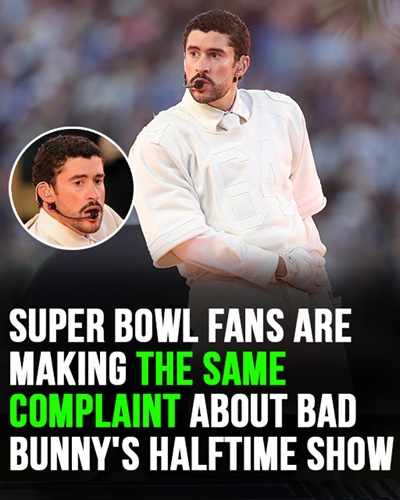
For the 2026 edition, anticipation was particularly high. Apple Music served as the official sponsor, branding the performance as the “Apple Music Super Bowl LX Halftime Show.” What made this event historically significant was the selection of Bad Bunny, the Puerto Rican superstar, as the headlining solo performer.

Benito Antonio Martínez Ocasio, professionally known as Bad Bunny, became the first Latino artist to headline the Super Bowl halftime show alone and the first to present a set predominantly performed in Spanish.
The choice represented a deliberate celebration of multicultural identity and global influence, setting the stage for a performance that would merge artistry, politics, and cultural pride.
Crafting the Performance: Music, Identity, and Cultural Resonance
From the opening notes, it was clear that Bad Bunny’s approach differed from typical halftime shows. Instead of relying solely on pop spectacle or traditional American chart-toppers, the performance was carefully curated to highlight his Puerto Rican heritage and broader Latinx identity.
The show opened with high-energy tracks such as “Tití Me Preguntó” and “Yo Perreo Sola,” instantly establishing a dynamic, festival-like atmosphere.
The rhythms of reggaeton, infused with trap elements, were synchronized with elaborate choreography that involved dozens of dancers, musicians, and percussionists. Every movement, costume, and visual element reinforced the narrative of cultural pride.
The staging was immersive. Gigantic LED screens projected vivid landscapes of Puerto Rico, from tropical coastlines to vibrant cityscapes, while live projections depicted historical and cultural motifs, paying homage to Latin music’s influence across the Americas.
Color schemes emphasized red, white, and blue tones alongside tropical hues, symbolically connecting Latin heritage with broader American identity.
The use of live brass ensembles, maracas, and traditional percussion further anchored the performance in cultural authenticity, blending modern pop with historical resonance.

Bad Bunny also embraced collaboration to elevate the cultural message. Throughout the 13-minute performance, he invited several high-profile guests:
- Lady Gaga appeared for a salsa-infused rendition of her song “Die With a Smile,” merging English and Spanish lyrics. The pairing showcased cross-genre synergy and underscored the performance’s global appeal.
- Ricky Martin, another Puerto Rican icon, performed “Lo Que Le Pasó a Hawaii,” adding depth and historic continuity to the celebration of Latin music’s impact.
- Cameos by stars such as Pedro Pascal, Cardi B, Karol G, Jessica Alba, and Alix Earle punctuated the show, creating moments of surprise and amplifying its cultural significance.
In the final moments, confetti cannons erupted, and a visual montage of flags from North, Central, and South America filled the stadium. Bad Bunny held a football engraved with the phrase, “Together, We Are America,” while the giant screen displayed, “The only thing more powerful than hate is love.”
The symbolism was deliberate: the performance celebrated unity, cultural diversity, and inclusivity, conveying a social message as potent as its musical impact.
Public Reception: Celebration, Criticism, and Debate
Almost immediately, social media platforms and news outlets exploded with commentary. Millions of viewers shared reactions, creating viral conversations that transcended national boundaries. Responses were deeply divided, reflecting broader cultural, linguistic, and political perspectives.
Praise and Cultural Significance
Supporters lauded the show as groundbreaking and authentic. Analysts noted several key aspects:
- Historic Representation: For the first time, a major U.S. cultural stage prominently showcased Latinx identity without compromise, highlighting language, music, and heritage.
- Universality of Emotion: Even viewers who did not speak Spanish reported feeling moved by the energy, emotion, and precision of the performance. Music and movement transcended language barriers, creating a shared experience of joy and celebration.
- Artistic Innovation: Critics of traditional halftime shows noted Bad Bunny’s unique integration of narrative, choreography, and cultural motifs, describing it as a “storytelling performance in motion” rather than a series of hit songs.
Celebrities and musicians amplified the positive reception. Kacey Musgraves remarked that the show made her feel “more proudly American” than many traditional patriotic tributes, while Lady Gaga and Ricky Martin praised the collaboration as a meaningful exchange of artistic and cultural values.
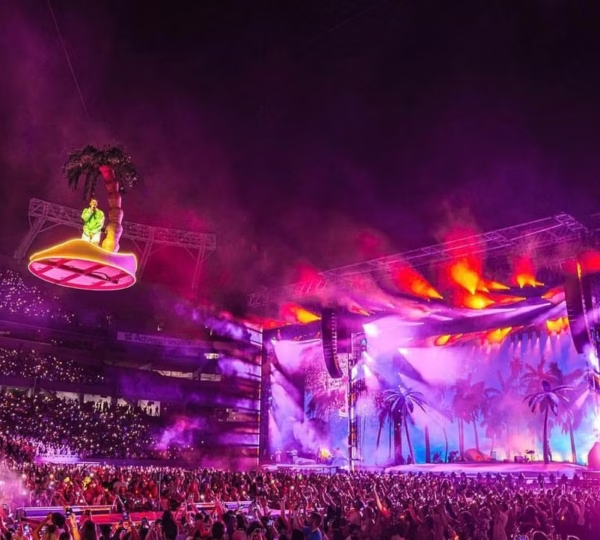
Fans also highlighted the social and emotional impact. Across platforms, hashtags celebrating Latinx pride and cultural authenticity trended worldwide.
Users shared videos, GIFs, and commentaries analyzing choreography, fashion, and set design, emphasizing the show’s layered artistry. Many argued that the halftime performance had expanded the definition of American entertainment by embracing multicultural narratives without erasure.
Criticism and Controversy
Not all responses were positive. A segment of conservative commentators and political figures voiced strong objections:
- Language Barrier: Critics complained that the Spanish-language performance was alienating for English-speaking viewers. They argued that a widely televised national event should prioritize English content.
- Perceived Political Messaging: Some commentators interpreted the show as advancing cultural or political agendas, which they felt were inappropriate for a sporting event broadcast to a mass audience.
- Cultural Backlash: High-profile detractors, including former U.S. President Donald Trump, publicly criticized the show, labeling it as misaligned with their perception of “American values.”
Social media amplified these divisions. While many praised the show’s artistry, critics engaged in heated debates over language, identity, and representation.
Memes, opinion pieces, and viral posts highlighted the polarizing effect of cultural representation on mainstream stages, emphasizing the continuing tension between inclusivity and perceived tradition.
Alternative Programming: Turning Point USA’s “All-American Halftime Show”
Prior to the halftime performance, Turning Point USA (TPUSA), a conservative political nonprofit, announced its own alternative programming, the “All-American Halftime Show.”
Headlined by artists including Kid Rock, Brantley Gilbert, Lee Brice, and Gabby Barrett, the event sought to promote themes of faith, family, and traditional values as a counterpoint to Bad Bunny’s show.
While heavily promoted within conservative circles, viewership numbers ultimately remained modest compared to the official halftime broadcast.
Early reviews cited technical issues, uneven production quality, and less dynamic staging, contributing to the perception that Bad Bunny’s performance dominated both cultural and media attention that evening.
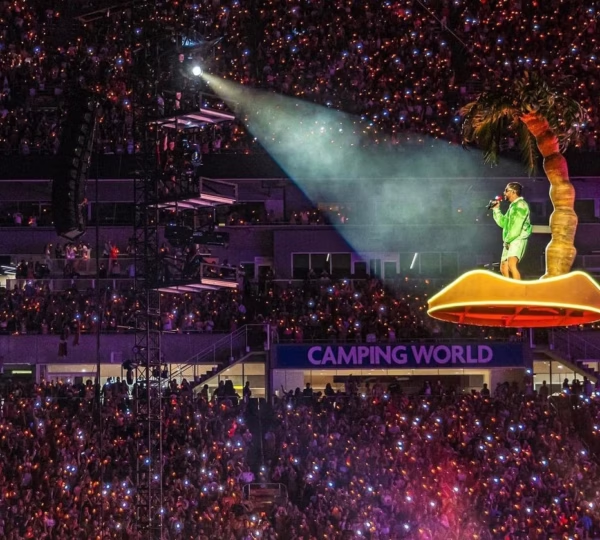
Following Bad Bunny’s groundbreaking Super Bowl LX halftime performance, the conversation extended far beyond the stadium and television broadcast.
While the 13-minute set concluded in a flourish of color, movement, and music, its cultural and social resonance continued to unfold across multiple arenas: media, politics, global pop culture, and fan communities.
Global Media Coverage and Viewership Impact
Immediately after the show, major media outlets worldwide covered the performance extensively. Publications in the United States, Puerto Rico, Latin America, Europe, and Asia highlighted both the artistic innovation and the historic significance of Bad Bunny as the first Latino solo artist to headline the Super Bowl halftime show.
News segments analyzed the fusion of reggaeton, trap, and salsa influences, noting the meticulous choreography, musical arrangement, and guest appearances.
Social media metrics revealed staggering global engagement:
- Twitter/X saw millions of mentions, trending hashtags such as #BadBunnySB, #SuperBowlLX, and #LatinxPride.
- YouTube livestreams and post-event streams accumulated tens of millions of views within 24 hours. Fans shared full clips, fan edits, and reaction videos, many of which trended internationally.
- Platforms like Instagram and TikTok amplified viral moments, including Lady Gaga and Ricky Martin’s collaborative performance segments, Bad Bunny’s iconic football gesture, and confetti-filled finale visuals.
Analysts noted that even viewers unfamiliar with Spanish-language music engaged with the performance through visual storytelling, stagecraft, and the infectious energy of the artists.
Many fans remarked that the emotional impact of music, dance, and spectacle transcended language barriers, highlighting the universality of artistic expression.
Celebrity Responses and Industry Recognition
Following the broadcast, high-profile celebrities publicly praised Bad Bunny’s artistry and vision:
- Lady Gaga described it as an “honor and transformative moment,” noting the creative synergy in blending diverse musical genres and languages.
- Ricky Martin emphasized the historical weight of the performance for Latinx representation, calling it “a proud day for our culture and a global stage for identity.”
- Tom Brady, legendary NFL quarterback, commented on the halftime show’s energy and unifying message, highlighting how music and sports can converge to celebrate diverse communities.
In addition, musicians, cultural critics, and academics weighed in on panels and podcasts. Discussions ranged from musical composition and staging to broader societal implications, including representation, inclusion, and identity politics in mainstream entertainment.

Many applauded Bad Bunny for asserting authenticity without compromising mainstream appeal.
Political and Cultural Controversy
Despite widespread acclaim, the show generated significant criticism from certain political and cultural commentators. The primary points of contention included:
- Language and Accessibility: Critics argued that the heavy Spanish-language focus marginalized English-speaking viewers, questioning whether national broadcasts should prioritize English content.
- Perceived Political Messaging: Certain observers interpreted the messaging around unity, identity, and cultural pride as implicitly political, sparking debates about the role of entertainment in sociopolitical discourse.
- Cultural Conservatism: Public figures, including former U.S. President Donald Trump, condemned the performance as “misaligned with traditional American values,” framing the show as a challenge to conventional norms.
These critiques led to a broader dialogue on cultural pluralism, representation, and what it means to define “American” identity on one of the largest entertainment stages in the world.
Commentators, writers, and academics debated whether national events should reflect the diversity of the population or maintain adherence to traditional expectations.
Turning Point USA’s Alternative: Reception and Limitations
In contrast, Turning Point USA’s “All-American Halftime Show” received modest attention. The event, featuring artists like Kid Rock, Brantley Gilbert, Lee Brice, and Gabby Barrett, emphasized “faith, family, and freedom,” aiming to offer an alternative aligned with conservative cultural values.
Despite substantial promotion, the TPUSA show faced several challenges:
- Technical difficulties affected livestream quality, with early glitches noted on platforms like X (formerly Twitter).
- Viewership numbers remained comparatively low, especially when contrasted with Bad Bunny’s performance, which dominated social media trends globally.
- Critics highlighted uneven production, lower energy choreography, and limited cross-cultural appeal, emphasizing that audience engagement is increasingly shaped by spectacle, inclusivity, and originality.
While the TPUSA performance sparked discussion within conservative media outlets, mainstream attention overwhelmingly focused on Bad Bunny’s historic set, underlining the influence of cultural resonance and media amplification in shaping public perception.
Cultural and Sociopolitical Significance
Bad Bunny’s halftime show transcended music. It became a lens through which global audiences engaged with questions of identity, belonging, and cultural expression. Several key dimensions illustrate this impact:
- Representation and Visibility: By showcasing Latinx culture prominently on a globally televised stage, the performance amplified the visibility of Hispanic and Latino communities, promoting pride and recognition.
- Multilingual Engagement: The choice to perform predominantly in Spanish affirmed the linguistic diversity of America’s population and challenged traditional expectations of English-only media events.
- Unity Through Art: The energy, choreography, and storytelling allowed audiences across languages and geographies to experience shared emotion and narrative, reinforcing the idea that art can bridge cultural divides.
- Cultural Diplomacy: For Puerto Rico and Latinx communities, the performance functioned as a soft cultural diplomacy initiative, promoting heritage, music, and talent on an international platform.
Academics studying media and culture highlighted the show as an example of “mainstream multiculturalism,” demonstrating how entertainment events can affirm diverse identities while achieving mass appeal.
Legacy, Awards, and Enduring Influence
Even after the Super Bowl ended, the performance maintained cultural relevance. Within days, the halftime show was analyzed in music industry reviews, television recaps, and academic discussions. Several aspects of its legacy emerged:
- Record-breaking Engagement: Streaming numbers for the halftime show exceeded tens of millions, with sustained virality across YouTube, TikTok, and Instagram.
- Artistic Innovation Recognition: Critics lauded the integration of live music, cross-genre collaborations, visual storytelling, and choreography as a new benchmark for halftime performances.
- Cultural Education: For many non-Latinx viewers, the performance offered an immersive introduction to Puerto Rican culture and reggaeton/trap music, fostering cross-cultural understanding.
- Influence on Future Performances: Industry insiders noted that subsequent Super Bowl halftime bookings and global music festivals would likely incorporate multilingual and multicultural elements inspired by Bad Bunny’s success.
Music journalists, sociologists, and cultural critics alike emphasized that the show would serve as a reference point for discussions of inclusivity, representation, and artistic authenticity for years to come.
Key Takeaways
Bad Bunny’s Super Bowl LX halftime show represented far more than music or spectacle:
- It was historic — the first solo Latino artist, the first predominantly Spanish-language performance, and a clear statement of cultural pride.
- It sparked global dialogue — audiences, celebrities, and media debated its significance, meaning, and influence on American identity.
- It demonstrated the power of entertainment as cultural messaging — illustrating how music and performance can reflect diversity while inspiring unity.
- It highlighted audience agency — viewers were able to experience multiple perspectives, including TPUSA’s alternate show, emphasizing choice and cultural dialogue.
- It left an enduring legacy in pop culture, setting a new standard for representation, artistry, and storytelling on one of the largest global entertainment stages.
Ultimately, Bad Bunny’s halftime show confirmed that the Super Bowl, while rooted in sports, has evolved into a cultural crucible where identity, artistry, and social conversation intersect.
For millions of viewers worldwide, the performance was not just an entertainment moment but a statement about who America is, who it celebrates, and how cultural expression continues to evolve in a globalized, connected world.
