
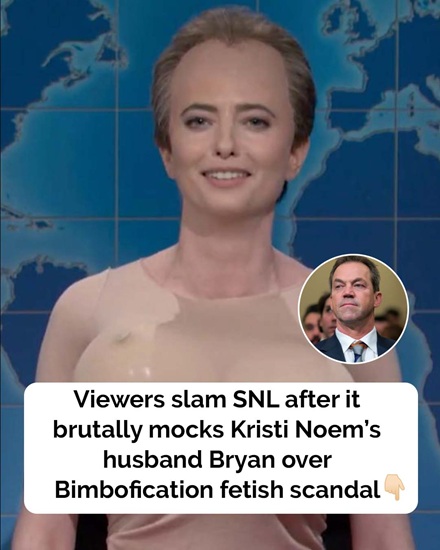
Following widespread reports regarding Bryon Noem, husband of Governor Kristi Noem, Saturday Night Live immediately incorporated the controversy into its April 4 episode.
Drawing attention and sparking debate among viewers across the United States and internationally. The Weekend Update segment addressed Bryon Noem’s alleged online activity in “bimbofication” fetish communities.
A topic that became the focus of public scrutiny after investigative articles suggested he participated in specialized online forums.
Comedian Sarah Sherman portrayed Bryon Noem on the show, wearing tight pink biker shorts and exaggerated prosthetic breasts. Her performance directly referenced reports claiming Bryon engaged in cross-dressing and other activities within adult-themed online communities.
During the sketch, Sherman delivered a line to co-host Michael Che: “My eyes are up here, my n*pples are out here,” adding, “I dare you to kink shame me on national television,” highlighting the show’s satirical approach.
The sketch drew inspiration from media reports, including those by the Daily Mail, which suggested Bryon had shared photos of himself dressed as a woman and expressed an interest in exaggerated breast sizes, mirroring themes within certain fetish subcultures.

It was also reported that Bryon spent significant sums interacting with models and participants in these online communities. While these details circulated widely, it is important to note that Bryon Noem has not publicly confirmed any of the claims.
Kristi Noem was included in the segment as well. Another cast member appeared portraying her holding a rifle, referencing her previous dog-related controversy, and delivered the line, “Did someone say puppies?” creating a layered satirical critique.
Some news outlets reported that Bryon may have used pseudonyms online and allegedly discussed rumors about Kristi’s personal life, including claims regarding her relationship with Corey Lewandowski. These claims have consistently been denied by the parties involved.
Following initial media coverage, a spokesperson for Kristi Noem told the New York Post that she was “devastated” by the revelations. The family reportedly felt “blindsided” and requested privacy as the situation unfolded in the public eye.
Once the SNL sketch aired, social media users quickly shared their opinions, with many expressing disapproval. X (formerly Twitter) became a prominent platform for debate over the ethics and comedic value of the segment.

One commenter wrote, “WOW, SATURDAY NIGHT LIVE FINALLY HIT THE BOTTOM, VERY SAD TIME,” signaling disappointment and questioning whether the show had overstepped in its satirical approach.
Other viewers criticized the perceived hypocrisy of the sketch. A second user stated, “The Left is all about LGBTQ+ and tolerance so cosplay should be okay, no? Liberal views and their total hypocrisy day after day is disgusting.”
Some highlighted the issue of identity and satire. Another comment read, “I thought the left said you aren’t supposed to make fun of people’s ‘true selves,’” questioning whether the segment contradicted progressive values regarding inclusivity and acceptance.
Additional criticism focused on double standards in political satire. A social media user wrote, “Hmm, something about this seems very hypocritical, can’t quite put my finger on it……” suggesting inconsistency in comedic targets.

One user referenced past media coverage of transgender public officials, writing, “Never made fun of ‘Rachel’ Levine or all the other troons during the Biden/Obama era. So brave,” implying selective targeting by SNL.
The segment also sparked broader debate about satire and ethics. Observers discussed whether comedy programs should focus on public actions or policies, rather than personal behaviors, particularly when allegations are unverified or involve private life.
SNL has a long tradition of using real-world events for humor, yet combining sexualized costume elements with sensitive allegations intensified criticism, with some viewers feeling that the sketch crossed a line between satire and ridicule.
Defenders argued the sketch falls within SNL’s remit of social and political commentary. Public figures and their families are often subjects of humor, particularly when allegations are reported widely, though this raises questions about privacy boundaries.
Critics countered that the sketch veered into personal harassment. By emphasizing alleged sexualized behavior, they argued the program risked creating harm and perpetuating stigmas, even if the claims were publicly circulated by media outlets.
Social media reactions revealed generational and ideological divides. Younger audiences tended to share memes and humor, while older or politically engaged viewers expressed concern that the sketch trivialized serious allegations and personal privacy.

Observers noted that the costume design and exaggerated physical traits heightened the sexualized nature of the segment, potentially overshadowing intended commentary on media coverage and political scandal.
Some analysts suggested the sketch might still spark meaningful conversations about online communities and adult subcultures. By satirizing Bryon’s alleged participation, the show indirectly raised awareness about niche internet spaces.
Kristi Noem’s office did not respond specifically to the sketch. Their previous statements emphasized privacy and the emotional impact of allegations, underscoring the family’s desire to handle sensitive matters outside public scrutiny.
The controversy reignited discussions about the responsibilities of late-night comedy. Questions arose regarding whether programs like SNL should prioritize entertainment, social commentary, or the protection of individuals inadvertently caught in political satire.
SNL’s approach reflects broader trends in political comedy, where spouses and family members are often incorporated into sketches. This dynamic raises ethical questions about balancing humor with respect for personal privacy, especially in unverified allegations.

The social media backlash demonstrated the polarizing effect of political and personal satire. Many viewers argued the sketch alienated longtime fans by blending sexualized humor with sensitive accusations, creating divisive opinions about late-night comedy boundaries.
Timing amplified the controversy. By responding immediately to breaking news, SNL emphasized current events, but this rapid reaction may have increased public backlash before allegations were fully confirmed or contextually explored.
The debate highlights challenges for comedy in the digital age. Social media platforms allow rapid public feedback, forcing creators to balance immediacy, comedic intent, and sensitivity to both subjects and audience perception.
Supporters defended the sketch as exercising comedic freedom. They argued public figures’ families are often fair game in satire, particularly when allegations are reported widely, and that the performance sparked relevant conversations about online subcultures.
Detractors emphasized potential long-term consequences. Satirizing alleged private online behavior can influence public perception and reputational outcomes, even if the accuracy of reports is unverified, raising ethical considerations for late-night comedy.
The sketch prompted wider reflections on comedy’s role in society. Balancing entertainment, social commentary, and personal privacy remains an ongoing challenge, especially when allegations involve sexualized content or potentially damaging claims about public figures.
Overall, SNL’s portrayal of Bryon and Kristi Noem prompted mixed reactions. Viewers were divided over whether the sketch was humorous, ethically appropriate, or respectful of personal boundaries, reflecting broader tensions in political satire today.
The controversy highlights the complexities of late-night humor. While comedy seeks to engage audiences with current events, targeting personal behaviors, particularly unverified sexualized allegations, raises questions about the limits of public satire.
Ultimately, the SNL sketch sparked discussion on privacy, satire, and media responsibility. By blending political commentary with personal allegations, it showcased the challenges creators face when navigating public, private, and sensitive content in comedy.
This situation exemplifies the broader tension between audience expectation, freedom of expression, and ethical satire. Late-night shows continue to navigate these challenges while balancing humor, relevance, and social responsibility.
The online response underscores how modern audiences actively participate in evaluating comedy. Social media platforms provide immediate feedback, reflecting diverse opinions about appropriateness, fairness, and cultural sensitivity in political humor.
Kristi Noem’s family, meanwhile, continues to request privacy amid ongoing public scrutiny. Their experience illustrates the emotional impact of media coverage and satirical portrayals on individuals connected to public figures.
In conclusion, the SNL sketch about Bryon and Kristi Noem demonstrates the interplay between satire, ethics, and public perception. Reactions illustrate the challenges of addressing sensitive allegations while maintaining comedic freedom in a highly connected media environment.
