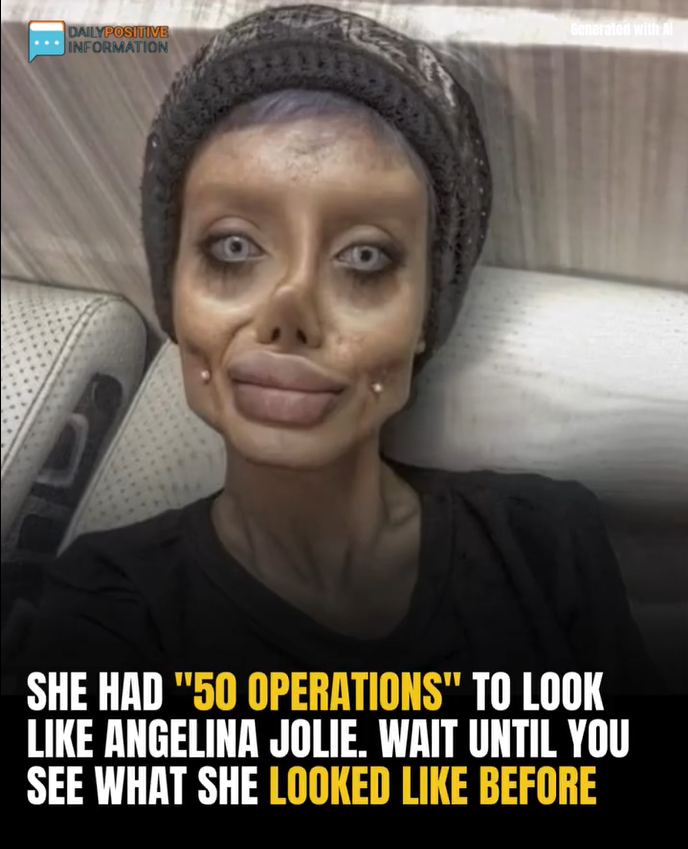
Sahar Tabar, born Fatemeh Khishvand in Iran, emerged as a viral figure in the Middle East after a series of striking images circulated online. She quickly captured global attention due to her heavily altered appearance.
Her drastic transformation, reportedly involving numerous surgical procedures, appeared designed to create an uncanny resemblance to Hollywood actress Angelina Jolie.
These changes included alterations to her lips, nose, and cheekbones, provoking widespread curiosity and controversy. Social media followers nicknamed her “Iran’s Zombie Angelina Jolie,” a moniker referencing both her unique facial appearance and her growing notoriety online.
At the height of her popularity, she amassed nearly four million Instagram followers. Though often assumed to be the result of dozens of surgical operations, it remains unclear how many procedures were real and how many images were digitally manipulated or edited for dramatic effect.
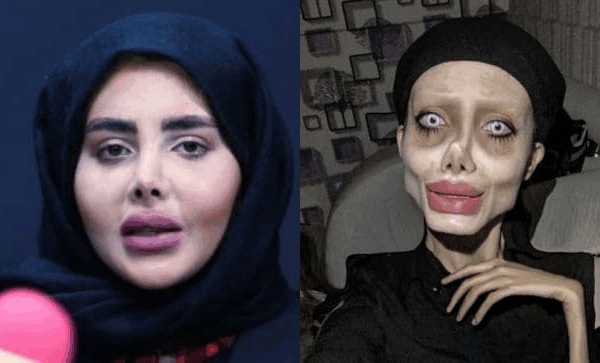
Tabar herself later clarified that her online persona was largely performative, blending makeup, photo editing, and creative expression to create a striking and unusual visual aesthetic that drew attention and provoked conversation.
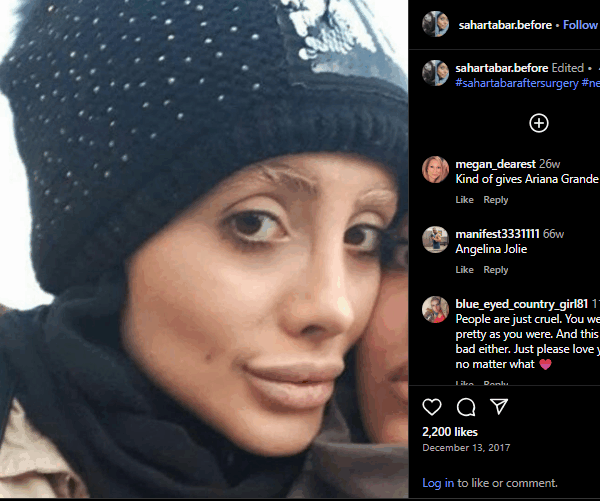
Prior to her rise, Sahar was a young artist interested in self-expression and pop culture, exploring fashion, makeup, and digital media as tools to craft a distinctive identity that stood out online.
Her social media accounts, including her old Twitter handle @sahartabar_official, became platforms for sharing her photos, allowing her to experiment with unconventional aesthetics and connect with a global audience fascinated by her appearance.
Despite her online persona, Tabar emphasized that these images did not reflect her true face, often painting herself in exaggerated or humorous ways for artistic effect, intentionally creating an over-the-top caricature rather than a literal transformation.
In interviews, including with the Russian outlet Sputnik, she explained that her creative choices were meant as self-expression. She denied attempting to directly mimic Angelina Jolie, stating that she sought to become a muse in her own right.
Sahar clarified that her appearance drew inspiration not only from celebrities but also from art and pop culture. She cited influences like exaggerated animation, theatrical makeup, and gothic aesthetics as part of her evolving style.
Her online notoriety, however, brought legal scrutiny. In October 2019, Iranian authorities arrested Tabar, citing charges including violating the country’s dress code, influencing youth negatively, and alleged financial improprieties, as well as purportedly obscene online content.
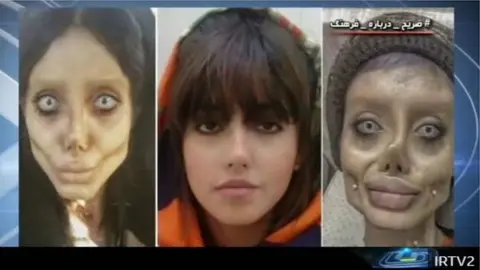
The arrest was widely reported internationally, highlighting Iran’s strict regulations regarding public decency, online expression, and the complex intersection of social media with the country’s cultural norms and laws.
Tabar was detained and sent to Qarchak Prison, one of Iran’s most notorious women’s correctional facilities, known for harsh conditions and overcrowding, amplifying concern among human rights activists and international observers.
Activists, including Masih Alinejad, publicly advocated for her release, appealing to global audiences and even directly calling on Angelina Jolie to lend support and attention to Sahar’s situation.
Alinejad highlighted the severity of Tabar’s imprisonment, emphasizing her youth—only 19 at the time—and the disproportionate nature of the sentence, portraying it as emblematic of broader issues in Iran regarding freedom of expression and online culture.
The case drew parallels with other high-profile incidents in Iran, such as the treatment of women arrested for violating hijab regulations, including Mahsa Amini, situating Tabar’s imprisonment within ongoing debates about personal freedoms and gender rights.
Tabar’s mother reportedly struggled with her daughter’s detention, sharing that she cried daily and feared for her daughter’s well-being while incarcerated under difficult conditions, adding a deeply human dimension to the international discourse.
During her imprisonment, Tabar faced intense public scrutiny, both domestically and internationally, and her case became a focal point in discussions of how social media personalities can be caught between global attention and local legal constraints.
Her sentence, reportedly ten years in prison, shocked the international community and sparked debate regarding the proportionality of penalties for young individuals involved in online expression or unconventional self-representation.
In interviews after her release, Tabar expressed regret over some of her earlier online behavior but also reaffirmed her commitment to artistic self-expression, clarifying that her viral images were meant as exaggerated performance rather than a literal attempt to mimic celebrities.
She highlighted that social media provided an accessible platform for creativity, particularly in countries with limited avenues for youth expression, noting that her intent was artistic, performative, and playful rather than malicious or criminal.
Following fourteen months in prison, Sahar Tabar was released, a decision welcomed by family, friends, and international supporters who had campaigned for her freedom, highlighting her youth, artistic intent, and the disproportionality of her punishment.
Her release prompted reflection on the broader implications of online fame, viral content, and governmental regulation in Iran, illustrating how social media can rapidly amplify both admiration and legal consequences.
Tabar has since returned to public life with a more cautious approach, balancing her artistic expression with the understanding of legal and cultural boundaries in her home country, aiming to maintain creativity responsibly.
She continues to engage with fans on new platforms, exploring makeup artistry, fashion, and digital expression in ways that showcase her personality while reducing the risk of controversy that led to her imprisonment.
The international media coverage of Tabar’s story highlighted the complexities of youth culture, online celebrity, and the global fascination with unconventional beauty, particularly when it intersects with restrictive legal environments.
Her viral nickname, “Zombie Angelina Jolie,” while sensational, obscured the deeper narrative of a young artist navigating self-expression, censorship, and the pressures of worldwide attention on social media platforms.
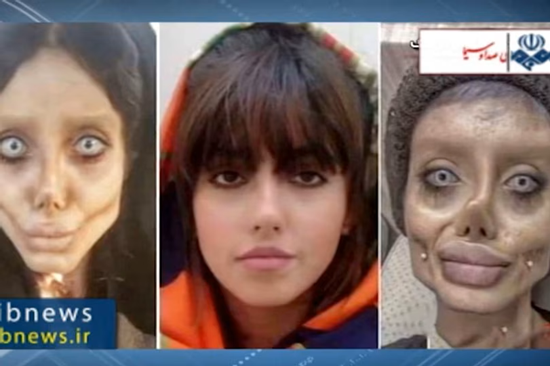
In interviews, Tabar explained that humor, exaggeration, and theatrical makeup were central to her work, emphasizing that she was creating a persona rather than attempting to become another individual or celebrity.
Observers noted that her story reflects larger cultural dynamics in Iran, where global pop culture meets local social norms, creating tension for young people experimenting with identity, appearance, and digital media.
International human rights groups drew attention to her imprisonment as an example of the risks faced by young women expressing themselves online in restrictive societies, advocating for reform and more proportional legal responses.
Tabar’s case remains a touchstone for discussions about online personas, viral fame, and the balance between personal expression and legal frameworks in conservative cultural contexts.
Her narrative also emphasizes the performative and constructed nature of social media content, reminding audiences that not all viral appearances are authentic or literal, but often involve layers of artistry and digital manipulation.
Following her release, she has used interviews and social media to explain the artistic intention behind her work, seeking to clarify misconceptions and assert her identity as a creator rather than a mere imitator of celebrities.
Tabar’s evolution illustrates the complex interplay between fame, legal risk, cultural expectation, and artistic freedom, particularly for young women navigating high-visibility platforms in countries with strict regulations.
Her story has inspired debate about the responsibilities of social media users, the impact of viral culture on mental health and legal exposure, and the ways in which young influencers can both benefit and suffer from sudden global attention.
While her case is unique, it resonates broadly with questions about self-expression, personal identity, and the challenges of maintaining agency in a world where digital images can be shared, scrutinized, and misinterpreted instantly.
Sahar Tabar now represents a more measured approach to creative work, balancing artistic expression, humor, and audience engagement with an awareness of the personal and legal stakes involved.
Her return to public attention is accompanied by reflection, learning, and advocacy for safe, responsible creative practices, demonstrating resilience after a period of intense legal and social pressure.
The attention she received from the global community highlights how youth culture in the Middle East is increasingly influenced by social media, aesthetics, and performative identity, intersecting with traditional norms in complex ways.
While initially sensationalized as “Zombie Angelina Jolie,” Tabar’s broader story reflects artistry, self-discovery, and the consequences of online performance, offering lessons about identity, fame, and cultural negotiation in a globalized digital environment.
Her experiences serve as a case study in the power and risk of viral content, illustrating how digital personas can rapidly alter public perception, attract global attention, and provoke real-world consequences.
Despite her imprisonment, Tabar continues to inspire debate and discussion about personal freedom, online creativity, and the responsibilities of both creators and audiences in the social media era.
In interviews, she repeatedly emphasizes that the images posted online were part of a deliberate artistic process, challenging audiences to look beyond the surface and understand her work as expressive rather than literal.
The story of Sahar Tabar reflects the challenges faced by young women globally who use social media to explore identity, beauty, and art in ways that may conflict with societal expectations or legal constraints.
Activists like Masih Alinejad have used her case to call for systemic reform and to highlight the importance of protecting young individuals from disproportionate legal responses to self-expression and online creativity.
Tabar’s viral fame, legal troubles, and eventual release highlight both the risks and opportunities inherent in digital platforms, where visibility can bring both admiration and peril simultaneously.
Today, she continues to explore art and self-expression while emphasizing safety, legality, and awareness, seeking to inspire creativity in others without repeating the missteps that led to her imprisonment.
Her narrative has become emblematic of the tension between globalized youth culture and local cultural restrictions, demonstrating how social media can amplify both opportunity and risk for young creators.
Sahar Tabar’s story ultimately serves as a cautionary tale and an inspirational narrative, showing how creativity, resilience, and personal growth can emerge from challenging circumstances and restrictive environments.