
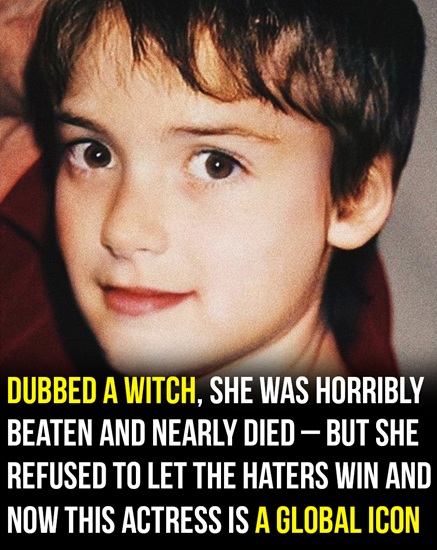
Winona Ryder is a name deeply woven into the fabric of modern Hollywood. To many, she represents the unmistakable face of 1990s cinema — a generation-defining actress whose performances embodied vulnerability, intelligence, and emotional depth.
Yet behind the success, acclaim, and cultural influence lies a far more complex story, one shaped by early trauma, personal loss, and resilience forged long before fame arrived.
Few fans realize how close Ryder’s journey came to being derailed entirely. Her childhood was marked by fear, violence, and a near-fatal accident — experiences that would quietly influence both her personal life and artistic choices.
Understanding Winona Ryder’s legacy requires looking beyond the red carpets and box office numbers, into the formative years that shaped her strength and sensitivity as an artist.
Early Life: A Childhood Far From Hollywood

Winona Ryder was born Winona Laura Horowitz on October 29, 1971, in Winona County, Minnesota, a place she was named after but never truly called home. Her upbringing was far removed from the glamour of Hollywood. Instead, it unfolded in an intellectually rich but emotionally complex environment shaped by history, art, and trauma.
Her parents, Cynthia Palmer (née Istas) and Michael D. Horowitz, were deeply involved in literature and creative culture. Cynthia worked as a video producer, editor, and author, while Michael was an author, editor, publisher, and rare book dealer. Their household valued books, storytelling, and intellectual curiosity over conventional material success.
Ryder grew up surrounded by influential thinkers, writers, and artists — including close family friend Timothy Leary, the renowned psychologist and counterculture figure. This unconventional environment encouraged creativity and critical thinking but also exposed Ryder to mature ideas and historical realities at a young age.
A Family History Shaped by the Holocaust
One of the most profound influences on Ryder’s childhood was her family’s connection to the Holocaust and World War II. Both sides of her family carried deep scars from this period of history.
Her maternal grandfather died while fighting against Nazi forces during World War II, while members of her paternal family were killed in Nazi concentration camps. These stories were not abstract historical lessons for Ryder — they were personal, intimate, and emotionally heavy.
In later interviews, Ryder explained how overhearing conversations about concentration camps and wartime atrocities instilled a deep and lasting fear. She became terrified of separation from her parents and developed an early awareness of human cruelty and loss.
Reflecting on this in a 2020 interview, Ryder explained that while learning the truth was painful, she was ultimately grateful her parents did not shield her entirely from reality. The experience shaped her empathy and sense of moral responsibility, qualities that would later define her on-screen presence.
She spent long hours in libraries, particularly drawn to books about history and the Holocaust, attempting to understand the legacy of suffering that had touched her family so deeply.

An Isolated Childhood and Early Sensitivity
Ryder’s childhood was also marked by geographic and social isolation. For a time, her family lived in a remote area of Northern California without electricity, reinforcing her sense of being different from her peers.
This isolation contributed to her introspective nature. Ryder has often described herself as a shy, sensitive child who felt more comfortable in books and imagination than in social settings. While this sensitivity later became a strength as an actress, it made her particularly vulnerable during her school years.
The Near-Drowning Incident That Changed Her Life
In 1983, at the age of 12, Ryder enrolled at the American Conservatory Theater in San Francisco, marking the beginning of her formal acting education. That same year, she experienced a traumatic event that nearly ended her life.
While swimming in the ocean, Ryder was caught in dangerous conditions and nearly drowned. She later revealed that when she was pulled from the water, she did not have a pulse. The incident left her deeply traumatized and resulted in a lifelong fear of water.
This fear — clinically understood as aquaphobia — followed Ryder into adulthood and became a significant challenge in her professional career. Unlike many childhood fears that fade with time, this one remained persistent.
Years later, during the filming of Alien: Resurrection (1997), Ryder was required to perform underwater scenes in a massive tank approximately 30 feet deep. The scenes were filmed without goggles or breathing masks, forcing her to confront the very fear rooted in her near-death experience.
To prepare, Ryder underwent extensive training and rehearsals. Her ability to complete the scenes safely stands as a testament to her determination and willingness to face deeply ingrained fears for her craft.
Bullying, Violence, and Gender-Based Harassment
Perhaps one of the most painful chapters of Ryder’s early life was her experience with bullying and physical violence at school.
Her short hair, slight frame, and unconventional appearance led classmates to mistakenly assume she was a boy. What began as teasing quickly escalated into harassment and physical abuse.
On her third day at a new school, Ryder was violently attacked by classmates. She was slammed into a locker, kicked repeatedly, and sustained serious injuries, including a fractured rib and six stitches to her head.

Despite the severity of the assault, Ryder later revealed that she was punished by school authorities rather than supported — a deeply damaging experience that reinforced her sense of isolation and injustice.
Recalling the incident years later, she explained that she repeatedly insisted she was a girl, but the violence continued regardless. The lack of institutional protection left lasting emotional scars.
Fame Did Not End the Bullying
Ironically, Ryder’s rise to fame did not immediately bring relief. After starring in Beetlejuice (1988) at age 16, she hoped success might change how she was treated at school.
Instead, the bullying intensified. Classmates mocked her role, calling her “a witch” and using her visibility as a reason to target her further. The experience reinforced the idea that external success does not automatically shield individuals from cruelty — especially during adolescence.
These experiences deeply influenced Ryder’s understanding of alienation, vulnerability, and emotional pain — themes that would become central to many of her most memorable performances.
Resilience Formed in Silence
Despite enduring violence, fear, and isolation, Ryder did not retreat from the world. Instead, she quietly developed resilience. Acting became both an escape and a means of expression — a way to channel fear, sadness, and confusion into something meaningful.
By the time she entered Hollywood, Ryder already possessed emotional depth far beyond her years. Her ability to portray outsiders, misunderstood characters, and emotionally complex women was not learned in acting classes alone — it was shaped by lived experience. Breaking Into Hollywood: An Unconventional Star Emerges
Winona Ryder’s entry into Hollywood was anything but typical. Unlike many young actors molded into conventional leading roles, Ryder’s appeal lay in her difference. Her intelligence, introspection, and understated emotional presence set her apart in an industry that often favored extroverted charisma.
Her breakout role in Tim Burton’s Beetlejuice (1988) immediately positioned her as a distinctive new voice in American cinema. As Lydia Deetz, Ryder portrayed a character who was withdrawn, perceptive, and emotionally complex — qualities that mirrored aspects of her own personality. The film became a cult classic, and Ryder’s performance resonated deeply with audiences who felt alienated or misunderstood.
This early success was not merely commercial; it established Ryder as an actress willing to inhabit unconventional characters, often on the fringes of society.
Defining a Generation: The Rise of a 1990s Icon
Following Beetlejuice, Ryder’s career accelerated rapidly. In Heathers (1989), she starred in a dark satire of high school cruelty, social hierarchy, and teenage despair. Though the film initially struggled at the box office, it later achieved iconic status, praised for its sharp critique of adolescent conformity.

Ryder’s portrayal of Veronica Sawyer showcased her ability to balance cynicism with vulnerability — a performance that would influence countless coming-of-age films in the decades that followed.
Her collaboration with Tim Burton continued in Edward Scissorhands (1990), a visually poetic film that further solidified her reputation. As Kim Boggs, Ryder brought warmth and emotional depth to a story about isolation, difference, and acceptance. The film was both a critical and commercial success, and Ryder’s performance helped anchor its emotional core.
By the early 1990s, she had become one of Hollywood’s most sought-after young actresses — not as a traditional starlet, but as a symbol of emotional authenticity.
Critical Acclaim and Artistic Maturity
Ryder’s transition from teen icon to serious dramatic actress was marked by a series of critically acclaimed roles.
In The Age of Innocence (1993), directed by Martin Scorsese, she delivered a restrained yet powerful performance that earned her an Academy Award nomination for Best Supporting Actress. The role demonstrated her ability to thrive in period dramas and complex emotional narratives.
The following year, she starred in Little Women (1994) as Jo March — a role that resonated deeply with audiences and critics alike. Her portrayal earned her a second consecutive Academy Award nomination, this time for Best Actress, affirming her status as one of the most talented performers of her generation.
These performances established Ryder not merely as a popular actress, but as a respected artist with remarkable range and depth.
Mental Health Behind the Spotlight
Despite her professional success, Ryder’s personal life was increasingly marked by psychological strain. She has spoken openly about struggling with anxiety and depression, conditions rooted in her early trauma and exacerbated by the pressures of fame.
In 1990, Ryder made the difficult decision to withdraw from The Godfather Part III in order to seek psychiatric treatment. At a time when mental health was rarely discussed openly — particularly among young celebrities — her choice was both courageous and misunderstood.
Later roles, such as Girl, Interrupted (1999), forced her to confront her own fears directly. Ryder admitted that portraying characters consumed by anxiety was emotionally challenging, as it mirrored her internal struggles. Rather than avoiding such roles, she approached them with honesty, using acting as a form of expression and catharsis.
Her openness about mental health has since been widely praised, especially as public discourse around emotional well-being has evolved.
Romance, Media Obsession, and Public Scrutiny
Ryder’s personal life became a frequent subject of media fascination during the 1990s, particularly her relationship with actor Johnny Depp. Their romance, which began when Ryder was just 17, was intensely scrutinized by tabloids.
The pair became one of Hollywood’s most talked-about couples, with their engagement and subsequent breakup receiving constant coverage. Depp’s infamous “Winona Forever” tattoo — later altered after their separation — became emblematic of the era’s obsession with celebrity relationships.

In later interviews, Ryder reflected on how the media attention distorted her self-image and intensified emotional stress. The experience highlighted the vulnerability of young actors navigating fame under relentless public observation.
Challenging Work Environments and Industry Realities
Ryder has also spoken candidly about difficult experiences on film sets. During the production of Bram Stoker’s Dracula (1992), she endured intense direction from Francis Ford Coppola, who reportedly used harsh methods to elicit emotional responses.
While such practices were more normalized at the time, Ryder’s reflections have contributed to ongoing conversations about ethical conduct in filmmaking and the importance of psychological safety for performers.
Support from colleagues, including actors like Keanu Reeves, played a crucial role in helping her navigate these environments. Ryder has consistently emphasized the importance of solidarity and mentorship within the industry.
Stalking, Privacy, and the Dark Side of Fame
As her fame grew, Ryder faced multiple stalking incidents — a reality that underscored the dangers of celebrity culture. These encounters ranged from obsessive letters to individuals appearing uninvited at filming locations.
While Ryder has sometimes addressed these experiences with restraint or humor, they represent a serious aspect of fame that often goes unacknowledged: the erosion of personal safety and privacy.
These experiences further contributed to her decision to step back from the public eye.
Hiatus and Quiet Reinvention
In 2001, Ryder withdrew from Hollywood, entering a four-year hiatus that allowed her to focus on recovery, reflection, and personal growth. Unlike many high-profile comebacks, her return was gradual and deliberate.
She accepted smaller roles, independent projects, and character-driven performances, prioritizing creative fulfillment over visibility. This period allowed Ryder to redefine her relationship with acting and fame on her own terms.
A Triumphant Return: Stranger Things
Ryder’s career revival reached a new peak with her role as Joyce Byers in Netflix’s Stranger Things. The series reintroduced her to a global audience and showcased her emotional intensity and authenticity.
Her portrayal of a mother grappling with fear, grief, and unwavering determination resonated deeply with viewers. Critics praised her performance as one of the show’s emotional anchors, and many described her casting as inspired.
For a new generation, Ryder became not a nostalgic figure, but a powerful, contemporary presence.
Advocacy, Honesty, and Cultural Impact
Throughout her career, Ryder has remained vocal about mental health, trauma, and resilience. Her willingness to speak openly about anxiety and depression has helped normalize conversations that were once stigmatized.
She has become a quiet advocate — not through grand speeches, but through honesty and example.
Conclusion: A Life Defined by Endurance
Winona Ryder’s journey is not simply a Hollywood success story. It is a narrative of survival, emotional intelligence, and artistic integrity.
From a bullied child haunted by fear, to an actress who defined a generation, Ryder’s life illustrates that adversity can shape — but does not have to destroy — one’s future.
Her legacy lies not only in iconic films, but in the courage to remain vulnerable in an industry that often demands armor.
Winona Ryder endures because she reflects something deeply human: the ability to carry pain, transform it into art, and continue forward with quiet strength.
