
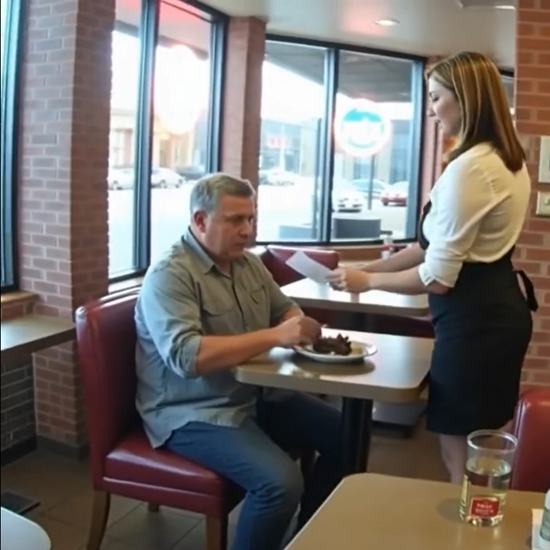
The dim glow of the steakhouse’s interior cast long shadows across polished wood floors as Daniel Whitmore entered, the scent of sizzling steaks and seared garlic thick in the air.
His steps toward the “EMPLOYEES ONLY” door were deliberate, echoing in the near-empty corridor, as tension tightened around his chest.
A small note burned a figurative hole in his pocket. Its six words carried a weight that belied their brevity, compelling him forward.
Daniel understood the power of truth hidden beneath corporate veneer, a weight heavier than any balance sheet.
He paused momentarily, looking back at the dining room. Patrons chatted over wine and plates, completely unaware of the storm brewing behind the kitchen doors. The energy seemed light, yet the staff’s quiet strain whispered through the air.

Bryce, the restaurant manager, lingered near the host stand, seemingly engrossed with familiar diners. But Daniel, experienced in reading people, recognized the illusion of calm. Bryce’s intimidation tactics and selective charm had long held the staff in subtle fear.
Daniel inhaled steadily and stepped through the back door. Stainless steel appliances gleamed under fluorescent lights, and the hum of refrigeration filled the quiet corridor. The kitchen’s usual clatter felt distant, almost muffled, as he moved toward the end where Jenna waited.
Her figure emerged from the glow, tense yet composed. Relief flashed across her eyes as she saw him approach, accompanied by the quiet weight of her responsibility. “Mr. Whitmore,” she said, her voice soft yet determined, “I didn’t know who else to trust.”
Daniel shook his head slightly, offering reassurance. “It’s Daniel. Thank you for reaching out. Tell me everything. I need to know what’s happening here.” His voice carried both authority and the patience that inspired confidence.
Jenna’s gaze flickered toward the kitchen door before returning. “It’s Bryce. He manipulates the staff, cuts corners that affect service, and pressures us to maintain perfection for corporate appearances. Everyone is afraid to speak because he appears untouchable.”

Daniel’s mind processed her words carefully. The façade of a smoothly run restaurant was crumbling, leaving stressed employees and overlooked failures hidden behind glossy reports and satisfied diners’ smiles. Human cost had gone unnoticed for too long.
“And the rest of the team?” he asked cautiously, wanting the full picture without adding fear or pressure.
“They’re dedicated,” Jenna admitted softly. “But exhausted. Most of us can’t risk confrontation. Still, some of us hope for change, even if it’s only a fragile hope, barely visible beneath the weight of daily stress.”
Daniel felt that hope resonate. It mirrored his own beginnings, the spark that turned a single grill into a chain of thriving steakhouses. He knew the team’s dignity and potential could not be allowed to wither under Bryce’s unchecked authority.
“Thank you for telling me,” he said, voice firm. “I’ll handle this carefully. We’ll restore integrity, respect, and professionalism. No one should feel fear in their own workplace, especially here.”
A slight smile broke through Jenna’s tension. “I knew you would act, Daniel. I had to believe someone would listen and take it seriously.”
Returning to the dining room, Daniel’s mind raced with strategy. Subtle investigations, private conversations, and careful oversight would be required. He needed to correct issues while maintaining staff confidence, ensuring the cultural shift could endure.
Observing from the corner, he noted the strain on employees’ faces, the subtle nervous glances, the quiet exhaustion hidden behind courteous smiles. Each detail strengthened his resolve to act decisively, yet thoughtfully.

He reviewed each team member mentally—their talents, vulnerabilities, and contributions—all exploited under Bryce’s management. Daniel considered how to rebuild morale, restore dignity, and protect staff from further abuse while maintaining operational efficiency.
Next, he began discreetly collecting staff feedback. Conversations were quiet, measured, and confidential, revealing the full scope of Bryce’s mismanagement, including unrealistic expectations, verbal intimidation, and policies bending staff morale toward burnout.
Jenna proved invaluable. Her knowledge of schedules, interpersonal dynamics, and Bryce’s patterns provided Daniel with a roadmap for discreet interventions that would protect employees while addressing systemic issues.
Within days, small but meaningful improvements took shape. Shift schedules were optimized, accountability protocols strengthened, and staff received clear, fair instructions. These subtle changes began to restore confidence and ease tension.
Daniel also communicated with corporate, framing issues as operational improvements rather than personal criticisms. This professional approach protected the staff while demonstrating leadership and a commitment to workplace integrity.
He established confidential channels for staff feedback, allowing employees to voice concerns safely. Trust grew incrementally, bolstering morale and reinforcing the principle that their voices mattered and actions would follow.

Daniel’s presence gradually transformed the kitchen. Collaboration returned, energy lifted, and small gestures of teamwork emerged. Even the simplest acknowledgments began rebuilding a culture of pride and mutual respect.
Jenna, encouraged by the changes, began mentoring newer employees and reinforcing positive behavior, demonstrating that leadership could be collaborative, compassionate, and effective without intimidation.
When Daniel confronted Bryce directly, he relied on documented evidence and staff accounts. The conversation was firm yet fair, focused on behavior, operations, and accountability, leaving Bryce no room to manipulate or excuse his actions.
Bryce’s defensiveness was predictable. Daniel remained composed, emphasizing policies, employee welfare, and operational standards. Clear expectations were set, ensuring that professional improvements would be sustained without fear of retaliation.
Over the following week, Daniel continued oversight and monitoring. He rewarded staff initiative, corrected lapses discreetly, and ensured the cultural improvements became permanent fixtures rather than temporary adjustments.
Gradually, morale visibly improved. Staff communicated openly, teamwork strengthened, and genuine pride in their work replaced the previous atmosphere of fear and tension. The transformation was tangible, immediate, and deeply satisfying.

Patrons noticed subtle differences too. Service was smoother, energy lighter, and the previously unnoticed stress seemed lifted. The restaurant no longer radiated quiet anxiety but professionalism, respect, and quiet confidence.
Finally, Daniel addressed the staff collectively, emphasizing accountability, respect, communication, and pride in their work. His words inspired unity, hope, and renewed commitment to maintaining Whitmore’s Chop House as a place of excellence and dignity.
Applause followed quietly, a mixture of relief, gratitude, and cautious optimism. The atmosphere was transformed, proving that leadership, patience, and attentive action could change workplace culture dramatically and sustainably.
Outside, the evening air was cool and fragrant, carrying hints of asphalt, distant pine, and the fried aroma from earlier shifts. It symbolized opportunity, fresh beginnings, and the reward of attentive leadership.
Daniel strode to his truck, contemplative yet optimistic. The restaurant was no longer a site of fear but a model of collaboration, respect, and staff empowerment. Hope had returned, nurtured by careful observation and decisive, empathetic action.
Fort Smith witnessed transformation not through corporate mandates but through hands-on, compassionate leadership. Dignity was restored, teamwork renewed, and the foundation for a thriving, respectful workplace secured for the long term.
As he started the engine, Daniel glanced back. Inside, laughter, conversation, and efficient service continued, the restaurant alive with energy. Whitmore’s Chop House now embodied what he had always envisioned: pride, professionalism, and hope restored.
