
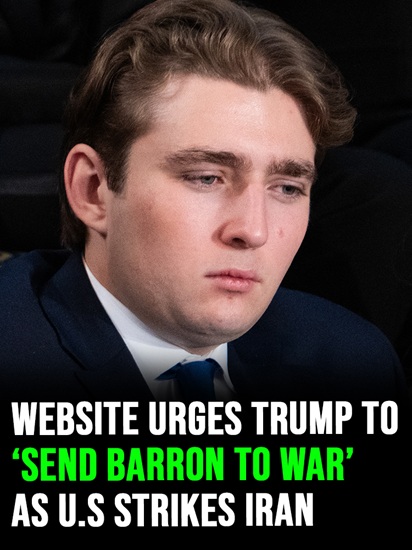
In early March 2026, a surprising social media trend captured the attention of users in the United States and around the world: the name Barron Trump — the youngest son of former U.S. President Donald Trump.
Began appearing in thousands of posts, tweets, memes, and online discussions. Unlike other viral moments involving public figures, this trend did not stem from an official political statement, military involvement, or public comment made by Barron Trump himself.
Instead, the attention arose from a satirical website that quickly went viral in the wake of a major international event: the United States and Israel’s coordinated military strikes against Iran, widely reported in global media as occurring on February 28, 2026.
The website, DraftBarronTrump.com, was created as a parody to mock the concept of political accountability, leadership, and the idea of who bears the real risks of war. Its sudden popularity reflects a broader pattern in social media culture: the use of humor, irony, and satire to engage with complex political events, especially in moments of heightened public anxiety over conflict and international security.
This trend highlights not only the creative ways internet communities process serious news but also the persistent public concern over who is expected to bear the human cost of geopolitical decisions.

Origins of the Satirical Website
DraftBarronTrump.com was launched on the very day that the military strikes against Iranian targets began. The website’s timing was crucial: it appeared while media outlets were covering the unfolding operations, and social media was rapidly amplifying news, commentary, and analysis. The site was created by Toby Morton, a comedy writer and satirist with a history of political and social commentary. Morton is known for his work on shows such as South Park and MADtv, as well as for creating parody websites that blend humor with sharp cultural criticism.
Morton’s stated intention, as shared in interviews with media outlets after the site went viral, was not to encourage any real-world action involving the Trump family but to use exaggeration and absurdity as a lens for public discussion. By creating a satirical call to “draft” Barron Trump into military service, the website deliberately positioned a private, underage family member of a former president into the center of a serious geopolitical debate — an ironic inversion meant to highlight perceived inequalities in accountability among political elites.
Structure and Content of DraftBarronTrump.com
The landing page of DraftBarronTrump.com is designed to mimic patriotic petitions or official calls to service, but the tone is unmistakably comedic and hyperbolic. The website uses the aesthetics of serious political campaigns — bold type, visually striking headers, and quotes formatted like endorsements — but pairs them with deliberately ridiculous content. Examples of the text include:
- “America is strong because its leaders are strong. President Trump proves that every day.”
- “Naturally, his son Barron is more than ready to defend the country his father so boldly commands.”
- “Service is honor. Strength is inherited. Dog Bless Barron.”
These lines intentionally mirror familiar political rhetoric while pushing it to an exaggerated extreme, highlighting the absurdity of imagining that a 19-year-old private citizen — and the son of a wealthy, prominent political family — should be called to serve in active combat.
Additionally, the website includes faux testimonials and quotes attributed to Barron’s older siblings and other fictionalized members of the Trump family. These fabricated endorsements use humor and irony to further underline the satirical intent, creating a scenario that is deliberately implausible yet strikingly memorable for online audiences. The combination of familiar political language, family-oriented exaggeration, and over-the-top patriotism makes the website an example of modern digital satire that is designed to provoke reflection as much as laughter.
Social Media Reaction: The Rise of #SendBarron
Almost immediately after the site went live, the hashtag #SendBarron began trending across platforms including X (formerly Twitter), Instagram, Facebook, Reddit, and Threads. Users engaged with the concept in multiple ways, ranging from purely humorous content to political commentary. Memes quickly proliferated, featuring Barron Trump in military attire, humorous captions, and exaggerated depictions of “frontline service.”
Some of the most common types of posts included:
- Irony and Humor — Users created memes and images that emphasized the ridiculousness of drafting a wealthy, underage political figure. These often included exaggerated depictions of Barron in combat gear, or humorous “military manuals” for training him.
- Political Commentary — Other users used the hashtag to highlight perceived inequalities in military service and leadership accountability. For instance, posts compared historical instances of draft avoidance by wealthy or politically connected individuals to the current expectation that ordinary citizens bear the risks of war.
- Speculative Sarcasm About Draft and Eligibility — While the U.S. does not have an active military draft, some social media posts used sarcasm to debate whether Barron Trump would qualify for selective service, taking into account his age, height (reportedly 6’9”), and physical eligibility. Several posts noted that his exceptional height could even make him ineligible for standard military service due to equipment and uniform constraints — an ironic detail that added to the comedic element of the satire.
Importantly, none of these posts represented official government action or serious recruitment efforts. They were almost entirely humor-driven or intended to make political points through exaggeration. Reputable news outlets covering the viral trend confirmed that it stemmed from a parody site and not from any credible military or legislative initiative.

Why the Satire Resonated with the Public
The viral popularity of DraftBarronTrump.com and the #SendBarron trend cannot be separated from the broader geopolitical context. The strikes against Iran — widely referred to in media as part of “Operation Epic Fury” — were significant both in scope and impact. Reports from international outlets highlighted the number of targets hit, casualties, and the political ramifications of the U.S.-Israeli coordination.
In such an environment, public anxiety and discussion about war decisions were already high. Satire provided a way for users to process these events and express their feelings about political accountability. By presenting a scenario that was obviously impossible — the drafting of a president’s youngest child — the site allowed people to critique real-world issues without relying on direct confrontation or traditional political commentary. Humor became a vehicle for reflection on serious questions: Who faces the real consequences of military action? How do class and political privilege influence who is exposed to risk? And to what extent should leaders’ families share in the burdens of the decisions they make?
The combination of viral humor and public concern about leadership and fairness created a feedback loop. As memes spread, the satire became both a form of entertainment and a means of expressing genuine political frustration, demonstrating the power of online communities to amplify commentary through creative engagement.
Following the viral launch of DraftBarronTrump.com, the hashtag #SendBarron became a multifaceted conversation across the internet. While initially conceived as a humorous exaggeration, the trend quickly evolved into a platform for broader social and political commentary. Users engaged with the concept in ways that reflected both the absurdity of the satire and deeper concerns about leadership accountability, privilege, and the human costs of military conflict.
How Online Communities Interpreted the Satire
Social media users did not respond to DraftBarronTrump.com in a uniform way. Observers noted several distinct patterns of engagement:
- Meme Creation and Humor:
The most immediate response was comedic. Thousands of images, GIFs, and video clips depicted Barron Trump in imaginative, humorous military scenarios — from mock “basic training” sessions to exaggerated depictions of combat missions. Memes frequently exaggerated his height of 6’9” and included captions such as:- “When the president says ‘lead by example’…”
- “Barron’s basic training requires custom tanks and helicopters”
- “Dog Bless Barron, saving America one awkward salute at a time”
- Political Critique and Satirical Protest:
Beyond humor, many users interpreted the trend as a form of protest against perceived inequalities in leadership and military service. Posts emphasized the contrast between political elites — including former presidents and lawmakers — and ordinary citizens, particularly in discussions about military deployment or the human cost of conflict. Examples include:- Posts comparing Barron Trump’s hypothetical draft eligibility to historical exemptions for wealthy or politically connected families.
- Discussion threads arguing that leaders who send troops into conflict should themselves bear some personal risk or exposure.
- Parodies of official military policy, often using sarcasm to suggest that the draft should apply universally, regardless of social status.
- Debates on Military Policy and Draft Eligibility:
Even in a humorous context, some users speculated about the technicalities of military service. These posts frequently referenced Barron Trump’s reported height — an unusually tall 6’9” — noting that in some branches of the U.S. military, there are maximum height restrictions due to equipment limitations, such as the fit of standard vehicles, aircraft, and uniforms. While entirely speculative, this discussion generated threads on military logistics, equipment design, and selective service eligibility. The combination of real-world military standards with absurdist parody created a space where humor and genuine curiosity intersected. - Global Engagement:
Though centered in the United States, the trend also gained international attention. Social media users in Europe, Asia, and the Middle East participated in sharing memes and commenting on the satire, often framing the discussion around perceptions of American leadership and domestic political culture. Some international commentators pointed out that the viral trend reflects a uniquely U.S.-specific mixture of celebrity culture, political satire, and participatory online humor.
Media Coverage and Expert Analysis
Mainstream media quickly picked up on the viral trend, with news outlets across the United States, Canada, the United Kingdom, and Australia reporting on #SendBarron. Journalists emphasized that the site was clearly satirical, and fact-checked content confirmed that no real recruitment or military directive involving Barron Trump existed. Coverage generally fell into three categories:
- Explainer Journalism: Outlets such as The New York Times, The Washington Post, and BBC News clarified the context, noting that DraftBarronTrump.com was a parody created by comedian Toby Morton. These reports highlighted the viral spread of the site and analyzed the types of social media engagement it inspired.
- Opinion and Cultural Commentary: Many columnists and social media analysts used the trend to discuss broader issues, including class privilege, military accountability, and the role of satire in American political culture. Opinion pieces explored how online humor allows citizens to critique political leaders without direct confrontation, turning memes into tools of civic engagement.
- Media Studies and Social Dynamics: Experts in media and communication noted that #SendBarron is emblematic of the modern information ecosystem, where the line between humor, political commentary, and viral news is increasingly blurred. Satirical content spreads rapidly when it touches on real anxieties or social issues, and DraftBarronTrump.com succeeded precisely because it fused comedy with questions about fairness, responsibility, and risk in leadership.
Themes and Patterns in Online Discussions
A closer look at social media activity reveals several recurring themes that fueled the conversation:
- Hypocrisy and Accountability: Many users expressed frustration over perceived double standards in who faces the consequences of war. The hypothetical scenario of Barron Trump serving in combat highlighted inequities between political elites and ordinary citizens.
- Generational Risk and Youth: The satire resonated particularly with younger audiences, who are often most affected by conscription policies, military recruitment, and the broader impacts of international conflict. By centering the youngest member of a prominent political family, the website made the discussion tangible and relatable.
- Absurdist Humor as Social Commentary: Exaggeration, irony, and improbable scenarios allowed participants to navigate serious topics without direct confrontation. By imagining a scenario that could never realistically occur, the trend provided a safe space to critique leadership, question military policy, and discuss geopolitical tensions.
- Meme Economy and Participatory Culture: The viral spread of #SendBarron highlights the participatory nature of modern social media. Users did not merely consume content; they actively transformed it, creating memes, fan art, parody videos, and text threads that expanded the original satire. This participatory culture amplified both humor and social commentary simultaneously.
Impact Beyond the Internet
While DraftBarronTrump.com and #SendBarron are primarily online phenomena, their reach and impact illustrate broader trends in contemporary political discourse:
Digital Literacy and Media Awareness: The virality of DraftBarronTrump.com provides a teachable moment for digital media literacy. It reinforces the importance of distinguishing satire from factual reporting, understanding parody in political commentary, and engaging critically with viral content.

While DraftBarronTrump.com and the #SendBarron trend may appear at first glance to be a modern internet joke, its resonance draws upon a long tradition of political satire and cultural commentary in the United States. By examining historical precedents, societal implications, and the broader digital landscape, we can better understand why this viral phenomenon captured public attention so powerfully in early 2026.
Political Satire in American History
Satire has been a cornerstone of American political culture for centuries. From the pamphlets of the Revolutionary era to modern digital platforms, humor has provided a way to question authority, critique leadership, and engage citizens in political discourse. Notable examples include:
- 18th and 19th Centuries: Figures like Benjamin Franklin employed wit and parody to comment on governance and civic responsibility, often publishing essays and cartoons in newspapers to critique British authorities or local political figures.
- Early 20th Century: Political cartoons in major newspapers lampooned presidents, senators, and military policies, shaping public opinion and providing social commentary on issues ranging from war to economic policy.
- Late 20th Century: Television programs such as Saturday Night Live, The Daily Show, and MADtv — on which Toby Morton worked — transformed satire into mainstream entertainment while simultaneously influencing political perceptions. Comedians became key interpreters of current events, blending humor with critical analysis.
DraftBarronTrump.com fits squarely into this lineage. By exaggerating the idea that a president’s child should be drafted into military service, the site uses the same techniques of irony, parody, and hyperbole that have historically been used to engage audiences on questions of political accountability and fairness. The virality of the site highlights the adaptation of these traditions to a digital and social media-driven world.
Comparisons to Previous Viral Satirical Movements
While #SendBarron is unique in its focus on the son of a sitting or former president, it shares similarities with other viral satirical campaigns:
- “Honk if You Hate War” Campaigns: Previous online memes and websites encouraged symbolic gestures against military conflicts, using humor and irony to engage users who might feel powerless to influence policy.
- Parody Presidential Campaigns: Over the past decade, satirical campaigns have circulated online, including parody announcements of fictional candidates or exaggerated policy positions. These campaigns use absurdity to comment on real-world politics, much like DraftBarronTrump.com does.
- Celebrity and Political Mashups: Social media has increasingly seen viral trends where the worlds of celebrity, politics, and meme culture intersect. By placing Barron Trump — both a political figure’s family member and a cultural symbol — into an imaginary military scenario, #SendBarron tapped into this intersection, amplifying its reach and shareability.
Cultural Significance of #SendBarron
The #SendBarron phenomenon is culturally significant for several reasons:
- Highlighting Social Inequality and Accountability:
At its core, the trend draws attention to the perceived distance between political elites and ordinary citizens, particularly in the context of military service. By imagining a scenario in which a president’s child is expected to serve, the satire invites reflection on who is shielded from risk in society and who bears the consequences of governmental decisions. - Generational Commentary:
Barron Trump, as a 19-year-old, represents the generation most likely to be affected by military drafts, climate policies, and economic shifts influenced by political decisions. #SendBarron allowed younger audiences to participate in political critique through humor, while also raising questions about how policy decisions impact youth disproportionately. - Digital Literacy and Critical Engagement:
The trend demonstrates the importance of distinguishing satire from factual reporting. While some users initially misunderstood the site’s intent, reputable media quickly clarified the parody nature of DraftBarronTrump.com. The viral spread of the site offers a teachable moment about evaluating sources, understanding context, and thinking critically about online content — key skills in the age of digital media. - International Perceptions of U.S. Political Culture:
Global engagement with the trend — including commentary from users in Europe, Asia, and the Middle East — underscores how U.S. political satire resonates worldwide. International audiences often view these trends as reflections of American political transparency, freedom of speech, and the blending of celebrity culture with governance.
Expert Commentary on Satire and Civic Engagement
Media analysts and sociologists have emphasized the dual role of satire in society: to entertain and to provoke thought. In the case of #SendBarron, experts highlighted several key takeaways:
- Satire as a Mirror: By exaggerating a real-world dynamic, satire allows audiences to see underlying truths. The absurdity of drafting Barron Trump spotlights broader societal debates over fairness and privilege.
- Humor as Civic Participation: Participating in satirical online movements can serve as a form of civic engagement. Sharing memes, creating content, or discussing hashtags like #SendBarron enables users to reflect on and communicate their opinions about government policies and leadership decisions.
- Memes and Social Discourse: The rapid spread of #SendBarron illustrates how memes can serve as both entertainment and commentary, influencing public perceptions in ways that traditional journalism alone may not.
Lessons on Political Communication in the Digital Era
The DraftBarronTrump.com trend also provides insight into the evolving landscape of political communication:
- Rapid Response and Virality: Digital platforms enable instant public response to major events. The website appeared hours after U.S. and Israeli strikes against Iran, demonstrating the speed at which satire can enter global conversation.
- Hybridization of Humor and Critique: Modern online satire blends multiple functions: it entertains, educates, critiques, and catalyzes debate simultaneously. Users interact with content in participatory ways, expanding its impact beyond a single medium.
- Blurred Lines Between Reality and Parody: Viral content challenges audiences to assess credibility, recognize exaggeration, and distinguish between humorous commentary and official information — a critical skill in maintaining informed public discourse.
Long-Term Implications of the #SendBarron Trend
While DraftBarronTrump.com is temporary in its immediate popularity, its long-term significance lies in the lessons it offers about digital culture, political satire, and civic discourse:
- Sustaining Public Debate Through Humor: The trend shows that humor can sustain engagement on serious topics. Even after viral peaks, conversations about fairness, leadership, and societal risk continue in various forums.
- Empowering Younger Audiences: By centering on a 19-year-old, the satire empowered younger users to participate in discussions often dominated by older, established political voices.
- Enhancing Media Literacy: The viral spread of parody reinforces the need for critical evaluation of digital content, helping audiences distinguish satire from factual reporting and encouraging thoughtful media consumption.
Conclusion
In summary, the viral phenomenon of DraftBarronTrump.com and the #SendBarron hashtag represents a significant moment in the intersection of political satire, social media engagement, and civic discourse. The site’s humor, absurdity, and timely release allowed it to serve as both entertainment and a vehicle for public reflection. By imagining an impossible scenario — the drafting of Barron Trump into military service — the trend highlighted questions about social inequality, accountability, and the human costs of political decisions.
Far from being mere online fluff, #SendBarron demonstrates the capacity of satire to provoke critical thinking, engage global audiences, and catalyze conversation about real-world events. It exemplifies the power of the digital age, where humor and political critique merge, audiences participate actively in discourse, and societal reflection can emerge from even the most exaggerated parody.

As of March 2026, DraftBarronTrump.com remains a touchstone example of how modern satire operates: viral, interactive, and deeply intertwined with the public’s perceptions of leadership, fairness, and the social consequences of conflict. Its lessons extend beyond entertainment, offering insight into civic engagement, digital literacy, and the continuing evolution of political commentary in the 21st century.
Public Engagement Through Humor: Satire and parody allow citizens to engage with complex issues, including war and foreign policy, in an accessible way. #SendBarron demonstrates how humor can catalyze widespread discussion on accountability and privilege.
Highlighting Social Inequality: Even as a joke, the scenario of drafting a president’s child illuminates societal concerns about who bears risk in a conflict and who is insulated by wealth, status, or political connections.
Global Cultural Reflection: The trend also underscores the role of U.S. political culture in shaping global perceptions. International observers noted the combination of celebrity, politics, and satire as a uniquely American lens on serious geopolitical events.

