
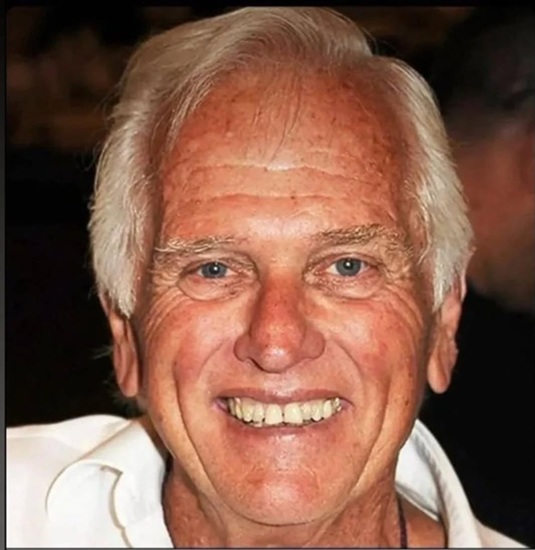
Ronald Pierce Ely, widely recognized by audiences around the world for his unforgettable portrayal of Tarzan in the 1960s NBC television series, passed away at the age of 86, leaving behind a legacy that blended physical prowess, charismatic screen presence, and a life deeply shaped by both triumph and tragedy.
While Ely’s early career established him as one of television’s most dynamic leading men, his later years were marked by profound personal loss that contrasted sharply with his heroic on-screen persona.
Early Life and Path to Stardom
Ron Ely was born on June 21, 1938, in Hereford, Texas. From a young age, Ely exhibited athletic ability and a natural charisma that would later become hallmarks of his acting career.
He attended the University of Texas, where he excelled in sports, particularly swimming and football, demonstrating the physical discipline that would later define his portrayal of action-oriented characters.

Ely’s early modeling work and participation in regional theater productions provided him with both confidence and exposure, ultimately paving the way to Hollywood opportunities.
Ely’s breakthrough came in the mid-1960s when he was cast as Tarzan, a role that would catapult him to international fame. The series aired on NBC from 1966 to 1968, distinguishing itself from previous adaptations of Edgar Rice Burroughs’ classic character.
Unlike earlier versions of Tarzan, which often depicted him as a nearly silent, primitive figure, Ely’s Tarzan was articulate, intelligent, and morally thoughtful.
He spoke fluent English, engaged with complex storylines, and exhibited emotional depth—a fresh interpretation that resonated strongly with audiences and critics alike.
Tarzan: Iconic Television Series and Cultural Impact
The portrayal of Tarzan required Ely to maintain an extraordinary level of physical fitness. He performed many of his own stunts, including swimming, climbing, and intense fight sequences, which were executed with precision and a convincing athletic flair.
His muscular build and commanding screen presence became defining features of the show, setting a new standard for television action heroes.
The series’ success cemented Ely as a household name and earned him a devoted fan base that admired both his talent and his embodiment of one of literature’s most legendary figures.
Beyond his physicality, Ely’s interpretation brought emotional and ethical nuance to the character. Tarzan was portrayed as a man of intelligence and principle, navigating the complexities of the jungle world while maintaining a strong moral compass.
This multidimensional approach helped the series gain critical acclaim and enduring popularity, influencing subsequent adaptations of the Tarzan character in film and television.
Career After Tarzan
Following the end of the Tarzan series in 1968, Ely continued to pursue a steady acting career across both television and film. In 1975, he starred as Doc Savage in the film Doc Savage: The Man of Bronze, further reinforcing his action-hero image.

Ely also made guest appearances on numerous popular television shows of the 1970s and 1980s, including Fantasy Island, The Love Boat, Wonder Woman, and CHiPs. His ability to seamlessly adapt to various genres—from adventure and drama to lighthearted television fare—demonstrated his versatility as an actor.
Despite his continued professional success, Ely was known for maintaining a grounded approach to fame. He never fully embraced the Hollywood lifestyle, choosing instead to prioritize personal fulfillment and family life.
By the late 1990s, he began reducing his acting engagements, ultimately stepping away from the public eye to focus on private pursuits and the well-being of his family.
Ely officially retired from acting in 2001, though he briefly returned to the screen in 2014 with a small role in the television movie Expecting Amish, marking his final on-screen appearance. After this brief return, he dedicated himself to a life of quiet reflection, away from the attention that had defined his career.
Personal Life: Marriage and Family
Ron Ely’s personal life was characterized by both deep devotion to his family and a preference for privacy. In 1984, he married Valerie Lundeen, a woman with her own notable accomplishments.
Valerie had been a flight attendant and gained national recognition in the beauty pageant circuit, winning titles such as Miss Airline International in 1980 and Miss Florida USA in 1981. Their marriage marked the beginning of a partnership built on mutual support, shared values, and a commitment to family life.
The couple had three children: daughters Kirsten and Kaitland, and son Cameron. Friends and acquaintances described the Ely household as nurturing, close-knit, and intentionally shielded from the spotlight of Hollywood.
Valerie, in particular, was deeply involved in the lives of her children, balancing her personal achievements with her role as a dedicated mother and, later, grandmother. The Ely family celebrated the birth of their first grandchild in 2018, a moment of joy that brought renewed energy and happiness to the couple’s lives.
The Tragedy of October 15, 2019
The serenity of Ely’s later years was shattered on October 15, 2019, in a tragedy that drew national attention. On that day, authorities responded to a 911 call at the Ely residence in Santa Barbara, California, only to discover the devastating loss of Valerie Lundeen Ely.

She had been fatally stabbed in their home, and her death was confirmed at the scene. The suspect was identified as Cameron Ely, their 30-year-old son.
During the subsequent search for Cameron, law enforcement confronted him outside the residence. According to official reports, deputies attempted to communicate with Cameron but were unable to gain verbal compliance.
The situation escalated, resulting in deputies discharging their firearms. Cameron Ely was fatally wounded, and no deputies were injured during the incident.
The Santa Barbara County Sheriff’s Office later confirmed that the case would undergo standard criminal, coroner, and administrative investigations, a process that included autopsies and internal review of law enforcement procedures.
The events of that day left the Ely family devastated. The dual loss of a spouse and child in a single night inflicted profound emotional trauma, an experience compounded by the public scrutiny that inevitably accompanied the tragedy.
In the aftermath of the tragedy that claimed the lives of both Valerie and Cameron Ely, Ron Ely faced not only personal grief but also the complexities of navigating the legal system. In October 2020, roughly one year after the incident, Ely filed a federal wrongful death lawsuit against the Santa Barbara County Sheriff’s Office, seeking accountability for the fatal shooting of his son.
The lawsuit alleged that Cameron Ely was surrendering and posed no immediate threat at the time deputies opened fire, emphasizing claims that excessive force had been used during the confrontation.
According to the court filings, the lawsuit stated that deputies discharged more than 20 rounds at Cameron, who was unarmed. The complaint also raised questions about whether proper de-escalation techniques had been employed and whether law enforcement had adhered to department policies and protocols.
While the Sheriff’s Office maintained that deputies acted in accordance with their training and responded appropriately to a perceived threat, the legal proceedings provided a formal avenue for Ely to seek answers and challenge the circumstances surrounding his son’s death.
This lawsuit highlighted the broader issues surrounding police use of force and accountability, drawing public attention to a case that was already deeply emotional and complex. It also served as one of the few moments where Ely publicly engaged with the events of October 15, 2019, balancing his desire for privacy with the pursuit of justice and transparency.

Public Reaction and Media Coverage
The events that unfolded at the Ely family home resonated far beyond Santa Barbara. Media outlets nationwide reported extensively on the tragedy, noting the stark contrast between Ron Ely’s heroic on-screen persona and the profoundly tragic realities of his personal life.
Fans expressed shock, grief, and disbelief, reflecting a collective sense of sorrow for a man who had long been celebrated for his embodiment of strength, courage, and moral integrity.
Social media and fan communities shared tributes to Ely and his family, offering condolences and remembering the joy he had brought to television audiences as Tarzan.
Commentators often highlighted the irony that a figure so widely recognized for heroism and adventure had faced such devastating circumstances in real life, creating a powerful dialogue about the human vulnerabilities of public figures. Many noted that the tragedy underscored the universal truth that fame and success cannot shield individuals from personal loss or grief.
The Emotional Toll on Ron Ely
The personal impact on Ron Ely was profound and enduring. Losing both a spouse and a child on the same day is an unimaginable experience, one that left deep emotional scars.
Close friends described Ely as heartbroken and withdrawn in the years following the incident, emphasizing that the grief he experienced was compounded by the public nature of the tragedy. Despite his fame and previous career successes, Ely faced a deeply private struggle with loss, mourning in solitude while navigating legal battles and media scrutiny.
Family members noted that Ely focused on maintaining stability for his remaining children, Kirsten and Kaitland, and on supporting his grandchildren.
Though he rarely spoke publicly, his close circle emphasized that he carried the memory of Valerie and Cameron with him in every aspect of his life. Ely’s devotion to family remained unwavering, even in the wake of overwhelming grief.
Life in Retirement and Later Years
In his final years, Ron Ely lived largely away from the public eye, embracing a quiet and private lifestyle. He resided in California, surrounded by the natural beauty of the region, which provided both solace and a space for reflection.

Friends described him as thoughtful, contemplative, and deeply appreciative of the simple moments in life, from spending time with grandchildren to enjoying outdoor activities.
Although Ely’s health reportedly declined with age, he remained intellectually engaged and emotionally connected with those closest to him. He continued to value privacy and discretion, rarely granting interviews or making public appearances, even as fans and media occasionally sought updates about his well-being.
This retreat from the spotlight allowed him to focus on personal healing and on cherishing memories of happier times with Valerie and their children.
Remembering Valerie Lundeen Ely
Valerie Lundeen Ely is remembered as more than just the spouse of a television star. Her life reflected accomplishment, resilience, and devotion.
Beyond her titles as Miss Airline International and Miss Florida USA, Valerie was a loving mother and grandmother, dedicated to her family and to cultivating a nurturing home environment. Friends and family recall her warmth, kindness, and ability to balance personal ambition with a commitment to family values.
Her death represented a tremendous loss, not only for Ron Ely but also for her extended family, friends, and the wider community that had admired her for decades. Valerie’s legacy continues to be honored through the memories she left behind and the lasting impact she had on those who knew her personally.
Ron Ely’s Legacy: Fame, Resilience, and Humanity
Ron Ely’s life story is a complex tapestry of triumph, creativity, and personal tragedy. His portrayal of Tarzan remains a defining contribution to television history, influencing generations of audiences and setting a high standard for the depiction of heroic characters. Beyond his professional achievements, Ely’s life demonstrates the human dimensions of resilience, devotion, and vulnerability.
His later years serve as a poignant reminder that even those who seem larger-than-life on screen face challenges, grief, and personal hardships that resonate universally. Ely’s ability to navigate fame with grace, prioritize family, and endure unimaginable personal loss reflects a depth of character that extends far beyond his on-screen persona.
Final Years and Passing
Ron Ely passed away in 2024 at the age of 86, concluding a life marked by both extraordinary public achievement and profound private struggle.
The details of his passing were kept closely guarded by his family, consistent with the privacy he had sought in the decades following his retirement.
His death prompted reflections not only on his career and contributions to television but also on the humanity behind his public image—a man defined equally by his family devotion and the resilience he demonstrated in the face of tragedy.
Friends, colleagues, and fans continue to honor Ely’s memory, celebrating his athleticism, charisma, and enduring influence on popular culture. At the same time, the story of his later life, marked by loss and sorrow, reminds the public that behind every iconic figure exists a deeply human story, complete with love, pain, and resilience.
Reflections on Fame, Family, and Tragedy
The Ely family tragedy remains a somber chapter in the broader narrative of Hollywood history, illustrating that fame and recognition cannot insulate individuals from life’s harsh realities.
Ron Ely’s story offers an enduring lesson: even those who embody heroism on screen experience vulnerability and loss, navigating challenges that are at once deeply personal and universally human.
In remembering both Ron Ely and Valerie Lundeen Ely, it becomes clear that their legacies extend beyond the television screen. They represent dedication, family, and the profound ways in which love and tragedy intersect.
Ely’s life serves as a reminder of the duality of human experience—where moments of brilliance and joy coexist with grief and hardship, creating a life story that is as compelling as any fictional adventure he once brought to life.
In the aftermath of the tragedy that claimed the lives of both Valerie and Cameron Ely, Ron Ely faced not only personal grief but also the complexities of navigating the legal system. In October 2020, roughly one year after the incident, Ely filed a federal wrongful death lawsuit against the Santa Barbara County Sheriff’s Office, seeking accountability for the fatal shooting of his son.
The lawsuit alleged that Cameron Ely was surrendering and posed no immediate threat at the time deputies opened fire, emphasizing claims that excessive force had been used during the confrontation.
According to the court filings, the lawsuit stated that deputies discharged more than 20 rounds at Cameron, who was unarmed. The complaint also raised questions about whether proper de-escalation techniques had been employed and whether law enforcement had adhered to department policies and protocols.
While the Sheriff’s Office maintained that deputies acted in accordance with their training and responded appropriately to a perceived threat, the legal proceedings provided a formal avenue for Ely to seek answers and challenge the circumstances surrounding his son’s death.
This lawsuit highlighted the broader issues surrounding police use of force and accountability, drawing public attention to a case that was already deeply emotional and complex. It also served as one of the few moments where Ely publicly engaged with the events of October 15, 2019, balancing his desire for privacy with the pursuit of justice and transparency.
Public Reaction and Media Coverage
The events that unfolded at the Ely family home resonated far beyond Santa Barbara. Media outlets nationwide reported extensively on the tragedy, noting the stark contrast between Ron Ely’s heroic on-screen persona and the profoundly tragic realities of his personal life.
Fans expressed shock, grief, and disbelief, reflecting a collective sense of sorrow for a man who had long been celebrated for his embodiment of strength, courage, and moral integrity.
Social media and fan communities shared tributes to Ely and his family, offering condolences and remembering the joy he had brought to television audiences as Tarzan.
Commentators often highlighted the irony that a figure so widely recognized for heroism and adventure had faced such devastating circumstances in real life, creating a powerful dialogue about the human vulnerabilities of public figures. Many noted that the tragedy underscored the universal truth that fame and success cannot shield individuals from personal loss or grief.
The Emotional Toll on Ron Ely
The personal impact on Ron Ely was profound and enduring. Losing both a spouse and a child on the same day is an unimaginable experience, one that left deep emotional scars.
Close friends described Ely as heartbroken and withdrawn in the years following the incident, emphasizing that the grief he experienced was compounded by the public nature of the tragedy. Despite his fame and previous career successes, Ely faced a deeply private struggle with loss, mourning in solitude while navigating legal battles and media scrutiny.
Family members noted that Ely focused on maintaining stability for his remaining children, Kirsten and Kaitland, and on supporting his grandchildren.
Though he rarely spoke publicly, his close circle emphasized that he carried the memory of Valerie and Cameron with him in every aspect of his life. Ely’s devotion to family remained unwavering, even in the wake of overwhelming grief.
Life in Retirement and Later Years
In his final years, Ron Ely lived largely away from the public eye, embracing a quiet and private lifestyle. He resided in California, surrounded by the natural beauty of the region, which provided both solace and a space for reflection.
Friends described him as thoughtful, contemplative, and deeply appreciative of the simple moments in life, from spending time with grandchildren to enjoying outdoor activities.
Although Ely’s health reportedly declined with age, he remained intellectually engaged and emotionally connected with those closest to him.
He continued to value privacy and discretion, rarely granting interviews or making public appearances, even as fans and media occasionally sought updates about his well-being. This retreat from the spotlight allowed him to focus on personal healing and on cherishing memories of happier times with Valerie and their children.
Remembering Valerie Lundeen Ely
Valerie Lundeen Ely is remembered as more than just the spouse of a television star. Her life reflected accomplishment, resilience, and devotion.
Beyond her titles as Miss Airline International and Miss Florida USA, Valerie was a loving mother and grandmother, dedicated to her family and to cultivating a nurturing home environment. Friends and family recall her warmth, kindness, and ability to balance personal ambition with a commitment to family values.
Her death represented a tremendous loss, not only for Ron Ely but also for her extended family, friends, and the wider community that had admired her for decades. Valerie’s legacy continues to be honored through the memories she left behind and the lasting impact she had on those who knew her personally.
Ron Ely’s Legacy: Fame, Resilience, and Humanity
Ron Ely’s life story is a complex tapestry of triumph, creativity, and personal tragedy. His portrayal of Tarzan remains a defining contribution to television history, influencing generations of audiences and setting a high standard for the depiction of heroic characters. Beyond his professional achievements, Ely’s life demonstrates the human dimensions of resilience, devotion, and vulnerability.
His later years serve as a poignant reminder that even those who seem larger-than-life on screen face challenges, grief, and personal hardships that resonate universally. Ely’s ability to navigate fame with grace, prioritize family, and endure unimaginable personal loss reflects a depth of character that extends far beyond his on-screen persona.
Final Years and Passing
Ron Ely passed away in 2024 at the age of 86, concluding a life marked by both extraordinary public achievement and profound private struggle.
The details of his passing were kept closely guarded by his family, consistent with the privacy he had sought in the decades following his retirement. His death prompted reflections not only on his career and contributions to television but also on the humanity behind his public image—a man defined equally by his family devotion and the resilience he demonstrated in the face of tragedy.
Friends, colleagues, and fans continue to honor Ely’s memory, celebrating his athleticism, charisma, and enduring influence on popular culture. At the same time, the story of his later life, marked by loss and sorrow, reminds the public that behind every iconic figure exists a deeply human story, complete with love, pain, and resilience.
Reflections on Fame, Family, and Tragedy
The Ely family tragedy remains a somber chapter in the broader narrative of Hollywood history, illustrating that fame and recognition cannot insulate individuals from life’s harsh realities. Ron Ely’s story offers an enduring lesson: even those who embody heroism on screen experience vulnerability and loss, navigating challenges that are at once deeply personal and universally human.
In remembering both Ron Ely and Valerie Lundeen Ely, it becomes clear that their legacies extend beyond the television screen. They represent dedication, family, and the profound ways in which love and tragedy intersect.
Ely’s life serves as a reminder of the duality of human experience—where moments of brilliance and joy coexist with grief and hardship, creating a life story that is as compelling as any fictional adventure he once brought to life.
