
For millions of television viewers during the 1960s and 1970s, Gunsmoke wasn’t just a show; it was a weekly ritual, a steady presence in households across America.
Families would gather around the small black-and-white screens—or the early color televisions, as technology advanced—settling into the rhythms of Dodge City, Kansas.
It was a fictional place that had become profoundly real in the hearts of its viewers, a town where courage, honor, loyalty, and justice played out week after week, and where ordinary people and extraordinary heroes intersected in stories that reflected both the challenges and triumphs of life on the frontier.
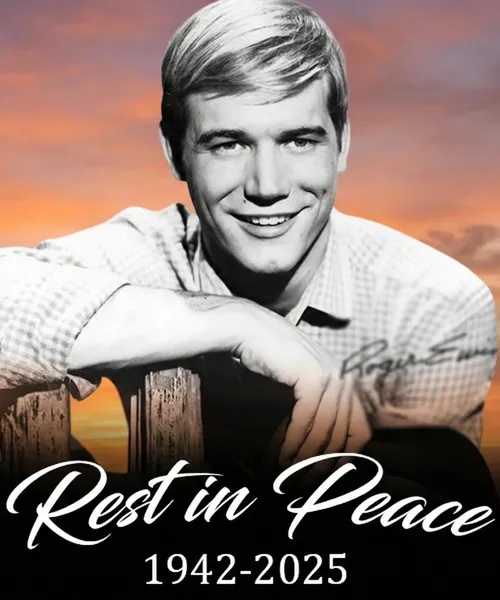
The passing of Roger Ewing at the age of 83 marks not only the loss of a talented actor but also the fading of a particular kind of television magic, one that emphasized understated strength, reliability, and quiet heroism.
Ewing’s journey to becoming a beloved figure in Dodge City is a story rooted in both admiration and determination.
Born in 1942 in Los Angeles, California, Ewing grew up surrounded by the burgeoning entertainment industry. The lights, cameras, and stories of Hollywood were never distant from his daily life, but the path to an acting career was far from guaranteed.
Even as a young man, he was captivated by narratives that combined drama, moral complexity, and human connection—the kinds of stories that Gunsmoke had perfected over its first decade on the air.
Before stepping onto the real set of Gunsmoke, Ewing had actually been a fan of the show. Like countless viewers, he found himself drawn into the moral landscapes of Dodge City, the relationships between the sheriff, his deputies, townspeople, and outlaws, and the ways in which the show addressed universal themes through its Western lens.
He once even performed in a school parody of Gunsmoke, mimicking characters he admired from the screen. The irony of that youthful imitation—that he would later become a part of the authentic series—was not lost on him in later reflections, where he would recall the surreal nature of walking onto a set that had so profoundly shaped his imagination.
Ewing’s path to television stardom, however, was not an overnight transformation. Like many young actors of the 1960s, he navigated a series of small roles in television and minor film parts, slowly honing his craft while learning the intricacies of the industry.
He experienced the realities of typecasting, often being offered roles that fit a particular youthful or earnest archetype. Despite these challenges, his commitment to acting never wavered.
Every small opportunity became a stepping stone, a lesson in timing, presence, and subtle emotional expression—skills that would serve him remarkably well when he joined Gunsmoke.
He joined the cast in the mid-1960s, initially appearing briefly before moving into a recurring role that captured the attention of viewers and critics alike.
At just twenty-three years old, Ewing brought a tall, calm presence to the series that balanced perfectly with the established stars.
James Arness as Marshal Matt Dillon, Amanda Blake as Miss Kitty Russell, and Milburn Stone as Doc Adams had created a world that felt authentic, rooted, and enduring.
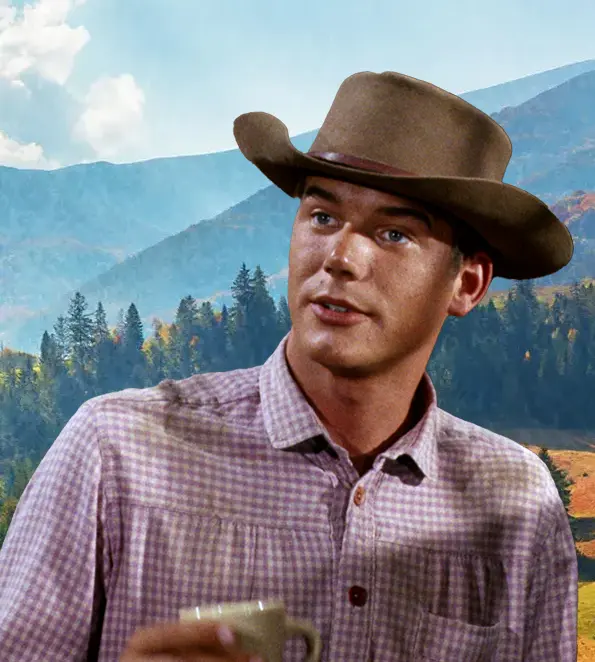
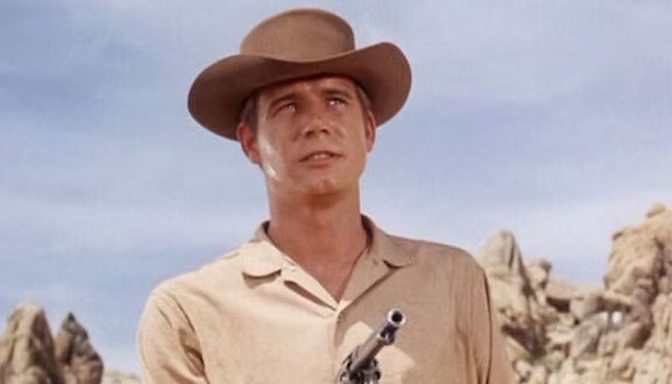
Into this landscape, Ewing stepped as Deputy Clayton Thaddeus “Thad” Greenwood, a young man seeking purpose, grappling with personal loss, and attempting to define his moral compass in a town where law and order were constantly tested.
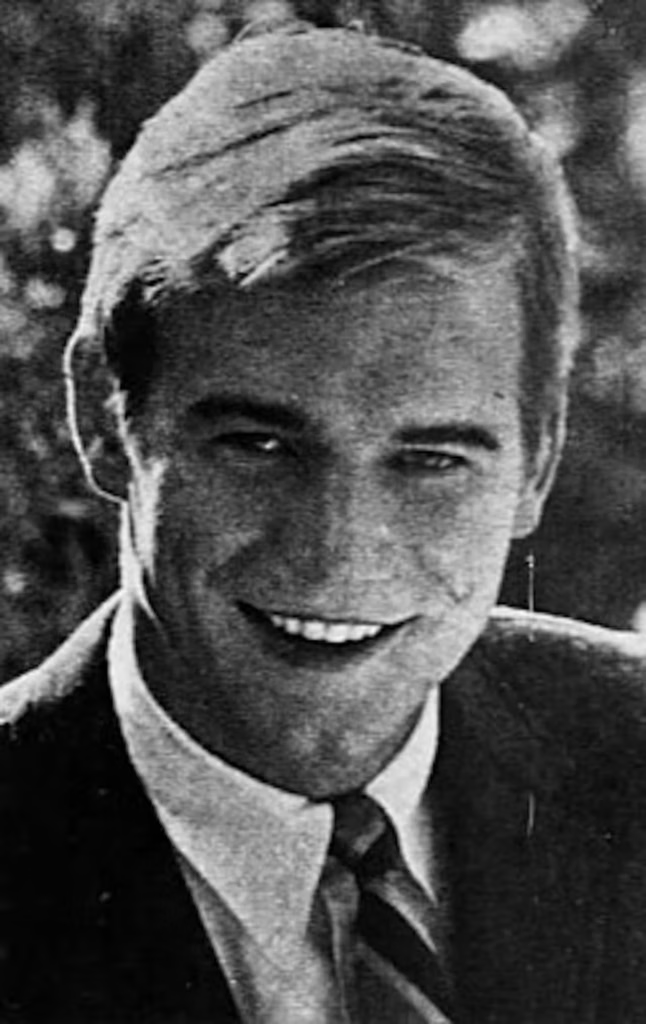
The character of Thad Greenwood was written with subtlety rather than grand gestures. He wasn’t the brash, gunslinging hero who solved conflicts through sheer bravado; instead, he represented a younger, contemplative generation in Dodge City.
His background as a man who had lost family members made him relatable to audiences who themselves had experienced loss or were navigating complex family dynamics. Viewers responded to Thad’s quiet determination, his thoughtful approach to justice, and his willingness to assist others without demanding recognition.
Ewing’s own manner—soft-spoken, deliberate, and naturally charismatic—allowed him to inhabit the role fully, lending credibility and warmth to a series that thrived on both drama and human connection.
His contributions were not merely about screen presence; they helped refresh the long-running series at a time when television audiences were evolving. By the mid-1960s, Gunsmoke had already solidified its reputation as one of the longest-running and most influential Westerns on television.
Yet even established shows require new energy to remain relevant. Ewing’s portrayal of Thad offered this infusion.
He represented a bridge between the older generation of characters and younger viewers who might see themselves reflected in his aspirations, moral dilemmas, and quiet courage.
His interactions with Marshal Dillon often highlighted the nuances of mentorship, respect, and the passing of wisdom from one generation to the next—a subtle storytelling layer that deepened the audience’s connection to the world of Dodge City.
Ewing’s professional discipline also contributed to his reputation among cast and crew. Those who worked with him frequently remarked on his punctuality, dedication, and willingness to learn from veteran actors.
He wasn’t simply performing a script; he was absorbing the rhythm of the series, understanding the pacing of dialogue, the weight of silence, and the power of restraint.
In many ways, his presence reminded the cast of the very human core of Gunsmoke: that heroism, loyalty, and compassion could be communicated not only through action but also through quiet strength and consistency.
Beyond the studio, Ewing’s life reflected the same balance of ambition and grounded perspective. Even as fame grew, he remained thoughtful and reflective, aware that his identity as an actor was intertwined with, but not limited to, his character on television.
After leaving Gunsmoke, he continued to work in smaller television roles and occasional film projects, yet he gradually sought a quieter life away from the relentless spotlight.
Photography, travel, and community engagement became central to his post-acting years, allowing him to cultivate personal fulfillment and creativity beyond the constraints of Hollywood schedules.
While he stepped away from major acting roles, he maintained a connection to his fans, often reminiscing about his time on the set and the extraordinary privilege of contributing to a series that had shaped American television history.
In many ways, Roger Ewing’s impact on Gunsmoke was emblematic of what makes ensemble casts work: not every contribution must be dramatic or flashy to be essential.
His subtle performances provided emotional texture, human relatability, and continuity that anchored the show during transitional periods.
Fans often recall episodes where Thad Greenwood’s calm intervention prevented violence, assisted townspeople in personal crises, or quietly supported Marshal Dillon in difficult investigations.
These moments, while understated, became essential threads in the rich tapestry of Dodge City’s stories.
Even now, decades later, viewers remember him not for loud speeches or explosive confrontations but for presence—the kind of presence that invites trust, warmth, and identification.
In a television era increasingly dominated by spectacle, Ewing’s work exemplifies the enduring power of sincerity, thoughtfulness, and consistency.
Dodge City was a rough, sometimes dangerous place on screen, yet with actors like Roger Ewing, it felt humane, navigable, and ultimately redemptive.
After his years on Gunsmoke, Roger Ewing’s life entered a phase that reflected both the continuity of his professional ethos and the breadth of his personal interests.
Unlike many actors who struggle with identity after leaving a defining role, Ewing navigated this transition with careful attention to balance and introspection.
He continued to take occasional roles in television and film, always choosing parts that resonated with his sensibilities and allowed him to maintain the same understated integrity that had defined Thad Greenwood.

His approach reflected a deliberate avoidance of superficial fame, favoring instead personal growth, creativity, and meaningful contribution.
Photography became one of Ewing’s most cherished pursuits during this period. He traveled extensively, capturing landscapes, portraits, and moments of daily life with an artistic sensitivity reminiscent of his approach to acting.
Just as he had observed subtle expressions, quiet gestures, and understated heroism on the Gunsmoke set, he translated that same attention to detail into photography.
The interplay of light and shadow, the narrative potential of a single frame, and the human stories that unfolded in everyday life fascinated him. His work, though largely private, demonstrated a continuation of the attentiveness and authenticity that fans had admired in his performances.
Ewing also dedicated time to community involvement, speaking at local schools, engaging in charitable activities, and mentoring young aspiring actors.
He emphasized the importance of integrity, discipline, and emotional intelligence—qualities he believed were critical both in life and in the performance arts.
Colleagues, students, and community members often recalled his generosity, humility, and willingness to share insights that went beyond acting technique to include lessons in patience, perseverance, and empathy.
Through these interactions, he extended his influence far beyond television screens, leaving a mark on individuals and communities that reflected the quiet, steady spirit he had brought to Dodge City.
For fans of Gunsmoke, Roger Ewing’s presence on the show remained deeply resonant. Though he was not the lead actor, his contributions added essential layers to the narrative fabric of the series.
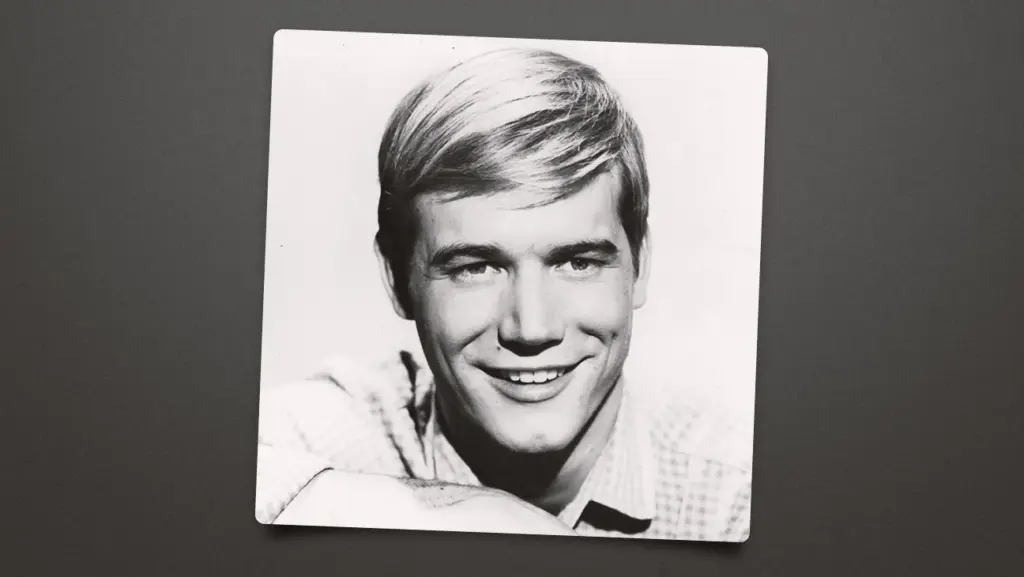
Thad Greenwood embodied a moral compass that was relatable, aspirational, and fundamentally human. Unlike characters whose heroism is built on spectacle, Thad’s strength lay in his attentiveness, his loyalty to his friends, and his willingness to intervene thoughtfully in the town’s conflicts.
These qualities, amplified through Ewing’s nuanced performance, created enduring episodes that audiences still discuss today.
Episodes like “The Quest for Justice” and “Shadow of Doubt” exemplify his ability to convey vulnerability, courage, and moral discernment—all without dominating the spotlight. It is this delicate balance that ensured his character remained beloved even decades after the series concluded.
The cultural significance of Gunsmoke, and by extension Ewing’s role, cannot be overstated. The series was groundbreaking in its realism, character development, and engagement with social themes.
It portrayed the West not as a mythical utopia or simply a backdrop for action, but as a complex environment where law, community, and human imperfection intersected.
Within this framework, Ewing’s Thad Greenwood became a touchstone for younger viewers who might otherwise struggle to relate to the older cast members.
He provided a lens through which audiences could see their own struggles and aspirations reflected in the high-stakes drama of frontier life.
The response from fans over the years underscores the lasting impact of his work. Letters, interviews, and fan gatherings often highlight how Ewing’s calm, reliable demeanor resonated with viewers.
Parents shared that they appreciated Thad Greenwood as a role model for their children, not because he was invincible, but because he demonstrated how courage, empathy, and moral clarity could coexist in challenging circumstances.
Retrospective articles about Gunsmoke frequently cite Ewing as a key contributor to the series’ longevity, acknowledging that ensemble cast members who embody consistency, authenticity, and integrity are often the glue that binds a show together.
In reflecting on Ewing’s later years, it is clear that he prioritized personal fulfillment as much as professional legacy. His marriage and family life, kept largely private, reflected his preference for stability, normalcy, and meaningful connections over public attention.
Those close to him described him as thoughtful, contemplative, and profoundly committed to the well-being of his family.
He approached personal relationships with the same care and consideration he had brought to his work, creating a life rooted in authenticity, balance, and quiet joy.
As television evolved, and the landscape of entertainment shifted toward faster pacing, high drama, and visual spectacle, Ewing’s performances on Gunsmoke served as a reminder of a different era of storytelling.
His work embodied the power of subtlety, observation, and grounded performance—qualities that continue to inform aspiring actors and resonate with audiences who appreciate narrative depth and character-driven drama.
In this way, Roger Ewing’s legacy extends beyond nostalgia; it is a model of artistry, integrity, and emotional intelligence that remains instructive for performers today.
It is also worth noting the historical significance of the period during which Ewing joined Gunsmoke. Television in the mid-1960s was undergoing profound transformation.
Shows were increasingly addressing moral ambiguity, complex human relationships, and social issues, moving beyond the formulaic storytelling of early television Westerns.
Ewing entered the series at a time when audiences were seeking richer narratives and more nuanced characterizations.
His ability to embody a character that was morally centered yet realistically flawed contributed to the show’s relevance and resonance in a changing cultural landscape.
Throughout his life, Roger Ewing demonstrated a profound understanding of balance—between professional ambition and personal fulfillment, between public visibility and private reflection, and between the subtlety of performance and the depth of human experience.
These qualities allowed him to navigate both the bright lights of television stardom and the quieter demands of personal growth with grace.
Ultimately, Ewing’s passing at 83 represents more than the loss of a talented actor; it is a moment to reflect on the enduring power of thoughtful storytelling, the role of ensemble artistry in defining cultural memory, and the impact of individuals who embody steadiness, sincerity, and integrity in their craft.
To countless viewers who grew up watching Dodge City unfold on their screens, Roger Ewing was not merely an actor—he was a symbol of quiet heroism, moral courage, and the possibility of living with authenticity in every aspect of life.
As television historians, fans, and cultural commentators reflect on Gunsmoke’s legacy, Ewing’s contributions remain a testament to the importance of character-driven storytelling.
In a world increasingly dominated by spectacle, his performances remind us that empathy, reliability, and understated brilliance can leave a far more lasting impression than loud heroics or dramatic flair.
For the generations who knew him on screen, Thad Greenwood will remain a touchstone for what it means to be a dependable, courageous, and morally attuned individual in the midst of life’s complexities.
In remembering Roger Ewing, it is also important to honor the continuity he represents—the idea that some legacies are built not on fleeting fame but on quiet, consistent excellence.
His presence in Gunsmoke helped ensure the show maintained its integrity, emotional resonance, and authenticity.
His performances, though often understated, were essential to the series’ ability to engage audiences for decades, creating memories that continue to be cherished by fans, scholars, and the broader cultural imagination.
In conclusion, the life and career of Roger Ewing exemplify the lasting power of subtle, authentic, and thoughtful performance.
From his formative experiences as a fan of Gunsmoke to his years as Deputy Thad Greenwood, and through his later pursuits in photography, travel, and community engagement, Ewing demonstrated an unwavering commitment to integrity, craft, and personal fulfillment.
For fans old and new, his work serves as a reminder that heroism can be quiet, impact can be profound even when understated, and a steady presence can shape not only a fictional town like Dodge City but also the hearts and memories of millions who followed the series.
His legacy is not simply one of television history, but of human resonance, artistry, and the enduring value of sincerity in both work and life.
Roger Ewing’s contributions will be remembered, cherished, and celebrated for generations to come, a testament to a career defined not by spectacle, but by the enduring, quiet brilliance that made Dodge City feel like home for countless viewers around the world.
