
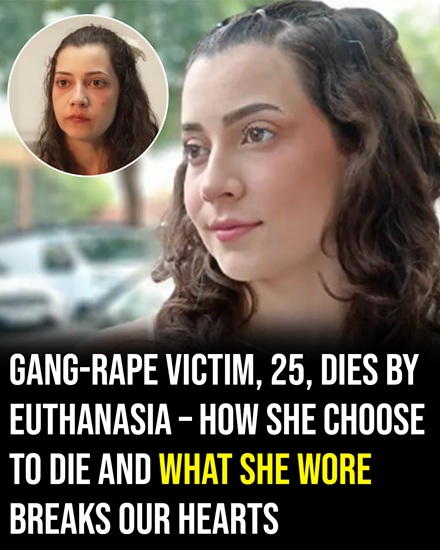
Noelia Castillo Ramos, a 25-year-old woman from Barcelona, passed away on March 26, 2026, through voluntary euthanasia, following years of chronic suffering and an extensive legal process.
Her case attracted both national and international attention because she was among the youngest individuals in Spain to legally request assisted death.
Born on November 14, 2000, Noelia faced significant hardships during her early life. She entered the Spanish social care system as a teenager after her family lost their home, navigating challenges that shaped her resilience but also exposed her to trauma and vulnerability.
During adolescence, Noelia was diagnosed with obsessive-compulsive disorder and borderline personality disorder.

These conditions significantly impacted her emotional stability and daily life, presenting ongoing challenges in managing relationships, stress, and personal well-being.
Tragically, Noelia also endured multiple sexual assaults. She reported being attacked by an ex-partner as well as by multiple men in social settings, though these incidents were not formally reported to authorities. These experiences contributed to long-lasting psychological trauma and fear.
In October 2022, following one of these assaults, Noelia attempted to take her own life by jumping from a fifth-floor building. The attempt left her permanently paraplegic, resulting in severe and irreversible physical pain that would define her subsequent years.
The fall caused major spinal cord damage, creating intense, ongoing physical suffering alongside profound psychological distress. Noelia described the pain as relentless and emotionally debilitating, leaving her with a severely diminished quality of life.
After enduring years of suffering, she sought a means to end her pain legally and compassionately. In April 2024, she formally applied for euthanasia under Spain’s Organic Law Regulating Euthanasia (LORE), which permits assisted death for adults experiencing serious, chronic, and irreversible suffering.
Spanish law requires individuals requesting euthanasia to submit multiple voluntary applications, demonstrate full mental capacity, and undergo approval by independent medical and ethics committees. These safeguards are designed to ensure the decision is fully informed and voluntary.

Noelia’s application was initially approved by the Catalonia Commission for Guarantees and Evaluation, the body responsible for certifying eligibility under the law. However, the process soon faced legal challenges initiated by her father, who, with support from Abogados Cristianos, filed appeals to block her request.
Her father contended that Noelia’s psychiatric conditions could impair her judgement and argued that society had a responsibility to protect her life rather than allow her death. These appeals sparked public discussion on the balance between autonomy and protection for vulnerable individuals.
Courts at multiple levels, including the High Court of Justice of Catalonia and the Supreme Court of Spain, ultimately rejected the appeals. Both judicial bodies confirmed that Noelia had the legal right to choose euthanasia under Spanish law.
The legal proceedings lasted 601 days, making her case a focal point for debate on euthanasia, autonomy, vulnerability, and the treatment of individuals living with both physical and psychological suffering.
Her father further escalated appeals to the Constitutional Court of Spain and eventually the European Court of Human Rights. Both courts declined to intervene, allowing the euthanasia procedure to proceed.
Throughout the process, Noelia emphasized that her decision was deeply personal and not intended as a precedent for others. In interviews, she explained that her choice reflected her own experience of suffering and should not be generalized or applied to anyone else.
Spain’s euthanasia law, enacted in 2021, allows adults experiencing unrelievable and irreversible suffering to request medically assisted death. Patients must demonstrate clear decision-making capacity, and the process is conducted in qualified hospitals or care centers.

After the final appeals were resolved, Noelia’s euthanasia was scheduled for the evening of March 26, 2026, at a care facility in Sant Pere de Ribes, in Barcelona province. She chose to be alone with her physician during the procedure, as allowed under Spanish protocols.
The euthanasia protocol involved a combination of three intravenous drugs: the first two induced deep sedation, while the third caused respiratory arrest. The medications were designed to prevent any pain or distress during the procedure, in compliance with legal regulations.
Before the procedure, Noelia invited her family to say goodbye on her own terms. Her mother, who opposed euthanasia personally, was able to remain with her, providing emotional support in the moments leading up to her passing.
Her decision highlighted significant family tensions and reflected broader societal debates about autonomy, compassion, and protection for individuals facing chronic suffering. The case prompted national discussion on the ethical and legal boundaries of assisted dying.
Supporters of her choice emphasized that people living with unrelievable physical and psychological pain should have the right to a dignified end. Critics raised concerns about mental health safeguards and the potential implications of permitting euthanasia in cases involving psychological trauma.
Religious groups and social advocates weighed in, some condemning the procedure as ethically unacceptable, while others highlighted the need for stronger mental health and social support networks to complement the legal framework.
In the Spanish Congress, lawmakers engaged in debate over the case, reflecting differing perspectives on dignity, autonomy, and state responsibility. Her story became a reference point for evaluating the limits and protections embedded in the euthanasia legislation.

Legal experts highlighted the multiple safeguards of the Spanish system, including repeated voluntary requests, medical and psychiatric evaluations, and ethical review committees designed to prevent impulsive decisions. Noelia’s case demonstrated how these mechanisms operate in practice.
Her case also informed international discussions on euthanasia, particularly regarding the treatment of individuals with both physical and psychological suffering. Scholars and ethicists have cited her experience as an example of the complexities involved in assisted dying policy.
Official records now list Noelia among the over a thousand individuals in Spain who have received legally sanctioned euthanasia since the law’s enactment. Her death represents both a personal decision and a broader social milestone in the ongoing conversation about assisted dying rights.
The moment of her passing on March 26, 2026, brought attention to the emotional and ethical dimensions of euthanasia, illustrating the tension between individual autonomy and societal responsibility. Her choice reaffirmed the legal framework designed to balance these concerns.
Noelia’s life and death continue to influence discussions around dignity, suffering, autonomy, and compassionate care. Her story underscores the challenges faced by individuals navigating deeply personal suffering within complex legal and medical systems.
Public and academic discourse has considered her case a critical example for understanding how societies approach the right to die, mental health, and social protections for vulnerable individuals.
Even as opinions remain divided, her experience has prompted reflection on the need for comprehensive mental health care alongside assisted dying policies, emphasizing the interplay of support, autonomy, and ethical safeguards.
Noelia’s story demonstrates the importance of respecting personal choice while ensuring legal and medical systems remain robust, compassionate, and thorough in evaluating cases of severe suffering.
Her case remains a reference in ongoing debates over euthanasia legislation in Spain and internationally, particularly when psychological trauma is a factor. It highlights how laws, ethics, and personal autonomy intersect in the most challenging circumstances.
Ultimately, Noelia Castillo Ramos’s life and choice illustrate the profound complexities of chronic suffering, the limits of medical intervention, and the significance of personal autonomy in end-of-life decisions.
Her experience has contributed to evolving conversations about the responsibilities of society, the rights of individuals, and the moral dimensions of compassionate care for those enduring unrelenting pain.
