
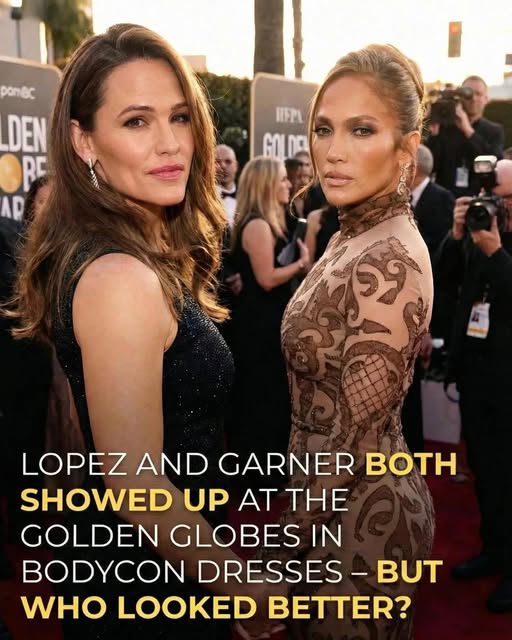
On the evening of January 11, 2026, Los Angeles was bathed in the unmistakable glow of Hollywood glamour as the 83rd Golden Globe Awards transformed the city into a dazzling hub of entertainment, style, and cinematic celebration.
The Beverly Hilton Hotel in Beverly Hills became the epicenter of excitement, with fans, photographers, and media outlets congregating hours in advance to witness what has become one of the most anticipated nights on the entertainment calendar.
Though the awards themselves recognize achievements in film and television, the ceremony has long been synonymous with fashion, and this year’s red carpet arguably set a new standard for bold choices, refined elegance, and viral-worthy moments.
The Red Carpet Before the Ceremony
Even before the first award was handed out, the red carpet was alive with anticipation. Photographers jockeyed for position, their flashes lighting up the driveway, while streaming cameras captured fans’ reactions and celebrities’ every move.
Unlike past years, the 2026 Golden Globes saw an unusual mix of veteran stars, rising talents, and international celebrities, all converging in one place for a moment that promised to be historic.
The red carpet itself seemed to function as a stage of its own—a runway where each arrival told a story, made a statement, or ignited conversation.
Stylists and designers clearly embraced the opportunity to push boundaries, with outfits ranging from sharply tailored menswear to sculptural gowns, avant-garde silhouettes, and experimental textures that blurred the lines between couture and art.
For many viewers watching at home, these first moments often defined the evening, setting expectations not only for fashion trends but also for how the night’s energy would unfold.
Standout Women on the Carpet
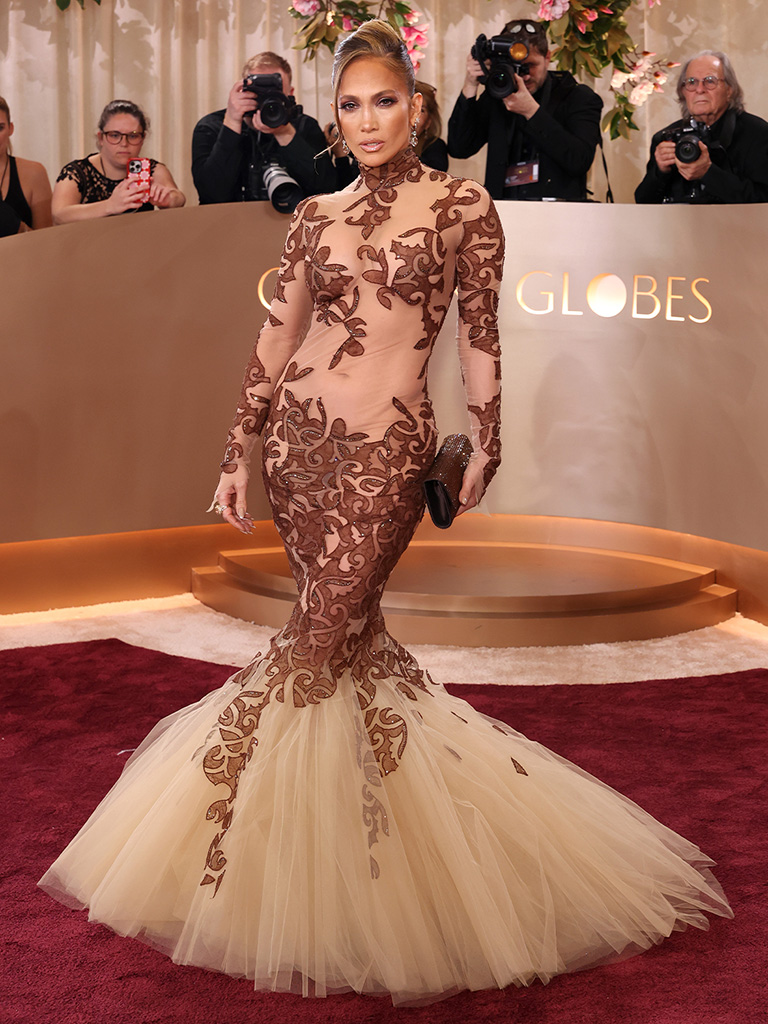
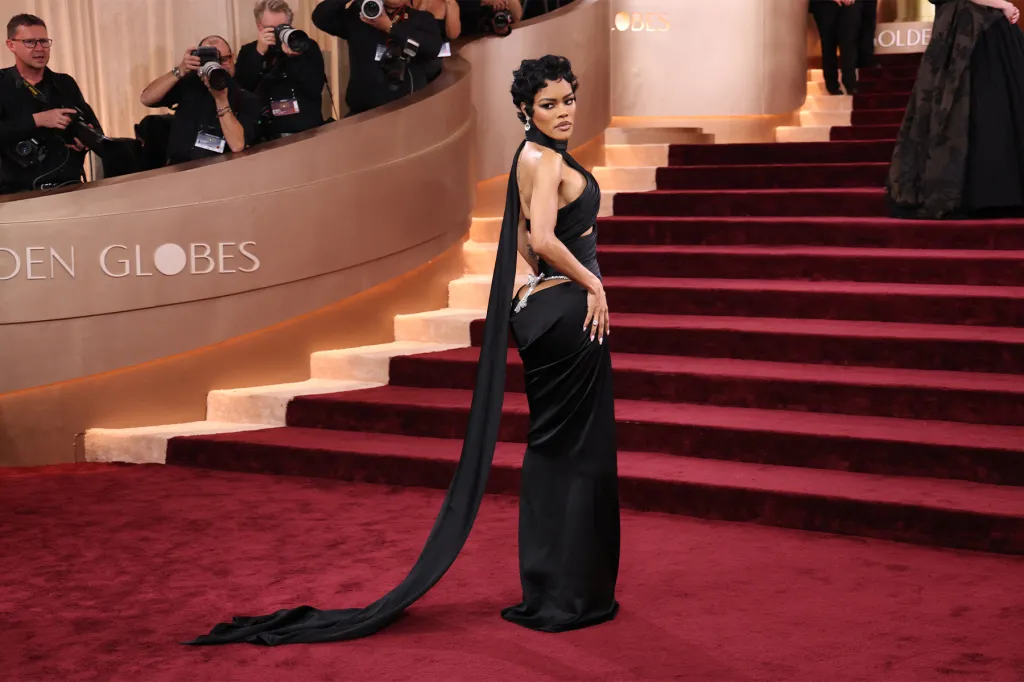
The women attending the Golden Globes delivered a masterclass in modern glamour. Teyana Taylor, known for her bold and fearless fashion choices, arrived in a couture gown that combined structured lines with unexpected details, drawing immediate attention from photographers and fans alike.
The ensemble exemplified a fearless approach to red carpet dressing, blending contemporary artistry with traditional elegance, and demonstrated why Taylor is considered one of the most influential style icons of her generation.
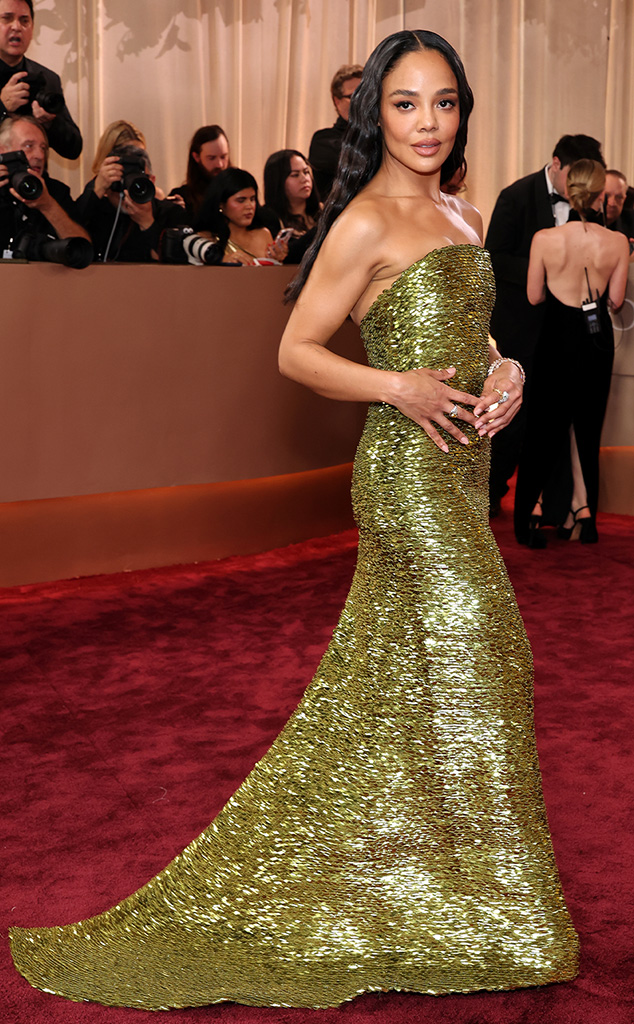
Tessa Thompson, in a shimmering gold ensemble, offered a different kind of impact. Her dress—meticulously tailored to accentuate movement and light—radiated understated drama.
While not as overtly bold as some of her contemporaries, the subtle sophistication of her choice resonated with critics and audiences alike.
The combination of shimmer, silhouette, and minimalist accessories elevated her presence, proving that confidence can transform simplicity into spectacle.
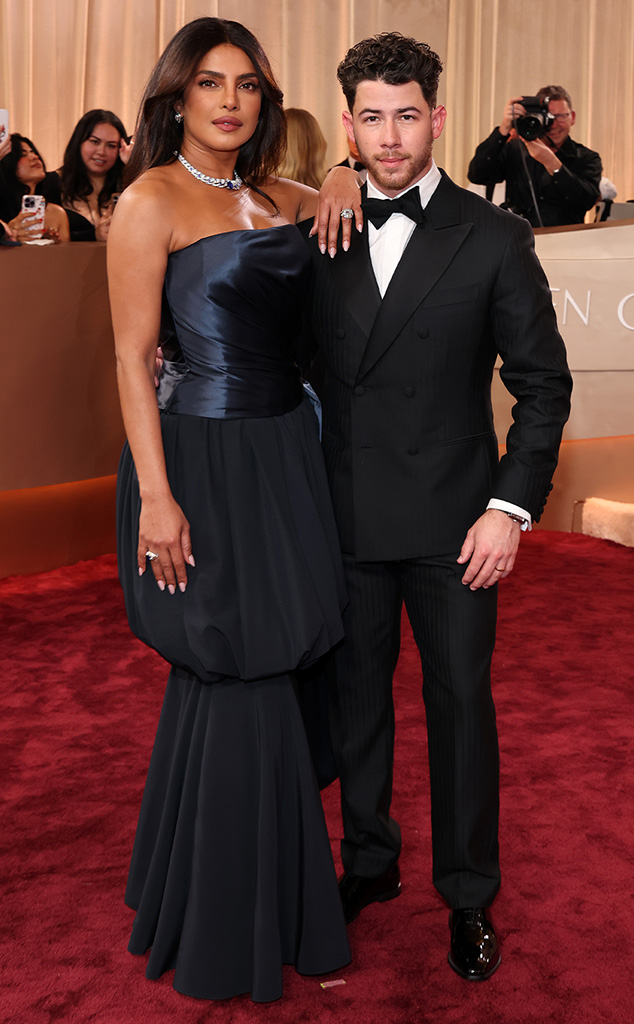
Other notable female arrivals included Priyanka Chopra Jonas, who exuded modern elegance with a gown that seamlessly blended classic tailoring with contemporary flair.
Jennifer Lawrence embraced refined sophistication in a statement dress that reflected both poise and personality.
Jessie Buckley’s outfit was particularly memorable for its juxtaposition of traditional glamour with subtle avant-garde elements, highlighting her as a standout not only for her acting accolades but also for her fashion sensibility.
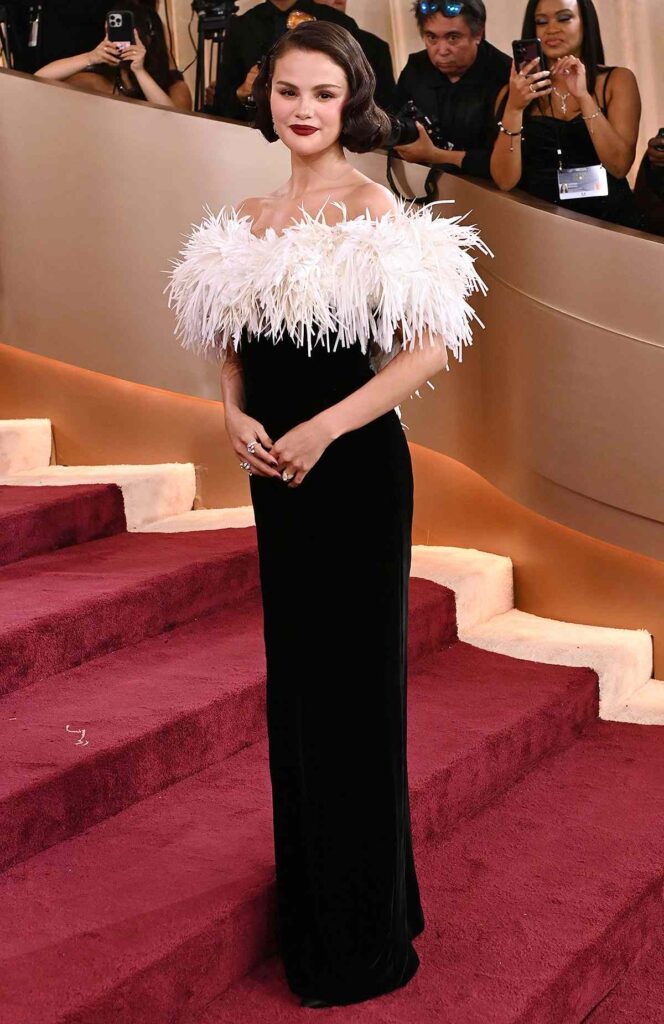
Selena Gomez, meanwhile, made headlines with a feathered Chanel gown, a playful and glamorous nod to haute couture traditions while maintaining her signature youthful energy.
Julia Roberts arrived in a sleek black Armani gown, reaffirming that timeless glamour still carries unmatched impact on a red carpet known for experimentation. Her presence underscored the idea that, while trends evolve, classic elegance remains relevant, commanding attention through poise, posture, and impeccable tailoring.
Menswear That Balanced Tradition and Modernity
On the men’s side, the Golden Globes offered a fresh take on menswear, blending traditional tailoring with modern innovation.
Michael B. Jordan, for example, arrived in a sharply cut ensemble that combined classic black tailoring with subtle but sophisticated embellishments, including satin lapels and statement footwear.
His look demonstrated how contemporary stars are increasingly using menswear to make expressive statements, much as their female counterparts do on the same carpet.
Colman Domingo brought understated refinement to the red carpet, pairing traditional tuxedo elements with unexpected textures and fabrics that highlighted craftsmanship and attention to detail.
Each male arrival showed that menswear can be both versatile and personal, balancing elegance with character while complementing the wider aesthetic of the event.
Power Couples and Memorable Pairings
Beyond individual outfits, several pairings on the red carpet became focal points for photographers and audiences alike.
Amal and George Clooney, long recognized as one of Hollywood’s most stylish couples, delivered a performance in synchronized elegance.
Their coordinated looks, combined with effortless charm and composure, made them one of the evening’s most admired duos, illustrating how fashion can communicate partnership, status, and shared aesthetic vision.
Hailee Steinfeld and Wunmi Mosaku brought warmth and energy to the carpet, their smiles and relaxed confidence serving as reminders that style is amplified when paired with authenticity and joy.
Rising stars and veterans alike created a tapestry of personality and presentation, showing that the Golden Globes red carpet is as much about character as it is about couture.
The Art of Storytelling Through Fashion
What made the 2026 red carpet truly unforgettable was the way fashion functioned as a narrative tool. Each ensemble told a story about the wearer’s personality, career, or public persona.
Bold choices signaled confidence and daring, while minimalist elegance communicated maturity and mastery of form.
The interplay between color, texture, and silhouette allowed celebrities to convey emotion, artistic taste, and even political or cultural statements in ways that transcended spoken language.
The Golden Globes’ red carpet has always been a stage for storytelling beyond the screen. In 2026, it exemplified how style, personality, and presence can converge to create moments that endure in the cultural consciousness.
Fans, journalists, and fashion critics noted that the evening’s arrivals were not simply about individual garments—they were about the aura, the energy, and the impact of a single look in defining a narrative for the night.
Cultural and Global Impact
The reach of the Golden Globes extends far beyond Hollywood itself. International audiences followed the event through streaming platforms, social media, and news outlets, dissecting every outfit and gesture in real-time.
Designers saw immediate spikes in attention for their work, while celebrities often experienced social media virality for their red carpet choices.
A single photograph could trend worldwide within minutes, influencing fashion trends, consumer behavior, and even public discourse around celebrity culture.
The 2026 Golden Globes illustrated the continued interplay between entertainment, fashion, and social media. Stars were not simply attending an awards show—they were participating in a global conversation about style, identity, and personal expression.
Every outfit was a potential headline, every pair of shoes a talking point, and every glance toward cameras an opportunity to captivate a worldwide audience.
While the red carpet dazzled with spectacle and personality, the heart of the 83rd Golden Globe Awards lay inside the Beverly Hilton’s grand ballroom, where the recognition of artistic achievement brought its own energy and tension.
This year’s ceremony honored films and television shows released during 2025, a year that saw a remarkable blend of groundbreaking performances, bold storytelling, and socially resonant narratives.
Honoring Cinematic Excellence
The night opened with a powerful acknowledgment of the challenges and triumphs of filmmaking in a post-pandemic entertainment landscape.
The historical drama Hamnet set the tone early, receiving the prestigious award for Best Motion Picture – Drama. The film, celebrated for its meticulous period accuracy, nuanced performances, and evocative storytelling, captured audiences and critics alike.
Its success on this night reflected a broader appreciation for films that combine technical mastery with emotional depth.
In the Musical or Comedy category, One Battle After Another took the crown, showcasing the industry’s ability to balance entertainment with thought-provoking content.
Its win demonstrated that comedy can be both intelligent and heartfelt, delivering performances that are equally deserving of recognition alongside traditional drama.
Breakout Performances and Acting Awards
Individual performances were also celebrated with gusto. Jessie Buckley won the award for Best Actress in a Motion Picture – Drama, delivering a career-defining portrayal that highlighted her ability to convey both strength and vulnerability.
Her acceptance speech blended gratitude with insight, acknowledging the collaborative effort of directors, co-stars, and the technical team that made her performance possible.
Wagner Moura’s win for Best Actor in a Motion Picture – Drama emphasized the global nature of modern cinema. Known for his ability to inhabit complex characters, Moura’s portrayal was lauded for its authenticity and emotional resonance.
His speech underscored the importance of storytelling as a universal language, bridging cultural divides and connecting audiences worldwide.
In the Musical or Comedy categories, Timothée Chalamet and Rose Byrne demonstrated the versatility required of actors in genre-blending films.
Their performances, both comedic and deeply human, captured critical attention and delighted audiences, reaffirming their status as two of the most compelling talents of their generation.
Television Highlights
Television awards also showcased a dynamic mix of genres and voices. Miniseries, dramas, and comedies all had their moments in the spotlight, reflecting the increasing complexity and quality of storytelling on the small screen.
Shows addressing pressing social issues, as well as those exploring intricate human relationships, found their place in the hearts of both viewers and voters, signaling that television is no longer secondary to cinema in terms of artistic achievement.
Fashion Meets Performance
While the awards themselves honored cinematic and television achievements, the evening’s broader cultural impact was inseparable from the ongoing conversation about style.
Many stars seamlessly bridged the divide between fashion and performance, using their red carpet choices to amplify the narratives they presented onscreen.
For example, Jessie Buckley’s avant-garde dress mirrored the complexity of her character in Hamnet, creating a thematic link between art and public persona. Similarly,
Timothée Chalamet’s refined menswear subtly referenced the elegance and depth of his filmic roles, offering an additional layer of meaning to his appearance.
The Golden Globes remain unique among awards shows because of this interplay between visual storytelling, self-expression, and cinematic recognition.
Attendees do not simply arrive in outfits—they craft a narrative through color, silhouette, and accessory choices that complements or contrasts with the work they are being honored for.
This holistic approach to presentation ensures that the night resonates on multiple levels: aesthetic, cultural, and emotional.
Couples, Collaborations, and Camaraderie
One of the more memorable aspects of the night was the presence of celebrity couples and creative partnerships.
Amal and George Clooney, already celebrated on the red carpet, drew attention again inside the ballroom for their unwavering support of collaborators and emerging talents.
Moments like these highlighted the communal spirit of the industry, showing that awards are not merely about individual recognition but also about shared accomplishment and mentorship.
Hailee Steinfeld and Wunmi Mosaku’s joint appearances emphasized the value of camaraderie and visibility. Their interactions—friendly, supportive, and warm—reinforced the idea that connection and confidence often define success as much as individual skill.
The Golden Globes’ unique format, blending television, film, and musical recognition in a single ceremony, encourages such interactions and showcases the broad spectrum of talent across genres and mediums.
Memorable Speeches and Cultural Impact
Acceptance speeches at the 2026 Golden Globes balanced gratitude, insight, and advocacy. Jessie Buckley’s speech, for instance, included a poignant tribute to her team and an acknowledgment of the social themes her film explored, drawing applause from both the audience and global viewers.
Wagner Moura used his speech to emphasize the responsibility of storytellers to represent diverse perspectives accurately and empathetically, highlighting the growing cultural significance of awards ceremonies as platforms for dialogue and awareness.
Timothée Chalamet’s remarks focused on artistic collaboration, while Rose Byrne emphasized the importance of resilience and authenticity in the entertainment industry.
Across all speeches, a common theme emerged: recognition at the Golden Globes was not merely a personal achievement, but a testament to the collective effort, creativity, and ethical responsibility of those involved in bringing stories to life.
Behind-the-Scenes Observations
While the cameras focused on glamour and awards, the behind-the-scenes atmosphere offered a different kind of magic.
Stagehands, lighting technicians, wardrobe teams, and makeup artists worked in seamless coordination, creating an environment where both the spectacle and the awards themselves could shine.
These unsung contributors are essential to the success of such a large-scale event, and their presence reflects the often-overlooked labor that underpins the public-facing elegance of Hollywood.
The Golden Globes also served as a testing ground for technological innovations in live broadcasting. Multiple camera angles, interactive streaming options, and real-time social media integration ensured that viewers worldwide could experience the event as if they were in the ballroom themselves.
This blend of traditional ceremony and modern engagement strategies reinforced Hollywood’s role as a leader in cultural presentation and media innovation.
Fashion Recap and Highlights
Returning to fashion, the evening emphasized the continuing evolution of celebrity style. Women’s gowns ranged from ethereal, flowing silhouettes to sharply tailored, statement-making designs.
Menswear demonstrated creativity in material choice, cut, and detailing, reflecting the growing trend of personalized expression.
Accessory choices—jewelry, belts, and shoes—were integral to the storytelling, with each ensemble carefully curated to complement the wearer’s narrative, both on-screen and in public perception.
Notably, the red carpet and ballroom appearances together formed a cohesive aesthetic arc, demonstrating how celebrities use every element of presentation to build a personal and professional brand.
From Priyanka Chopra Jonas’s timeless elegance to Michael B. Jordan’s striking menswear, the integration of style and presence became an integral part of the night’s storytelling.
Global Resonance and Social Media Buzz
The 2026 Golden Globes were also a reminder of how interconnected the entertainment world has become. Every look, speech, and interaction was analyzed, shared, and discussed globally, often in real-time.
Memorable moments instantly became trending topics on social media platforms, and design houses experienced immediate recognition and demand following standout appearances.
Fans and fashion analysts alike celebrated not just individual achievements, but the holistic experience of the event—the way fashion, performance, and presentation converge to create a lasting cultural imprint.
In a digital-first world, the influence of the Golden Globes extends far beyond the walls of the Beverly Hilton, affecting global perceptions of celebrity, style, and storytelling.
