
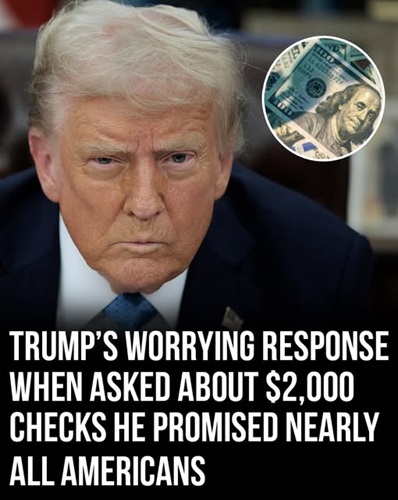
Every January, Americans anticipate tax refunds, but the start of 2026 brings renewed discussion about a potential fourth stimulus check, following President Donald Trump’s promises in late 2025.
The administration has suggested that middle- and low-income Americans could receive $2,000 each, funded by revenue collected from tariffs.
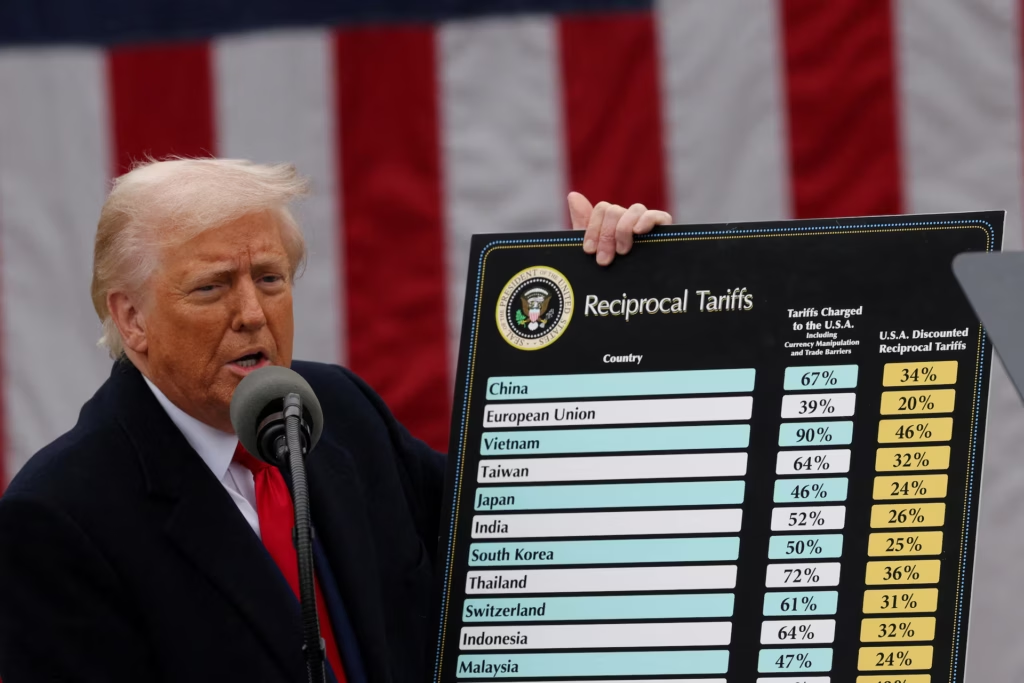
The plan has been described by Trump as a “dividend” for taxpayers, drawn from substantial income generated by tariffs on imported goods, particularly from China.
This announcement has sparked both excitement and skepticism. Taxpayers hope for extra cash that could assist with daily expenses, while economists and legal experts caution about the plan’s feasibility, its inflationary impact, and potential legal hurdles surrounding tariff revenue usage.
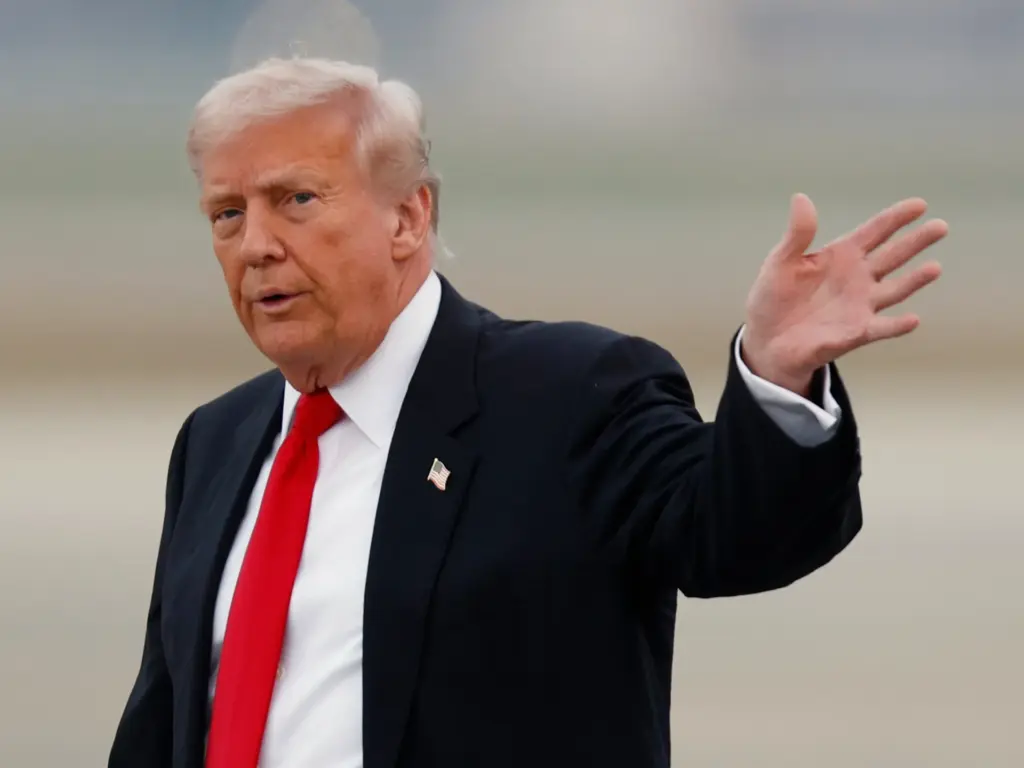
Trump’s Dividend Pledge
During multiple public statements, President Trump promised that individuals of moderate income would see a financial dividend before the midterm elections in 2026. He stated:
“We’ve taken in hundreds of millions of dollars in tariff money. We’re going to be issuing dividends later on. Somewhere prior to, you know, probably in the middle of next year… a little bit later than that.
Of thousands of dollars for individuals of moderate income, middle income.”
Trump emphasized that the payments would prioritize those earning less than the high-income thresholds, reinforcing the administration’s messaging that the benefit would help everyday Americans rather than the wealthy.
However, during a recent Oval Office interview, Trump seemed momentarily uncertain when reminded of his pledge to send $2,000 checks, a commitment he had tied explicitly to tariff revenue:
“I did do that? When did I do that?”
He clarified that he was thinking of a separate initiative—a $1,776 bonus for service members—but maintained that the $2,000 dividend payments were still planned and would likely occur toward the end of 2026, financed by what he described as “substantial” tariff revenue.
How the Tariff Revenue Works
The administration’s plan relies heavily on tariffs collected from imports, primarily from China. Trump has repeatedly highlighted that the revenue from tariffs has reached historically high levels.
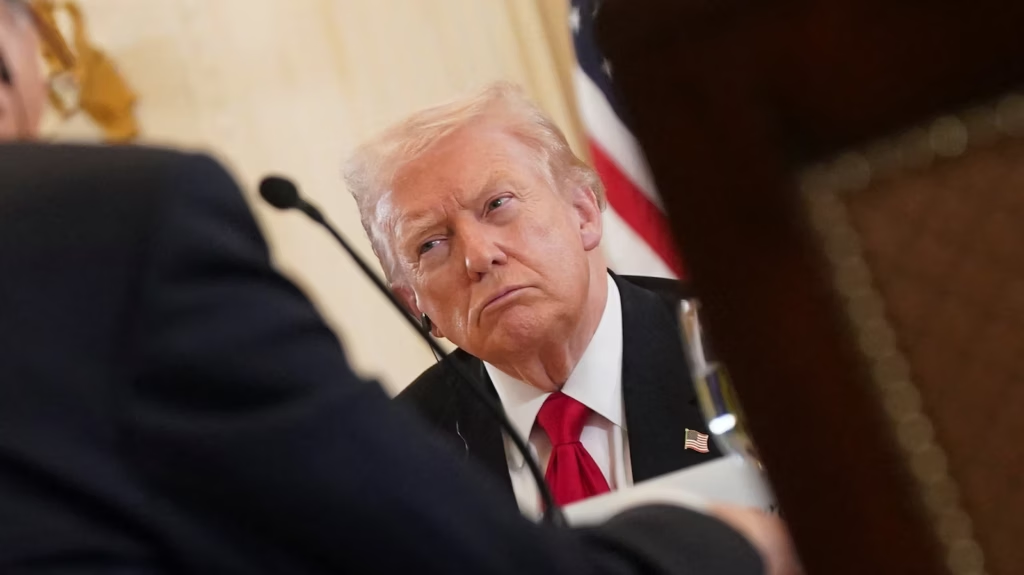
He claimed on social media that the administration had brought in “trillions of dollars” through these trade measures:
“People that are against Tariffs are FOOLS! We are taking in Trillions of Dollars and will soon begin paying down our ENORMOUS DEBT, $37 Trillion.
Record Investment in the USA…A dividend of at least $2,000 a person (not including high-income people!) will be paid to everyone.”
The administration intends to use the tariff revenue to fund these dividends, emphasizing a direct benefit from trade policy to American households.
Trump framed the plan as part of a broader economic strategy: boosting domestic investment, reducing debt, and rewarding middle- and low-income citizens.
Experts, however, caution that the expected tariff revenue may not be sufficient to cover $2,000 per eligible American.
While Trump suggested “trillions of dollars,” official Treasury figures show $90 billion collected in tariffs as of late September, far short of the estimated $600 billion cost of issuing $2,000 checks to all eligible recipients. This discrepancy has fueled debate over whether the plan is financially realistic.
Legal and Supreme Court Considerations
The administration’s tariff-based dividend plan faces potential legal challenges. Critics argue that using tariff revenue in this way may exceed the president’s legal authority, and some legal experts have predicted that the Supreme Court may need to weigh in on the issue.
If the Supreme Court rules against the administration’s tariff policies, it could require refunds of previously collected revenue, effectively eliminating the funds intended for the $2,000 dividend. Trump has publicly expressed concern about this scenario, warning on social media that an adverse ruling would have severe consequences:
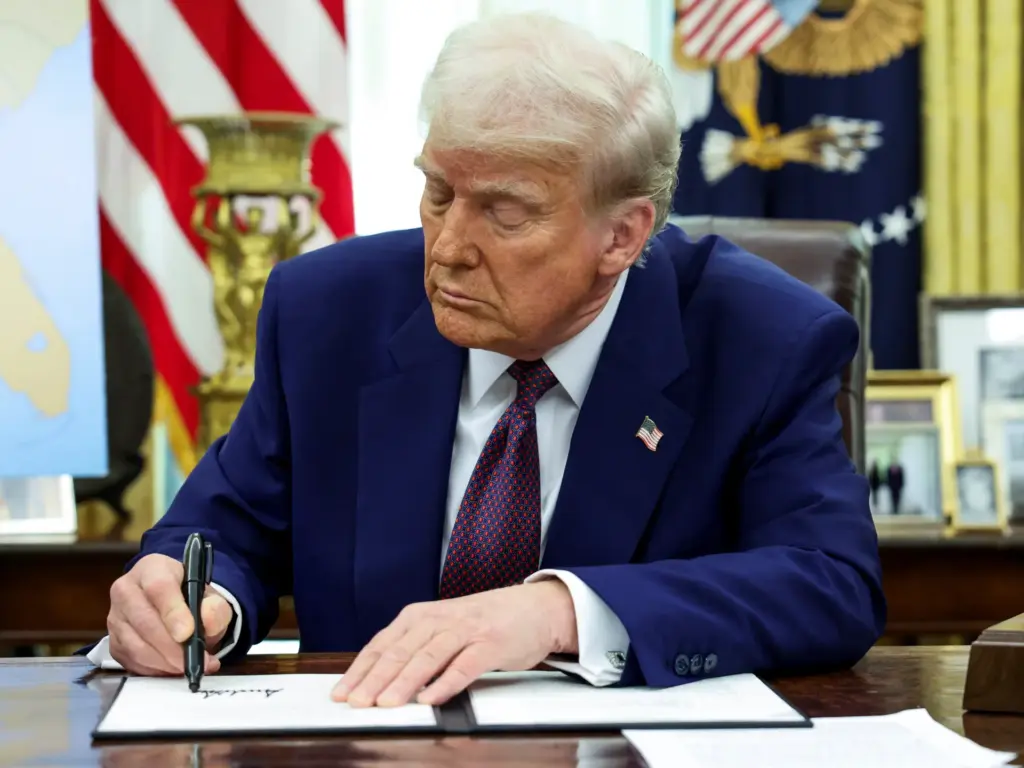
“Remember, when America shines brightly, the World shines brightly. In other words, if the Supreme Court rules against the United States of America on this National Security bonanza, WE’RE SCREWED.”
This underscores the high stakes involved, both politically and financially, for the administration.
Treasury and Economic Perspectives
Treasury Secretary Scott Bessent has provided additional details about the nature of the $2,000 dividend, emphasizing that it might take various forms, not necessarily as a direct cash check:
“I haven’t spoken to the president about this yet, but… it could be just the tax decreases that we are seeing on the president’s agenda. No tax on tips, no tax on overtime, no tax on Social Security.
Deductibility of auto loans…So, those are substantial deductions that are being financed in the tax bill.”
Bessent later clarified that Americans could see “very large refunds” ranging from $1,000 to $2,000 per household, suggesting that the benefit could come as a combination of tax cuts, withholding adjustments, and direct refunds.
Additionally, changes to withholding status could reduce the amount of tax deducted from each paycheck, effectively increasing take-home pay for workers. Bessent described this as a “real increase” in wages, particularly benefiting low- and middle-income households.
Inflationary Concerns
The prospect of distributing substantial sums to Americans has raised concerns about inflation. Treasury officials and Republican lawmakers have warned that a sudden injection of $2,000 per person could increase consumer spending rapidly, potentially pushing prices higher across multiple sectors.
Bessent highlighted that Americans should consider saving rather than immediately spending any dividend payments to mitigate inflationary pressures.
Economists have also noted that combining tariff-funded dividends with other fiscal policies could have complex effects on the broader economy, making careful planning essential.
Political Implications
Trump’s dividend plan is closely tied to midterm election politics. By promising targeted financial relief to moderate- and low-income Americans, the administration aims to bolster support ahead of key congressional races.
While Trump frames the dividend as a reward from successful tariff collection, critics argue that the initiative is largely politically motivated, designed to sway voter sentiment rather than address structural economic needs.
The administration continues to emphasize the economic benefits of tariffs, including domestic manufacturing growth, job creation, and funding for taxpayer dividends.
However, the uncertainty over revenue sufficiency and potential legal challenges has fueled skepticism among independent analysts and Congressional budget experts.
Step 1: How the Dividend Could Be Distributed
While President Trump has repeatedly promised $2,000 per eligible American, Treasury officials have clarified that these payments may not come as direct checks alone.
Instead, the administration is considering multiple methods to ensure households receive the financial benefit.
Tax Refunds
Treasury Secretary Scott Bessent indicated that a large portion of the dividend could come in the form of enhanced tax refunds, ranging from $1,000 to $2,000 per household.
This approach would be processed through the IRS, leveraging existing tax filing and refund mechanisms.

Withholding Adjustments
Another potential method involves modifying payroll withholding, meaning workers would see higher take-home pay in each paycheck.
Reducing taxes on tips, overtime, or Social Security contributions could function as an indirect dividend, effectively putting money into households’ pockets gradually rather than as a lump sum.
Deductions and Incentives
The administration may also expand deductions on certain expenses, including auto loans or mortgage interest, to provide additional financial relief.
This approach is aimed at maximizing the benefit for middle- and low-income households, while keeping administrative costs lower than issuing direct payments.
Combination of Methods
The most likely scenario, according to Treasury insiders, is a hybrid approach combining direct refunds, withholding adjustments, and expanded deductions.
This method allows flexibility if tariff revenue or legal outcomes limit the administration’s ability to distribute cash directly.
Step 2: The Cost of the Dividend Program
Experts estimate that issuing $2,000 per eligible American could cost approximately $600 billion, a sum significantly higher than the $90 billion raised from tariffs by late September 2025.
This gap has raised questions about feasibility and sustainability:
Tariff Revenue vs. Cost: Even with high tariff revenue, the projected inflows are insufficient to cover the promised $2,000 for all eligible Americans.
Potential Budget Deficit Implications: Without alternative funding, the plan could increase the federal deficit, adding pressure on policymakers to either scale back payments or identify other revenue sources.
Inflation Risks: Distributing large sums to households could drive higher consumer spending, potentially fueling inflation, especially if combined with an already tight labor market and rising energy prices.
Step 3: Legal Challenges
The administration’s reliance on tariff revenue introduces significant legal risk. Courts are currently reviewing the legality of some tariffs, and a negative ruling could require refunds to importers or limit the administration’s ability to allocate funds for dividends:
Supreme Court Implications: If the Supreme Court rules against the tariffs, the administration may lose access to the revenue intended for the dividend, potentially canceling or reducing payments.
Congressional Oversight: Even if tariff revenue is available, Congress may assert authority over federal spending, leading to further legal or political challenges.
National Security Justifications: The administration has cited tariffs as a “national security bonanza,” but legal experts note that using national security as justification for distributing funds directly to households could face scrutiny.
Step 4: Economic and Inflationary Effects
The potential distribution of $2,000 per eligible American could have mixed economic effects:
Boost in Consumer Spending
Households may use the funds for groceries, utilities, mortgage payments, or discretionary spending, providing a short-term boost to the economy. Retail, travel, and service sectors could see immediate gains.
Inflationary Pressure
Economists warn that injecting $600 billion into the economy in a short period may increase demand-pull inflation, especially for goods and services already in high demand. Treasury Secretary Bessent and Republican lawmakers have urged Americans to save rather than spend immediately to mitigate inflation.
Impact on Wages
Changes to withholding and payroll adjustments could increase take-home pay for workers, particularly in lower-income brackets. While this effectively boosts wages, it also increases disposable income, which could accelerate inflation if spending surges.
Step 5: Public Reaction
Public response to the $2,000 dividend promise has been varied:
Optimism Among Middle- and Low-Income Households: Many Americans express hope that the payments will provide relief for daily expenses, student loans, healthcare costs, and family needs.
Skepticism from Economists: Experts question the plan’s feasibility, noting that tariff revenue is insufficient to cover the full amount and warning of unintended consequences for inflation and federal debt.
Political Debate: Supporters argue that the dividend rewards Americans for enduring tariffs and stimulates economic growth. Critics view it as political maneuvering aimed at boosting approval ahead of the 2026 midterms.
Step 6: Alternative Scenarios
Given uncertainties in revenue and legal rulings, the administration has several contingency options:
Partial Payments
If tariff revenue is lower than projected, the government could issue smaller payments, e.g., $1,000 per household, and defer the remainder until additional funds become available.
Expanded Tax Deductions
Instead of direct cash, the administration could increase deductions or credits for payroll taxes, Social Security contributions, or other eligible expenses, providing financial relief indirectly.
Targeted Distributions
To reduce costs and focus on those most in need, payments could be means-tested, prioritizing households below a specific income threshold while excluding higher earners.
Delayed Distribution
If legal challenges or revenue shortfalls persist, the administration could delay payments to late 2026 or early 2027, potentially reducing political impact but ensuring compliance with fiscal and legal constraints.
Step 7: The Broader Context
The proposed $2,000 dividend reflects broader debates over fiscal policy, tariffs, and stimulus measures:
Trade Policy Link: Using tariff revenue to fund payments highlights the administration’s approach to leveraging trade policy for direct public benefit.
Stimulus Precedent: Following previous stimulus checks in 2020 and 2021, Americans are familiar with direct payments from the federal government, but funding mechanisms now differ, emphasizing alternative revenue streams.
Political Strategy: Distributing dividends before midterm elections could mobilize voter support, particularly among middle-income households who may feel directly benefited by the policy.
Step 8: Expert Analysis
Economists and policy analysts offer nuanced perspectives:
Feasibility Concerns: Some experts argue that the proposed $2,000 per person would require additional funding beyond tariffs, potentially increasing federal debt or requiring reallocations from other programs.
Inflation Risk: Rapidly distributing large sums may exacerbate inflation, particularly in sectors already facing supply constraints.
Economic Stimulus vs. Political Strategy: Analysts note that while the dividend could provide short-term economic stimulus, its timing suggests a significant political motive, aimed at boosting electoral support.
Step 9: Summary of Potential Impacts
If implemented as planned, the $2,000 dividend could:
Inject hundreds of billions of dollars into the economy, primarily benefiting middle- and low-income households.
Provide immediate financial relief for bills, groceries, and other household expenses.
Carry inflationary risks, particularly if spending surges rapidly.
Face legal uncertainty due to reliance on tariff revenue and Supreme Court review.
Influence political dynamics ahead of the 2026 midterms.
Conclusion
The potential $2,000 dividend promised by President Trump represents a highly ambitious and politically charged economic measure. While it could provide meaningful relief to millions of Americans, its feasibility is constrained by:
Limited tariff revenue versus projected costs
Legal challenges regarding the use of tariff funds
Inflationary implications from rapid distribution
Political and fiscal balancing by the administration
For taxpayers, the plan underscores the importance of monitoring IRS updates, potential withholding changes, and available deductions.
Whether delivered as direct checks, refunds, or payroll adjustments, the proposed dividend could reshape household finances in 2026.
While the final outcome remains uncertain, the announcement has already sparked debate nationwide about economic policy, trade revenue utilization, and the role of government in providing targeted financial relief.
