
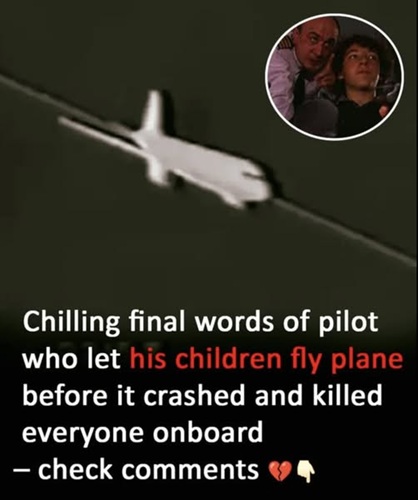
Some aviation accidents fade from public memory over time, while others remain deeply unsettling decades later. Aeroflot Flight 593 belongs firmly in the latter category. The crash, which occurred on March 23, 1994, claimed the lives of all 75 people on board and continues to be studied as one of the most preventable disasters in modern commercial aviation.
What makes Flight 593 particularly haunting is not a mechanical failure, severe weather, or sabotage—but a chain of human decisions that unfolded inside the cockpit.
At the center of the tragedy was a highly experienced pilot, a modern aircraft equipped with advanced automation, and a momentary lapse in judgment that violated fundamental aviation safety principles.
This accident has become a case study in cockpit discipline, human factors, automation misunderstanding, and the critical importance of strict adherence to operational procedures. It also serves as a reminder that even well-trained professionals are vulnerable to error when complacency, distraction, and misplaced confidence intersect.

The Aviation Landscape of the Early 1990s
To fully understand the circumstances surrounding Aeroflot Flight 593, it is essential to consider the historical and operational context of the time. The early 1990s marked a period of major transition for Russian civil aviation following the dissolution of the Soviet Union in 1991.
Aeroflot, once the world’s largest airline under a centralized state system, was undergoing rapid restructuring. The airline was modernizing its fleet, adopting Western-built aircraft such as Airbus models, and integrating international operational standards alongside long-standing Soviet-era practices.
This transition, while necessary, created challenges in training, standardization, and procedural discipline.
Cockpit culture during this period differed from what is strictly enforced today. While regulations clearly prohibited unauthorized individuals from manipulating flight controls, cockpit visits by family members or VIPs were not entirely uncommon on long-haul flights, particularly when the aircraft was cruising on autopilot.
However, such practices relied heavily on personal judgment rather than strict enforcement, leaving room for dangerous lapses.
Flight Overview and Aircraft Details
Aeroflot Flight 593 was a scheduled international passenger service operating from Sheremetyevo International Airport in Moscow to Kai Tak Airport in Hong Kong.
The aircraft assigned to the route was an Airbus A310-304, a wide-body, twin-engine jet designed for medium- to long-haul operations.
The Airbus A310 represented a significant technological step forward for Aeroflot at the time. It featured advanced fly-by-wire-assisted systems, sophisticated autopilot functions, and cockpit automation intended to reduce pilot workload during extended flights. However, this technology also required thorough understanding and strict procedural compliance to be used safely.

The aircraft was airworthy, properly maintained, and showed no evidence of mechanical malfunction prior to the accident. Weather conditions along the flight path were stable, and there were no external environmental factors that contributed to the crash.
The Flight Crew
The cockpit crew of Flight 593 consisted of three experienced professionals:
- Captain Yaroslav Kudrinsky, age 38, served as the aircraft commander. He had accumulated over 8,900 flight hours, including significant experience on Airbus aircraft.
- First Officer Igor Steinberg was responsible for monitoring systems and assisting in flight operations.
- Flight Engineer Sergey Yentsev managed aircraft systems, a role still present on some aircraft during that era.
By all accounts, Captain Kudrinsky was considered competent and professional. There was no indication of fatigue, impairment, or lack of qualification. The crew had successfully completed the departure and climbed to cruising altitude without incident.
Passengers on Board
The flight carried 75 people, including crew members and passengers. Among the passengers were business travelers, tourists, and families. Notably, Captain Kudrinsky’s two children were also aboard:
- Yana Kudrinskaya, aged 13
- Eldar Kudrinsky, aged 15
Their presence on the flight was not unusual, as airline employees were sometimes permitted to travel with family members. However, their involvement in cockpit activities would later prove catastrophic.
Cockpit Access and a Critical Misjudgment
Several hours into the flight, while cruising at high altitude over southern Siberia near the Kuznetsk Alatau mountain range, Captain Kudrinsky made a decision that violated established aviation regulations: he invited his children into the cockpit.
Initially, the situation appeared benign. The autopilot was engaged, and the aircraft was flying steadily at cruise altitude. Kudrinsky allowed his daughter Yana to sit in the captain’s seat briefly, pointing out navigational displays and external views. He instructed her not to touch any switches or controls.
While this behavior already represented a breach of standard cockpit discipline, the situation escalated when Eldar was invited to take the seat and place his hands on the control column.

Misunderstanding Automation and Manual Override
At the time, Captain Kudrinsky appeared to believe that the aircraft’s autopilot would prevent any significant deviation from controlled flight, regardless of minor control inputs. This assumption proved fatally incorrect.
The Airbus A310’s control system allowed manual input even when the autopilot was engaged. Applying force to the control column could partially override the autopilot’s commands without fully disengaging it in an obvious way. This design required pilots to carefully monitor flight parameters and understand the system’s response to manual input.
When Eldar applied pressure to the control column, the autopilot gradually disengaged from certain modes. Warning indicators appeared, but they were subtle and not immediately recognized by the crew. The aircraft began a slow, unintended roll to the right.
At first, the change was mild and went unnoticed. Within moments, however, the bank angle increased beyond normal limits.
The Start of a Deadly Chain Reaction
As the aircraft rolled further, the flight dynamics changed rapidly. The increasing bank angle caused rising G-forces, making movement inside the cockpit more difficult. Passengers were pressed into their seats, and the aircraft’s orientation shifted from stable cruise to an increasingly unstable attitude.
When the crew finally realized that the aircraft was no longer under proper control, valuable seconds had already been lost. Captain Kudrinsky attempted to regain control while simultaneously instructing his son to leave the seat.
By this point, the aircraft was entering a dangerous aerodynamic condition that required immediate and precise corrective action.
Once the Airbus A310 began rolling to the right, the situation inside the cockpit deteriorated rapidly. At cruising altitude, even a moderate bank angle can become dangerous if not corrected immediately. In the case of Flight 593, the bank angle gradually increased beyond 45 degrees, placing the aircraft well outside normal flight parameters.
As the aircraft rolled further, the lift generated by the wings became insufficient to maintain altitude. The plane began to lose height while still traveling at high speed. The crew was now dealing with a complex and dangerous combination of factors: excessive bank angle, increasing G-forces, and a misunderstanding of the aircraft’s automation status.

One of the most critical elements in this phase was the partial disengagement of the autopilot. The system did not fully disconnect in a way that was immediately obvious, which led to confusion. The pilots believed the autopilot was still compensating, while in reality, the aircraft was responding directly to manual input and aerodynamic forces.
This confusion cost the crew precious seconds.
Aerodynamic Stall and Spiral Descent
As the aircraft continued to bank, airspeed and angle of attack reached critical limits. The Airbus A310 entered an aerodynamic stall, a condition in which the wings can no longer generate enough lift to sustain controlled flight.
At high altitude, stalls are particularly dangerous. The thin air reduces aerodynamic margins, leaving little room for recovery if corrective actions are delayed or improperly applied.
Instead of a straightforward stall recovery, Flight 593 entered a spiral dive—a rapidly tightening descent characterized by increasing speed, loss of altitude, and extreme forces acting on both the aircraft and its occupants.
During this phase:
- The aircraft descended at an extremely high rate
- Control inputs became physically difficult due to G-forces
- Situational awareness inside the cockpit deteriorated further
- Recovery required precise, immediate, and coordinated action
Although the crew attempted to regain control, the combination of altitude loss, structural stress, and delayed recognition made recovery impossible.
The Final Moments
The final minutes of Flight 593 were marked by chaos and urgency. The cockpit voice recorder captured increasingly tense exchanges as the crew struggled to understand what was happening.
Captain Kudrinsky issued urgent commands, attempting to take full control and stabilize the aircraft. However, by this point, the plane had already lost too much altitude.
The Airbus briefly transitioned out of the stall, only to enter another uncontrolled maneuver. The aircraft descended rapidly toward the mountainous terrain below.
No distress call was transmitted. There was no time.
At approximately 12:58 a.m. local time, the aircraft impacted terrain at high speed. The crash was unsurvivable. All 75 people on board were killed instantly.
The Crash Site and Recovery Efforts
The crash occurred in a remote mountainous region of southern Siberia, making access difficult. Rescue teams faced harsh terrain and limited infrastructure.
Investigators recovered the flight data recorder (FDR) and cockpit voice recorder (CVR), both of which were crucial in reconstructing the sequence of events. The wreckage distribution and recorded data confirmed that the aircraft was fully intact until impact, ruling out structural failure or explosion.

Investigation and Official Findings
The official investigation, conducted by Russian aviation authorities with international oversight, concluded that human error was the primary cause of the accident.
Key findings included:
1. Unauthorized Cockpit Activity
Allowing untrained individuals—particularly children—to manipulate flight controls directly violated airline regulations and international aviation standards.
2. Misinterpretation of Automation
The crew did not fully understand how manual input interacted with the autopilot system. This misunderstanding delayed corrective action.
3. Breakdown of Cockpit Discipline
Standard operating procedures were not enforced. Proper crew resource management (CRM) was absent during critical moments.
4. Lack of Timely Recovery
Although recovery might have been theoretically possible early in the event, delayed recognition and improper responses eliminated that possibility.
Importantly, investigators found no mechanical failure, no weather-related issues, and no external interference.
The crash was deemed entirely preventable.
The Role of the Cockpit Voice Recorder
The CVR from Flight 593 is often cited as one of the most disturbing in aviation history—not because of dramatic language, but because of how ordinary the situation seemed at first.
The recording documents:
- Casual conversation and laughter
- The captain explaining controls to his children
- Gradual realization that something was wrong
- Increasing urgency and panic
- The final attempts to regain control
For aviation professionals, the CVR serves as a sobering reminder that accidents often begin with small, seemingly harmless decisions.
Lasting Impact on Aviation Safety
The tragedy of Flight 593 had long-term implications for aviation worldwide.
Stricter Cockpit Access Rules
Airlines reinforced and strictly enforced policies preventing unauthorized individuals from entering the cockpit or interacting with controls.
Improved Automation Training
Pilot training programs placed greater emphasis on understanding how automated systems interact with manual inputs.
Enhanced Crew Resource Management
CRM training became more comprehensive, focusing on communication, authority gradients, and procedural discipline.
Cultural Shift in Safety Practices
The accident underscored that experience alone does not eliminate risk. Strict adherence to procedures became non-negotiable.
Why This Accident Still Matters
Decades later, Aeroflot Flight 593 continues to be studied in pilot training programs, safety seminars, and accident analysis documentaries. Its lessons remain relevant in an era of increasingly automated aircraft.
The core message is clear:
- Technology cannot compensate for poor judgment
- Automation must be understood, not trusted blindly
- Safety rules exist because the margin for error in aviation is unforgiving
Final Reflection
The loss of Aeroflot Flight 593 was not the result of fate, bad luck, or mechanical failure. It was the consequence of a brief lapse in discipline that escalated into irreversible tragedy.
Captain Kudrinsky was not reckless by nature, nor was he unqualified. His decision was human—but in aviation, human error can have irreversible consequences.
The deaths of all 75 people on board, including his own children, stand as a powerful reminder of why aviation safety standards are absolute.
Conclusion
Aeroflot Flight 593 remains one of the most chilling and instructive accidents in aviation history. It demonstrates how modern aircraft, advanced technology, and experienced crews can still be overcome by a single moment of poor judgment.
The accident reshaped safety culture, reinforced training standards, and continues to educate future generations of pilots and aviation professionals.
Above all, it reminds us that in aviation, discipline is not optional, and rules are written in lives.
Once the Airbus A310 began rolling to the right, the situation inside the cockpit deteriorated rapidly. At cruising altitude, even a moderate bank angle can become dangerous if not corrected immediately. In the case of Flight 593, the bank angle gradually increased beyond 45 degrees, placing the aircraft well outside normal flight parameters.
As the aircraft rolled further, the lift generated by the wings became insufficient to maintain altitude. The plane began to lose height while still traveling at high speed.
The crew was now dealing with a complex and dangerous combination of factors: excessive bank angle, increasing G-forces, and a misunderstanding of the aircraft’s automation status.
One of the most critical elements in this phase was the partial disengagement of the autopilot. The system did not fully disconnect in a way that was immediately obvious, which led to confusion. The pilots believed the autopilot was still compensating, while in reality, the aircraft was responding directly to manual input and aerodynamic forces.
This confusion cost the crew precious seconds.
Aerodynamic Stall and Spiral Descent
As the aircraft continued to bank, airspeed and angle of attack reached critical limits. The Airbus A310 entered an aerodynamic stall, a condition in which the wings can no longer generate enough lift to sustain controlled flight.
At high altitude, stalls are particularly dangerous. The thin air reduces aerodynamic margins, leaving little room for recovery if corrective actions are delayed or improperly applied.
Instead of a straightforward stall recovery, Flight 593 entered a spiral dive—a rapidly tightening descent characterized by increasing speed, loss of altitude, and extreme forces acting on both the aircraft and its occupants.
During this phase:
- The aircraft descended at an extremely high rate
- Control inputs became physically difficult due to G-forces
- Situational awareness inside the cockpit deteriorated further
- Recovery required precise, immediate, and coordinated action
Although the crew attempted to regain control, the combination of altitude loss, structural stress, and delayed recognition made recovery impossible.
The Final Moments
The final minutes of Flight 593 were marked by chaos and urgency. The cockpit voice recorder captured increasingly tense exchanges as the crew struggled to understand what was happening.
Captain Kudrinsky issued urgent commands, attempting to take full control and stabilize the aircraft. However, by this point, the plane had already lost too much altitude.
The Airbus briefly transitioned out of the stall, only to enter another uncontrolled maneuver. The aircraft descended rapidly toward the mountainous terrain below.
No distress call was transmitted. There was no time.
At approximately 12:58 a.m. local time, the aircraft impacted terrain at high speed. The crash was unsurvivable. All 75 people on board were killed instantly.
The Crash Site and Recovery Efforts
The crash occurred in a remote mountainous region of southern Siberia, making access difficult. Rescue teams faced harsh terrain and limited infrastructure.
Investigators recovered the flight data recorder (FDR) and cockpit voice recorder (CVR), both of which were crucial in reconstructing the sequence of events. The wreckage distribution and recorded data confirmed that the aircraft was fully intact until impact, ruling out structural failure or explosion.
Investigation and Official Findings
The official investigation, conducted by Russian aviation authorities with international oversight, concluded that human error was the primary cause of the accident.
Key findings included:
1. Unauthorized Cockpit Activity
Allowing untrained individuals—particularly children—to manipulate flight controls directly violated airline regulations and international aviation standards.
2. Misinterpretation of Automation
The crew did not fully understand how manual input interacted with the autopilot system. This misunderstanding delayed corrective action.
3. Breakdown of Cockpit Discipline
Standard operating procedures were not enforced. Proper crew resource management (CRM) was absent during critical moments.
4. Lack of Timely Recovery
Although recovery might have been theoretically possible early in the event, delayed recognition and improper responses eliminated that possibility.
Importantly, investigators found no mechanical failure, no weather-related issues, and no external interference.
The crash was deemed entirely preventable.
The Role of the Cockpit Voice Recorder
The CVR from Flight 593 is often cited as one of the most disturbing in aviation history—not because of dramatic language, but because of how ordinary the situation seemed at first.
The recording documents:
- Casual conversation and laughter
- The captain explaining controls to his children
- Gradual realization that something was wrong
- Increasing urgency and panic
- The final attempts to regain control
For aviation professionals, the CVR serves as a sobering reminder that accidents often begin with small, seemingly harmless decisions.
Lasting Impact on Aviation Safety
The tragedy of Flight 593 had long-term implications for aviation worldwide.
Stricter Cockpit Access Rules
Airlines reinforced and strictly enforced policies preventing unauthorized individuals from entering the cockpit or interacting with controls.
Improved Automation Training
Pilot training programs placed greater emphasis on understanding how automated systems interact with manual inputs.
Enhanced Crew Resource Management
CRM training became more comprehensive, focusing on communication, authority gradients, and procedural discipline.
Cultural Shift in Safety Practices
The accident underscored that experience alone does not eliminate risk. Strict adherence to procedures became non-negotiable.
Why This Accident Still Matters
Decades later, Aeroflot Flight 593 continues to be studied in pilot training programs, safety seminars, and accident analysis documentaries. Its lessons remain relevant in an era of increasingly automated aircraft.
The core message is clear:
- Technology cannot compensate for poor judgment
- Automation must be understood, not trusted blindly
- Safety rules exist because the margin for error in aviation is unforgiving
Final Reflection
The loss of Aeroflot Flight 593 was not the result of fate, bad luck, or mechanical failure. It was the consequence of a brief lapse in discipline that escalated into irreversible tragedy.
Captain Kudrinsky was not reckless by nature, nor was he unqualified. His decision was human—but in aviation, human error can have irreversible consequences.
The deaths of all 75 people on board, including his own children, stand as a powerful reminder of why aviation safety standards are absolute.
Conclusion
Aeroflot Flight 593 remains one of the most chilling and instructive accidents in aviation history. It demonstrates how modern aircraft, advanced technology, and experienced crews can still be overcome by a single moment of poor judgment.
The accident reshaped safety culture, reinforced training standards, and continues to educate future generations of pilots and aviation professionals.
Above all, it reminds us that in aviation, discipline is not optional, and rules are written in lives.
