
When most couples celebrate a 40th wedding anniversary, the conventional choices lean toward serene and indulgent experiences: a luxury cruise gliding across turquoise waters.
A secluded beach resort bathed in golden sunsets, or a quiet retreat in the tranquil mountains. For South African couple Marius and Michelle Nortje, however, the notion of celebration is intertwined with adventure, curiosity, and the raw pulse of the natural world.
For them, the wild is not merely a destination; it is a living classroom, a source of inspiration, and a mirror reflecting life’s unpredictability, resilience, and beauty.
Having shared four decades together, the Nortjes have cultivated a love that thrives on shared experiences, especially in the untamed landscapes of Africa. Their journey led them to Kruger National Park, one of the continent’s most famous and ecologically diverse game reserves.

Located in the northeast of South Africa, Kruger spans nearly 19,500 square kilometers—a vast mosaic of savannahs, forests, wetlands, and riverine ecosystems.
It is home to Africa’s legendary wildlife, from majestic lions and stealthy leopards to towering giraffes and lumbering elephants. The park has long been a sanctuary for conservationists, tourists, and photographers alike, offering a rare glimpse into the intricate balance of predator, prey, and the environment they inhabit.
A Routine Safari That Turned Into a Once-in-a-Lifetime Encounter
The Nortjes are not casual visitors. Marius, a professional wildlife photographer with decades of experience, and Michelle, an avid observer and supporter of conservation initiatives, have made Kruger a recurring pilgrimage. “We visit at least once every year, sometimes up to four times,” Marius shared during an interview with The Citizen. Each visit, they explained, is more than a sightseeing trip; it is a deliberate immersion into nature, where patience, timing, and attentiveness can reveal the unexpected.
Their December 2025 anniversary safari began like countless others. The couple set out on what they initially considered a routine drive along Kruger’s well-trodden tar roads, hoping to spot lions—arguably the park’s most sought-after residents. Yet, as any seasoned safari-goer knows, wildlife rarely follows human expectations. The lions eluded them that morning, prompting Marius to turn off onto a lesser-used gravel path, a choice that would ultimately lead to a truly extraordinary encounter.
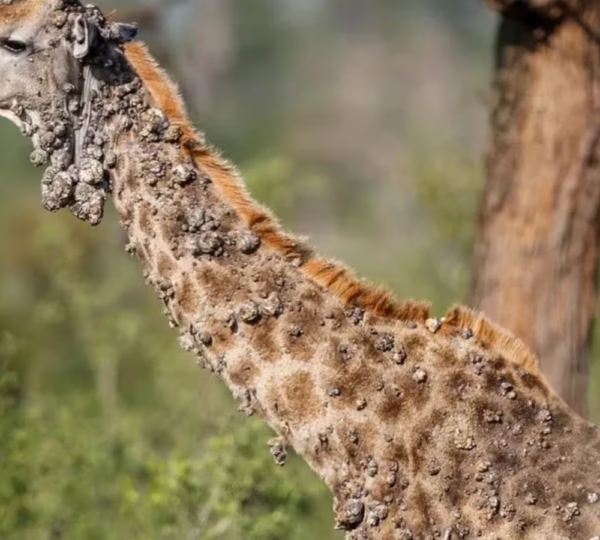
As they navigated the winding dirt road, the landscape opened into a mixture of bushveld and open plains. It was there that their first sighting of giraffes appeared—a single, graceful silhouette against the backdrop of golden grasses, followed closely by a second. But it was the third giraffe that stopped them in their tracks. Unlike the others, she bore an unusual pattern across her coat: clusters of lumps and wart-like protrusions that seemed to ripple along her tall, elegant frame.
“We noticed the first giraffe with strange growths,” Marius recounted. “At first, we weren’t sure what we were seeing—it looked unusual, almost alarming. But she was calm, grazing peacefully among the herd. It didn’t seem to hinder her movement or her feeding at all, though the growths themselves appeared pronounced.”
With the instinctive precision of a trained wildlife photographer, Marius lifted his camera, capturing a series of high-resolution images that would later ignite global attention. Michelle, equally captivated, observed quietly, marveling at the giraffe’s composure despite her visible condition. The moment was charged with a mix of wonder, concern, and reverence—an unplanned intersection of human curiosity and nature’s complexity.

The Story Goes Viral
After their encounter, Marius shared the photographs on Facebook, tagging the official South African National Parks (SANParks) page to raise awareness. At the time of the interview, SANParks had not responded, but the images quickly began circulating within online wildlife communities. Viewers around the world expressed astonishment, concern, and fascination at the sight of the giraffe, sparking conversations about wildlife health, disease, and the sometimes-hidden challenges faced by animals in their natural habitat.
The viral spread of the images eventually drew the attention of WorldWide Vets, an international animal welfare organization providing veterinary support to wildlife globally. Dr. Gemma Campling, founder and director of the organization, offered an authoritative explanation: the giraffe was afflicted with a viral condition caused by papillomavirus. More specifically, she was likely infected with a variant of Bovine Papillomavirus (BPV)—a virus known to affect certain large mammals, causing wart-like growths on the skin.
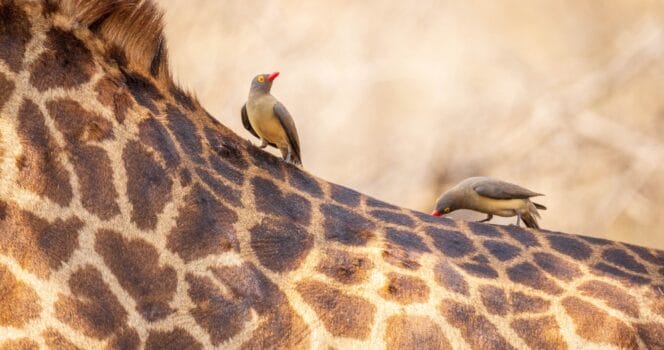
Papillomavirus, Dr. Campling explained, is a family of viruses affecting a wide range of animal species, each with its host-specific variations. Transmission often occurs through direct contact or via intermediary vectors. In this giraffe’s case, Dr. Campling hypothesized that oxpecker birds—small birds commonly seen riding on large mammals—might have facilitated the virus’s spread. These birds feed on parasites such as ticks and lice, and in doing so, occasionally transfer viral particles between animals. Remarkably, the rest of the herd showed no signs of infection, making this a rare and unusual case.
Despite its appearance, BPV is generally non-lethal, and in most instances, affected animals continue to feed, move, and interact normally within their environment. “Many cases are self-limiting,” Dr. Campling clarified. “The animals can recover naturally, without intervention, and the virus poses no threat to humans, unlike the human-specific variant of papillomavirus.” Nonetheless, the growths can cause discomfort as they enlarge, highlighting the resilience of wildlife in enduring environmental and health challenges.
Once Marius Nortje shared his photographs online, the response was swift and overwhelming. The images of the giraffe with the wart-like growths spread across social media platforms, including Facebook, Instagram, and specialized wildlife forums, captivating viewers from all corners of the globe. Users expressed a mix of shock, empathy, curiosity, and admiration, reflecting the way rare wildlife encounters resonate deeply with people even thousands of miles away from the African savannah.
One Facebook commenter remarked, “It’s incredible how nature can persist in the face of adversity. She’s still grazing, still moving gracefully. There’s so much to learn from her resilience.” Another added, “Marius’s photography doesn’t just capture a moment—it tells a story about wildlife we often take for granted.” This reaction highlighted a growing public awareness of wildlife health and the critical role that photography plays in bridging the gap between remote ecosystems and global audiences.
Expert Insight: Understanding Bovine Papillomavirus
The attention eventually reached WorldWide Vets, an international organization that supports wildlife veterinary care globally. Dr. Gemma Campling, the organization’s founder and director, provided a thorough explanation of what was being observed. The giraffe was diagnosed with a viral condition caused by papillomavirus, a type of virus that can affect various mammals and produce growths known as papillomas or warts. In this case, the strain was likely Bovine Papillomavirus (BPV), known to occasionally affect giraffes.
Dr. Campling explained that papillomavirus is species-specific, meaning most strains only infect their natural hosts. BPV typically affects cattle but can sometimes jump to other large herbivores, particularly in areas where species interact or share ecosystems. The transmission vector in this case was likely the oxpecker bird, a species that feeds on ticks and other small parasites on large mammals. While oxpeckers provide a cleaning service to their hosts, they can inadvertently facilitate the transmission of viruses such as BPV.
“This giraffe’s case is unusual,” Dr. Campling noted. “The rest of the herd appears unaffected, suggesting that transmission was limited, possibly due to behavioral factors or chance. It’s a reminder that even in well-monitored ecosystems, viral infections can occur in unexpected ways.”
Although BPV can be visually striking and sometimes cause discomfort, it is rarely life-threatening. In most cases, the papillomas may eventually regress naturally without intervention. This highlights a fundamental principle in wildlife management: not every medical anomaly requires human interference. Instead, careful observation, monitoring, and contextual understanding of animal behavior often provide the best approach.
Wildlife Monitoring: A Pillar of Conservation
The Nortjes’ encounter underscored the critical role of wildlife monitoring programs within national parks. Continuous observation allows conservationists and veterinarians to track unusual behaviors, diseases, or physical anomalies that could indicate emerging threats to individuals or populations. In Kruger National Park, SANParks veterinarians routinely conduct health assessments, particularly for species susceptible to disease outbreaks or environmental stressors.
“Monitoring is not only about intervention,” Dr. Campling emphasized. “It’s also about gathering knowledge—understanding how diseases spread, how individual animals cope, and how interactions between species affect overall ecosystem health. Even a single giraffe can provide insight into broader ecological dynamics.”

This instance, where a viral condition likely transmitted via oxpecker birds, demonstrates the interconnectedness of species within an ecosystem. Every organism—from birds to large herbivores—plays a role in shaping the environment, sometimes in ways that are invisible to casual observers. Understanding these interactions is vital for effective conservation strategies, allowing managers to anticipate and respond to potential threats without disrupting natural processes unnecessarily.
The Public and Scientific Impact
The viral images also highlighted the growing role of wildlife photography in conservation science. Marius’s careful documentation of the giraffe not only alerted experts but also provided valuable visual evidence for researchers studying disease patterns in large mammals. High-quality photographs, when shared responsibly, can inform both the public and the scientific community, inspiring dialogue about animal welfare, habitat preservation, and the importance of protecting vulnerable species.
Moreover, the public response demonstrated a shared empathy for wildlife that transcends national boundaries. Thousands of viewers engaged in conversations about the giraffe’s well-being, her environment, and the broader challenges faced by African wildlife. These discussions often emphasized resilience, adaptability, and the delicate balance between vulnerability and survival in the wild.
Observing the Unseen: Lessons in Patience and Awareness
For the Nortjes, witnessing the giraffe’s condition was an intimate lesson in patience, observation, and the profound complexity of nature. Michelle reflected on the experience: “It’s one thing to see wildlife on a routine safari, but it’s entirely another to encounter something so rare, so raw, and so instructive. Moments like this remind you how interconnected all species are and how much care conservationists invest in safeguarding these ecosystems.”
Marius agreed, noting that such encounters are as much about learning and reflection as they are about photography. “You can plan for the perfect shot or the classic ‘big five’ sighting, but some of the most unforgettable moments happen unexpectedly. They’re not just visually compelling—they teach you something about survival, resilience, and coexistence.”
The giraffe’s calm demeanor, despite her visible condition, became a symbol of nature’s quiet endurance. While her papillomas may have caused discomfort, she continued grazing, interacting naturally with her environment, and fulfilling her role within the herd. This balance between vulnerability and strength resonates as a universal lesson, reminding observers that adversity, whether in human life or the wild, can be met with grace and persistence.
For Marius and Michelle Nortje, the encounter with the giraffe was more than a moment of curiosity—it was a profound affirmation of why they have returned to Kruger National Park year after year. Their 40-year marriage, built on shared passions and a deep appreciation for life’s wonders, found a parallel in the patience, resilience, and interconnectedness observed in the wild. As Michelle reflected, “It’s moments like these that remind you why we keep coming back—not for the routine sights, but for the extraordinary, the rare, and the lessons that nature offers without words.”

A Marriage Intertwined with Nature
The Nortjes’ relationship with the wild stretches back decades. Marius, whose photography career spans numerous wildlife reserves and conservation projects, has spent countless hours capturing the subtle behaviors and hidden stories of African fauna. Michelle, equally engaged, has dedicated herself to studying wildlife patterns and supporting environmental education initiatives. Together, they approach each safari not simply as tourists but as careful observers, blending scientific curiosity with aesthetic appreciation.
On that December morning, as the giraffe calmly grazed despite her wart-like growths, the couple found themselves reflecting on the delicate balance of life—both human and animal. The moment was a convergence of two narratives: the Nortjes’ enduring partnership and the giraffe’s quiet demonstration of resilience. Each mirrored the other in subtle ways: strength tempered with vulnerability, endurance amid challenges, and the capacity to continue gracefully despite visible obstacles.
The Role of Photography in Conservation
This encounter also reinforces the vital role of photography in modern conservation. Marius’s images do more than capture a fleeting moment; they provide a visual record of rare phenomena that can inform scientific research, veterinary intervention, and public awareness. In wildlife reserves like Kruger, documentation of unusual conditions—such as this giraffe’s BPV infection—is essential for understanding population health and potential ecological threats.
Wildlife photography has evolved beyond aesthetics. Today, it serves as a bridge between remote ecosystems and global audiences. By sharing high-quality images, photographers raise awareness of species health, conservation challenges, and the intricate relationships between animals, birds, and their habitats. The Nortjes’ careful documentation of the giraffe’s condition exemplifies how photography can inspire dialogue, mobilize resources, and foster empathy for creatures whose lives often go unseen.
Conservation and Veterinary Oversight in Kruger National Park
While public fascination with the giraffe grew, Kruger National Park’s conservation and veterinary teams remained vigilant. SANParks veterinarians conduct regular health assessments of iconic species, ensuring that animals are thriving even when facing unusual conditions. In cases like the giraffe’s BPV infection, intervention is typically unnecessary unless the animal shows clear signs of distress or impaired mobility.
“Nature has its own mechanisms for coping with disease,” Dr. Gemma Campling emphasized. “Our role is to monitor, collect data, and ensure that the animal is able to continue fulfilling its ecological role safely. This giraffe is a reminder that resilience exists not just in humans, but in the wild itself.”
This approach underscores a key principle of conservation: intervention must be balanced with natural processes. Overly aggressive interference can disrupt ecosystems, whereas careful observation allows animals to adapt while still providing researchers with essential knowledge.
Lessons from the Wild
For Marius and Michelle, the encounter offered lessons far beyond the scope of a typical safari. It highlighted patience, observation, and empathy as central components of understanding wildlife. The giraffe’s calm demeanor, despite her visible papillomas, illustrated the natural world’s capacity for endurance. It also reinforced the importance of recognizing the interconnectedness of ecosystems, where even small players—like oxpecker birds—can influence the health and well-being of much larger animals.
Michelle reflected on the broader implications: “It’s humbling to witness resilience firsthand. This giraffe has her own challenges, yet she continues to feed, interact with her herd, and fulfill her role in the ecosystem. It’s a lesson in grace and adaptability that applies to life everywhere.”
A Marriage Marked by Shared Discovery
The giraffe encounter became a metaphor for the Nortjes’ own marriage. Forty years together have taught them that life is rarely predictable, that joy and challenge often coexist, and that patience, observation, and mutual support are essential. Just as the giraffe demonstrates resilience in the face of adversity, the Nortjes have navigated the ups and downs of life with curiosity, dedication, and a willingness to embrace the unexpected.
Marius summarized their sentiment perfectly: “Sometimes the most unforgettable moments aren’t planned. They happen when you’re truly present, paying attention, and willing to see the extraordinary in what others might overlook. This giraffe reminded us of that in the most vivid way possible.”
Conservation, Awareness, and the Legacy of Observation
The story of the giraffe with BPV also reinforces the ongoing importance of public engagement in wildlife conservation. Viral images, responsibly shared, can connect people with ecosystems they might never experience firsthand. They can highlight rare diseases, inform scientific study, and foster empathy for the often-hidden lives of wild animals. By documenting and sharing their encounter, the Nortjes contributed not only to public knowledge but also to the broader goals of wildlife protection and awareness.
Furthermore, the episode underscores that resilience, vulnerability, and interdependence are universal themes—whether in human relationships or the animal kingdom. Just as Kruger’s wildlife thrives within a delicate ecological balance, human life flourishes when nurtured with care, attention, and respect for the unseen challenges faced by others.
Conclusion: Love, Life, and Lessons from the Wild
Celebrating four decades of marriage, Marius and Michelle Nortje discovered a story that extends beyond their personal journey. Their encounter with the giraffe highlighted not only a rare medical condition but also the profound beauty, resilience, and interconnectedness inherent in the natural world. Through patient observation, careful documentation, and shared reflection, they were reminded of life’s enduring lessons: that strength often exists alongside vulnerability, that challenges can be met with grace, and that the extraordinary often lies hidden within the ordinary.
For the Nortjes, the giraffe became more than a subject of a photograph—it became a symbol of their shared journey, a testament to the power of observation, and a reminder that life’s most profound insights often emerge in unexpected places.
As Marius put it, “It’s a privilege to witness moments like this. They remind us that wildlife, like life itself, is full of surprises, lessons, and quiet beauty. And just like our marriage, the experience leaves a lasting impression—one that deepens appreciation for the resilience and wonder all around us.”
In the end, their 40th anniversary was not defined by luxury or comfort but by connection—to each other, to the wild, and to the profound lessons that nature quietly imparts. This story reminds us that some of life’s richest experiences, and the most meaningful celebrations, are found not in man-made indulgences but in the untamed, enduring heart of the natural world.
