
The golden age of Hollywood created legends whose influence continues to shape cinema today. Among those unforgettable figures was Natalie Wood, a performer whose life, career, and mysterious death remain deeply woven into film history.
Born Natalia Nikolaevna Zakharenko in San Francisco in 1938 to Russian immigrant parents, Wood entered the entertainment world at a remarkably young age. Her mother strongly believed her daughter was destined for stardom and pursued acting opportunities tirelessly.
From early childhood, Wood appeared in films and commercials, quickly gaining attention for her expressive eyes and emotional presence. Even as a child performer, she demonstrated unusual maturity, a quality that casting directors and audiences immediately noticed.
Her breakthrough came with the beloved holiday film Miracle on 34th Street. In the movie, Wood portrayed Susan Walker, a skeptical little girl whose faith in Santa Claus is ultimately restored.
The role captured audiences across the United States and helped establish her reputation as one of the most promising child actors of her generation. Critics praised her natural delivery and ability to convey authentic emotion.
Unlike many child stars whose fame fades with adolescence, Wood successfully navigated the difficult transition into adult acting roles. Hollywood history is filled with performers who struggled during this period, but Wood demonstrated remarkable resilience.
By her teenage years she was already appearing in increasingly complex roles that demanded emotional depth. Directors quickly realized she possessed a rare ability to portray vulnerability without losing strength.
Her career reached a new level with the influential drama Rebel Without a Cause. In the film she starred opposite the legendary actor James Dean.
Wood played Judy, a troubled teenager navigating family conflict and emotional isolation. The performance resonated deeply with young audiences, reflecting the anxieties and frustrations of postwar American youth.
The film became a cultural milestone, and Wood’s portrayal earned her an Academy Award nomination for Best Supporting Actress. It confirmed that she was no longer merely a child star but a serious dramatic performer.
Throughout the late 1950s and early 1960s, Wood continued building a career defined by emotionally demanding roles. Her performances often explored themes of longing, identity, and complicated relationships.
Perhaps her most famous performance arrived with the musical film West Side Story, where she played Maria, a young woman caught in a tragic love story inspired by Shakespeare’s Romeo and Juliet.
The film was a major success and won ten Academy Awards, including Best Picture. Although Wood’s singing voice was largely dubbed for the film, her emotional acting helped anchor the story’s dramatic core.
Audiences were captivated by her portrayal of innocence confronting violence and prejudice. Her character’s heartbreak and hope reflected broader social tensions of the early 1960s.
Wood’s career continued with notable roles in films such as Splendor in the Grass, where she starred opposite Warren Beatty in a deeply emotional drama.
Her performance in that film earned her another Academy Award nomination. Critics praised her ability to portray psychological turmoil with remarkable authenticity.
By the early 1960s, Natalie Wood had become one of Hollywood’s most recognizable and respected actresses. Her image appeared on magazine covers, and she commanded leading roles in major studio productions.
Despite professional success, her personal life often drew significant public attention. Hollywood’s fascination with celebrity relationships meant that her marriages and friendships frequently appeared in newspapers and magazines.
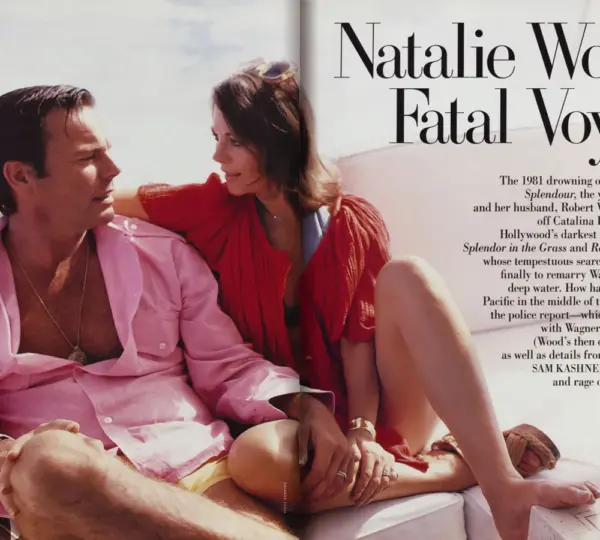
One of the most discussed relationships in her life was with actor Robert Wagner. The couple married in 1957, divorced in 1962, and later remarried in 1972.
Their relationship, marked by both romance and turbulence, fascinated the public. Hollywood reporters often portrayed them as one of the industry’s most glamorous couples.
Wood also worked with many prominent figures in the entertainment industry. Directors admired her professionalism, while fellow actors frequently spoke about her generosity and emotional intelligence.
Although she achieved great success, Wood reportedly experienced periods of personal struggle and anxiety. The pressures of fame, combined with the expectations placed on major film stars, could be overwhelming.
Still, she remained dedicated to her craft and continued acting through the 1970s. She appeared in films and television projects that allowed her to explore more mature characters.
By the early 1980s, Wood was still an active and respected figure in Hollywood. Few could have predicted that her life would soon become one of the entertainment industry’s most enduring mysteries.
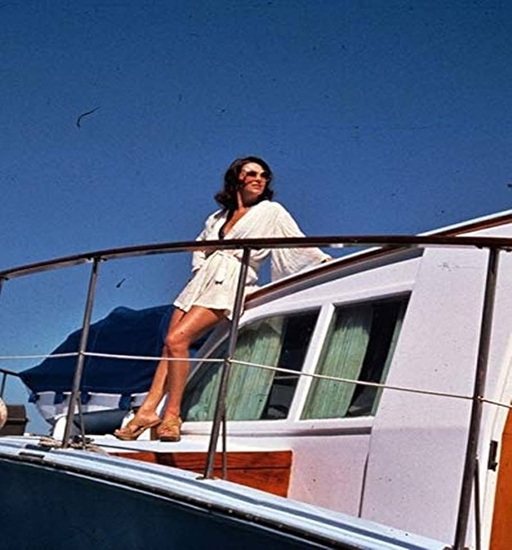
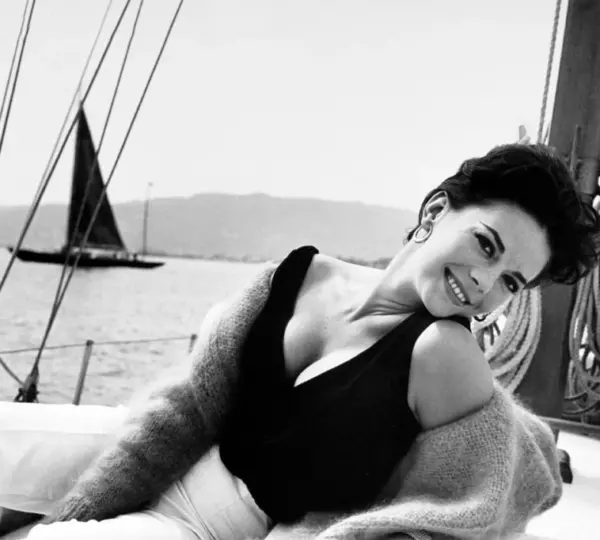
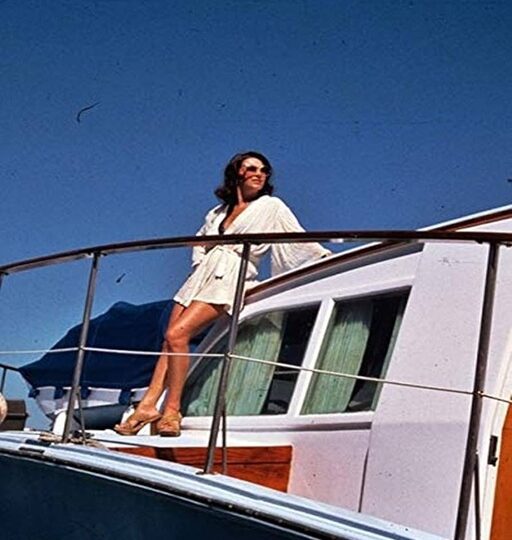
In November 1981, Wood traveled with her husband Robert Wagner aboard their yacht, named the Splendour. The boat was near Catalina Island off the coast of California.
Also present on the trip was actor Christopher Walken, who was working with Wood on the film Brainstorm.
The yacht’s captain, Dennis Davern, was also on board. The small group planned a quiet weekend getaway away from the intense spotlight of Hollywood life.
During the evening of November 28, the group reportedly had dinner and spent time together aboard the boat. Accounts later suggested that alcohol had been consumed during the gathering.
At some point during the night, Natalie Wood disappeared from the yacht. The circumstances surrounding her disappearance quickly became the subject of widespread concern and speculation.
The following morning, authorities discovered her body floating in the water near Catalina Island. She was 43 years old.
An inflatable dinghy from the yacht was found nearby. Investigators initially believed Wood may have attempted to board the small boat and accidentally fallen into the water.
The Los Angeles County coroner ruled her death a drowning and initially classified it as an accident. However, questions about the events of that night continued to linger.
Investigators interviewed Wagner, Walken, and Davern, but the exact timeline of what happened before Wood entered the water remained unclear.
Over the years, various accounts of the evening emerged, sometimes conflicting with earlier statements. These discrepancies contributed to growing public curiosity and debate.
In 2011, the Los Angeles County Sheriff’s Department reopened the investigation after new information surfaced. Officials emphasized that they wanted to review the case carefully using modern investigative methods.
The renewed investigation brought renewed attention to the events surrounding Wood’s final hours. Media outlets around the world revisited the story, examining witness statements and historical evidence.
In 2012, the coroner’s office amended Wood’s death certificate. The cause of death was changed to drowning with “other undetermined factors.”
This revision did not identify a specific cause beyond drowning but acknowledged that certain aspects of the case remained uncertain.
In 2018, investigators announced that Robert Wagner was considered a “person of interest” in the ongoing inquiry. Authorities clarified that this designation did not imply criminal charges.
Wagner has consistently denied any wrongdoing and has cooperated with investigators over the years. The case remains officially unresolved.
For many observers, the uncertainty surrounding Wood’s death has contributed to its enduring fascination. The combination of celebrity, tragedy, and unanswered questions continues to capture public attention.
Yet beyond the mystery, Natalie Wood’s artistic legacy remains powerful and influential. Her performances continue to be studied by film historians and admired by audiences.
Younger viewers discovering classic cinema often encounter her work for the first time through restored prints and streaming platforms.
Her role in Rebel Without a Cause remains one of the most iconic portrayals of teenage alienation in American film history.
Similarly, West Side Story continues to be celebrated as one of the greatest movie musicals ever produced.
Wood’s ability to express emotional vulnerability helped bring realism to many of her characters, setting her apart from more stylized performers of the era.
Film scholars often highlight her talent for conveying subtle emotional shifts through facial expression and tone rather than exaggerated gestures.
This naturalistic style helped bridge the gap between the classic studio system and the more psychologically complex performances that emerged in later decades.
Beyond acting, Wood also influenced how Hollywood viewed the transition from child performer to adult star.
Her successful evolution demonstrated that young actors could grow artistically while maintaining credibility with audiences.
The industry continues to reference her career as an example of longevity in a profession often marked by short-lived fame.
Natalie Wood’s personal story also reflects broader themes about Hollywood during the mid-twentieth century.
The studio system carefully shaped public images of stars, while private struggles often remained hidden behind glamorous publicity campaigns.
Wood’s life revealed both the beauty and the pressure associated with that world.
Despite the tragedy of her death, her body of work remains vibrant and accessible.
Film festivals frequently screen her movies, allowing new generations to appreciate her performances on the big screen.
Critics often note that her roles capture universal emotions such as longing, insecurity, and hope.
These qualities help explain why audiences continue to feel connected to her characters decades after the films were produced.
Her performances have also influenced later actors who admire her sincerity and emotional depth.
Many performers cite her work as an example of how authenticity can elevate a film beyond simple entertainment.
As time passes, Natalie Wood’s legacy continues to grow.
While the mystery of her final night remains unresolved, her artistic contributions remain clear and undeniable.
Her films still illuminate theaters and living rooms around the world.
Through those performances, she remains a lasting presence in cinema history.
The unanswered questions surrounding her death may never be fully resolved.
Yet the impact of her work ensures that Natalie Wood will always be remembered not only for the mystery that followed her passing but for the extraordinary talent she brought to the screen.
