
Melania Trump’s tenure as First Lady of the United States, first from 2017 to 2021 and then returning in 2025, has been characterized by a deliberate balance between public service, personal privacy, and media scrutiny.
Unlike her husband, Donald Trump, whose public persona dominated headlines and political discourse, Melania often maintained a measured.
Intentional presence—selecting specific initiatives and appearances to communicate her priorities while keeping much of her personal life private.
Born in Slovenia in 1970, Melania Knavs grew up in a small town near Sevnica. Her early life, framed by the realities of a socialist republic and later exposure to the modeling world, shaped a unique perspective on discipline, public image, and perseverance.
By the time she moved to New York City in the 1990s to pursue modeling professionally, Melania had already developed a keen understanding of public perception, presentation, and personal boundaries—skills that would later influence her approach to the role of First Lady.
When she first entered the White House in January 2017, Melania brought this background into an unprecedented political landscape. Her approach was subtle but intentional, focusing on projects that could make tangible differences without relying on overt political advocacy. Among these efforts, the “Be Best” initiative, launched in May 2018, became the defining pillar of her public service.

The “Be Best” campaign centered on three core pillars: children’s well-being, online safety and positivity, and awareness of opioid abuse and addiction. The initiative emphasized holistic child development, the importance of mental health, and the growing dangers of cyberbullying in a digital age. While critics initially questioned the depth of the initiative and its measurable outcomes, Melania defended its purpose as a culturally relevant and forward-looking campaign designed to address some of the most pressing challenges facing children and families.
During her first term, Melania frequently visited schools, community centers, and non-profit organizations to engage directly with children and families affected by substance abuse or cyberbullying. Her approach blended personal presence with strategic messaging: she often delivered speeches highlighting the importance of empathy, resilience, and responsible digital citizenship. In doing so, she carved a space for a modern First Lady whose influence could be measured not by political lobbying but by social impact.
Her return to Washington, D.C., in January 2025 for a second tenure marked a deliberate evolution in her approach. In interviews prior to her arrival, Melania outlined a plan to divide her time between Washington, Palm Beach, Florida, and New York City, reflecting a modern, flexible interpretation of the First Lady’s duties. She emphasized that her role would remain purposeful yet selective, focusing on personal initiatives, charitable engagement, and public education programs, rather than seeking broad political influence.
One of the central themes of her second tenure was continuity and reinforcement of her first-term initiatives. The “Be Best” program continued to guide her public agenda, with an emphasis on practical strategies for children’s well-being and family support systems. Melania traveled extensively to meet educators, child advocates, and community leaders, discussing strategies for combating cyberbullying and promoting safe online behavior. These efforts were complemented by partnerships with organizations tackling opioid addiction, providing families with resources, education, and guidance on navigating a public health crisis that had affected millions of Americans.
At the same time, Melania’s second term included a surprising pivot toward media and public storytelling. She announced the production of a documentary chronicling her life, professional experiences, and time in the White House. The film, reportedly acquired by Amazon for $40 million, was released in January 2026 and offered viewers a personal perspective on the challenges, responsibilities, and accomplishments of her unique role. The documentary traced her journey from Slovenia to New York City, her modeling career, marriage to Donald Trump, and her public service as First Lady.

Critics offered a range of opinions about the documentary, reflecting the broader public fascination and skepticism surrounding Melania’s persona. Some praised the film for offering an intimate look into her advocacy work, while others questioned the degree to which it shaped public perception or addressed controversial aspects of her tenure. In interviews, Melania emphasized that her goal was not universal approval but personal and professional fulfillment. She stated, “I’m very proud of the film. People may like it, may not like it, and that’s their choice. We achieved what we wanted to achieve. For myself, it’s already successful. I’m very proud of what we did.”
Beyond her advocacy work, Melania’s public appearances during her second term remained highly curated. She attended ceremonial events, state functions, and charitable galas, often emphasizing her elegance and poise while maintaining a clear boundary between personal and political life. Her style, both in fashion and public demeanor, continued to attract global media attention, reflecting a longstanding interest in the role of aesthetics, branding, and public image in defining the modern First Lady.
Historical context provides additional insight into the challenges Melania faced in balancing privacy, advocacy, and visibility. Previous First Ladies, such as Eleanor Roosevelt, had embraced highly active political and social advocacy, while others, like Jacqueline Kennedy Onassis, focused on cultural diplomacy, public grace, and aesthetic influence. Melania’s approach blended these traditions: selective advocacy in child welfare and public health, complemented by carefully managed visibility in cultural and media projects.
Public reception of her initiatives remained polarized, influenced by both partisan perspectives and longstanding societal expectations for women in high-profile political roles. Nevertheless, the “Be Best” initiative provided a concrete measure of her commitment to social advocacy, offering programs and partnerships that addressed tangible needs among children and families across the United States.
Melania Trump’s second tenure as First Lady has coincided with an era of heightened public scrutiny and a polarized media environment. Unlike previous generations, where the role of the First Lady was shaped largely by proximity to the President and domestic initiatives, the 21st-century First Lady is judged not only by her contributions but by how she is portrayed across 24-hour news cycles, social media platforms, and global commentary. Melania, with her disciplined, measured approach, became a focal point for debates on visibility, impact, and personal branding in public service.

Public Opinion and Approval Ratings
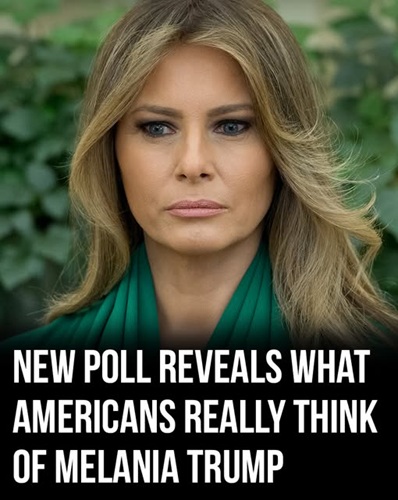
Recent public opinion data provides insight into the polarized perception of Melania Trump. According to a YouGov poll conducted online between February 2–5 and February 3–5, 2026, among 2,255 adult Americans, her approval rating stood at -16. The survey employed a randomized, stratified sample accounting for gender, age, race, education, geographic region, voter registration status, and political affiliation. Additionally, responses were weighted according to recent presidential vote patterns and voter turnout, ensuring a representative measure of public sentiment.
Melania’s rating, while lower than that of the current First Lady Jill Biden (-9), was slightly higher than Hillary Clinton’s -17, reflecting a complex, partisan-aligned perception of her public persona. These figures highlight a divided view of her effectiveness and visibility in her role, with opinions shaped not only by her initiatives but by broader political affiliations and media narratives.
Approval ratings also varied across political lines. Republican respondents generally rated her more positively, citing her advocacy for children’s well-being, elegance, and discreet public persona as attributes worthy of respect. Democrats, on the other hand, were more critical, often pointing to perceived low visibility, limited engagement in overt policy advocacy, or a focus on personal branding over systemic initiatives.
Comparisons with Previous First Ladies
Historical comparisons provide perspective on the challenges Melania faced. Previous First Ladies have received significantly higher approval ratings, often reflecting a combination of public visibility, tangible advocacy achievements, and cultural impact. For example:
- Nancy Reagan: +25 approval rating, recognized for her “Just Say No” anti-drug campaign and influence in promoting social initiatives.
- Lady Bird Johnson: +23, celebrated for her environmental advocacy and beautification projects across the United States.
- Rosalynn Carter: +32, noted for her mental health advocacy and active engagement in policy discussions.
- Barbara Bush: +21, praised for literacy programs and her compassionate public persona.
- Michelle Obama: +21, lauded for initiatives such as “Let’s Move!” and her extensive public engagement.
- Laura Bush: +19, recognized for her work in literacy, education, and global humanitarian efforts.
Jacqueline Kennedy Onassis remains the highest-rated First Lady according to the same YouGov survey, with an extraordinary +56 approval rating. Her tenure from 1961–1963 was marked by elegance, cultural sophistication, and a lasting impact on American fashion, diplomacy, and the arts—qualities that defined her enduring legacy.

In this historical context, Melania’s approval ratings illustrate the challenges of navigating a role that is simultaneously ceremonial, social, and increasingly scrutinized in a highly partisan environment. While not ranking among the highest, her ratings reflect a stable base of support, particularly among those who value discretion, aesthetic influence, and advocacy within specialized domains such as child welfare and public health.
Media Coverage and Public Dialogue
Media coverage has played a pivotal role in shaping Melania Trump’s public perception. Headlines frequently focused on her fashion choices, personal appearances, and perceived detachment from overt political discourse, often overshadowing her policy initiatives or charitable work. Fashion, in particular, became a lens through which her persona was examined—analyzed, praised, or critiqued as a reflection of poise, taste, or aloofness.
Despite the scrutiny, Melania maintained a disciplined approach, carefully curating her public appearances and prioritizing initiatives that aligned with her personal values. Her strategy emphasized quality over quantity: she preferred targeted engagement, measured messaging, and projects with lasting social impact rather than high-volume media exposure.
The release of her documentary in January 2026 marked a strategic effort to provide the public with direct insight into her personal story, advocacy work, and values. The film chronicled her journey from Slovenia to New York City, her professional modeling career, her marriage to Donald Trump, and her time as First Lady. In addition to personal history, the documentary highlighted her work on the “Be Best” initiative, cyberbullying prevention, and opioid awareness—projects that might have been underrepresented in traditional media coverage.
Critics offered a mixed response to the documentary, reflecting the polarized cultural landscape. Some praised the film as a thoughtful, candid exploration of her life, emphasizing the human dimension behind public roles. Others questioned whether it fully captured her public service impact or adequately addressed controversies associated with her tenure. Melania, however, framed the project as a personal achievement and a vehicle for public education. She emphasized that success should not be measured solely by critical acclaim but by the ability to communicate values, inspire action, and document her initiatives for posterity.

Partisan Perspectives and Cultural Influence
Melania’s tenure also underscores the deeply partisan nature of modern American politics. Her higher approval ratings among Republican voters highlight the alignment between her personal style, advocacy priorities, and the values appreciated by the conservative base. Critics on the Democratic side often expressed frustration over her relatively low visibility in policy-driven initiatives, comparing her with First Ladies like Michelle Obama, who adopted highly public advocacy roles.
Nevertheless, her approach has influenced discussions about the evolving expectations of the First Lady. Scholars and commentators have debated questions such as: Should the First Lady maintain a private presence, focusing on specialized initiatives, or assume a highly visible, politically active role? How does selective engagement shape long-term legacy? And how should modern media coverage be interpreted in evaluating influence and impact?
Melania’s measured, selective public engagement offers an alternative perspective: that influence does not necessarily correlate with constant visibility or media saturation. Her approach demonstrates that initiatives like “Be Best” can be impactful even if they are less frequently covered in mainstream headlines, emphasizing sustainability, tangible results, and targeted advocacy.
As Melania Trump’s second tenure progressed, her role increasingly became a reflection of the evolving expectations for First Ladies in the 21st century. While her approach was markedly different from highly politically active predecessors like Eleanor Roosevelt or Michelle Obama, it demonstrated a strategic, modernized understanding of influence: one that combined personal narrative, selective public engagement, and advocacy tailored to tangible social needs.
The Documentary as a Legacy Statement
The release of Melania Trump’s documentary in January 2026 represented a watershed moment in her tenure. Beyond mere media exposure, the film was a deliberate exercise in narrative control and historical documentation. It offered audiences a comprehensive view of her life: from her childhood in Sevnica, Slovenia, to the bustling streets of New York City during her modeling career, her eventual marriage to Donald Trump, and her complex experiences as First Lady.
Importantly, the documentary contextualized her advocacy work. It highlighted the ongoing efforts of the “Be Best” initiative, with particular attention to cyberbullying prevention, children’s mental health, and opioid awareness. By integrating interviews with educators, child psychologists, and families who had benefited from these programs, the film offered concrete evidence of impact. In doing so, Melania presented herself not merely as a public figure but as an agent of social change, documenting initiatives that might otherwise have been overshadowed by media focus on style, fashion, or political spectacle.
Critics’ reactions were mixed, reflecting polarized perceptions. Some lauded the documentary as a rare, candid look at the life and motivations of a First Lady who had long been portrayed as enigmatic. Others questioned whether it sufficiently addressed political controversies or her public visibility. Yet Melania emphasized that the project’s purpose was not universal approval but historical record, personal expression, and advocacy promotion. She explained in interviews, “The film shows who I am, what I care about, and what I have accomplished. Success is not whether everyone likes it, but whether it tells the truth of my journey and inspires others.”
Cultural and Public Influence
Melania’s approach reshaped public dialogue about the modern First Lady. She demonstrated that influence could manifest through carefully chosen initiatives, storytelling, and advocacy—even if not accompanied by constant media attention or overt political engagement. This perspective challenged conventional metrics of success for First Ladies, which historically emphasized public visibility and high-profile political advocacy.
The selective engagement strategy proved especially effective in culturally resonant ways. Her advocacy on cyberbullying addressed a contemporary concern affecting millions of children globally, while opioid awareness programs contributed to public health discourse in a deeply polarized environment. Schools, non-profits, and community groups reported measurable improvements in program participation, awareness campaigns, and parental engagement, indicating that Melania’s influence extended beyond the immediate political sphere.
Her visibility in ceremonial, charitable, and cultural events further underscored the dual nature of her impact. Melania’s appearances at diplomatic events, charity galas, and cultural exhibitions highlighted the importance of representation, poise, and diplomacy in the role of First Lady. Fashion and public style continued to be discussed widely in media outlets, but increasingly these discussions were contextualized as part of a broader, deliberate public persona designed to complement—not overshadow—her advocacy initiatives.
Historical Context and Partisan Perspectives
Melania’s tenure stands in contrast to previous First Ladies who followed divergent strategies. Eleanor Roosevelt embraced outspoken advocacy and policy engagement; Jacqueline Kennedy Onassis defined cultural sophistication and global influence; Michelle Obama combined public service with highly visible advocacy campaigns. Melania’s approach combined elements of discretion, advocacy, and media management, emphasizing the power of narrative control, selective engagement, and personal branding.
Partisan perspectives influenced public perception significantly. Republican voters frequently praised her elegance, measured public presence, and child-centered advocacy. For many conservatives, her discretion and selective engagement reinforced values of dignity, private initiative, and focused impact. Conversely, critics on the Democratic side questioned the absence of overt policy activism and perceived low visibility, reflecting broader debates about gendered expectations, traditional roles, and the evolving nature of the First Lady’s responsibilities.
Despite polarized opinions, Melania’s approach had tangible societal effects. Her initiatives reached millions of children and families, raising awareness on issues often underrepresented in public discourse. Public discussions increasingly acknowledged that influence need not correlate solely with frequency of appearances or media saturation. Instead, targeted, high-impact efforts could leave a lasting legacy in areas such as education, mental health, and public welfare.
Legacy and Long-Term Impact
As historians and political analysts began to evaluate her second term, several themes emerged regarding Melania Trump’s legacy:
- Strategic Privacy: Melania redefined the concept of visibility in public service. By curating her appearances and initiatives, she demonstrated that discretion and deliberate engagement could amplify influence without overexposure.
- Focused Advocacy: Through programs like “Be Best,” she addressed pressing societal concerns such as cyberbullying, child well-being, and substance abuse, leaving a measurable, enduring impact on communities nationwide.
- Cultural Diplomacy: Her ceremonial roles, public appearances, and media projects highlighted the soft power of the First Lady, emphasizing diplomacy, aesthetics, and cultural representation alongside substantive advocacy.
- Narrative Control: By producing a documentary about her life, Melania ensured that her story, initiatives, and motivations were preserved for posterity, providing a personal lens through which future generations could evaluate her influence.
- Inspiration and Discussion: Melania’s tenure sparked public debate about the modern role of the First Lady, influencing expectations, historical comparisons, and gendered discourse surrounding political spouses in the 21st century.
Ultimately, Melania Trump’s second tenure illustrates the multidimensional nature of modern public service. While her approval ratings may not match those of historically celebrated First Ladies, her legacy resides in her focused advocacy, carefully curated public persona, and enduring influence on societal discussions about children’s welfare, digital responsibility, and public perception.
Concluding Thoughts
Melania Trump’s time as First Lady demonstrates the delicate balance between privacy, advocacy, and public perception. In an era of instant news, pervasive social media scrutiny, and partisan polarization, she navigated her role with a strategic combination of selective engagement, cultural diplomacy, and personal storytelling.
Her documentary, advocacy work, and ceremonial presence collectively shape a nuanced portrait: a First Lady who leveraged her personal narrative, disciplined public persona, and targeted initiatives to influence society meaningfully. She highlighted the evolving expectations of public service, demonstrating that impact is measured not only in visibility or approval ratings but in the tangible improvements brought to the lives of children, families, and communities.
Melania Trump’s tenure ultimately leaves a lesson for future First Ladies: influence can be exercised quietly but powerfully, advocacy can be targeted yet profound, and legacy is shaped as much by strategic engagement and narrative control as by public acclaim. Her story reflects the modern reality of public service, where personal integrity, purposeful action, and deliberate communication define long-term influence, inspiring discussions on how history will remember the role of the First Lady in shaping culture, policy, and societal norms.
Her time in the White House—marked by elegance, privacy, and advocacy—ensures that Melania Trump’s legacy will be studied, debated, and appreciated as an example of how subtle yet focused engagement can leave a lasting imprint on both national consciousness and the evolving role of political spouses in American history.
