
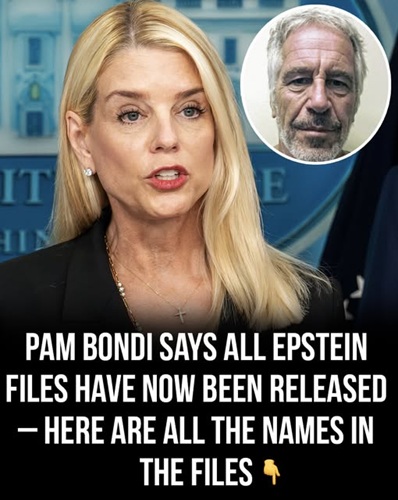
As of February 18, 2026, there is no verified public record showing that the U.S. Department of Justice (DOJ) has made an unredacted release of “all” documents related to the Jeffrey Epstein case or that a federal statute requiring a complete.
Unredacted public release called the “Epstein Files Transparency Act” mandates absolutely no exceptions in every category.
Reports and official DOJ releases instead reflect a partial, staggered compliance process under that law, with ongoing debate about how fully the material has been disclosed and why redactions remain.
Understanding what is verified about these disclosures — how they were produced, what they contain, and what remains redacted or unreleased — is essential for informed discussion around a case that has drawn international attention. Here’s what is established:
1. What the “Epstein Files” Are
The term Epstein files refers to a vast collection of investigative material, court documents, grand jury records, emails, images, videos, and other records in federal custody related to:
- the 2019 federal sex trafficking indictment of Jeffrey Epstein,
- related state and federal prosecutions,
- the criminal case against Epstein’s associate Ghislaine Maxwell,
- and other investigations connected to Epstein’s activities.
These materials originate from multiple government offices, including:
- the U.S. Attorney’s Office for the Southern District of New York (SDNY),
- the U.S. Attorney’s Office for the Southern District of Florida,
- various FBI investigations,
- and related grand jury proceedings.
The files are not a single document or record set compiled at one point — they are an archive of investigative and prosecutorial materials collected over years across different jurisdictions.

Epstein himself was arrested in July 2019 on federal sex trafficking charges involving minors and died in custody the following month. His death was ruled a suicide by the New York City medical examiner, though it remains the subject of ongoing public debate.
Ghislaine Maxwell, his longtime associate, was convicted in 2021 of sex trafficking related to Epstein’s network and is serving a 20‑year federal prison sentence.
2. How and Why the Government Began Releasing Files
In 2025, Congress passed legislation often referred to in reports as the Epstein Files Transparency Act, signed into law in November 2025, which required the Department of Justice to disclose material from its files related to Epstein’s known activity by a set deadline.
That law did not automatically eliminate all legal protections or override every type of privilege; instead, it required the DOJ to produce “responsive” documents related to the government’s intragovernmental investigations, subject to constitutional, statutory, and regulatory safeguards concerning privacy and legal privilege. This means the Justice Department was required to balance transparency with other legal obligations, including:
- victim privacy protections, including names and identifying information;
- grand jury secrecy rules, which typically prohibit public disclosure of certain testimony and evidence;
- ongoing investigations or information that might compromise law enforcement operations;
- and deliberative or privileged internal communications.
Compliance was meant to be completed by December 19, 2025 according to the statute’s timeline. The law did not provide an automatic penalty for noncompliance, but it did mandate disclosure “responsive” to the request within that window.
3. What Has Been Released So Far
Although some news reports and Republican and Democratic lawmakers have described the statute as requiring full disclosure of all documents tied to Epstein, the actual public releases have been partial, heavily redacted, and subject to ongoing legal scrutiny.
Here is what has been confirmed through official DOJ communication:
- On January 30, 2026, the DOJ announced the release of over 3 million pages of records related to Epstein and Maxwell to comply with the law, including images and videos, many of which were substantially redacted to protect privacy.
- The DOJ’s press release and associated letter to Congress confirmed that the material was compiled from multiple sources and that thousands of images, videos, emails, and other investigative materials were included in the public disclosure. It also noted that materials were withheld or redacted due to legal privileges and survivors’ privacy.
- Deputy Attorney General Todd Blanche publicly stated that the redactions applied to protect victim identities, and that the DOJ did not redact the names of politicians in the released files unless they were victims.
- The DOJ also acknowledged that some materials were not produced because they included unrelated matters, duplicates, or items covered by privilege.
Separately, Justice Department officials provided lists of government officials and politically exposed persons appearing in the files to members of Congress, but these lists did not imply criminal behavior and were contextualized as names found in the released or reviewed material.

Importantly, these releases did not include unredacted grand jury testimony or every possible internal document — nor has there been a claim from the DOJ that every federal record related to Epstein has been publicly disclosed without exception.
4. Ongoing Debate and Criticism
Members of Congress, including representatives from both parties, have publicly criticized how the DOJ has handled the release. Some legislators argue that:
- the timeline for disclosure was not met in full;
- redactions appear broader than strictly required by privacy law;
- no comprehensive official accounting of withheld records has been provided to the public; and
- some unrelated names have been included in documents or lists, generating confusion about relevance and context.
At the same time, the DOJ defends its process, saying it has complied with the law while protecting sensitive personal information and preserving victim privacy. Redactions have been described as necessary under longstanding legal frameworks, including those governing grand jury secrecy and victim protections.
The release has also drawn reactions from public figures whose names appear in the files — for example, actress and television host Whoopi Goldberg publicly stated that her name appeared in the released documents only in the context of an email about a charity event and not because of wrongdoing or friendship with Epstein.
5. Why Verified Context Matters
One key principle in reporting on high‑profile, sensitive investigations like Epstein’s is that the presence of a name in a document or flight log does not constitute evidence of criminal conduct. Judges, advocacy groups, and the DOJ itself have repeatedly emphasized that:
- a person’s name may appear for many reasons, including social contact, professional interaction, third‑party mentions, or even media reporting;
- the mere presence of a name in released material does not equate to wrongdoing;
- courts often specifically caution against inferring guilt based on inclusion in unsealed court records.
This context is particularly important because some individuals have tried to tie current or former public officials to the Epstein case through speculation about document releases. Responsible reporting distinguishes between:
- individuals formally charged with crimes;
- individuals convicted in relation to Epstein’s conduct;
- individuals mentioned or referenced in public files; and
- individuals whose appearance may arise from unrelated or innocuous communications.
6. Summary of the Current Situation
As of this writing:
- The DOJ has released millions of pages of documents related to Epstein’s investigations in response to the 2025 law, but these are heavily redacted and do not include every possible file in federal custody.
- The Justice Department has provided lawmakers with lists of names in the files, but these lists do not equate to evidence of criminal involvement and are issued in a context of legislative oversight, not adjudication.
- Lawmakers and advocates continue to debate how much information has been produced, what remains withheld, and how transparency and privacy should be balanced.
No official release to date states that absolutely all Epstein‑related materials possessed by the DOJ have been made public without redaction. The process remains ongoing, complex, and subject to legal and procedural constraints.

To understand the public conversation about transparency and “the Epstein files,” it helps to look at the full arc of the Jeffrey Epstein case — from its earliest investigations through the document releases that have occurred under judicial and legislative pressure.
1. Origins: Criminal Investigations and Initial Prosecutions
Jeffrey Epstein was a financier whose wealth and social connections put him in contact with a wide range of high‑profile individuals. Allegations of sexual misconduct involving minors followed him for years, but the first major federal prosecution came in July 2019 when Epstein was arrested on federal charges in the Southern District of New York for alleged sex trafficking and conspiracy to commit sex trafficking. These charges focused on conduct involving minors at his residences in New York and Florida. (justice.gov)
Epstein’s 2019 indictment represented a dramatic escalation from his controversial earlier plea deal in 2008 in Florida, which many prosecutors and victims later criticized for being too lenient. That earlier non‑prosecution agreement allowed Epstein to avoid significant federal prison time and led to renewed calls for accountability and transparency when the 2019 case was brought forward.
While awaiting trial in 2019, Epstein died in federal custody at the Metropolitan Correctional Center in Manhattan. Officials ruled his death a suicide. That determination remains the subject of public debate.
2. Ghislaine Maxwell and Related Legal Developments
A major legal development in the aftermath of Epstein’s death involved Ghislaine Maxwell, a close associate. Maxwell was arrested in July 2020 and later convicted in December 2021 on multiple counts related to sex trafficking, enticement of minors, and related offenses. She was sentenced to 20 years in federal prison. Magistrate judges and prosecutors relied on substantial testimony from survivors and documentary evidence.
Maxwell’s conviction marked one of the few major criminal outcomes directly connected to Epstein’s broader network and conduct. It also contributed to greater public scrutiny of the evidence that prosecutors had amassed over years.
3. Unsealing Civil Lawsuit Records and Document Dumps
Long before the 2025 law mandating disclosure, many Epstein‑related records were already in the public domain through civil litigation and prosecutorial filings. These included depositions, witness statements, and investigative materials that were unsealed following lawsuits against Epstein’s estate or related parties.
In 2020 and 2021, several civil court filings connected to Epstein generated media attention when portions of court‑ordered unsealing made some materials publicly available. This included a variety of records that referenced flight logs, property ledgers, phone contact lists, and other ancillary documents.
It is critical to understand how civil records differ from federal prosecutorial materials:
- Civil records can become public through court orders or litigation between private parties.
- Federal prosecutorial materials may be subject to grand jury secrecy rules and other confidentiality protections that do not automatically apply in civil cases.
In earlier unsealings, judges explicitly warned that the presence of a name in a document did not imply wrongdoing, a point repeated by courts to protect reputations and ensure accuracy. Public reporting emphasized that many names appeared for innocuous reasons — such as attendance at events or social contact — rather than evidence of criminal acts.

4. The 2025 Transparency Legislation (Epstein Files Transparency Act)
In 2025, Congress passed legislation requiring the Department of Justice to disclose certain parts of its investigative files related to Epstein. This law did not, however, automatically override established legal protections for:
- Grand jury materials, which are generally secret under federal law unless a court‑ordered exception applies.
- Victim identities, especially minors, which are protected by statutes designed to avoid retraumatizing survivors.
- Attorney‑client privileged materials or deliberative government communications, which are shielded to protect internal decision‑making.
Instead, the law required the DOJ to identify and produce responsive records by a set statutory deadline, while applying legal exceptions that have long governed federal disclosures.
5. What Has Been Produced to Date
On January 30, 2026, the DOJ announced it had released over 3 million pages of material in compliance with the law. According to the DOJ:
- The documents include a mix of investigative material, judicial filings, custodial interviews, and evidentiary records.
- Some images and videos were included, but many were redacted to protect privacy and comply with legal prohibitions on releasing certain types of material.
- Redactions were applied pursuant to longstanding federal procedures governing privacy, grand jury secrecy, ongoing investigations, and other protections. (justice.gov)
Deputy Attorney General Todd Blanche confirmed that the DOJ did not redact public officials’ names unless they were victims. However, the way names are contextualized remains a central issue: the presence of a name in a document released under the law does not equate to evidence of misconduct or criminal involvement.
6. How Document Releases Work in Federal Cases
When the DOJ or federal courts release materials from a criminal investigation, they must often balance competing legal priorities:
- Victim privacy — especially when minors are involved, in order to prevent unnecessary exposure and trauma.
- Grand jury secrecy — protected by Federal Rule of Criminal Procedure 6, which limits disclosure of grand jury matters without special court authorization.
- Ongoing investigations — information about ongoing probes may be withheld to protect operational integrity.
- Deliberative process and internal privilege — federal agencies can claim exceptions to preserve candid internal analysis.
Even when legislative pressure demands disclosure, these protections remain grounded in federal statute or judicial precedent.
7. Public Figures and Names in the Files
In the course of reporting on the document releases, multiple major news outlets and analysts have cautioned against implying guilt based on the appearance of a name. Public figures’ names can appear for several reasons:
- Social contact with Epstein prior to knowledge of his crimes
- Professional interactions related to philanthropy, business, or advocacy
- Referenced in third‑party documents, such as news articles or interview transcriptions (e.g., referencing a public appearance)
Importantly, courts have clarified that encountering a name in unsealed material does not constitute evidence of a crime.
For example, major news reporting revealed that figures such as Donald Trump, Bill Clinton, Bill Gates, and others appeared in flight logs, social invitations, or email headers in unsealed documents. Journalistic coverage has repeatedly noted that the presence in records ≠ evidence of criminal conduct.
Many public figures named in unsealed or released materials have publicly denied wrongdoing or stated that their interactions were unrelated to criminal behavior.
8. Ongoing Transparency Debates and Legislative Oversight
Calls for transparency in federal cases are not unique to Epstein. Lawmakers have repeatedly raised questions in public hearings about prosecutorial discretion, plea deals, and prioritization of sex trafficking cases. Broad bipartisan interest exists in:
- Further release of investigative materials
- Clear explanations of prosecutorial decisions in early Epstein cases
- Strengthening child protection and anti‑trafficking statutes
- Ensuring that victims’ voices are heard and their privacy protected
Debate continues about how transparent such disclosures should be, how to balance public interest with legal and ethical protections, and how to contextualize released material responsibly in responsible reporting.
Since the Justice Department’s major January 2026 disclosure under the Epstein Files Transparency Act, the public response, political reactions, and calls for further release have been nearly as consequential as the documents themselves. News outlets, lawmakers, legal advocates, survivors’ groups, and international bodies have weighed in on what was released — and what remains withheld — triggering new investigations and scrutiny of federal transparency practices.

1. Global Reaction to the Latest Releases
When the Department of Justice announced it had released more than 3 million pages of material — including roughly 2,000 videos and 180,000 images — it marked the largest tranche of Epstein‑related federal documents made public in U.S. history. DOJ officials said this was done to comply with the Epstein Files Transparency Act, which was enacted in November 2025 and required publication of DOJ records tied to Epstein and Maxwell investigations.
Internationally, the large volume of material has amplified attention on allegations that reached far beyond U.S. borders. Independent United Nations experts — citing parts of the released files — recently characterized Epstein’s network and abuse as potentially rising to the level of “crimes against humanity,” highlighting the systemic exploitation and corruption revealed in the documents. Those experts called for impartial, thorough investigations into crimes and institutional failures.
Meanwhile, regional and national responses have differed:
- In New Mexico, lawmakers approved a truth commission to investigate alleged abuse at Epstein’s now‑sold Zorro Ranch near Santa Fe — a property that had received minimal scrutiny in earlier federal investigations. The state‑level inquiry will use subpoena power to gather survivor testimony and evidence in hopes of shedding new light on activities at the sprawling estate.
- European nations and some international institutions have launched or expanded probes into possible misconduct involving individuals named or referenced in the documents. According to reporting, resignations and investigations have occurred among diplomats, charity leaders, and corporate executives abroad, reflecting the broad reach of Epstein’s network.
These responses underscore how the publicly released files — even in heavily redacted form — have triggered renewed scrutiny and accountability efforts in multiple jurisdictions.
2. What the Published Documents Contain (and Don’t Contain)
The January 30, 2026 DOJ release marked what officials called the final major tranche under the 2025 transparency law. Deputy Attorney General Todd Blanche stated that DOJ had reviewed more than 6 million pages of material and published over 3 million pages of documents as required by Congress, while protecting sensitive information such as victim identities or material from ongoing investigations.
What the files include:
- Emails and communications between investigators, prosecutors, and occasionally individuals connected to Epstein contextualized around investigations.
- Flight logs, financial records, and email exchanges previously obtained in lawsuits and released in part through FOIA or court orders.
- Photographs and videos from searches of Epstein properties.
What the files do not necessarily include:
- Fully unredacted grand jury testimony, which remains subject to special secrecy rules. The DOJ has asked courts to authorize further release of grand jury transcripts but redactions are still required to protect victim identities and comply with federal rules.
- Many materials with deep redactions, including entire pages or sections blacked out to protect victim privacy or privileged communications. Deputy AG Blanche acknowledged these redactions are extensive and necessary under existing law.
This combination — large volume but heavy redaction — has fueled debate about whether the public has truly seen “all” of the relevant documents or merely a curated subset.
3. How Lawmakers and Advocates Responded
Lawmakers continue to argue over whether the DOJ’s disclosures meet both the letter and spirit of the Epstein Files Transparency Act. Some critics — including members of both political parties — argue that the agency missed the law’s original December 19, 2025 deadline and that documents remain withheld without clear explanation.
For example:
- Rep. Ro Khanna and Rep. Thomas Massie, sponsors of the transparency bill, have questioned whether all “responsive” materials were disclosed and whether the documents that were withheld were properly justified.
- Other lawmakers continue to seek unredacted grand jury materials through courts, seeking judicial orders to compel broader release beyond what the Justice Department has voluntarily disclosed.
- Critics also raised concerns that some names included in public lists — including artists, entertainers, or political figures — were referenced out of context, causing confusion or unfair implications. The DOJ defended its listing of public figures by explaining that names can appear for innocuous reasons, such as media coverage or unrelated contact logs.
Public advocacy groups have also pushed back, arguing that materials that could shed light on prosecutorial decisions, plea deals, and institutional failures — such as the controversial 2008 non‑prosecution agreement Epstein secured in Florida — remain partially protected or withheld.
4. Clarifying Names, Associations, and Context
A major misunderstanding in public discussions has involved the appearance of names of high‑profile individuals in the released files. It’s crucial to understand the following:
- Names appearing in documents do not in themselves imply wrongdoing or criminal involvement. Public figures can be referenced for a variety of reasons, such as reporting on events, social contact in earlier periods, or peripheral mentions by third parties.
- The Justice Department and courts have repeatedly emphasized that inclusion of a person’s name in investigative material is not equivalent to evidence of a crime. Courts specifically caution against conflating presence in records with culpability.
- Some advocated for broader release of names and associated context earlier in 2026, but subsequent clarification showed that several individuals included in lists were unrelated to Epstein and had appeared in unrelated datasets or police materials. This highlighted the complexity of sorting meaningful data from massive archives.
Responsible analysis distinguishes between:
1) Confirmed criminal conduct (as proven in court),
2) Individuals charged or convicted of offenses,
3) Individuals merely named in records for miscellaneous or social reasons,
4) Unverified speculation about connections.
This framework prevents misinformation and reputational harm.
5. Survivors’ Perspectives and Transparency Limits
Groups representing survivors of Epstein’s abuse have expressed mixed reactions to the DOJ’s release. Some praise the effort to publish the documents publicly and make more materials available than ever before. Others argue that the disclosure process continues to retraumatize survivors by exposing sensitive details without sufficient protective measures. Some said the disproportionate focus on names rather than the structural failures enabling the abuse missed an opportunity for accountability.
This tension — between transparency, survivor protection, and privacy — reflects a broader challenge policymakers and prosecutors face in high‑profile abuse cases. Courts and justice officials often err on the side of protecting victims under longstanding federal secrecy rules, even as lawmakers and advocates push for maximum transparency.
6. What Comes Next
Even with the January 2026 document release, the Epstein case’s public and legal dimensions are far from concluded:
- Federal and state investigations continue in various jurisdictions, including proposed truth commissions like the one in New Mexico focused on alleged abuse at the Zorro Ranch.
- Civil litigation against banks and institutions connected to Epstein’s financial networks remains active.
- Ongoing pressure from lawmakers seeks additional disclosures or explanations for redaction policies and withheld material.
Ultimately, what’s clear from verified public sources is that while large quantities of the Epstein records have been released under a federal law — and while those documents are accessible for public analysis — they do not represent a complete, unedited dump of all government materials related to Epstein without legal protections applied. Rather, what has been published is a carefully reviewed, heavily redacted subset designed to balance public interest with constitutional privacy and prosecutorial confidentiality
