

On February 10, 2026, the small community of Tumbler Ridge in northeastern British Columbia experienced a devastating act of violence that profoundly affected residents, families, educators, and first responders.
The town—home to approximately 2,700 people—has long been known for its close-knit character, scenic mountain surroundings, and strong sense of local connection.
In the aftermath of the tragedy, that same spirit of connection has become central to the community’s path forward. Authorities have confirmed that nine people died in the incident, including the suspected shooter, and that more than two dozen others were injured.
The events unfolded across two locations: a private residence and Tumbler Ridge Secondary School, which serves students in grades 8 through 12. Law enforcement officials have emphasized that the investigation remains ongoing and that confirmed information should be distinguished from speculation.
This feature presents verified details released by officials and focuses on the broader community impact, support efforts, and the road to recovery.
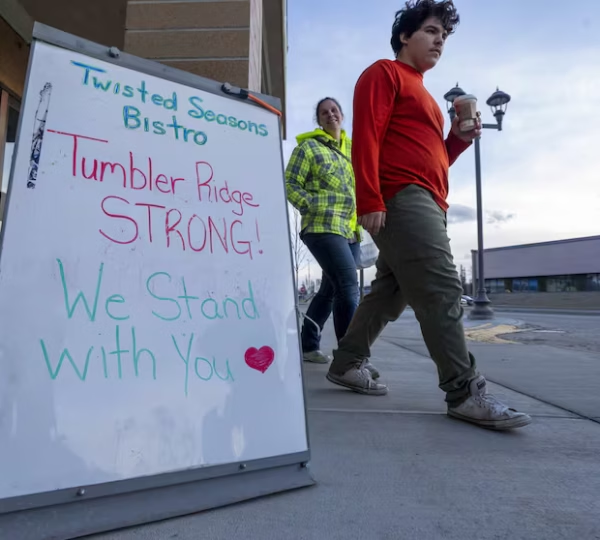
Understanding the Setting: A Remote and Close-Knit Community
Located in the foothills of the Canadian Rockies, Tumbler Ridge is geographically remote compared to larger urban centers in British Columbia. Many families have lived in the region for years, with daily life shaped by school events, recreational sports, outdoor activities, and seasonal gatherings. In smaller communities like this one, schools often serve as central hubs—places where students, staff, and parents form enduring relationships.
Residents describe the town as one where neighbors know one another by name, where teachers often know multiple generations within a single family, and where community events bring together people from all walks of life. That familiarity has made the impact of this tragedy especially profound.
When critical incidents occur in small towns, the effects can ripple widely. Because social circles often overlap, many residents may personally know someone affected. Mental health experts note that in close-knit communities, trauma can be both deeply personal and collectively shared.
The Confirmed Timeline of Events
According to statements released by the Royal Canadian Mounted Police, emergency services received reports of gunfire shortly after 1:20 p.m. local time on February 10.
Authorities have confirmed the following sequence based on preliminary investigative findings:
- Two individuals were fatally shot at a private residence.
- The suspect then entered Tumbler Ridge Secondary School.
- Additional victims were fatally shot inside the school.
- The suspect was later found deceased from what authorities described as an apparent self-inflicted gunshot wound.
- In total, nine people died, including the suspect.
- At least 27 others sustained injuries of varying severity.
Police have indicated that the suspect was 18 years old. Officials have not publicly released all investigative details, citing respect for affected families and the integrity of ongoing inquiries.
The RCMP stated that officers responded rapidly after the initial calls and moved to secure both scenes. Emergency protocols were activated immediately, including lockdown procedures at the school. Students and staff were evacuated once it was safe to do so, and parents were directed to designated reunification points.
Authorities have asked the public to rely only on verified updates and to avoid spreading unconfirmed reports, especially on social media.

The Victims
Officials confirmed that eight victims were killed at the two locations combined—two at the residence and six at the school—along with the suspected shooter. Among those killed were students and an adult staff member.
Family members later identified some of the young victims publicly. Community members have described the students as kind, energetic, and engaged in school life. Friends and relatives have shared tributes emphasizing their warmth, humor, and aspirations for the future.
The adult victim at the school was described by colleagues as a dedicated educational assistant who supported students academically and emotionally. School staff members have noted that support personnel often form especially close bonds with students, offering encouragement and day-to-day guidance.
Out of respect for families, many official communications have avoided extensive public discussion of personal details. Community leaders have encouraged remembrance focused on honoring lives rather than revisiting the circumstances of the incident.
Emergency Medical Response
In the immediate aftermath, emergency responders from across the region mobilized to assist. Due to the town’s rural location, coordination between local responders and larger regional medical centers was critical.
Several injured individuals were transported to nearby hospitals, while others required transfer to specialized facilities. One critically injured child was airlifted to BC Children’s Hospital in Vancouver for advanced care.
Health authorities later confirmed that while many injured individuals were treated and released, some remained hospitalized in serious condition. Medical teams have been widely commended by residents for their swift action and professionalism under pressure.
Experts note that in rural incidents, logistical coordination—including air transport and trauma response—plays a significant role in survival outcomes. Officials have expressed gratitude to paramedics, emergency physicians, nurses, and support staff involved in the response.
Provincial and National Reaction
The tragedy drew condolences and statements from leaders at the provincial and federal levels.
Mark Carney, Prime Minister of Canada, issued a statement expressing sympathy for the victims’ families and the community of Tumbler Ridge. He emphasized the importance of supporting affected families and ensuring access to counseling and recovery resources.
David Eby, Premier of British Columbia, also offered condolences and confirmed that provincial support services would be made available to the community.
Flags were lowered at government buildings in recognition of the lives lost. Lawmakers from across the political spectrum expressed solidarity with residents, underscoring the shared national impact of such events.
Public officials have been careful not to speculate about motive while the investigation continues. They have reiterated that determining the full context of the incident will require time and thorough review.
School District and Community Support Measures
In the days following the tragedy, the local school district implemented a series of measures focused on student safety and emotional recovery.
Counselors, psychologists, and trauma specialists were brought into the community. Temporary support centers were established for students, parents, and staff seeking assistance. Authorities emphasized that returning to normal routines would be approached cautiously and with sensitivity.
School leaders stated that decisions regarding reopening or relocation would prioritize mental health considerations. Trauma-informed approaches—designed to recognize the varied ways individuals process grief—have been central to planning.
Mental health professionals explain that children and adolescents may experience trauma differently from adults. Reactions can include anxiety, sleep disturbances, withdrawal, difficulty concentrating, and emotional fluctuations. Access to ongoing counseling is widely recommended following community-wide critical incidents.
Investigative Process and Public Communication
The RCMP has indicated that the investigation includes reviewing digital communications, interviewing witnesses, examining firearm acquisition details, and reconstructing the timeline of events. Authorities have urged patience, noting that thorough investigations of this nature can take months.
Officials have also cautioned against the spread of misinformation. In fast-moving situations, incomplete or inaccurate details can circulate quickly online. Law enforcement agencies have emphasized that updates will be provided when information has been verified.
While some community members have raised broader questions about warning signs and prevention, investigators have not released definitive conclusions regarding motive. Authorities have stated that mental health history may be part of the review, but they have not attributed causation publicly.
Responsible reporting practices recommend avoiding sensationalism and refraining from publishing unverified details about perpetrators.
The Immediate Impact on Daily Life
In small communities, daily routines are often tightly interconnected. The temporary closure of the school disrupted not only academic schedules but also extracurricular activities, sports programs, and social gatherings. Parents adjusted work schedules to care for children, and community facilities shifted focus to providing support services.
Local businesses and nonprofit groups organized meal deliveries, childcare support, and transportation assistance for affected families. Faith leaders and community volunteers opened spaces for quiet reflection and prayer.
Experts in community recovery note that early expressions of solidarity—meals shared, memorial gatherings, coordinated assistance—can strengthen resilience over time.
Looking Ahead
As the investigation continues, Tumbler Ridge faces the long process of recovery. Grief counselors emphasize that healing is rarely linear. Some residents may seek support immediately, while others may process emotions gradually over months or years.
Provincial and federal officials have pledged continued assistance. Community leaders have encouraged residents to check in with one another, especially children and seniors who may be struggling quietly.
The tragedy has prompted renewed national conversations about school safety, mental health resources, and early intervention strategies. While policy discussions evolve, the immediate focus in Tumbler Ridge remains on remembrance, support, and stabilization.
In the days and weeks following the February 10 tragedy, life in Tumbler Ridge did not return to normal. Instead, the community entered a period defined by collective mourning, emotional shock, and a gradual shift toward structured recovery. For a town of roughly 2,700 residents, the impact has been deeply personal. Many families knew one another through school events, youth sports, volunteer work, or multigenerational ties to the region. In such settings, trauma rarely affects only a small circle—it touches nearly everyone in some way.
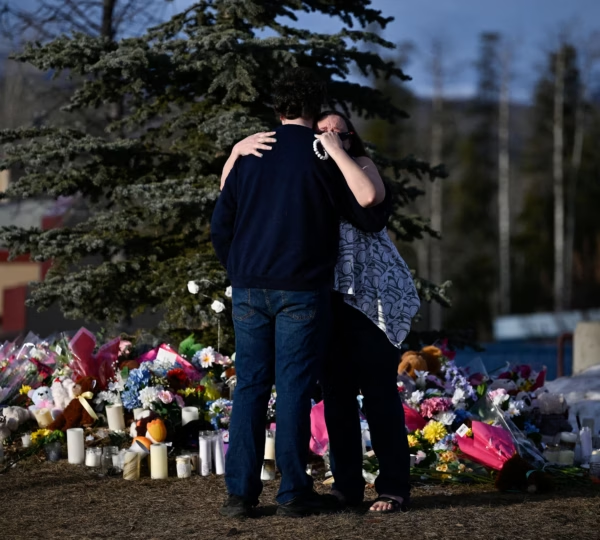
As investigators from the Royal Canadian Mounted Police continued their work, the community’s immediate focus turned toward care, stability, and the emotional well-being of children and families.
Community Grief: A Shared Experience
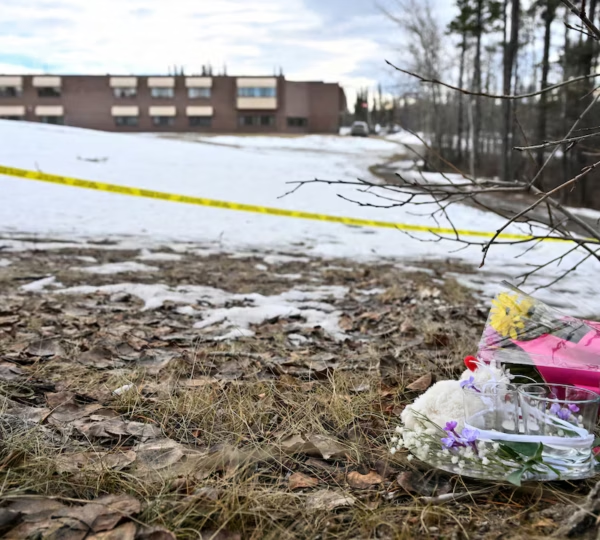
Grief in small communities often unfolds publicly as well as privately. In Tumbler Ridge, memorials appeared near Tumbler Ridge Secondary School, with flowers, candles, handwritten notes, and symbolic items left in quiet tribute. Residents gathered for vigils and remembrance services organized by local faith leaders and community volunteers.
Mental health professionals describe this kind of collective mourning as both painful and protective. On one hand, seeing reminders of loss can intensify emotions. On the other, communal acknowledgment validates those emotions and helps prevent isolation. When people gather together, they share stories, offer comfort, and affirm that no one is grieving alone.
Parents in the community have described the difficulty of explaining such events to children. Experts recommend age-appropriate conversations—honest but not overwhelming—focused on reassurance, safety, and emotional openness. Children may not always articulate their distress directly; instead, it may appear in changes to sleep patterns, appetite, school performance, or mood.
Trauma-Informed Support in Schools
One of the most significant challenges has been addressing the needs of students and educators. Schools are places of learning, but they are also spaces where young people build friendships, form identities, and feel a sense of belonging. When violence occurs in or near such spaces, the psychological impact can be complex and long-lasting.
In the aftermath, the local school district announced that students would not immediately return to the affected building. Administrators emphasized that reopening decisions would be guided by trauma-informed principles. These approaches recognize that recovery timelines vary widely: some individuals seek routine quickly as a source of stability, while others require extended time and structured counseling before re-engaging in familiar environments.
Counselors, child psychologists, and crisis response specialists were brought in from across British Columbia to provide ongoing support. Temporary counseling centers were established to give families a confidential space to process their emotions. Group sessions were also made available, allowing students to connect with peers who share similar feelings.
Educational experts stress that trauma-informed schools prioritize:
- Predictable routines
- Clear communication
- Opportunities for emotional expression
- Flexibility in academic expectations
- Continuous access to mental health professionals
Teachers have been encouraged to monitor behavioral changes carefully and to approach classroom discussions with sensitivity. Some students may prefer silence; others may need to talk openly. Respecting those differences is central to recovery.
The Role of Families and Caregivers
For parents and guardians, the tragedy has introduced difficult questions about safety, resilience, and long-term emotional health. Many families have sought guidance on how to rebuild a sense of normalcy without dismissing the seriousness of what occurred.
Psychologists often recommend:
- Maintaining consistent daily routines where possible.
- Limiting children’s exposure to distressing media coverage.
- Encouraging open dialogue without forcing conversation.
- Modeling healthy coping behaviors.
- Seeking professional help if symptoms persist or intensify.
In rural communities like Tumbler Ridge, access to specialized mental health care can be more limited than in larger urban centers. As a result, provincial support programs have worked to supplement local services with visiting professionals and telehealth resources.
The importance of sustained support cannot be overstated. Research on community trauma shows that while immediate counseling is helpful, long-term follow-up often determines whether individuals fully process their experiences.
First Responders and Secondary Trauma
While much attention rightfully centers on victims and families, first responders also experience emotional strain. Police officers, paramedics, firefighters, and emergency medical staff were among the first to confront the unfolding situation. Exposure to high-intensity events can result in what professionals call secondary trauma.

Organizations that support first responders often provide peer counseling and confidential mental health services after critical incidents. Experts note that addressing responder well-being is not only compassionate—it is essential to sustaining effective emergency services in small communities.
In this case, officials acknowledged the extraordinary efforts of responders from the region and beyond. Coordinated emergency action in a rural setting requires planning, communication, and logistical precision. Medical air transport, hospital coordination, and scene management all played roles in the immediate response.
Provincial and National Conversations
The tragedy has also prompted broader discussions across Canada about school safety, mental health resources, and violence prevention strategies. While investigators continue to examine the circumstances surrounding the case, policymakers have emphasized that meaningful prevention requires a multi-layered approach.
Statements from Mark Carney and David Eby focused on solidarity, support services, and long-term community assistance. Leaders at multiple levels of government have reiterated commitments to:
- Strengthening mental health access
- Supporting rural communities
- Reviewing school safety frameworks
- Encouraging responsible information sharing
It is important to note that while public debate often intensifies after such events, investigators have not released definitive conclusions regarding motive. Officials have cautioned against speculation, emphasizing respect for families and the integrity of the investigative process.
Responsible Media Coverage and Public Dialogue
Experts in public safety and journalism frequently highlight the importance of responsible reporting in the wake of violent incidents. Best practices encourage minimizing sensational details and focusing on victims, community resilience, and verified facts.
In digital environments, misinformation can spread rapidly. Authorities have urged residents and the broader public to rely on official updates from the Royal Canadian Mounted Police and provincial authorities.
Responsible communication supports healing. When coverage centers on remembrance, recovery, and constructive dialogue, it can reduce the risk of additional harm to affected communities.
Economic and Social Impacts
Beyond emotional trauma, small towns can experience economic ripple effects after high-profile incidents. Temporary school closures, altered work schedules, and canceled community events can disrupt local commerce. Tourism—particularly in scenic regions like Tumbler Ridge—may also be affected in the short term.
Local leaders have emphasized the importance of supporting small businesses and maintaining community engagement activities when appropriate. Social connection is widely recognized as a protective factor in trauma recovery.
Community centers and recreation facilities have hosted gatherings not only for counseling but also for structured activities aimed at restoring a sense of normal interaction. Organized events—when thoughtfully planned—can help rebuild confidence and connection.
The Psychology of Collective Healing
Healing from a traumatic event is rarely linear. Psychologists describe several common phases:
- Shock and disbelief – Immediate emotional numbness or confusion.
- Intense emotional reaction – Sadness, anger, anxiety, or fear.
- Adjustment – Gradual integration of the event into personal and collective memory.
- Reconstruction – Development of new routines and renewed sense of purpose.
Communities that prioritize transparency, mutual support, and access to care tend to navigate these phases more constructively.
In Tumbler Ridge, neighbors have organized meal trains, childcare exchanges, and volunteer support systems. Faith groups and nonprofit organizations have coordinated fundraising initiatives for affected families. These efforts, though unable to erase loss, demonstrate resilience in action.
Long-Term Planning for Recovery
Community recovery from large-scale trauma often extends over years. Experts emphasize that anniversaries of the event may trigger renewed grief. Schools and local leaders commonly prepare commemorative events or quiet spaces for reflection around significant dates.
Long-term strategies may include:
- Continued funding for mental health services
- Infrastructure adjustments to improve safety
- Youth engagement initiatives
- Parent education workshops
- Community forums for dialogue
The goal is not simply to return to what existed before, but to build systems that are stronger, more supportive, and more attentive to early warning signs of distress.
A Community United in Remembrance
While official investigations proceed and policy discussions evolve, residents of Tumbler Ridge continue to focus on honoring those who lost their lives. Public tributes emphasize kindness, potential, and the positive contributions each individual made.
Community leaders have encouraged residents to remember the victims through acts of service, educational scholarships, and initiatives that reflect shared values. Such efforts can transform grief into meaningful action.
Following large-scale traumatic events, governments and advocacy groups often evaluate the adequacy of existing policies. In Canada, the Tumbler Ridge tragedy has renewed attention on:
- School Safety Protocols – Reviewing lockdown procedures, emergency alerts, and evacuation plans to ensure that rural and urban schools alike have actionable strategies.
- Early Intervention Programs – Increasing access to mental health services for youth, including community-based counseling, peer-support initiatives, and training for educators to identify warning signs of distress.
- Crisis Response Infrastructure – Enhancing coordination between local law enforcement, medical teams, and provincial emergency management agencies, especially in remote communities where immediate access to advanced care may be limited.
- Responsible Media Practices – Encouraging coverage that is factual, non-sensational, and centered on recovery, prevention, and the experiences of victims’ families rather than the details of perpetrators or violent acts.
Both Mark Carney and David Eby emphasized the importance of investing in these areas. Their statements stressed that while investigations will determine the specific circumstances, proactive measures can reduce the likelihood of similar events elsewhere.
Community-Led Prevention Initiatives
In Tumbler Ridge, local leaders and organizations have begun implementing community-centered initiatives aimed at promoting safety and mental wellness. Examples include:
- Youth Engagement Programs: After-school clubs and mentorship initiatives that provide safe spaces for young people to socialize, develop skills, and express emotions.
- Peer Support Networks: Programs where trained student volunteers help classmates access counseling services and offer support for those struggling with grief or anxiety.
- Parental Education Workshops: Sessions on recognizing signs of mental health issues, managing conflict, and fostering open communication within families.
- Community Resilience Planning: Coordinated strategies between local government, law enforcement, and nonprofits to prepare for emergencies while supporting vulnerable populations.
Psychologists and social workers emphasize that community-led interventions are particularly effective because they are culturally and geographically tailored. In small towns like Tumbler Ridge, trust and familiarity strengthen participation and long-term impact.
Memorializing Lives and Encouraging Hope
Memorials and commemorative events have continued in Tumbler Ridge, emphasizing remembrance rather than fear. Residents have contributed to initiatives that honor the victims’ lives through:
- Scholarship Funds: Supporting students who embody the values and interests of those lost, such as curiosity, leadership, and compassion.
- Community Gardens and Art Projects: Public spaces dedicated to reflection, creativity, and a tangible symbol of life and growth.
- Annual Remembrance Events: Ceremonies and gatherings that allow families, students, and neighbors to come together, share memories, and reaffirm community bonds.
Such activities help foster a sense of continuity and purpose, reinforcing that even in the wake of tragedy, positive action is possible.
Long-Term Mental Health Strategies
Experts recommend several long-term strategies for communities affected by trauma:
- Sustained Counseling Access: Ensuring that both children and adults can receive ongoing professional support, even months or years after an incident.
- Trauma-Informed Education: Integrating social-emotional learning and mental health awareness into school curricula to help students manage stress and recognize early warning signs.
- Family and Caregiver Support: Offering guidance to parents and guardians on nurturing resilience, modeling healthy coping strategies, and maintaining routines that provide stability.
- Monitoring and Early Warning Systems: Encouraging communities to identify patterns of distress, isolation, or behavioral changes in youth that may indicate a need for intervention.
In rural areas, these strategies are enhanced by telehealth services, visiting specialists, and coordinated provincial support.
The Role of National Organizations
Several Canadian organizations have stepped forward to support communities impacted by violence, including:
- Canadian Mental Health Association (CMHA): Providing resources for coping with trauma, grief, and anxiety.
- Kids Help Phone: Offering 24/7 confidential counseling for children and youth.
- Canadian Red Cross: Coordinating emergency response support and community recovery programs.
Collaboration between local, provincial, and national groups strengthens response capabilities, ensuring that small towns like Tumbler Ridge receive both immediate aid and sustained care.
Lessons in Preparedness and Awareness
While it is impossible to predict or prevent every tragedy, communities across Canada are learning valuable lessons from Tumbler Ridge:
- Preparedness Saves Lives: Training staff, students, and first responders in emergency protocols can reduce injuries and facilitate rapid evacuation.
- Mental Health Support is Critical: Early identification of emotional distress, coupled with access to professional care, is key to mitigating risks.
- Community Solidarity Matters: In small towns, neighbor-to-neighbor support, volunteer networks, and open communication create a protective social fabric.
- Responsible Media and Public Dialogue: Focusing on healing, verified information, and collective resilience helps prevent secondary trauma.
These lessons are shaping policy discussions at provincial and federal levels, contributing to ongoing national safety planning.
Moving Forward: Tumbler Ridge Today
Several months after the incident, Tumbler Ridge continues to demonstrate remarkable resilience. Schools are gradually reintroducing structured routines with integrated mental health support, and local families are engaging in both mourning and forward-looking initiatives. Community volunteers coordinate ongoing assistance programs, while faith leaders, educators, and medical professionals remain actively involved in supporting emotional recovery.
Residents express a shared commitment to maintaining the town’s character, protecting children, and fostering hope. The tragedy, while leaving an indelible mark, has also highlighted the community’s capacity for empathy, solidarity, and proactive care.
A National Reflection
The events in Tumbler Ridge have resonated far beyond northeastern British Columbia. Across Canada, conversations about school safety, youth mental health, emergency preparedness, and communal resilience have intensified. Policymakers, educators, and families are reflecting on how best to support vulnerable populations, implement preventive measures, and foster connected, vigilant communities.
At the same time, Tumbler Ridge serves as a powerful reminder that recovery is a marathon, not a sprint. Healing requires patience, sustained investment in mental health resources, and continued attention to social and emotional well-being. It also demonstrates the importance of hope and the potential for communities to rebuild bonds even after profound loss.
Remembering, Rebuilding, and Hope
As Tumbler Ridge moves forward, the memory of the lives lost remains central. Families, classmates, educators, and neighbors honor their legacies through daily acts of kindness, remembrance initiatives, and community support networks. By integrating grief, recovery, and proactive strategies for prevention, Tumbler Ridge exemplifies resilience in action.
The town’s story is one of both sorrow and solidarity. While the impact of February 10, 2026, will never fully fade, the combination of community care, professional support, and collective determination offers a path toward healing. In shared remembrance, responsible action, and ongoing support, Tumbler Ridge is striving to preserve the safety, cohesion, and spirit that have long defined this unique community.
