

The phone call from Stella’s teacher arrived in the middle of a quiet Tuesday afternoon, shattering the routine hum of our household and sending my mind into a flurry of disbelief, concern, and protective instinct I hadn’t felt in years.
“Your daughter assaulted another student. I expect you in my office tomorrow morning,” the teacher said abruptly before hanging up, leaving me staring at the receiver, struggling to reconcile those words with the gentle, thoughtful child I knew.
Stella, twelve years old, had always been careful, precise, and considerate, someone who apologized when another child accidentally bumped her, and who quietly excelled in school, earning straight A’s without seeking attention or accolades.
The thought that she had physically attacked another child was inconceivable. I paced our small kitchen, trying to imagine how the moment could have escalated, wondering if there had been a misunderstanding or exaggeration that painted my daughter in a way that wasn’t true.

When Stella returned home from school, her face was pale, her lips slightly quivering, but her eyes burned with a quiet anger that immediately made me uneasy; this was not fear alone, it was righteous indignation.
“I don’t regret it,” she said firmly, and her words stopped me cold, forcing me to take a seat and demand clarity, needing to understand the events that had led to such an uncharacteristic display of confrontation.
She recounted the day carefully, explaining how Lucy, a notorious bully, had taken Ava’s lunch, pulled the food out in front of her peers, and discarded it in the trash, humiliating Ava publicly and repeatedly despite her protests.
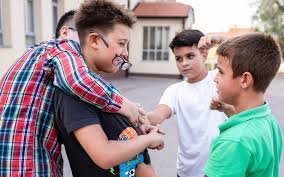
Stella described how she had intervened, initially attempting verbal confrontation, then shoving back only after being physically provoked, and finally, witnessing Lucy trip and fall during the scuffle, which prompted the teacher to immediately assume Stella was at fault.
I asked for details, names, dates, and witnesses, listening intently as Stella listed other instances where Lucy had harassed classmates, stolen belongings, and taunted children who were more vulnerable, creating a pattern that extended far beyond a single classroom incident.
Then the realization struck me: Lucy’s last name was Nines—a name I hadn’t heard in decades but that instantly conjured memories of my own torment at school, inflicted by Heather Nines, a girl who had made my childhood miserable through relentless bullying and humiliation.
Heather Nines had been cruel in ways adults dismissed as typical “mean girl” behavior—she stole lunches, damaged new clothing, and inserted chewing gum into my hair, laughing gleefully as I cried, leaving scars both visible and invisible.
Now, twenty-five years later, that same last name appeared in my child’s life, manifesting through a daughter who mirrored her mother’s arrogance, privilege, and unrepentant cruelty, bringing the past sharply into the present in an almost surreal echo.
The night before the school meeting, I had Stella document every incident she could recall involving Lucy, creating a detailed log of bullying episodes, dates, and witness statements, while I contacted other parents like Ava’s mother to corroborate the ongoing harassment.
The next morning, Stella and I entered the school office together, our nerves taut, ready to advocate for truth and justice, prepared for confrontation with adults who, like Heather once, seemed to confuse charm, wealth, or social influence with immunity from accountability.
Ms. Grant, the teacher, expected an apology from Stella, her posture stiff, voice curt, already dismissive of Stella’s side of the story and demonstrating a bias toward Lucy that immediately frustrated and alarmed me.
Before I could speak, the office door opened, and in walked Heather Nines herself, older, more polished, yet unmistakably the same cruel force from my childhood, now accompanied by her daughter, Lucy, who exhibited the same smirk, sharp chin, and air of entitled superiority.
Heather’s smile, aimed directly at me, was cold and knowing, dripping with condescension and an unspoken threat that neither time nor adulthood had tempered her predilection for judgment and power over others.
She immediately assessed Stella and me as if evaluating an old rival, casually remarking on Stella’s appearance and presence, comparing her unfavorably to Lucy, and signaling that she intended to frame the narrative in her favor before any words were exchanged.
I watched Stella closely as her eyes narrowed slightly, a mix of caution and defiance, recognizing in her a steadiness I had cultivated in her—knowing that my child, unlike me, would not shrink or cower under intimidation.
Heather attempted to assert dominance, claiming Lucy’s actions were harmless, that jealousy motivated other students, and that confrontation was an overreaction, all while maintaining a veneer of polite civility that barely disguised her manipulative tendencies.
I calmly presented the documentation Stella had compiled: written incidents, witness names, dates, and text messages from Ava’s mother detailing repeated harassment, each entry meticulously prepared to counter any attempt at dismissal or minimization of Lucy’s actions.
Heather scoffed and rolled her eyes, attempting to belittle our preparation, while I focused on factual presentation, refusing to be baited into emotional argument, determined to protect Stella and to prevent history from repeating itself.

As the meeting unfolded, it became clear that the school administration, initially hesitant, could no longer ignore patterns of bullying, corroborated by multiple students, parents, and the clarity of the documentation Stella and I provided, forcing them to reconsider their initial assumptions.
Heather’s attempts to deflect responsibility, claim her daughter’s popularity as justification, and dismiss prior incidents crumbled under the weight of evidence and witness accounts, exposing the generational cycle of unchecked entitlement and cruelty.
Mr. Bennett, the principal, intervened decisively, requesting full access to all prior reports involving Lucy, instituting temporary removal from class, and signaling to Heather that standard administrative tolerance for repeated bullying would not continue.
Heather attempted one final manipulation, accusing me of exaggeration and referencing old grievances between our families, but I remained composed, addressing the real issue: protecting children from ongoing harassment and ensuring Stella’s actions were viewed in the proper context.
Ava’s mother, present in the office, reinforced the evidence, confirming repeated incidents and the impact on her child, providing an external validation that countered Heather’s attempts to frame the confrontation as isolated or unprovoked.
By the end of the meeting, the administration acknowledged the severity of the situation, Lucy faced suspension, and Stella received acknowledgment for defending herself and others in the moment, cementing a pivotal lesson in accountability, courage, and standing up against bullies.
That evening, Stella sat with me, reflecting on the events, her voice steady yet vulnerable, expressing gratitude for my unwavering support, and beginning to understand that facing injustice sometimes requires confrontation, documentation, and unflinching advocacy.
We talked about my own experiences with Heather, and for the first time, Stella could see a tangible connection between history and her present, learning that silence and fear protect no one, and that truth must be met with courage.

I reminded her that while fear is natural, action guided by integrity, evidence, and support networks is the antidote to bullying and systemic negligence, and that standing up is a powerful act that defines character more than conformity ever could.
Later, she went to bed, and I remained awake, contemplating the cycles of cruelty that had spanned generations and how different life could be when one child has advocacy, support, and a parent willing to confront injustice without hesitation.
By the next week, school officials confirmed camera footage verified Lucy’s repeated harassment, bolstered by statements from other students, resulting in disciplinary action, while Stella maintained her composure, experiencing validation and closure that I had only dreamed of as a child.
The most important lesson, however, transcended the administrative outcome: Stella learned firsthand that documentation, perseverance, and speaking truthfully in the face of intimidation are more potent than silence or retaliation.
I reflected on the contrast between my childhood and hers, realizing that protecting her was not about vengeance but about teaching her resilience, ethical action, and the courage to defend herself and others without fear of reprisal.
In the days following the confrontation, Stella carried a new confidence, one forged in the fire of advocacy and validation, a stark contrast to her earlier timidity, and it radiated in her posture, tone, and the way she navigated school corridors.
She walked past peers with a quiet pride, unafraid of whispers or sideways glances, knowing she had acted with integrity, documented the truth, and had adults recognize both the evidence and her courage to intervene appropriately.
Ava, who had been the frequent target of Lucy’s harassment, began smiling more openly at lunch, sitting without fear, and even thanking Stella in small, grateful ways, showing the impact of one child standing up for another in a sustained way.
The administration, spurred by our documentation and Ava’s mother’s corroboration, initiated a broader review of school policies, reviewing previous incidents with Lucy and establishing new protocols to ensure other children were protected and heard.
Heather Nines, though still present at the school, found her influence diminished; teachers and administrators no longer brushed aside reports simply because of her charm, social status, or her child’s superficial popularity, creating a shift in the school’s culture.

Stella’s peers began to notice the change too; those who had previously been passive observers realized the importance of reporting harassment and supporting each other, slowly breaking the pattern of silent complicity that had allowed bullying to persist.
At home, Stella’s demeanor evolved further; she was more willing to share details of her day, more assertive in expressing her feelings, and increasingly involved in discussions about fairness, justice, and ethical behavior with a maturity beyond her years.
I encouraged Stella to journal her experiences, to write down incidents, her emotions, and lessons learned, understanding that self-reflection and documentation would not only help her process but also empower her to advocate for others in future situations.
Even our evening conversations became richer, with Stella asking about my own experiences, wanting strategies and insights on dealing with intimidation, manipulation, and historical cycles of bullying that I had endured silently as a child.
We also discussed resilience and emotional intelligence, emphasizing that courage is not the absence of fear but the ability to act thoughtfully and effectively, even when threatened, a lesson Stella had now embodied in her own life.
Meanwhile, the school arranged mediation sessions for students involved, focusing on conflict resolution, empathy development, and clear communication, and Stella participated, often quietly mentoring younger students on how to assert themselves respectfully.
Ava and Stella became close allies, forming a partnership that extended beyond immediate incidents, including studying together, helping each other with homework, and supporting classmates facing social challenges, creating a micro-community of safety and solidarity.
Heather Nines tried subtle interventions, questioning the fairness of disciplinary actions against Lucy, but the school had shifted, administrators no longer yielding to intimidation, and Heather’s attempts at manipulation were met with firm, consistent policies and transparent procedures.
Lucy, while still resistant at first, slowly began to face consequences for her behavior, receiving structured support and counseling, which emphasized accountability and empathy, yet maintained boundaries to protect other students from future harassment or manipulation.
Stella observed these processes closely, learning the difference between justice and revenge, between corrective measures and punishment, and internalized the principle that confronting wrongdoing can coexist with compassion without condoning harmful behavior.
I often reminded her at night that growth sometimes requires patience, understanding, and vigilance, that healing from bullying is not linear, and that watching systems and individuals respond thoughtfully is as important as personal courage in creating lasting change.
The experience also strengthened my relationship with the school administration, who recognized our role as partners rather than adversaries, understanding that parental advocacy, careful documentation, and respectful communication can dramatically improve student safety and accountability.
We began documenting more broadly, keeping records not just for Stella’s incidents but for ongoing patterns of harassment and social dynamics, learning that attention to detail and proactive involvement often prevents small issues from escalating into more serious conflicts.
At home, Stella’s confidence extended beyond the school environment; she became more engaged in extracurricular activities, volunteering in peer mentoring programs, and speaking publicly about bullying, advocating for inclusivity, respect, and empowerment for children with fewer resources.
Her growth inspired conversations in our community, prompting other parents to reevaluate their responses to bullying, encouraging reporting, and fostering an environment where accountability and compassion were valued over popularity or appearances.
Even months later, Stella reflected on the confrontation with Heather’s daughter, recognizing that while fear had existed, preparation, evidence, and advocacy transformed a potentially traumatic experience into a formative lesson in ethics, resilience, and leadership.
We also discussed empathy and perspective-taking, understanding that even perpetrators of bullying may struggle with insecurities or learned behaviors, but that accountability remains critical, and by guiding rather than simply punishing, long-term positive change becomes possible.
At the same time, Stella developed strategies for self-protection, emotional regulation, and reporting, balancing assertiveness with safety, which she shared with friends, creating a ripple effect that fostered empowerment and mutual support among her peer group.
Heather, observing from the periphery, was forced to confront the consequences of past behaviors and the futility of perpetuating cycles of intimidation, while Stella’s example demonstrated how informed, calm, and evidence-based advocacy could shift the balance of power constructively.
The process reinforced a broader lesson: courage, clarity, and persistence in addressing injustice are transferable skills, equipping Stella not just to respond to bullying, but to navigate social, academic, and professional environments with integrity and confidence.
By the end of the school year, Stella had transformed from a quiet observer into a respected peer, recognized for her fairness, courage, and advocacy, proving that even children can change the culture around them when supported and guided effectively.
In the months after the school meeting, Stella’s confidence solidified, radiating in every interaction; she spoke with clarity, engaged in discussions about fairness, and began mentoring younger students, embodying lessons of courage, accountability, and ethical decision-making.
Her relationship with Ava deepened into a lasting friendship built on trust, shared experiences, and mutual protection, with both girls encouraging each other academically, socially, and emotionally, turning trauma into a foundation for resilience and empowerment.
Stella also began participating in school leadership programs, using her firsthand experiences to educate peers about the consequences of bullying, emphasizing empathy, documentation, and speaking up as tools to create a safe, respectful community.
At home, our family routines adjusted naturally to Stella’s growth; we spent evenings reflecting on daily events, discussing moral dilemmas, and reinforcing that courage often involves listening, observing, and acting thoughtfully, not reacting impulsively or vindictively.
Heather Nines gradually became less involved in school affairs, her attempts at undermining authority and promoting Lucy’s impunity repeatedly blocked by policies reinforced by evidence, documentation, and firm administrative support that prioritized student safety.
Lucy, facing structured guidance and counseling, began small but meaningful shifts in behavior, learning accountability while Stella observed how leadership combined with compassion can guide transformation without excusing harmful actions.
We continued documenting every incident carefully, compiling notes, emails, and firsthand accounts, ensuring that patterns of behavior were traceable, allowing administrators to address misconduct decisively and giving Stella confidence that truth and preparation matter.
Through these experiences, Stella learned to advocate for justice while maintaining empathy, understanding that fairness requires careful consideration, respect for process, and a commitment to supporting those who cannot yet defend themselves.
Our family dinners became spaces of discussion about values, responsibility, and integrity; Stella asked questions about past injustices, historical examples of bullying, and strategies for addressing social inequities, demonstrating her growing maturity and social awareness.
We also explored community initiatives, volunteering together to support younger students experiencing bullying, helping Stella recognize that advocacy can extend beyond personal experience and create a broader culture of respect and accountability.
At school, Stella’s peers began to emulate her behavior; reporting bullying incidents increased, empathy improved, and group dynamics shifted as students realized that taking action and documenting events was more powerful than staying silent or retaliating.
Ava’s confidence soared as well, allowing her to participate in group activities, focus on academics, and engage socially without fear, showing how one child’s courage can ripple outward to positively impact multiple lives within a community.
Stella’s growth inspired other parents and teachers, sparking conversations about preventive measures, consistent policy enforcement, and the importance of empowering students with tools to recognize, document, and address bullying safely and effectively.
Even Heather Nines seemed forced to acknowledge the consequences of her past actions indirectly, watching as her daughter encountered structured consequences and guidance while Stella thrived, illustrating the long-term impact of adult responsibility—or lack thereof—on children.
We noticed Stella’s leadership extending beyond conflict situations; she mediated peer disagreements, offered advice to classmates, and modeled respectful communication, demonstrating that courage coupled with empathy builds stronger communities than fear or intimidation ever could.
Over time, Stella reflected on her journey, recognizing that her initial anger, fear, and frustration were natural but that thoughtful action, evidence, and persistence created meaningful change, teaching her that the tools of advocacy are powerful lifelong skills.
Our family dynamic strengthened, with Stella, Ava, and our household developing open communication, trust, and emotional support networks, reinforcing the idea that protection and guidance can transform vulnerability into resilience when combined with careful, principled action.
At school, Stella’s efforts prompted administrators to review and improve anti-bullying policies, implement more systematic documentation procedures, and provide training for staff and students on recognizing patterns of harassment and responding appropriately.
Heather’s attempts at interference became increasingly futile, highlighting the importance of accountability, consistency, and transparency in school systems, while Stella’s leadership and documentation inspired peers to trust that reporting wrongdoing leads to constructive outcomes.
Evenings at home became reflective moments, where Stella discussed her observations, learned to balance assertiveness with empathy, and explored how individual courage combined with systemic support can create long-term social change.
Months later, Stella shared her story with a larger audience in school assemblies, emphasizing resilience, ethical decision-making, and the importance of standing up for others, showing that personal experiences can educate and empower a wider community.
Through this journey, Stella internalized a critical lesson: justice and compassion are not mutually exclusive, and effective advocacy requires patience, preparation, and moral clarity, ensuring that those who cannot protect themselves are heard and supported.
The transformation of Stella, Ava, and our family highlighted that courage and persistence in addressing wrongdoing create not just immediate solutions but also lasting cultural shifts, building communities grounded in fairness, empathy, and accountability.
Stella’s confidence and ethical maturity became defining aspects of her character, illustrating that personal growth, informed advocacy, and compassionate leadership can break cycles of bullying and inspire change across generations of students.
Our family recognized that while Heather’s actions reflected unresolved patterns from her own childhood, Stella’s journey demonstrated that intentional guidance, love, and evidence-based intervention empower children to redefine their experiences and assert control over their narratives.
Even long after Lucy faced disciplinary consequences, Stella continued to model courage, empathy, and advocacy for others, ensuring that her experience transformed into lessons for peers, younger students, and herself, fostering a sense of justice and responsibility.
By the end of the school year, Stella’s maturity and leadership were evident not only to us but to teachers, administrators, and her peers, proving that resilience, preparation, and principled courage are more effective than revenge or passive endurance.
Through this experience, I finally realized that my role as a parent was not just to protect but to empower, equipping Stella with tools to navigate social challenges and transform adversity into leadership, advocacy, and meaningful personal growth.
The story concluded not with vengeance or humiliation for Heather but with Stella’s empowerment, the restoration of fairness, and the establishment of systems ensuring future bullying would be recognized, documented, and addressed proactively by adults and students alike.
