The music stopped, and the woman stepped back with an encouraging expression. She told Cameron that his timing was improving but still needed work. He laughed, nodded, and reached for her hands again. I wondered how many lessons they had shared. How many times had he told me he was working late while spending time here? How long had this been happening? My imagination was moving faster than my ability to understand what I was actually seeing. I took one step backward, suddenly desperate to leave before he noticed me standing in the hallway.
Then an older man’s voice came from inside the studio.
“I don’t think I can do it.”
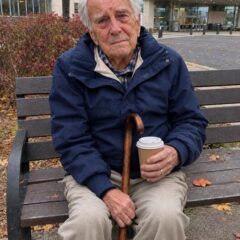
I stopped and looked through the window again. An elderly man had entered the room. His shoulders were slightly bent, and his hands trembled as he held the white rose I had seen Cameron purchase earlier. Cameron walked toward him with a patient expression that reminded me of the way he used to help our young nephew learn to ride a bicycle. The woman who had been dancing with my husband stepped aside and gave the older man a gentle smile. I felt confused. The scene was no longer what I had imagined, but I still didn’t understand what was happening.
The older man looked down at the flower and repeated that he couldn’t do it. The woman smiled and reminded him that he had said the same thing during their previous lesson. Cameron approached him and rested a reassuring hand on his shoulder. He told the man that he wasn’t incapable of doing it; he was simply frightened. The older gentleman gave a tired sigh and explained that he hadn’t asked a woman to dance since he was seventeen. He said he kept imagining that she would laugh at him. His voice carried a sadness that made the entire room grow quiet.
Cameron shook his head gently. He told him that imagining rejection was not the same as experiencing it. Then he picked up the white rose and placed it back into the older man’s trembling hands. He began telling him about something his grandfather used to say. According to Cameron, his grandfather believed that people often spent too much time fearing the possibility of hearing no, while forgetting how painful it could be to spend an entire lifetime wondering what might have happened if they had simply asked. The older man listened without interrupting.
“I’ve already wasted fifty-eight years, son,” he whispered.
Cameron smiled gently and replied that the man didn’t have to waste another five seconds. There was no pressure in his voice, only encouragement. He wasn’t laughing at the man’s nervousness or telling him to stop being afraid. He was simply reminding him that he still had a chance to do something meaningful. As I watched them, I began to understand that the white rose was not intended for the woman I had imagined. It was meant for someone else, someone whose presence was still missing from the room.
Suddenly, the entire situation began to make sense. Cameron wasn’t secretly meeting a romantic partner. He was helping an elderly man prepare for a moment that had apparently been waiting more than half a century to happen. The woman was a dance instructor, and my husband was one of the volunteers helping the older man practice. The garment bag likely contained the clothes he planned to wear. The flower was not a gift from Cameron to another woman. It was a small symbol of courage for someone who had been afraid to ask a simple question for decades. I felt my eyes fill with tears, although I still didn’t know the entire story.