
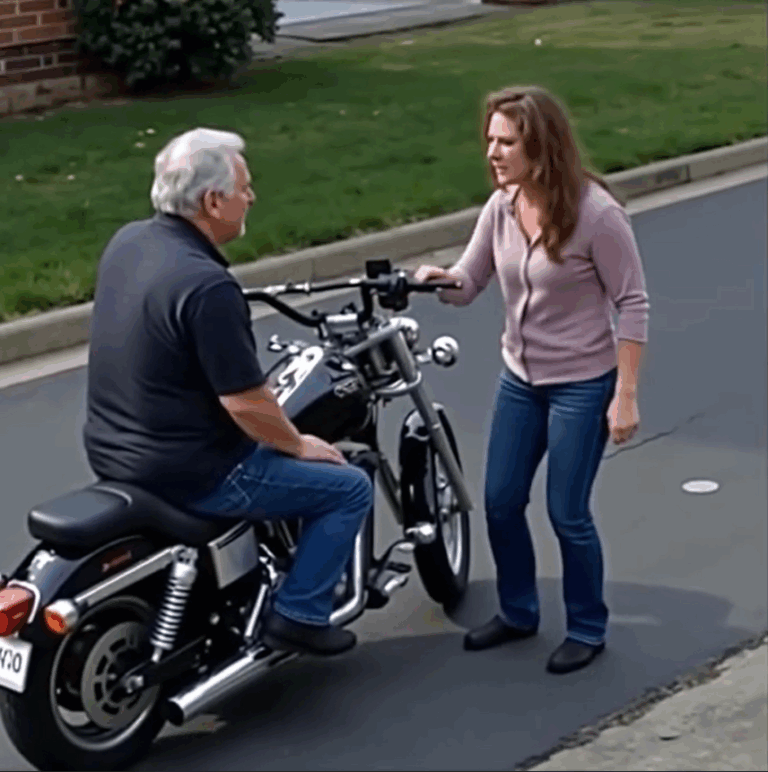
When my dad decided to sell his motorcycle shop after fifty years of dedication, I was struck by a wave of disbelief. That shop had been more than a business; it was a testament to his perseverance, a place where memories of family, laughter, and hard work intertwined.
Seeing him let it go felt like the closing of a chapter I wasn’t ready to read, and I struggled to reconcile pride with a deep sense of loss.
He bought a Harley for a solo retirement adventure, a gleaming symbol of freedom and independence. At forty-two, burdened by bills, mortgage worries, and the desire to buy a condo, I couldn’t fathom his decision.
It felt as though he had chosen the open road over me, over the stability I desperately needed. The distance between his dreams and my reality seemed insurmountable.
I expected guidance, emotional support, perhaps even shared moments to ease the burdens I carried. Yet, as I watched him pack his gear, I felt abandoned.

My emotions were tangled—love for my father mingled with frustration and confusion, leaving me unsure how to respond or even what I truly wanted from him.
After Mom passed away, I imagined he would slow down, embracing routines that honored her memory. I pictured quiet dinners, long conversations, and small gestures of comfort. But instead, he returned to his biker roots, rekindling a part of himself that had been dormant for decades. That reclamation of identity both unsettled and fascinated me.
When I tentatively asked for help, his response was gentle but firm. He reminded me that he had already provided a strong foundation, a life built with intention and care. His words were neither harsh nor dismissive—they were tender and honest, acknowledging that the tools for my own independence had already been given.
He explained the Harley trip was a promise to Mom: to live fully, embrace joy, and honor the passions she had encouraged him to pursue.
His eyes sparkled as he described the journey ahead, and I began to understand that this was not an act of escape but a deliberate, heartfelt commitment to self-fulfillment and remembrance.
The night he left, anger surged through me. I wanted to protest, to insist that family obligations should come first, that he had responsibilities toward me.
But as he handed me a check from selling his tools, I realized it was an act of love rather than duty. It was meant to provide security, not to absolve guilt.

It wasn’t merely money; it was a message. He wanted me to feel supported, to breathe easier under financial strain, and to know that he trusted me to manage life’s challenges. Slowly, my resentment softened, replaced with a cautious understanding of the depth and intentionality of his actions.
Watching him ride off into the night, the wind lifting his jacket, I finally comprehended that his choice was not selfish. It was healing, necessary, a reclamation of the self he had set aside for decades of work, family obligations, and caregiving. That realization shifted my perception of love entirely.
In the months that followed, he returned with stories of open highways, sunsets that painted the sky in vivid colors, and encounters with strangers who became brief companions yet left lasting impressions. His excitement was contagious, a vivid reminder that life continues to unfold, even after loss and hardship.
When I apologized for my earlier resentment, he simply smiled. “I’m glad you finally saw me,” he said, his voice calm and knowing. That moment brought closure I had not anticipated, a profound sense of peace that replaced the lingering tension I had carried for months.
Through his journey, I learned that love often requires releasing expectations. Allowing him to pursue his own path allowed me to gain perspective, a fresh start, and a deeper understanding of family dynamics that are sometimes invisible yet vital. It was a lesson in trust and acceptance.
I began to appreciate the foundation he had provided—the lessons in responsibility, resilience, and independence that were embedded in everyday life. His freedom became a bridge, teaching me that living fully does not preclude responsibility, and that love can manifest in acts of trust and encouragement.

Life started to feel more forgiving, more open. I carried his example, observing how he navigated the world with curiosity, courage, and joy, understanding that love is patient, active, and sometimes quietly transformative, unfolding in subtle, unexpected ways.
Reflecting on our shared history, I saw that every decision he had made—selling the shop, taking the Harley trip, giving financial support—was intertwined with deep care and intention. His actions revealed a love that was not always visible, yet profoundly impactful, teaching me lessons beyond words.
Financial independence, self-reliance, and emotional resilience became gifts I hadn’t fully appreciated at first. By witnessing his choices, I learned that supporting loved ones sometimes means granting them space to thrive, to grow, and to rediscover themselves, even when it feels inconvenient or challenging.
His return from the road was transformative. Every story he shared, every sunset described, every encounter recounted contained insight, lessons in courage, curiosity, and human connection. He reminded me that life is best experienced fully, with an open heart and willingness to embrace change.
I understood that love is not always measured in presence. Sometimes it is measured in trust, in freedom, and in the quiet assurance that one’s choices, though distant, are made from a place of care and intentionality. His journey embodied this truth.
Through this experience, I realized family bonds are strengthened not just by daily interaction but by respect for individuality and personal growth. Releasing expectations allowed me to discover resilience, empathy, and a deeper appreciation for the complexity of love.

Now, I carry these lessons into every aspect of my life. Facing challenges, I reflect on his courage, his joy, and the deliberate decisions that shaped both his life and mine. Freedom and responsibility coexist, grounded in trust, care, and intention.
Even years later, memories of that night linger—the roar of the Harley, the flash of sunset, the tension of anger slowly transforming into understanding. These memories remind me that life’s deepest lessons often arrive unexpectedly, hidden in ordinary moments.
His journey reinforced that love is multifaceted. It includes freedom, patience, and trust. By observing him embrace life fully, I learned that allowing space for self-fulfillment strengthens relationships rather than weakening them.
I learned to release rigid expectations, discovering freedom for both of us. By letting him find his own path, I gained clarity, empathy, and respect, understanding that love can be present even when physical proximity is absent.
Today, I celebrate both the man he is and the lessons he imparted silently. His journey became a mirror for my own growth, showing that love is active, intentional, and enduring, manifesting in both presence and trust.

In embracing his own path, my dad provided guidance without instruction, teaching me that responsibility and freedom are not opposites. Observing his choices showed that authenticity, passion, and care can coexist, enriching our lives and relationships profoundly.
Even the smallest memories—handing me the check, the smile after my apology, the stories of open highways—carry deep significance. They remind me that love and personal fulfillment are intertwined, revealing themselves over time in subtle, transformative ways.
His return was more than a homecoming; it was a living example of pursuing one’s passions while remaining connected to family. Every story, every sunset, every encounter was a lesson in living fully and authentically.
I now view his choices with admiration and gratitude. What once seemed like abandonment became a source of wisdom, resilience, and empowerment, teaching me that patience, perspective, and understanding are essential components of lasting familial love.
The story of his Harley journey continues to shape my life. I carry it as a reminder that love is complex, nuanced, and often expressed in ways that challenge initial assumptions but ultimately strengthen bonds and trust.
Understanding his motivations transformed my perspective. Freedom, joy, and self-expression are integral to human experience. Supporting these needs in others fosters deep connection, growth, and respect, even when choices initially appear selfish or inconvenient.
I learned that resentment can cloud understanding. Observing his actions without judgment revealed the care and intentionality behind every decision, showing me that love can be patient, quiet, and transformative even when it is not immediately recognized.
His journey taught me to embrace change and uncertainty with openness. Life is dynamic, and the choices of loved ones may diverge from expectations, yet still provide guidance, inspiration, and enduring support that strengthens relationships in profound ways.
Reflecting on our experiences, I now carry peace. What once seemed abandonment became a bridge for mutual understanding, growth, and appreciation of family, love, and personal fulfillment that transcends conventional expectations.
