

Renowned American singer-songwriter Country Joe McDonald, one of the most recognizable musical voices associated with the protest culture of the 1960s, has passed away at the age of 84. His music and activism helped define a generation deeply engaged in social change.
According to statements shared by his family, McDonald died on March 7, 2026, at his home in Berkeley, California. His death followed complications related to Parkinson’s disease, an illness he had been living with in his later years.
His passing represents the closing of an important chapter in the history of protest music in the United States. For many listeners, McDonald’s voice symbolized the determination, frustration, and hope that defined a turbulent era.
Throughout his career, he combined music with political awareness, creating songs that reflected social movements, political tensions, and the experiences of people affected by war and inequality.
Born Joseph Allen McDonald on January 1, 1942, in Washington, D.C., he entered the world during a time of global conflict and transformation that would later influence his perspective and artistic voice.

Although he was born in the nation’s capital, McDonald spent much of his childhood in California, where his family eventually settled. The state’s cultural diversity and creative atmosphere helped shape his early experiences.
Growing up in California exposed him to a variety of musical traditions. From folk music to blues and early rock, these sounds played a significant role in shaping the style he would later develop.
As a young teenager, McDonald became fascinated with the guitar. Like many aspiring musicians of the era, he began learning songs by ear and gradually developed his own songwriting abilities.
One of the artists who had a strong influence on him was Woody Guthrie, the legendary folk singer known for writing songs that reflected the struggles of working-class Americans.
Guthrie’s storytelling approach showed McDonald that music could be more than entertainment. It could also serve as a powerful tool for expressing political ideas and social concerns.
Inspired by this philosophy, McDonald began writing his own songs while still young. Many of his early compositions explored themes related to justice, freedom, and the experiences of ordinary people.
Before fully committing himself to music, however, McDonald spent time serving in the United States Navy. His military service exposed him to new perspectives on global conflict and national policy.
These experiences later shaped his views about war and politics. They would eventually become central themes in some of his most well-known songs.
After completing his service, McDonald returned to California during the early 1960s. At that time, the region—particularly the city of Berkeley—was becoming a hub for student activism and cultural experimentation.

Berkeley’s atmosphere was energized by political debates, civil rights activism, and artistic innovation. Universities, coffeehouses, and music venues created a lively environment where ideas could be shared freely.
The growing counterculture movement attracted writers, musicians, and political thinkers who were questioning traditional social structures and exploring alternative ways of living.
McDonald quickly immersed himself in this environment. He began performing music locally while also participating in discussions about politics, civil rights, and the direction of American society.
During the mid-1960s, he helped form a band that would soon become one of the most recognizable musical groups of the counterculture movement.
Together with guitarist Barry Melton and several other musicians, he founded the band Country Joe and the Fish.
The group quickly gained attention for its unusual combination of psychedelic rock, folk storytelling, and satirical political commentary.
Their music stood out in a rapidly evolving musical landscape. During the mid-1960s, artists across the United States were experimenting with new sounds influenced by rock, blues, folk, and emerging psychedelic styles.
San Francisco, located not far from Berkeley, had become a center of this musical experimentation. Bands associated with the so-called “San Francisco sound” were exploring new artistic directions.
Country Joe and the Fish soon became part of this vibrant scene, performing alongside other rising artists who were helping shape the sound of the era.
Their performances were known for being both musically energetic and politically charged. McDonald often used humor and satire to express his opinions about current events.
The band’s lyrics addressed topics ranging from social inequality to government policy, making their music both entertaining and thought-provoking.
One of their most famous songs would eventually become a defining protest anthem of the late 1960s.
The song, titled I‑Feel‑Like‑I’m‑Fixin’‑to‑Die Rag, offered a sharply satirical look at the growing conflict in Southeast Asia known as the Vietnam War.
Through dark humor and memorable lyrics, the song criticized the political decisions that sent thousands of young Americans into a distant and controversial conflict.
For many listeners, the song captured the growing frustration felt by students, activists, and soldiers who questioned the purpose and consequences of the war.
As opposition to the Vietnam War increased across the United States, the song began spreading rapidly through college campuses, protest gatherings, and independent radio stations.

Its catchy rhythm and pointed message made it one of the most recognizable protest songs of the era.
McDonald later explained that he wrote the song partly as a satirical response to the rhetoric surrounding war and patriotism during the period.
Although the song sparked controversy among some audiences, it also resonated deeply with people who felt their concerns were not being represented in political discussions.
Country Joe and the Fish soon gained a reputation as one of the most outspoken musical groups associated with the anti-war movement.
Their albums combined experimental rock instrumentation with lyrics that addressed the political and social upheaval taking place during the 1960s.
The band’s popularity grew steadily as they performed at concerts, universities, and large gatherings connected to the counterculture movement.
One event in particular would cement McDonald’s place in music history and bring his message to a global audience.
In August 1969, Country Joe McDonald performed at the legendary Woodstock Music & Art Fair in Bethel, New York.
The festival, often simply called Woodstock, drew hundreds of thousands of attendees and featured some of the most influential musicians of the era.
Originally scheduled as a three-day music festival, Woodstock quickly became much more than a concert. It symbolized a cultural movement centered on peace, music, and social change.
McDonald’s appearance at the festival turned into one of the most memorable moments of the entire event.
Before performing his famous anti-war song, he led the crowd in a chant known as the “Fish Cheer,” encouraging thousands of people to participate in the call-and-response chant.

The massive audience enthusiastically joined in, creating an unforgettable moment of unity and energy.
Immediately afterward, McDonald performed “I-Feel-Like-I’m-Fixin’-to-Die Rag,” delivering one of the most iconic protest performances in music history.
The moment was later captured in the documentary film Woodstock: 3 Days of Peace & Music, which helped preserve the festival’s cultural impact for future generations.
The film went on to win an Academy Award and became an important historical record of the event.
For McDonald, the Woodstock performance was not just a musical milestone. It was an opportunity to share a message about peace and social responsibility with an enormous audience.
The visibility gained from the festival transformed him into an internationally recognized figure within the counterculture movement.
His music became closely associated with the anti-war movement and the broader cultural shifts taking place during the late 1960s.
Yet despite the fame that followed Woodstock, McDonald remained focused on using music as a platform for reflection and social dialogue.
He believed that songs could spark conversations about difficult issues and encourage people to think critically about the world around them.
The years following Woodstock would bring both new opportunities and significant changes in the musical landscape.
But for McDonald, the commitment to blending music with meaningful messages remained constant.
His journey as an artist and activist was only beginning to reach its full scope.
Following the global recognition he gained at Woodstock, Country Joe McDonald continued to build a remarkable career that combined music, activism, and cultural commentary. His influence extended far beyond the stage, shaping how protest music was perceived in America and internationally.
After the band Country Joe and the Fish disbanded in the early 1970s, McDonald embarked on a solo career. This new phase allowed him to explore a wider variety of musical styles and personal themes while maintaining his commitment to social issues.
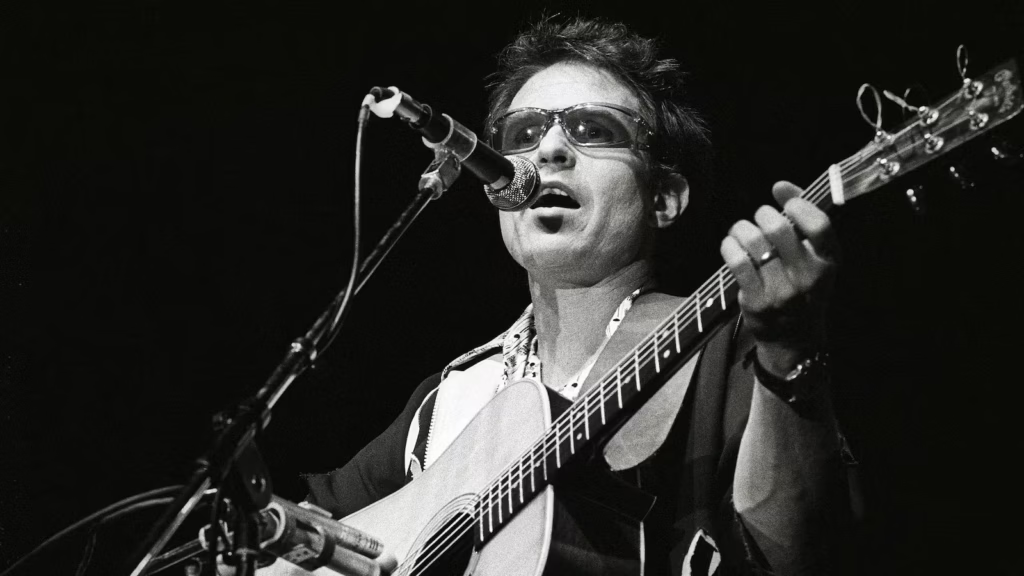
Over the following decades, McDonald recorded more than thirty albums and composed hundreds of songs. These works spanned folk, psychedelic rock, blues, and experimental styles, demonstrating his versatility and dedication to artistic innovation.
His solo music often addressed issues that were both deeply personal and socially significant. He wrote about war, peace, civil rights, environmental concerns, and the challenges faced by ordinary people during times of political upheaval.
McDonald remained closely connected to Vietnam War veterans. Having experienced military service himself, he understood the physical and emotional toll of war and used his platform to advocate for their rights and recognition.
His activism extended to numerous humanitarian causes. He frequently supported campaigns for environmental protection, global peace initiatives, and educational programs designed to promote understanding across diverse communities.
Throughout his solo career, McDonald remained a powerful presence at festivals, rallies, and university events. His music and speeches encouraged audiences to question authority, engage critically with social issues, and participate in collective action.
Many of his albums during this period reflected a mature perspective, combining political commentary with introspection and historical reflection. He often intertwined personal storytelling with broader societal observations.
McDonald’s work continued to resonate with younger generations, who discovered his music both through live performances and recordings. His songs remained relevant as they addressed universal themes of justice, freedom, and empathy.
In addition to music, McDonald pursued historical research, writing, and educational outreach. He examined how cultural movements influenced politics, society, and public consciousness, sharing insights through lectures and interviews.
Even in later years, McDonald performed with energy and passion, demonstrating a lifelong commitment to music and social engagement. His concerts became spaces for dialogue, reflection, and celebration of cultural heritage.
Throughout the 1980s and 1990s, he continued to tour, release albums, and participate in activist campaigns. He collaborated with other musicians, civil rights leaders, and environmental advocates to advance causes he deeply cared about.
McDonald also became a mentor to younger artists, encouraging them to blend creativity with social responsibility. His guidance helped inspire a new generation of socially conscious musicians.
Although he faced the physical limitations of age and health challenges, he remained determined to share his message and connect with audiences worldwide. His resilience was a hallmark of his public persona.
His songs continued to be featured in documentaries, historical retrospectives, and educational programming, ensuring that the lessons and emotions of the 1960s remained accessible to contemporary audiences.
McDonald’s music highlighted the transformative power of art. It showed that songs could convey complex political ideas while also creating emotional resonance and community among listeners.
His commitment to activism never waned. Over the years, he advocated for peace, civil rights, and the fair treatment of veterans, consistently emphasizing the moral responsibility of society to support the vulnerable.
In addition to his public work, McDonald remained a devoted family man. He spent meaningful time with his wife, Kathy McDonald, and their five children, nurturing relationships that were central to his personal happiness.
His children—Seven, Devin, Ryan, Tara Taylor McDonald, and Emily McDonald Primus—remembered him as a supportive father who balanced his professional life with deep engagement in family matters.
McDonald’s influence extended to his grandchildren, whom he encouraged to explore creativity, question authority thoughtfully, and respect cultural and historical knowledge.
The intersection of his artistry and activism also left a lasting impression on fellow musicians and collaborators. Many regarded him as a model of integrity and courage in combining music with meaningful social commentary.
Throughout his career, McDonald demonstrated that popular music could challenge societal norms, provoke discussion, and encourage collective reflection, leaving a lasting legacy for artists and audiences alike.
His contributions have been widely studied in academic and cultural contexts. Scholars often cite his work as emblematic of how music and political movements can intersect in meaningful ways.
McDonald’s activism remained informed by personal experience, historical awareness, and empathy. He used his platform responsibly, advocating for issues with nuance and integrity rather than seeking mere popularity.
Even as musical styles evolved, McDonald remained relevant by adapting while staying true to his core values of social justice, empathy, and artistic expression.
During the 2000s and 2010s, he scaled back extensive touring but continued to perform selectively, write music, and participate in cultural events, ensuring that his voice remained present in public discourse.
He also contributed to retrospectives and documentaries, offering firsthand accounts of the counterculture movement and the social dynamics of the 1960s, providing valuable historical insight.
McDonald remained closely connected to the Woodstock legacy, participating in anniversary events, interviews, and celebrations that highlighted the festival’s cultural significance.
Through these appearances, he reinforced the idea that music could unite communities, bridge differences, and inspire social awareness in ways that transcend generations.
In addition to his musical and activist work, McDonald continued to write and reflect on his experiences, offering a personal perspective on historical events and societal shifts that shaped his career.
His writings and interviews provide insight into the challenges faced by musicians in politically charged eras, as well as the responsibilities that come with having a public platform.
McDonald’s influence extended internationally. His songs were heard and appreciated by audiences outside the United States, including activists, students, and music lovers inspired by his message of peace and social consciousness.
Even as he aged, he maintained a deep curiosity about the world, encouraging dialogue and understanding across generational, cultural, and political divides.
Fans, historians, and fellow musicians frequently praised his ability to merge humor, irony, and seriousness, creating songs that were simultaneously entertaining and thought-provoking.
McDonald’s work serves as a reminder that music can have lasting social impact, reaching beyond entertainment to inform, inspire, and mobilize communities.
His life exemplifies how artists can remain engaged with pressing social issues while continuing to evolve creatively and personally.
In his later years, Country Joe McDonald faced the gradual challenges of aging while continuing to reflect on a life spent at the intersection of music and activism. Despite reduced touring, he remained a significant figure in cultural discussions.
McDonald’s health became a growing concern over time, particularly as he battled Parkinson’s disease, a progressive neurological disorder that affects movement and can lead to complications affecting speech, balance, and daily activities.
Despite the physical limitations imposed by Parkinson’s disease, McDonald remained engaged with music and advocacy, often participating in interviews, recordings, and public discussions that shared his historical and cultural insights.
He continued to perform select concerts when possible, choosing smaller venues that allowed him to connect personally with audiences while managing the strain that larger tours could impose on his health.
Family played a central role in McDonald’s final years. His wife, Kathy McDonald, remained a devoted partner, supporting him through his illness while maintaining a nurturing home for their children and grandchildren.
His children—Seven, Devin, Ryan, Tara Taylor McDonald, and Emily McDonald Primus—spoke publicly about their father’s warmth, mentorship, and unwavering encouragement, highlighting the balance he maintained between a high-profile career and family life.
Grandchildren were also a source of joy for McDonald, who encouraged them to explore music, ask questions about society, and develop their own sense of creative and moral responsibility.
Even as he faced declining physical abilities, McDonald remained mentally sharp, often reflecting on the social movements, political struggles, and cultural revolutions he had witnessed firsthand during the 1960s and beyond.
He frequently spoke about the responsibility of artists to use their platform for meaningful expression, noting that the impact of music goes far beyond entertainment to shaping cultural awareness and inspiring action.
McDonald’s influence continued to reach a global audience. Students, activists, and musicians from around the world studied his songs and lyrics, recognizing them as instructive examples of music as a tool for social change.
He also remained committed to mentoring younger musicians and social activists, encouraging them to embrace integrity, thoughtful activism, and creativity in pursuing their goals.
His legacy is not solely musical. McDonald contributed to discussions on social justice, environmental protection, civil rights, and veteran advocacy, emphasizing how art and community engagement can intersect.
Throughout his life, he remained deeply empathetic, often emphasizing the importance of listening to others, understanding diverse perspectives, and engaging with social issues with thoughtfulness and compassion.
McDonald’s later work reflected a blend of retrospection and forward-looking optimism. He revisited old songs, reinterpreted classic pieces, and occasionally collaborated with younger artists, bridging generational gaps.
As Parkinson’s disease progressed, he became increasingly dependent on family support, yet he maintained a positive outlook, focusing on creative endeavors and remaining intellectually active.
He continued to share stories from his career and life experiences, giving audiences and fans a rich understanding of the social context surrounding his music.
Tributes poured in from around the world following news of his declining health and eventual passing, highlighting the global reach and enduring impact of his work on music, activism, and culture.
His death on March 7, 2026, marked the conclusion of a remarkable life dedicated to art, advocacy, and social consciousness. The music community recognized him as a pioneer in protest music and counterculture expression.
In addition to his family, McDonald is survived by his brother, Billy McDonald, who shared memories of growing up with Joseph Allen McDonald and witnessing his early passion for music and social justice.
His passing represents both a loss and a legacy. While the world mourns the physical absence of his presence, his songs, performances, and activism continue to influence artists and social movements globally.
McDonald’s contribution to the 1960s counterculture, the anti-Vietnam War movement, and the evolution of protest music has been studied extensively in academic and historical contexts, ensuring his work is preserved for future generations.
He inspired countless individuals to recognize the power of music in shaping social consciousness, encouraging activism, and fostering unity across communities facing injustice and conflict.
His performances, particularly iconic moments like the Woodstock Fish Cheer, remain enduring symbols of the potential of collective voice, music, and public engagement to create cultural and social impact.
McDonald’s songs continue to be performed, recorded, and referenced in documentaries, educational programs, and social justice campaigns, demonstrating the timeless relevance of his message.
He leaves behind not just a family but an artistic and activist legacy that exemplifies the enduring relationship between creativity and civic responsibility.
Throughout his life, he balanced humor, satire, and earnestness, proving that music could convey complex social commentary while remaining engaging and memorable for listeners of all ages.
His advocacy for Vietnam War veterans, environmental protection, civil rights, and global peace remains a model for socially conscious artists striving to make a difference.
Fans continue to honor his work through commemorative performances, tributes, and reinterpretations of his songs, keeping his voice alive in contemporary culture.
McDonald’s life demonstrates how persistence, courage, and artistic expression can shape not only the cultural landscape but also the way society engages with issues of justice and morality.
He remained a devoted partner, father, grandfather, mentor, and activist until the end, leaving a lasting imprint on both his family and the wider world.
Through decades of change, McDonald maintained an unwavering belief in the potential of music to educate, inspire empathy, and challenge established norms.
His passing reminds us of the enduring power of art to document social movements, amplify voices of dissent, and connect communities across time and space.
Country Joe McDonald’s music, performances, and public life serve as a testament to the impact one individual can have when creativity, integrity, and activism converge.
The lessons from his career remain relevant today: that social engagement, historical awareness, and artistic courage can coexist, leaving a positive and lasting influence.
McDonald’s story continues to inspire musicians, historians, and activists alike, illustrating how art can serve as a powerful catalyst for reflection, dialogue, and cultural transformation.
May the legendary singer-songwriter, activist, and cultural icon rest in peace. His voice, music, and vision will continue to resonate for generations, reminding us of the enduring intersection of music, activism, and human conscience.
