
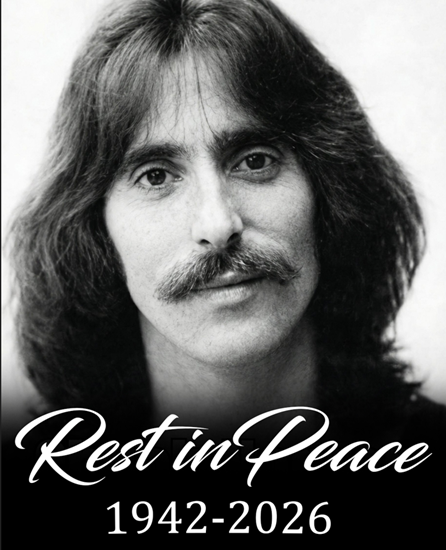
From a modest upbringing in the Bronx to international recognition as the unmistakable voice behind some of the most enduring rock hits of the late twentieth century, Chuck Negron’s life traced a remarkable arc of talent, struggle, collapse, recovery, and resilience.
His story is inseparable from the sound of American classic rock, yet it also stands on its own as a deeply human narrative—one shaped by extraordinary success, devastating addiction, and ultimately, redemption earned through perseverance and honesty.
On Monday, February 2, 2026, Chuck Negron died at the age of 83 at his home in Studio City, California, surrounded by his family, according to an announcement by his publicist.
In the final months of his life, he had been battling heart failure alongside long-term chronic obstructive pulmonary disease (COPD), conditions that had increasingly limited his ability to perform and travel. His passing marked the end of a significant chapter in American music history and prompted tributes from fans and fellow musicians across generations.

For listeners around the world, Negron’s voice was instantly recognizable—a powerful, expressive tenor capable of soaring choruses, intimate ballads, and celebratory anthems that dominated radio airwaves throughout the late 1960s and 1970s.
Yet behind the commercial success and widespread acclaim lay a life marked by personal demons, fractured relationships, and profound hardship.
His legacy, therefore, is not only musical but deeply personal, offering a story of survival and self-reclamation that continues to resonate.
Early Life: Bronx Beginnings and Musical Roots
Charles “Chuck” Negron II was born on June 8, 1942, in New York City and raised in the Bronx, an environment that exposed him early to both struggle and creativity.
Growing up in a working-class neighborhood during the postwar years, Negron experienced economic uncertainty firsthand. These early challenges instilled in him a strong work ethic and a determination that would later define both his career and his recovery.
Music entered Negron’s life at a young age. As a child and teenager, he gravitated toward singing, particularly within the doo-wop tradition that flourished on street corners and schoolyards throughout New York City in the 1950s.
These informal vocal groups provided his first exposure to harmony, rhythm, and performance—skills that would later become central to his professional success. Singing was not merely a pastime; it was an identity taking shape.
In addition to music, Negron showed promise as an athlete. He played basketball competitively in local leagues and developed a strong sense of discipline and competitiveness.

For a time, sports appeared to offer a viable future, and Negron pursued basketball seriously enough to earn opportunities beyond his neighborhood. However, even as athletics demanded his focus, music remained a constant pull.
As a teenager, Negron recorded his first single and began performing on notable stages, including the legendary Apollo Theater in Harlem.
Appearing at the Apollo—long regarded as a proving ground for emerging talent—was a formative experience that reinforced his belief that a career in music was possible.
These early performances laid the groundwork for a journey that would soon take him far from New York and into the center of the American rock movement.
Musical Breakthrough: Three Dog Night and a New Sound
Negron’s move to Los Angeles marked a turning point in his life. Initially, he relocated to California to play basketball at California State University, but the city’s vibrant music scene quickly drew him in.
By the mid-1960s, Los Angeles had become a hub for musical experimentation, collaboration, and opportunity. It was there that Negron’s ambitions shifted decisively toward music.
In 1967, Negron joined forces with fellow vocalists Danny Hutton and Cory Wells. The trio initially performed under the name Redwood, gaining early attention and even attracting interest from established figures in the music industry.
Soon after, they rebranded as Three Dog Night—a name inspired by an Australian expression referring to extremely cold nights that required multiple dogs for warmth.

The metaphor proved fitting, symbolizing the powerful blend of three distinct voices that defined the group’s sound.
Three Dog Night emerged at a moment when American rock music was rapidly evolving. Unlike many bands of their era, the group did not focus primarily on writing original material.
Instead, their defining strength lay in interpretation. They possessed an exceptional ability to identify compelling songs by emerging and established songwriters and transform them into polished, emotionally resonant recordings that appealed to a broad audience.
Negron’s voice quickly became a central element of the band’s identity. As a lead vocalist, he combined technical precision with emotional intensity, bringing clarity and depth to each performance.
Between 1969 and 1974, Three Dog Night achieved extraordinary commercial success, placing 21 songs in the Billboard Hot 100 Top 40, including three No. 1 hits—a remarkable achievement that positioned them among the most successful American bands of the era.
Signature Songs and Cultural Impact
Among Three Dog Night’s extensive catalog, several songs stand out as defining contributions to popular music. Chief among them is “Joy to the World (Jeremiah Was a Bullfrog),” written by Hoyt Axton and released in 1971.
Featuring Negron’s commanding lead vocal, the song topped the Billboard Hot 100 and became one of the best-selling singles of the decade.
Its exuberant tone and memorable chorus ensured its place as a cultural touchstone, played endlessly on radio and embraced across generations.

Other signature recordings further showcased Negron’s versatility. “One (Is the Loneliest Number)” revealed his ability to convey vulnerability and emotional depth, while “Easy to Be Hard” demonstrated his sensitivity to socially reflective material.
Songs such as “Just an Old Fashioned Love Song,” “The Show Must Go On,” “Black & White,” “Mama Told Me (Not to Come),” and “Never Been to Spain” highlighted the band’s range, blending rock, pop, and soul influences into a sound that was both accessible and distinctive.
Three Dog Night’s success was closely tied to their collaborations with accomplished songwriters, including Randy Newman, Laura Nyro, and Harry Nilsson.
By bringing these compositions to a mass audience, the band played a significant role in shaping the musical landscape of the early 1970s.
Their recordings became staples on radio stations, jukeboxes, and later, digital platforms—evidence of a lasting appeal that transcended trends.
Challenges, Addiction, and the Fracturing of Success
Despite their remarkable achievements, the pressures of fame weighed heavily on Three Dog Night. Constant touring, relentless schedules, and the expectations of commercial success strained both personal health and interpersonal relationships.
Like many artists of the era, members of the band struggled with substance abuse, and internal conflicts gradually eroded their cohesion.
Negron’s battle with addiction proved especially severe. He later spoke openly about the extent of his struggles, describing years dominated by drug dependence that led to financial ruin, deteriorating health, and profound isolation.
At his lowest point, Negron experienced homelessness and lived for a time on Los Angeles’ Skid Row—an astonishing fall from the heights of chart-topping success.
These personal challenges contributed to the dissolution of Three Dog Night in 1976, even as the band remained commercially viable.

The breakup marked a painful end to one of the most successful groups of its generation. Negron’s difficulties continued into the early 1980s, and by 1985, he was formally dismissed from the band, further deepening the sense of loss and displacement that defined that period of his life.
Recovery, Reflection, and Reinvention
The turning point came in 1991, when Negron achieved sobriety after years of addiction. Recovery marked a profound transformation—not only in his physical health, but in his outlook on life and creativity.
Freed from the grip of substance abuse, he began rebuilding his identity with clarity and purpose.
Negron returned to music with renewed intention, embarking on a solo career that allowed him greater personal expression. Between 1995 and 2017, he released seven solo albums, many of which reflected themes of struggle, accountability, faith, and redemption.
While these recordings did not replicate the commercial heights of his earlier work, they earned respect for their honesty and emotional depth.
In 1999, Negron published his memoir, Three Dog Nightmare: The Chuck Negron Story. The book offered an unflinching account of fame, addiction, and recovery, resonating with readers for its candor and vulnerability.
It became an important contribution to discussions about addiction within the music industry, highlighting the human cost of unchecked excess and the possibility of renewal.
Later Years, Health Struggles, and Personal Life
Negron’s later years were shaped by ongoing health challenges. Diagnosed with COPD in the early 1990s, he continued to perform intermittently despite increasing physical limitations.
The condition, which includes emphysema among its manifestations, made breathing and sustained live performance progressively more difficult. Over time, Negron acknowledged that his health required him to step back from touring and public appearances.
In his personal life, Negron found stability and support. He married his longtime partner, Ami Albea Negron, in a private ceremony in 2020. Family became a central source of strength, and he maintained close relationships with his children and grandchildren.
He was the father of five children—Shaunti Negron Levick, Charles “Chuckie” Negron III, Charlotte Negron, Annabelle Negron, and Berry Oakley Jr., whom he raised as a son—and a grandfather to nine.
Music remained a shared bond within the family. Several of his children collaborated with him on creative projects, including the 2017 album Negron Generations, which symbolized both continuity and healing across generations.
In 2025, Negron reconciled with former bandmate Danny Hutton after decades of estrangement. Their reunion, marked by mutual apologies and reflection, provided a sense of closure to a relationship long strained by conflict and addiction.
Legacy and Lasting Influence
Chuck Negron’s legacy occupies a significant place in American music history. As the voice behind many of Three Dog Night’s most enduring recordings, he helped shape the sound of an era.
The band’s songs remain fixtures on classic rock radio and continue to reach new audiences through streaming and popular culture.
Beyond the music itself, Negron’s life story carries broader meaning. His journey—from the Bronx to international stages, through addiction and recovery, and toward personal redemption—embodies a narrative of resilience that extends beyond the entertainment world. It speaks to the possibility of accountability, change, and renewal, even after profound loss.
Chuck Negron died on February 2, 2026, at the age of 83. He is survived by his wife, children, grandchildren, and a global community of fans who continue to find joy, comfort, and inspiration in his work.
While his passing marks the end of a vibrant chapter in rock history, his voice endures—captured in recordings that continue to resonate decades after their creation.
In a career defined by extraordinary highs and devastating lows, one truth remained constant: Chuck Negron’s voice was unforgettable. Through talent, hardship, and perseverance, he left behind a body of work—and a human story—that continues to echo across generations.
