
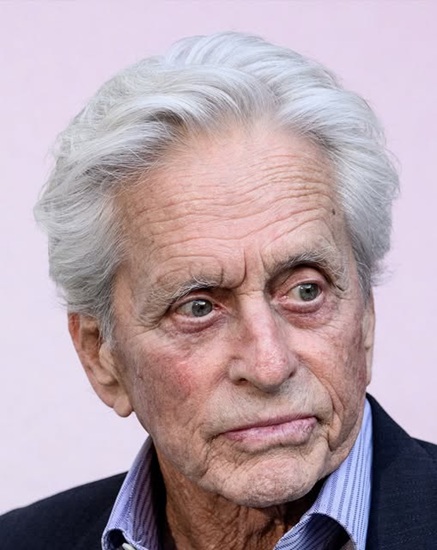
After nearly six decades of commanding presence in Hollywood, Michael Douglas, now 80, has surprised fans worldwide by announcing that he will be stepping back from acting, at least for the foreseeable future.
Speaking candidly at the Karlovy Vary International Film Festival (KVIFF), Douglas revealed that this decision stems from a desire to prioritize his health, personal life, and family over the relentless demands of an acting career that has spanned almost 60 years.
“I’ve had a very busy career. Now, I have not worked since 2022, purposefully, because I realized I had to stop,” Douglas told Deadline. “I’d been working pretty hard for almost 60 years, and I did not want to be one of those people who dropped dead on the set.” His words, tinged with humor, nevertheless underscore a serious commitment to life balance and personal well-being, marking the conclusion of one of the most enduring careers in Hollywood history.
A Hollywood Legacy: The Douglas Family Lineage
Born on September 25, 1944, in New Brunswick, New Jersey, Michael Kirk Douglas is the son of legendary actor Kirk Douglas, whose trailblazing performances in classics such as Spartacus (1960) and Paths of Glory (1957) cemented his status as a cinematic icon of the 20th century.

Growing up in a household steeped in the arts, Michael was immersed in the intricacies of Hollywood from an early age. Yet, rather than merely riding the coattails of his father’s fame, Douglas sought to forge his own identity, blending inherited talent with modern versatility and a willingness to embrace both acting and producing roles.
Douglas’s early life was marked by exposure to the duality of fame: the glamour and prestige of Hollywood on one hand, and the intense pressures of public scrutiny and high expectations on the other. His education included studies at the University of California, Santa Barbara, and the University of California, Berkeley, where he pursued political science and theater, reflecting both a cerebral and artistic curiosity that would inform his career choices.
The Producer Emerges: One Flew Over the Cuckoo’s Nest
While Douglas would become internationally recognized as a versatile actor, his first major success came behind the camera as a producer. At just 31, he produced the film adaptation of Ken Kesey’s seminal novel One Flew Over the Cuckoo’s Nest (1975). The film, a critical and commercial triumph, garnered widespread acclaim and won five Academy Awards, including Best Picture—a remarkable achievement for someone so early in their career.
Douglas has often described this project as profoundly personal. His father, Kirk Douglas, had initially sought to produce the film himself but passed the rights on to Michael, creating a symbolic bridge between generations. In interviews marking the 50th anniversary of the film, Douglas reflected: “I did the film because my father handed me the rights, and it was an incredible experience. I learned more in that year than in my entire life up to that point.”
This early accomplishment established Douglas not only as a creative visionary behind the camera but also as a determined figure willing to tackle challenging, socially significant material. The film’s exploration of institutional control, individuality, and morality resonated both with critics and audiences, laying the foundation for Douglas’s reputation as an artist unafraid to navigate complex and provocative themes.
Breaking Ground as an Actor: Redefining the Male Lead
Transitioning from producing to acting, Douglas demonstrated an extraordinary ability to inhabit characters of moral complexity and psychological depth. His career-defining role as Gordon Gekko in Wall Street (1987) remains a cultural touchstone, a morally ambiguous financier whose iconic declaration, “Greed is good,” captured the ethos of an era while cementing Douglas’s place among the elite of cinematic performers. This performance earned him an Academy Award for Best Actor, affirming his skill in embodying characters that challenge audiences both intellectually and emotionally.

Douglas’s acting portfolio throughout the 1980s and 1990s was distinguished by a willingness to tackle psychologically intense and provocative roles. In Fatal Attraction (1987), Douglas portrayed the everyman embroiled in a perilous affair, navigating obsession, fear, and moral consequence with nuance and intensity. Similarly, Basic Instinct (1992) pushed boundaries in the thriller genre, blending charisma, tension, and sexual intrigue in ways few actors of his generation could achieve convincingly.
These performances showcased Douglas’s range: he could inhabit the morally conflicted, the psychologically tormented, and the romantically entangled with equal conviction. Beyond skill, his presence on screen exuded a gravitas and authenticity that made audiences invest emotionally in every role. Douglas did not merely perform; he inhabited, transforming scripts into living, breathing explorations of human nature.
The Marriage of Talent and Versatility
While many actors focus solely on performing, Douglas consistently balanced acting with producing, demonstrating a rare versatility. His ability to navigate these dual roles—managing the logistical and creative complexities behind the camera while delivering compelling performances in front of it—underscored a professional discipline and passion for storytelling that few could match.
From early successes in drama and thrillers to the exploration of socially relevant narratives, Douglas’s career reflected both ambition and a commitment to artistic integrity. His choices consistently demonstrated a willingness to embrace risk—whether in challenging roles or unconventional production projects—and a desire to expand the possibilities of storytelling in cinema.
While Michael Douglas’s early career established him as a powerhouse of dramatic intensity, his later years showcased a remarkable ability to reinvent himself, connecting with both long-time fans and younger audiences. One of the most notable shifts came with his entry into the Marvel Cinematic Universe (MCU) as Dr. Hank Pym, the original Ant-Man, in Ant-Man (2015), followed by Ant-Man and the Wasp (2018) and Ant-Man and the Wasp: Quantumania (2023).

For Douglas, the transition into superhero cinema represented both a professional challenge and a creative opportunity. “I had the experience, and I was excited to do it. I’d never done a green screen picture before,” he admitted, reflecting on the unfamiliar technical demands of contemporary blockbuster filmmaking. Working alongside actors such as Paul Rudd and Evangeline Lilly, Douglas adapted his seasoned acting techniques to blend seamlessly with high-tech visual effects, comedy-driven storytelling, and action-oriented sequences.
The role of Hank Pym allowed Douglas to balance gravitas with light-hearted humor, demonstrating his flexibility in navigating the evolving tastes of modern audiences. It was a bridge between his established legacy of intense, morally complex performances and the vibrant, often fantastical demands of a global franchise. For many younger fans, this introduction defined Douglas as an actor who could seamlessly traverse genres and generations, proving that age need not limit relevance in Hollywood’s ever-changing landscape.
Television Triumph: The Kominsky Method
Not content to be defined solely by his cinematic work, Douglas also made a remarkable mark on television, most notably with Netflix’s The Kominsky Method (2018–2021). Collaborating with legendary producer Chuck Lorre, the series offered a humorous yet poignant meditation on aging, friendship, and the persistence of personal ambition. Douglas’s portrayal of Sandy Kominsky, a veteran acting coach navigating the joys and challenges of later life, earned him a Golden Globe Award and further demonstrated his ability to imbue characters with warmth, wit, and profound humanity.
Douglas has reflected on this work as a continuation of his career-long exploration of the human condition. Unlike blockbuster cinema, The Kominsky Method offered nuanced, character-driven storytelling, allowing him to explore comedy, vulnerability, and introspection. The series was not just a professional achievement but also a personal milestone, affirming that even after decades in the industry, there remained room for innovation and meaningful artistic expression.
Balancing Acting and Producing: A Lifelong Challenge
Michael Douglas’s career has consistently straddled two demanding spheres: performance and production. In 1997, he founded Further Films, an independent production company responsible for projects including Don’t Say a Word (2001), One Night at McCool’s (2001), and Netflix’s Ratched (2020). The company exemplified Douglas’s commitment to nurturing creative projects that challenged both audience and industry expectations.

Despite the successes, Douglas has openly acknowledged the challenges of balancing these dual responsibilities. “I’m enjoying my hiatus and enjoying my life. It was overwhelming running the production company and acting at the same time,” he reflected. The intensity of overseeing production while delivering award-winning performances took a significant personal and emotional toll, reinforcing the wisdom behind his decision to step back from acting and focus on select, meaningful projects.
Health Challenges: Resilience in the Face of Adversity
A defining and deeply personal chapter of Douglas’s life was his battle with stage IV throat cancer, diagnosed in 2010. The aggressive disease necessitated intensive chemotherapy, radiation, and careful monitoring, all of which posed serious risks to his voice and acting abilities. Douglas has spoken candidly about the challenges:
“Stage 4 cancer is not a holiday,” he told reporters at KVIFF. “I went with the program, involving chemo and radiation, and was fortunate. The surgery would have meant not being able to talk and removing part of my jaw, and that would have been limiting as an actor.”
Surviving such a life-threatening condition profoundly shaped Douglas’s perspective. Beyond the obvious physical resilience, the experience deepened his appreciation for the balance between career and personal life, highlighting the importance of choosing projects that aligned with both his artistic vision and personal well-being.
Family First: The Joys of Personal Life
Douglas’s recent decision to step away from acting is as much about family as it is about personal health. Married since 2000 to Catherine Zeta-Jones, the Oscar-winning and Golden Globe-nominated actress known for films such as Chicago (2002) and The Mask of Zorro (1998), Douglas has expressed immense satisfaction in supporting his wife’s thriving career while focusing on his own personal pursuits.
“I’m very happy with taking the time off. But I say I’m not retired because if something special came up, I’d go back. But otherwise, I’m quite happy. I just like to watch my wife work,” Douglas said. This perspective underscores a career-long theme: balancing ambition with meaningful personal relationships. For Douglas, success is measured not solely in accolades or box office receipts but in the capacity to cultivate lasting family connections and enjoy life beyond the camera.
Continuing the Family Legacy: Collaboration with Cameron Douglas
The Douglas legacy continues in Hollywood through Michael’s son, Cameron Douglas, who has carved his own path as an actor. At 46, Cameron has appeared in films such as Wire Room (2022), starring Bruce Willis, demonstrating both talent and a connection to contemporary cinematic narratives.

Michael Douglas’s upcoming collaboration with Cameron in Looking Through Water (originally titled Blood Knot) serves as a symbolic passing of the torch. “It’s special to work with Cameron. This film feels like a fitting way to collaborate before I step away from acting,” Douglas remarked. This project allows father and son to share the screen while simultaneously enabling Michael to transition to a more selective engagement with the industry, emphasizing legacy, mentorship, and the continuation of the Douglas name in film.
As Michael Douglas steps back from acting, the breadth of his career becomes even more remarkable. Nearly sixty years in Hollywood have allowed him to explore a vast spectrum of characters, genres, and storytelling mediums—from gritty dramas and morally complex thrillers to family-friendly blockbusters, comedies, and high-concept television series.
Douglas has often spoken of the unique privilege and responsibility of sustaining such longevity. “I’ve had a very full life in the industry. I’ve worked with incredible people, explored stories that challenged me, and experienced moments I will never forget. But now, it’s time to take stock, to slow down, and to focus on what matters most in life,” he shared at KVIFF. This reflection highlights a recurring theme throughout his career: the pursuit of meaningful work balanced with a conscious awareness of personal well-being and family life.
Iconic Roles: Shaping Cinema and Culture
Douglas’s career is punctuated by performances that have left an indelible mark on both cinema and popular culture. Among these roles, several stand out for their complexity, cultural resonance, and lasting influence:
- Gordon Gekko in Wall Street (1987) – Perhaps Douglas’s most iconic role, Gekko epitomized the ambitious, morally ambiguous financier, and his declaration “Greed is good” has since become a touchstone for discussions about capitalism, ethics, and ambition. The role earned Douglas an Academy Award for Best Actor and solidified his ability to embody characters whose charisma and ruthlessness provoke both admiration and reflection.
- Alex Forrest in Fatal Attraction (1987) – A thriller that explored obsession, infidelity, and the psychological consequences of moral compromise. Douglas’s portrayal of a man caught in a web of unintended consequences highlighted his skill in navigating high-stakes emotional drama.
- Nick Curran in Basic Instinct (1992) – A tense, sexually charged thriller that challenged traditional notions of seduction, danger, and power dynamics. Douglas balanced vulnerability and authority, creating a character whose tension and charisma left audiences captivated.
- Dr. Hank Pym in the MCU (Ant-Man 2015–2023) – Introducing Douglas to a new generation, his portrayal of Hank Pym blended humor, scientific curiosity, and paternal warmth, proving his adaptability and appeal across cinematic eras.
Beyond individual performances, Douglas’s roles collectively shaped audiences’ perceptions of masculinity, ambition, moral complexity, and resilience. His characters often grappled with ethical dilemmas, personal flaws, and societal pressures, creating a body of work that resonates as much intellectually as it entertains.
A Conscious Decision to Step Back
Douglas’s announcement to pause his acting career is both deliberate and strategic. Unlike many who are forced into retirement by circumstance, illness, or waning opportunities, Douglas has chosen to prioritize health, family, and personal fulfillment while maintaining an open door for special projects.
“I did not want to be one of those people who dropped dead on the set,” Douglas said, blending humor with gravitas. His decision is a rare example in Hollywood of intentional pacing, highlighting the importance of longevity and sustainability in an industry often characterized by relentless schedules and public scrutiny.
Douglas’s hiatus allows him to explore life beyond the camera—time with family, personal hobbies, and selective projects that genuinely excite him—without the pressures of constant performance. It is a conscious embrace of the next chapter, emphasizing quality of experience over the quantity of output.
Legacy and Cultural Impact
Michael Douglas’s influence extends far beyond box office numbers and award counts. His career has redefined what it means to be a male lead in Hollywood, introducing morally nuanced, psychologically layered characters at a time when one-dimensional archetypes often dominated. By choosing complex roles and producing socially significant films, Douglas has inspired generations of actors, filmmakers, and audiences alike.
His legacy is also deeply intertwined with the Douglas family lineage in cinema. By collaborating with his father, Kirk Douglas, early in his career, and now with his son, Cameron Douglas, he has fostered a multigenerational connection to Hollywood storytelling, cementing the family as one of the industry’s enduring dynasties.
Life Beyond the Screen
While Hollywood fans will remember Douglas for his unforgettable performances, he emphasizes the importance of life outside of work. Following his recovery from stage IV throat cancer, Douglas gained a renewed appreciation for the finite nature of time and the value of personal connections. His focus on family, particularly supporting Catherine Zeta-Jones’s career and nurturing his relationship with his son, underscores a life philosophy that prioritizes emotional richness and personal fulfillment over continuous public acclaim.
Douglas has also used his visibility to reflect on aging, health, and career sustainability, particularly through projects like The Kominsky Method, which confronts aging with humor, intelligence, and empathy. By modeling resilience and balance, Douglas sets a benchmark for longevity in the entertainment industry—a roadmap for navigating professional ambition without sacrificing well-being.
Looking Ahead: A Life of Selective Engagement
Although Douglas has stepped back from regular acting, he remains open to projects that resonate deeply. Whether through selective film roles, mentoring, or collaborative work with family, his approach signals a refined focus: meaningful engagement rather than relentless productivity.
“I’m not retired, because if something special came up, I’d go back. But otherwise, I’m quite happy,” he said. This mindset encapsulates his approach to career and life, blending caution, curiosity, and an enduring passion for storytelling.
Conclusion: An Enduring Hollywood Legend
Michael Douglas’s career—spanning nearly six decades—is a testament to talent, resilience, and conscious artistry. From Oscar-winning productions to culturally iconic performances, from superhero blockbusters to introspective television, Douglas’s contributions have shaped the modern cinematic landscape.
By stepping back on his own terms, Douglas models a career defined not solely by fame or accolades, but by intentional choices, sustained creative energy, and a deep appreciation for life’s finite and precious moments. His story serves as both inspiration and instruction: even the most celebrated actors must recognize when to pause, to cherish family, and to embrace new chapters beyond the spotlight.
Ultimately, Michael Douglas leaves a legacy that transcends the screen. It is a legacy of artistic integrity, personal resilience, and enduring influence—a reminder that true success is measured not only in awards or performances but in the courage to live fully, creatively, and authentically, both on and off camera.
