
It was far from guaranteed that Rachel Ward would secure the role that would define her career and, in many ways, reshape her life entirely. When she was cast as Meggie Cleary in the iconic 1983 television miniseries The Thorn Birds, few could have predicted the profound cultural impact the series would have, or how deeply it would affect Ward’s personal journey.
At the time, she was still in the early stages of transitioning from a highly successful modeling career into the unpredictable world of film and television. Yet, with The Thorn Birds, Rachel Ward not only became an international star almost overnight but also found love, family, and a new home halfway across the globe.
Decades later, she remains closely associated with the character of Meggie Cleary, a role whose emotional depth, resilience, and vulnerability resonated with millions of viewers around the world.
The Making of a Cultural Phenomenon
When discussing television history, people often focus on long-running series that span decades or define entire genres—shows like Bonanza, Little House on the Prairie, Friends, The Sopranos, or Twin Peaks. These series undeniably left their mark, but not all television storytelling requires years to make a lasting impression.

Some of the most impactful narratives have been told in the miniseries format—a limited-run production, often only a few nights, yet capable of captivating audiences in a way that lingers for generations. The Thorn Birds firmly belongs to this category of rare, enduring television phenomena.
Based on Colleen McCullough’s 1977 bestselling novel, The Thorn Birds was adapted into a ten-hour miniseries that first aired in March 1983. The story centered on Meggie Cleary, a young Irish-Australian woman navigating love, loss, and family loyalty over several decades, and her forbidden, lifelong romance with Father Ralph de Bricassart, played by Richard Chamberlain.
Its broadcast schedule—over five consecutive nights—turned it into an event, rather than just a show. Over 30 million viewers tuned in from the United States alone, making it one of the most-watched television events in history at the time.
Audiences were immediately captivated by the sweeping emotional arcs, complex characters, and breathtaking Australian landscapes that served as both backdrop and silent character in the story.
Critics applauded the adaptation for its faithfulness to McCullough’s novel, as well as the performances of its ensemble cast, while awards recognition followed, including multiple Golden Globes and Emmy Awards.
Even decades later, The Thorn Birds continues to be cited among the most memorable television miniseries ever produced, its story as compelling and emotionally affecting now as it was then.
Rachel Ward: An Unexpected Choice for Meggie Cleary
Ward’s casting as Meggie Cleary was anything but straightforward. The production team embarked on a rigorous and exhaustive search for the right actress, acutely aware that the role demanded extraordinary emotional versatility.
Meggie’s story spans from her teenage years through adulthood, requiring an actress capable of portraying innocence, naivety, passion, heartbreak, and eventually, resilience forged by experience and loss.

Producer Stan Margulies emphasized the challenge: “She has to go from 18 to her early 50s. From a naïve young girl to a bitter woman, and finally to someone who understands where her life changed course.”
More than 200 women were initially considered, with around 40 going through formal auditions. Ward, who had no formal acting training comparable to some of her contemporaries, approached the audition differently.
Her performance was understated, natural, and subtle—a stark contrast to the more theatrical interpretations the producers had seen. Ward later reflected on the moment: “I remember taking it seriously without acting with a capital A. It’s so subjective. I was probably just right in that moment.”
While initial reactions from producers focused on her physical appearance rather than her technique, they recognized potential and invested in her development.
Ward worked closely with an acting coach to prepare for the monumental role, transforming herself into a performer capable of carrying the emotional weight of Meggie Cleary across multiple decades of storytelling.
From England to Australia: Rachel Ward’s Early Life and Career
Born on September 12, 1957, in Cornwell, Oxfordshire, England, Rachel Claire Ward grew up in a well-connected and privileged family but displayed an independent and creative streak from a young age.
She attended Hatherop Castle School, known for its focus on arts education, before continuing her studies at the Byam Shaw School of Art in London.

At just 16, Ward made a decisive and bold move—she left formal education behind to pursue a career in modeling. Her striking features, poise, and innate elegance quickly drew attention, earning her spots in prestigious magazines such as Vogue, Cosmopolitan, and Harper’s & Queen.
Though modeling brought recognition and financial stability, Ward sought a deeper, more fulfilling form of creative expression. Her interest gradually shifted toward acting, initially through television commercials and small on-screen roles.
Her first appearance in a television film came in 1979 with Christmas Lilies of the Field, which was followed by minor roles in both British and international productions. These experiences allowed her to gain confidence in front of the camera, refining her naturalistic acting style that would eventually resonate so well with audiences in The Thorn Birds.
The Thorn Birds: Breaking Through to Global Stardom
Ward’s portrayal of Meggie Cleary in The Thorn Birds marked her career-defining breakthrough. Acting alongside seasoned performer Richard Chamberlain, she delivered a performance that captured Meggie’s vulnerability, inner strength, and complex emotional journey.
The authenticity and subtlety of Ward’s acting drew widespread acclaim, earning her a Golden Globe nomination in 1982 for Best Actress in a Miniseries or Motion Picture Made for Television. Meanwhile, Chamberlain won the award for Best Actor, and the series itself received four Golden Globes and six Emmy Awards.
Chamberlain, reflecting years later on the enduring success of the miniseries, noted that its combination of romance, tragedy, and moral complexity made it unforgettable: “It was tragedy after tragedy.
No one really won—but the characters were unforgettable.” Audiences connected deeply with the narrative, particularly Meggie Cleary’s resilience in the face of relentless adversity. From a sweeping family saga to intimate emotional moments, Ward’s performance was central to the miniseries’ success and longevity.

The Hidden Struggle: Self-Doubt and Criticism
Despite public recognition and acclaim, Ward struggled with private insecurities and self-doubt. Her nontraditional path into acting—moving from modeling without formal acting school training—led to scrutiny from critics.
Some, including a review in The New York Times, described her as “miscast,” a critique that affected Ward deeply. “I felt terribly like I’d disappointed everyone,” she later admitted. “I felt the show succeeded despite me.”
Over time, however, Ward’s perspective evolved. The affirmation of her talent came in unexpected ways, often through personal interactions. One of the most meaningful moments came when her daughter watched The Thorn Birds years later and told her, “Mom, you were fabulous.”
Ward recalled how transformative this simple validation was, showing her that even decades after its release, her performance could still touch hearts and resonate with viewers.
Love and Life Beyond the Camera
While Meggie’s love story with Father Ralph unfolded on screen, Ward’s real-life romance blossomed off-camera. During filming, she met Australian actor Bryan Brown, who portrayed Meggie’s husband, Luke O’Neill. Their connection was immediate and palpable, a chemistry that went beyond the scripted romance.
Ward reflected on the experience: “What happened on screen was happening off it. That’s why it felt so real.” Crew members noticed the bond quickly, with Richard Chamberlain himself noting Brown’s support for Ward throughout filming, helping to calm her nerves and bolster her confidence.
Their relationship progressed swiftly. Ward and Brown married just months after the series wrapped, establishing a partnership that has endured for decades.

Australia, initially the setting for a story of forbidden love, became home. Together, they raised three children—Rose, Matilda, and Joseph—while building a life grounded in both family and creativity.
After the international success of The Thorn Birds, Rachel Ward could have easily settled into the comfort of fame, but she chose to continue pushing herself creatively.
While many actors might have relied solely on the momentum of a single breakthrough, Ward sought roles that challenged her and allowed her to explore different aspects of human experience.
In the years immediately following the miniseries, she appeared in a number of films and television projects across both Australia and the United States.
One notable early post-Thorn Birds project was Dead Men Don’t Wear Plaid (1982), a comedy film directed by Carl Reiner, where Ward demonstrated her versatility by combining drama with subtle comedic timing. In 1984, she starred in Against All Odds, a romantic thriller opposite Jeff Bridges and James Woods, further proving she could carry complex emotional scenes in cinematic settings as well as on television.
Ward’s early choices reflected a careful consideration of her trajectory as an actress, blending mainstream appeal with meaningful, character-driven narratives.
Returning to Australian Roots
Ward’s move to Australia after marrying Bryan Brown marked a significant turning point in her personal and professional life.
Australia, initially the backdrop for the epic love story of Meggie Cleary, became the canvas for Ward’s evolving career and personal growth. Immersed in the Australian film industry, she developed a deep appreciation for storytelling that reflected the country’s culture, history, and unique landscapes.
Her collaborations with Brown also extended beyond their on-screen roles. The couple’s shared creative vision led to joint ventures in film and television production, blending their experiences and insights to tell stories that were both personal and universal.
Ward’s immersion into the Australian arts scene also allowed her to nurture emerging talent and mentor younger actors and filmmakers, further solidifying her reputation as a respected figure in the industry.
Awards and Recognition
Ward’s dedication to her craft did not go unnoticed. In 2001, she received a Golden Globe nomination for her role in On the Beach, a remake of the 1959 classic depicting life after a global nuclear catastrophe.
Her portrayal brought renewed attention to her skill as a dramatic actress capable of delivering subtle yet profoundly emotional performances. Over the years, Ward accumulated critical acclaim for her work in both feature films and television series, including titles such as Martha’s New Coat, Rake, Devil’s Playground, and The Straits.
In addition to accolades for her acting, Ward’s work behind the camera—directing and producing—has also been recognized as groundbreaking, particularly for women in an industry historically dominated by men.
Her commitment to nuanced storytelling, combined with her artistic sensibility, has allowed her to carve a unique niche that blends performance, direction, and narrative insight.
Transition to Directing and Producing
Ward’s evolution into directing and producing represents a natural extension of her desire for creative control and meaningful storytelling. She embraced opportunities to work behind the camera, bringing to life projects that reflected her values and vision.
One of the notable examples is The Death and Life of Otto Bloom (2016), a film exploring memory, love, and the human experience through a non-linear narrative.
In this project, Ward not only contributed creatively behind the scenes but also collaborated with her daughter, Matilda Brown, who portrayed the same character at different stages of life. This collaboration was emblematic of Ward’s ongoing commitment to family and legacy in storytelling.
Her directing style emphasizes authenticity, emotional resonance, and character-driven narratives, often focusing on complex female protagonists and intergenerational stories.
Ward has consistently spoken about the importance of creating opportunities for women both in front of and behind the camera, reflecting her broader advocacy for gender equity in the arts.
Advocacy and Philanthropy
Beyond her artistic endeavors, Rachel Ward has dedicated significant energy to humanitarian and advocacy work. In 2005, she was awarded the Member of the Order of Australia (AM) in recognition of her contributions to the arts and her work with disadvantaged youth.
Ward has been particularly active in supporting programs that provide mentorship, education, and creative outlets for young people who might not otherwise have access to the arts.
Her commitment to advocacy stems from a deeply held belief that storytelling and creative expression can transform lives. Ward has frequently discussed how film and television are not only entertainment but also tools for empathy, understanding, and social change.
By leveraging her platform, she has amplified the voices of underrepresented communities and fostered meaningful opportunities for emerging artists.
Family Life and Parenting
Ward’s life in Australia is defined not only by her professional achievements but also by her deep devotion to family. Her marriage to Bryan Brown has spanned decades, providing a stable and loving foundation for their children: Rose, Matilda, and Joseph.
Ward has been candid about the challenges of balancing a demanding career with parenting, emphasizing that her family’s well-being always comes first.
Her guidance to her children, particularly Matilda, highlights a philosophy rooted in both encouragement and independence. Ward encouraged Matilda to pursue filmmaking rather than solely acting, nurturing her daughter’s broader creative interests while ensuring she developed her own voice and perspective.
The mother-daughter collaboration in The Death and Life of Otto Bloom stands as a testament to their shared commitment to meaningful, artful storytelling and highlights how family and professional life can intersect in creative harmony.
Personal Philosophy and Reflection
Ward’s journey from model to actress, and later to director and advocate, reflects a broader philosophy centered on growth, resilience, and authenticity. She has openly discussed the pressures and insecurities she faced early in her acting career, including doubts about her abilities and criticism from the press.
Yet, rather than allowing these challenges to define her, Ward used them as opportunities to refine her craft, expand her creative scope, and deepen her understanding of herself and her work.
Her reflections often circle back to the lessons learned from The Thorn Birds. The role of Meggie Cleary required emotional honesty, subtlety, and the ability to convey a lifetime of experience in a single performance.
Ward has described how that formative experience shaped her approach to all subsequent roles, teaching her the value of patience, empathy, and dedication to character development. She credits the series not only with launching her international career but also with instilling a lifelong commitment to storytelling with integrity and depth.
Cultural Legacy and Influence
Decades after The Thorn Birds, Rachel Ward’s influence extends far beyond a single role. The miniseries remains a reference point in popular culture, frequently cited in retrospectives on television history and enduring media phenomena.
Ward herself has become a symbol of versatility and resilience in the entertainment industry—a figure who successfully navigated transitions between modeling, acting, directing, and producing, while simultaneously maintaining a meaningful family life and advocacy work.
Moreover, her work behind the camera has contributed to expanding opportunities for women in film, offering pathways for emerging talent and encouraging the inclusion of diverse stories.
Ward’s commitment to mentorship and collaboration ensures that her impact on the industry will continue through the next generation of storytellers, particularly those inspired by her ability to balance artistic vision with personal integrity.
Ward Today: Life, Art, and Ongoing Inspiration
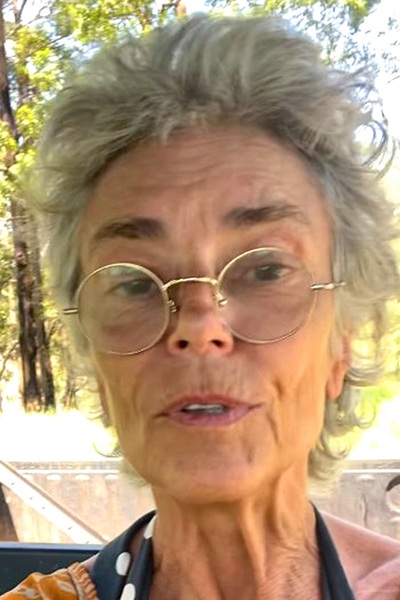
Now in her mid-60s, Rachel Ward remains active and engaged, both professionally and personally. While she is forever associated with Meggie Cleary, she has consistently demonstrated that her life and career extend far beyond a single defining role.
Her journey—from her early years in Oxfordshire to the runways of London, the sets of international film productions, and the landscapes of Australia—illustrates a remarkable story of transformation, perseverance, and creative exploration.
Ward’s philosophy emphasizes the importance of following one’s instincts, embracing risk, and staying true to one’s values. She often highlights that while fame and recognition can be gratifying, the most enduring success comes from love, purpose, and authentic engagement with life and work.
Whether through her films, her humanitarian efforts, or her mentorship of emerging artists, Ward has cultivated a legacy that embodies resilience, integrity, and the power of storytelling to connect, inspire, and transform.
