
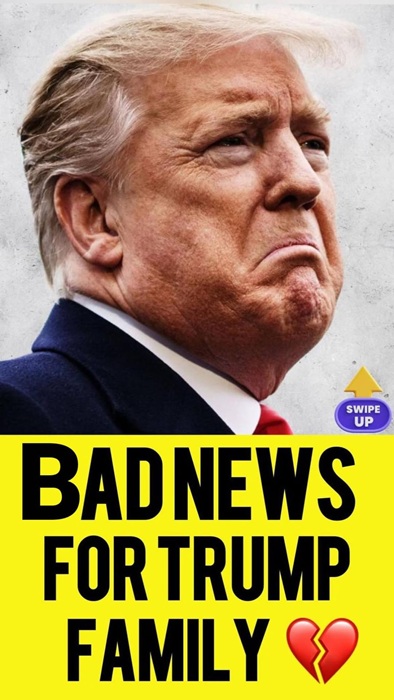
Mary Trump, the estranged niece of former U.S. President Donald Trump, has once again publicly criticized her uncle, accusing him of being a deeply flawed and irresponsible parent.
Her remarks came amid renewed online discussion involving Donald Trump’s youngest son, Barron Trump, and unverified claims circulating on social media regarding potential exposure to controversial internet personalities.
Mary Trump, a clinical psychologist and author, has long positioned herself as one of the most outspoken critics within the Trump family.
Over the years, she has repeatedly argued that Donald Trump’s behavior—both in private family life and in public leadership—reflects a pattern of emotional neglect, narcissism, and a lack of accountability.
In her latest comments, she framed the controversy not as an isolated incident, but as part of what she describes as a long-standing family and cultural problem tied to power, influence, and values.
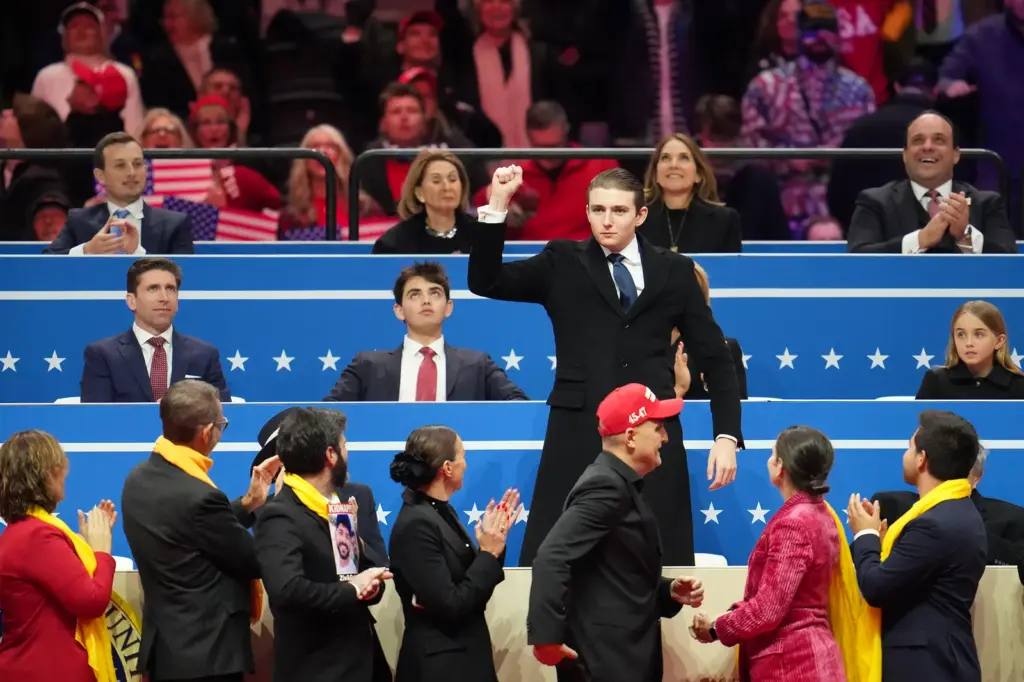
Background: Barron Trump and Online Speculation
The recent debate emerged after online speculation and media commentary suggested that Barron Trump, who turned 18 in 2024, may have been exposed to or expressed interest in content associated with Andrew Tate, a controversial internet figure.
It is important to note that no verified public statements from Barron Trump confirm these claims, and Barron has largely remained out of the public spotlight throughout his childhood and adolescence.
Nevertheless, the online discussion gained traction due to Andrew Tate’s high profile within certain corners of social media, particularly among young male audiences.
Tate has described himself as a proponent of hyper-masculine views and has drawn widespread criticism for statements that many advocacy groups and analysts describe as misogynistic.
He has also faced serious legal accusations, including rape and human trafficking, which he has publicly denied.
Legal proceedings and investigations involving Tate have been ongoing in multiple jurisdictions, and no final verdicts have been universally concluded at the time of writing.
Mary Trump emphasized that her criticism was not directed at Barron himself. Instead, she argued that children of powerful figures often become indirectly affected by the ideologies and social environments surrounding their parents, whether intentionally or not.
Mary Trump’s Central Argument: Responsibility and Influence
In commentary shared via her independent media platform, Mary Trump Media, Mary Trump argued that the controversy highlights what she sees as a failure of parental responsibility at the highest levels of power.
She suggested that Donald Trump’s long-standing alliances, rhetoric, and political positioning have helped normalize extreme or harmful figures within certain conservative online spaces.
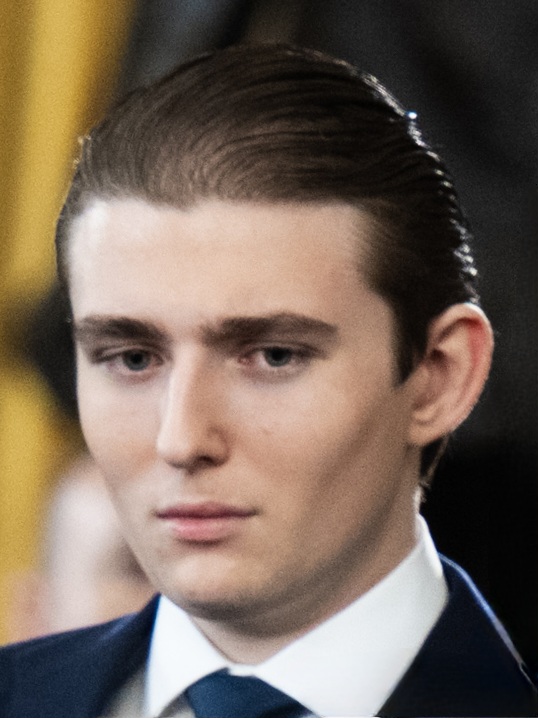
According to Mary Trump, influence does not occur in a vacuum. She has repeatedly stated that when public figures align themselves—directly or indirectly—with polarizing personalities, the consequences can extend beyond politics and into family life, culture, and youth identity formation.
“This is not a coincidence,” she said in a recent video discussion, referring to the overlap between Andrew Tate’s public praise of Donald Trump and Tate’s past efforts to engage with conservative political audiences.
Mary Trump pointed out that Tate had, over the years, publicly positioned himself as a supporter of Donald Trump and had attempted to associate his brand with right-wing political movements in the United States and abroad.
Andrew Tate’s Political Posturing and Public Image
Andrew Tate has, at various times, expressed admiration for Donald Trump, portraying him as a symbol of defiance against political correctness and establishment norms.
Tate’s self-presentation as a cultural rebel has resonated with certain online audiences, particularly within what is often referred to as the “manosphere”—a loose network of forums, influencers, and content creators that focus on masculinity, dating, and gender dynamics.
Critics argue that this online ecosystem frequently promotes adversarial views toward women and progressive social movements. Supporters, on the other hand, claim it represents a backlash against modern cultural norms.
Mary Trump has consistently aligned herself with the former interpretation, warning that such spaces can radicalize young people and normalize harmful attitudes.
She stressed that while Barron Trump is a private individual and should not be targeted or scrutinized, the broader issue lies in how political leaders shape cultural norms, either by condemning or tacitly enabling controversial voices.
A Family History Marked by Conflict
Mary Trump’s latest remarks cannot be separated from the broader history of conflict within the Trump family. She is the daughter of Fred Trump Jr., Donald Trump’s older brother, who struggled with alcoholism and died in 1981 at the age of 42.
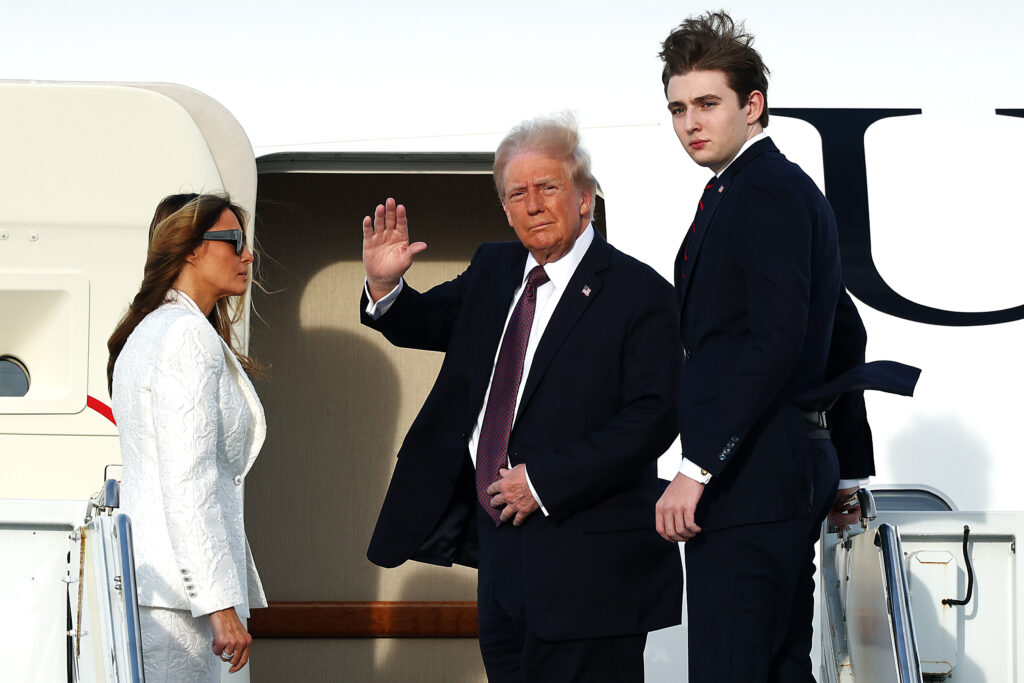
Mary Trump has frequently stated that her father’s difficulties were compounded by what she describes as emotional cruelty and lack of support from the Trump family patriarch, Fred Trump Sr.
In her 2020 memoir, Too Much and Never Enough, Mary Trump painted a deeply critical portrait of her uncle, arguing that Donald Trump’s personality was shaped by a household that valued dominance, wealth, and public image over empathy and emotional health.
The book became a bestseller and intensified tensions between Mary Trump and other members of the Trump family.
Legal Disputes and Estrangement
The family rift has also played out in court. Mary Trump previously sued Donald Trump and other relatives, alleging that she had been misled about the value of her inheritance following her grandfather’s death.
The lawsuit claimed that family members had engaged in deceptive financial practices to minimize her share of the estate.
In 2022, a New York court ruled in favor of Donald Trump and the other defendants, effectively ending the legal dispute. Despite the ruling, Mary Trump has continued to assert that the case underscored what she sees as a pattern of unethical behavior within the family’s business dealings.
The legal outcome did little to soften Mary Trump’s public criticism. Instead, she has argued that the case reinforced her belief that accountability has rarely been enforced within the Trump family—either privately or publicly.
Public Reaction and Media Response
Mary Trump’s recent comments quickly drew reactions across political and media circles. Supporters praised her for speaking openly about what they see as the cultural consequences of Donald Trump’s influence, while critics accused her of exploiting family connections to maintain public relevance.
Several commentators also cautioned against drawing conclusions about Barron Trump based on unverified online claims.
Media ethicists emphasized the importance of protecting minors and young adults from undue scrutiny, particularly when they have not chosen public life for themselves.
Mary Trump acknowledged these concerns, reiterating that her focus remains on Donald Trump’s conduct and leadership, not on his children. She argued that examining the behavior of powerful figures is both legitimate and necessary in a democratic society.
Mary Trump’s criticism of her uncle has reignited a broader public discussion about the responsibilities that come with power, visibility, and political leadership.
While the former president’s supporters argue that family matters should remain private, critics counter that public figures inevitably shape cultural norms, whether intentionally or indirectly.
Political leaders, media analysts note, do not operate in isolation. Their rhetoric, alliances, and public silence can send implicit signals about what behavior and beliefs are acceptable within their political coalitions.
Mary Trump has repeatedly argued that Donald Trump’s rise coincided with the mainstreaming of aggressive, hyper-masculine online subcultures—spaces where figures like Andrew Tate found receptive audiences.
She has emphasized that this does not imply direct coordination or endorsement in every case. Rather, her argument centers on environmental influence: the idea that when controversial figures publicly praise a political leader and are not meaningfully challenged by that leader, their legitimacy can grow among supporters.
Experts on Online Influence and Youth Exposure
Psychologists and media researchers have increasingly examined how online personalities influence young audiences, particularly adolescents and young adults.
Studies have shown that algorithm-driven platforms can amplify extreme or polarizing content, often without users actively seeking it out.
Experts caution that exposure does not equal endorsement, especially among young people who may encounter controversial figures through viral clips, memes, or online debates.
This distinction is particularly important when discussing individuals like Barron Trump, who has never made public political statements and has largely avoided media attention.
Mary Trump herself has acknowledged this complexity. She has stated that her concern lies less with any single influencer and more with what she describes as a broader cultural ecosystem that rewards provocation, outrage, and dominance-driven messaging.
Andrew Tate’s Legal and Public Standing
Andrew Tate remains a highly controversial figure. He has been investigated by authorities in multiple countries over allegations including rape and human trafficking.
Tate has categorically denied all accusations, and legal proceedings are ongoing. As with all such cases, legal experts stress the importance of due process and the presumption of innocence until proven otherwise.
What is undisputed is that Tate has built a substantial online following by promoting a confrontational worldview centered on wealth, power, and rigid gender roles.
Advocacy organizations, educators, and digital safety experts have raised concerns about the impact of this messaging, particularly when consumed by younger audiences without critical context.
Mary Trump referenced Tate’s past political messaging not to assert guilt or wrongdoing beyond established facts, but to highlight how political branding and online influence can overlap, often in ways that blur accountability.
Donald Trump’s Relationship With Online Culture
Donald Trump’s political career has been closely tied to unconventional media strategies. From his early use of social media platforms to his frequent clashes with traditional news outlets, Trump reshaped how political messages are delivered and amplified in the digital age.
Supporters argue that this approach democratized political discourse and challenged entrenched elites. Critics, including Mary Trump, contend that it also lowered standards of civility and opened the door for more extreme voices to gain visibility.
Mary Trump has repeatedly argued that her uncle’s leadership style—marked by personal attacks, dismissive language, and a rejection of institutional norms—created fertile ground for online figures who thrive on controversy and provocation.
The Question of Parental Accountability
One of the most sensitive aspects of the debate concerns parenting and family responsibility. Mary Trump’s remarks describing Donald Trump as a “disgraceful” parent reflect her long-standing critique of what she views as emotional distance and self-interest within the Trump family.
Family psychologists caution that parenting judgments made from afar are inherently limited. Children of public figures often grow up under unique pressures, including constant scrutiny and restricted privacy.
In Barron Trump’s case, both Donald Trump and Melania Trump have made efforts to shield him from public exposure, particularly during his early years.
Mary Trump has acknowledged these efforts while maintaining that values are transmitted not only through direct parenting, but through example, language, and public conduct.
In her view, the behaviors modeled by powerful parents can shape a child’s understanding of authority, empathy, and responsibility.
Media Ethics and the Protection of Private Individuals
The renewed attention on Barron Trump has also sparked discussion among journalists and media ethicists about the treatment of children and young adults connected to public figures.
Most major news organizations adhere to guidelines that discourage unnecessary coverage of minors who are not actively involved in public life.
Even as Barron has reached adulthood, many commentators argue that restraint remains appropriate, given his lack of public political engagement. Mary Trump has echoed this sentiment, emphasizing that her criticism is aimed squarely at Donald Trump and the cultural environment surrounding him—not at his son.
This distinction is crucial for maintaining ethical standards in political reporting and commentary, particularly in an era when social media can rapidly amplify speculation and rumor.
Supporters and Critics React
Public reaction to Mary Trump’s comments has been sharply divided. Supporters view her as a rare insider willing to challenge what they see as dangerous patterns of behavior and influence.
They argue that her professional background as a psychologist lends weight to her analysis of power dynamics and family systems.
Critics, meanwhile, accuse her of leveraging her family name for attention and political gain. Some argue that her ongoing public commentary reflects unresolved personal grievances rather than objective analysis.
Others maintain that family disputes should not be litigated in the public arena.
Mary Trump has responded to these criticisms by stating that silence, in her view, would be more harmful than speaking out. She has consistently framed her work as an attempt to warn the public about the psychological and cultural consequences of unchecked power.
Political Implications Moving Forward
As Donald Trump remains a central figure in American politics, discussions about his influence—both political and cultural—are unlikely to fade.
Mary Trump’s commentary contributes to a broader examination of how leadership styles resonate beyond policy decisions, shaping social attitudes and online discourse.
Political analysts note that debates about masculinity, authority, and influence are increasingly central to electoral politics, particularly among younger voters.
The rise of social media influencers with explicit political or ideological leanings has further complicated the landscape.
Mary Trump has argued that confronting these dynamics openly is essential for a healthy democracy. Whether one agrees with her conclusions or not, her criticism has forced renewed attention on questions that extend beyond any single family.
A Continuing Conversation
Ultimately, the controversy surrounding Mary Trump’s remarks reflects deeper societal tensions about power, responsibility, and the boundaries between public and private life.
While factual limitations require caution when discussing unverified claims, the broader issues she raises—about influence, accountability, and cultural norms—remain widely debated.
Mary Trump has made it clear that she does not expect consensus. Instead, she has positioned her work as part of an ongoing conversation about leadership and ethics in the modern media age.
As online platforms continue to shape political and cultural identities, these debates are likely to grow more prominent, not less.
