
The kitchen has long been described as the heart of the home—a place where meals are prepared, families gather, and daily routines quietly unfold.
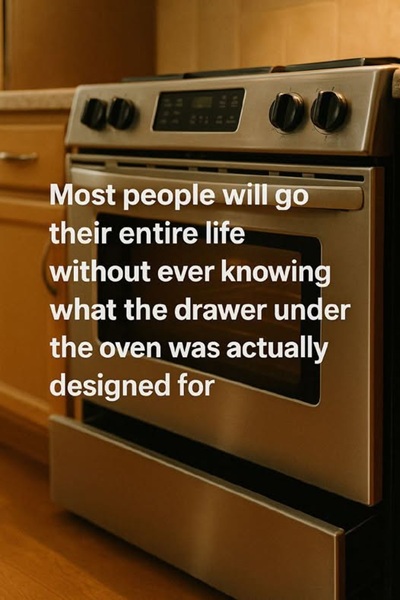
Despite the attention given to appliances, countertops, and cabinetry, one small but significant feature is often overlooked and misunderstood: the drawer located beneath the oven.
For decades, many homeowners have used this drawer without questioning its original purpose, assuming it exists solely as a convenient storage space. In reality, its design tells a much more interesting story.
In countless homes, the drawer beneath the oven is filled with baking sheets, frying pans, cooling racks, or bulky cookware that does not easily fit elsewhere.
Its location makes it feel practical, almost intuitive, to use it this way. Over time, this habit has become so common that many people believe storage was always the drawer’s intended function. However, this widespread assumption is not entirely accurate.
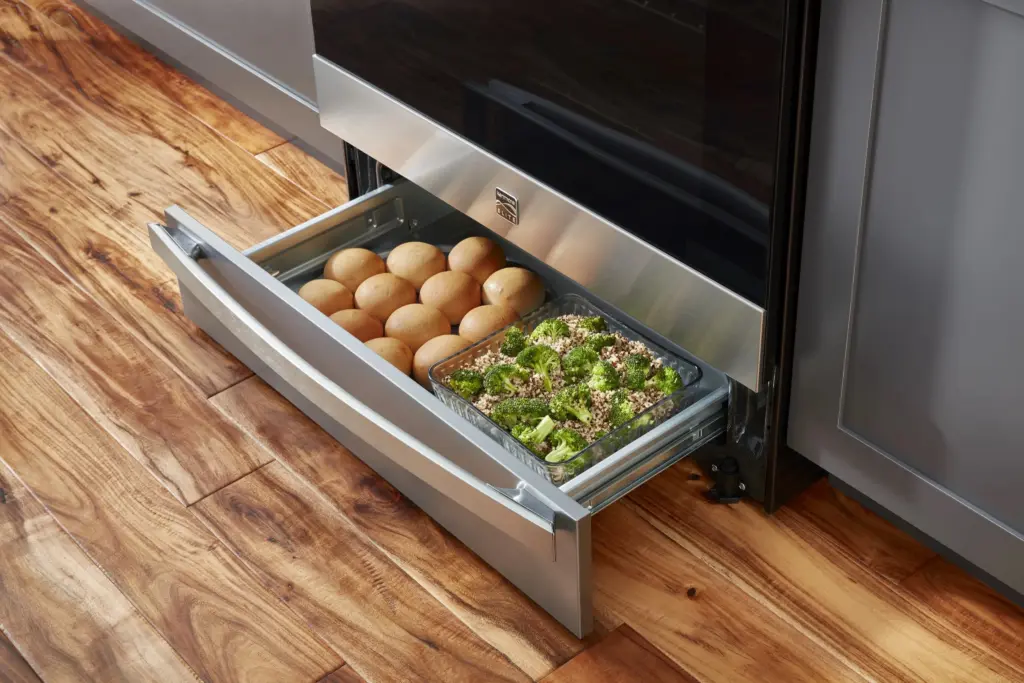
Historically, many ovens—particularly gas and electric models manufactured in past decades—were designed with a warming drawer rather than a storage compartment.
Appliance manufacturers included this feature to solve a practical cooking problem: how to keep prepared food warm without overcooking it while other dishes finished or guests arrived late.
The warming drawer was designed to maintain a low, steady temperature, typically ranging between 140°F and 200°F, which is ideal for holding food safely and comfortably until serving time.
Unlike the oven itself, which operates at much higher temperatures, a warming drawer provides gentle heat. This controlled warmth prevents food from drying out, burning, or continuing to cook.
Instead, it preserves texture, moisture, and flavor—qualities that can quickly deteriorate if food is left in a hot oven or reheated repeatedly.
For families hosting large meals, holiday dinners, or multi-course gatherings, this feature offered flexibility and reduced stress in the kitchen.
Over time, changes in appliance design and consumer habits blurred the distinction between warming drawers and storage drawers. Some modern ovens are indeed manufactured with drawers intended only for storage, while others retain true warming capabilities.
The confusion arises because many drawers look nearly identical from the outside. Without visible controls or labels, it is easy to assume they all serve the same purpose.
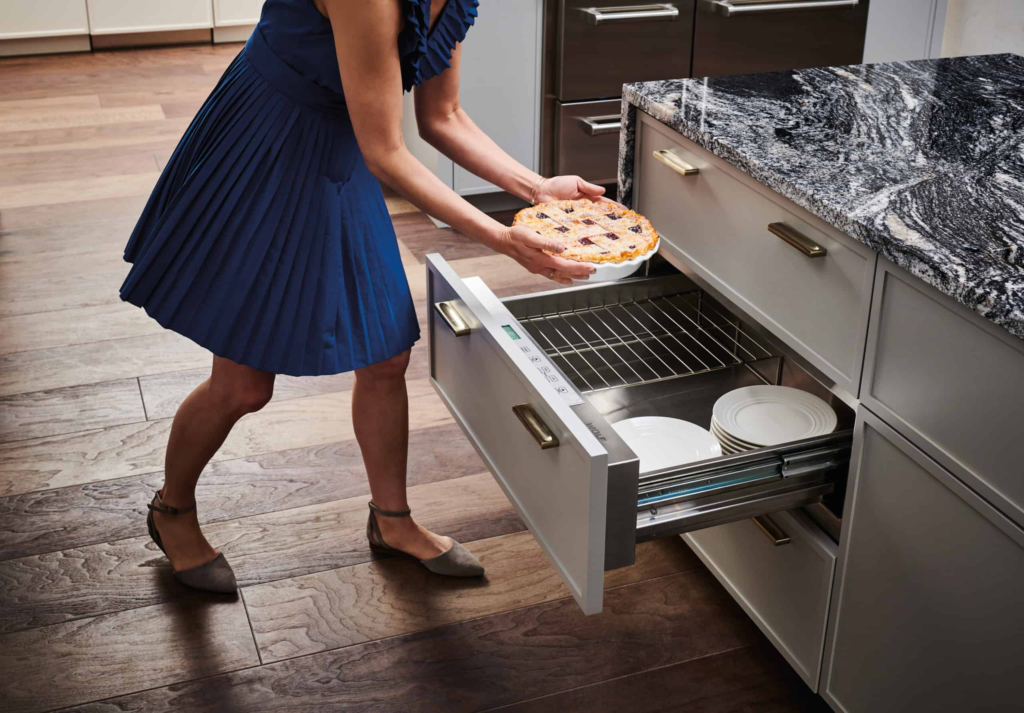
The key difference lies in functionality. A true warming drawer includes heating elements, insulation, and sometimes temperature controls or settings integrated into the main oven panel.
Storage drawers, by contrast, lack heating components and are designed simply to hold cookware. Determining which type you have is essential, and the most reliable way to do so is by checking the oven’s user manual or manufacturer specifications.
Some warming drawers may also include markings or settings such as “Warm” or “Proof,” indicating their intended use.
Using a warming drawer incorrectly—as a storage space—can create safety concerns. Items placed inside may be exposed to heat, even if the drawer is not actively turned on.
Residual warmth from the oven can raise temperatures inside the drawer, potentially damaging cookware, warping baking sheets, or creating a fire hazard if flammable materials are stored there.
Blocking airflow with stored items can also interfere with proper heat circulation, reducing appliance efficiency and increasing wear over time.
When used as designed, warming drawers rely on carefully controlled heat and insulation to maintain food quality.
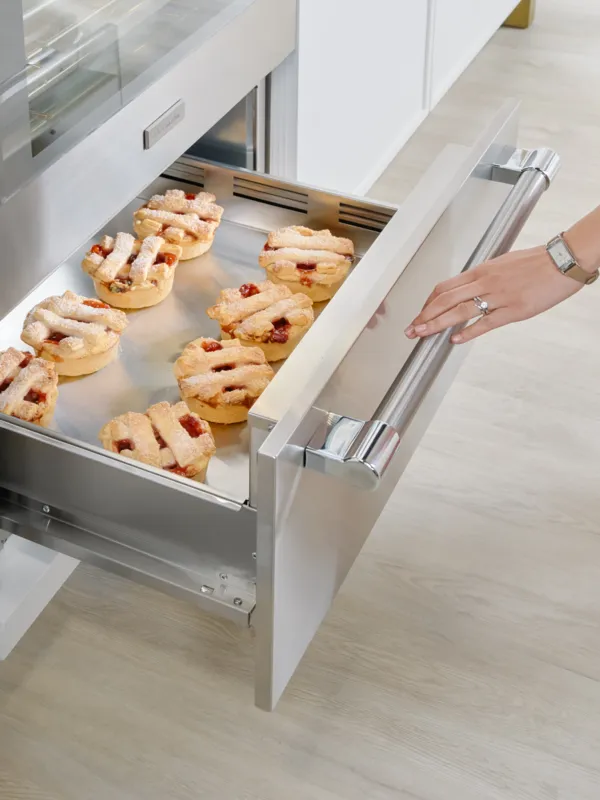
They are particularly effective for keeping plates warm before serving, holding side dishes at safe temperatures, or preserving freshly baked bread without drying it out.
Some models are even suitable for proofing dough, offering a stable, warm environment that encourages yeast activity—an advantage often utilized by professional chefs and experienced home bakers.
The misunderstanding surrounding oven drawers highlights a broader issue in modern kitchens: many homeowners are unfamiliar with the full capabilities of their appliances.
Features designed to improve safety, efficiency, and convenience are often underused or misused simply because their purpose was never clearly explained.
In the case of the warming drawer, what was once an innovative solution has become a forgotten feature, overshadowed by changing habits and assumptions.
Understanding the true function of the drawer beneath the oven is not merely a matter of curiosity. It can improve kitchen safety, extend the life of appliances, and enhance the overall cooking experience.
Recognizing whether your oven includes a warming drawer allows you to make better use of its design, avoid potential hazards, and appreciate the thoughtful engineering behind a feature that was meant to simplify meal preparation.
As kitchens continue to evolve with new technology and smarter appliances, revisiting older features with fresh understanding can reveal unexpected benefits.
The drawer beneath your oven may seem ordinary, but its original purpose reflects a time when appliance design focused on practical solutions to everyday cooking challenges.
Rediscovering how it was meant to be used can transform a neglected compartment into a valuable tool—one that quietly supports better meals, smoother timing, and a safer kitchen environment.
Now that the original purpose of the drawer beneath the oven is better understood, the next important step is learning how to identify its function in your own kitchen and use it safely and effectively.
Because oven designs vary widely by brand, model, and manufacturing year, no single rule applies to every home. However, a few reliable indicators can help homeowners determine whether their drawer is meant for warming or simple storage.
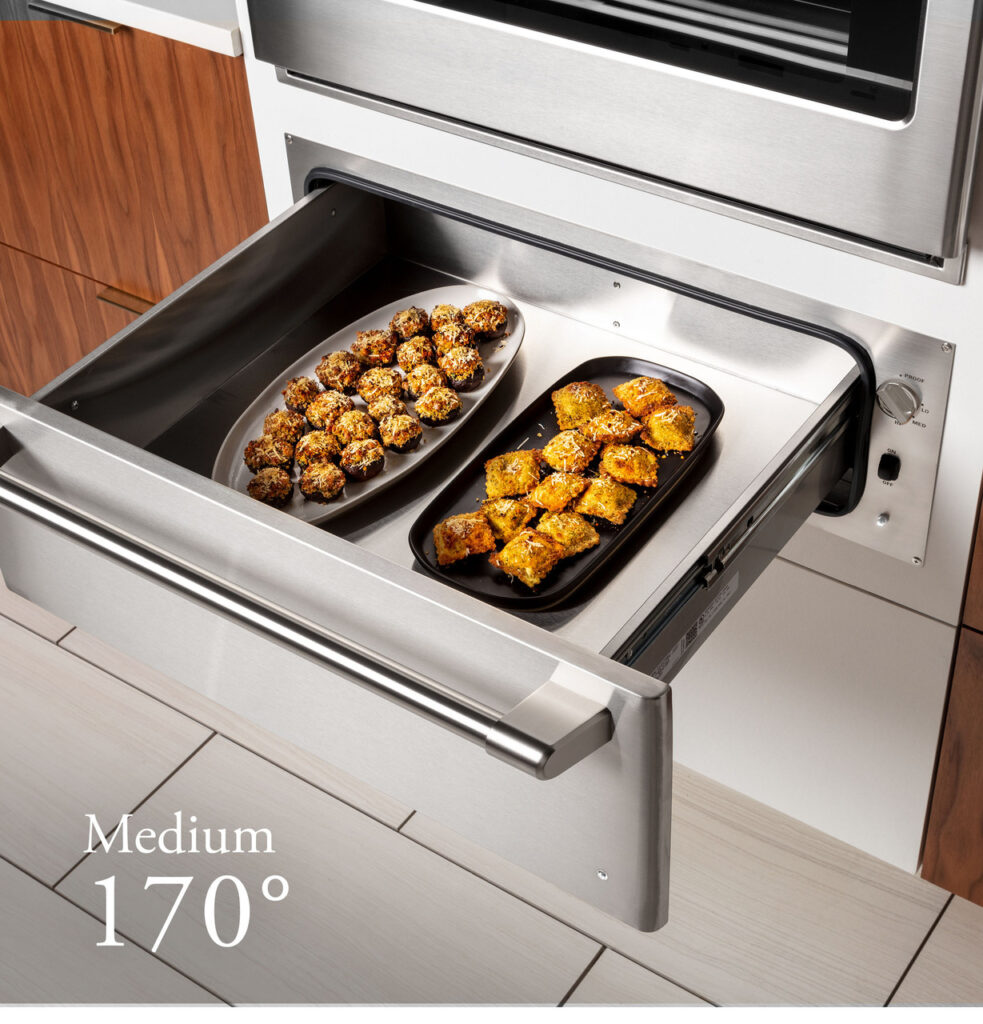
The most accurate way to identify your oven drawer is by consulting the manufacturer’s manual. Manuals typically specify whether the drawer includes a heating element and list appropriate temperature ranges or usage instructions.
If the manual is unavailable, many manufacturers provide digital versions online using the model number found inside the oven door or along the frame.
In some cases, visual cues can also be helpful. Warming drawers may feature heat-resistant seals, ventilation slots, or control settings integrated into the oven’s main panel. Storage drawers usually lack these features and feel more like a basic cabinet component.
Understanding this distinction is essential for safety. Using a warming drawer as storage can expose cookware and stored items to unexpected heat.
Even when not actively set to warm, residual heat from the oven above may raise internal temperatures. This can damage nonstick coatings, warp metal cookware, or compromise plastic handles.
Storing flammable items such as paper liners, packaging, or cloth materials in a heated drawer increases fire risk and can damage the appliance itself.
When used as intended, warming drawers offer several practical benefits. One of their most common uses is keeping prepared dishes at a safe serving temperature without drying them out.
This is especially useful during holidays, large gatherings, or family meals where multiple dishes must be served simultaneously. Side dishes such as vegetables, rice, or mashed potatoes can remain warm and ready while the main course finishes cooking.
Warming drawers are also ideal for keeping plates warm before serving. Pre-warmed plates help food retain heat longer once served, improving the overall dining experience.
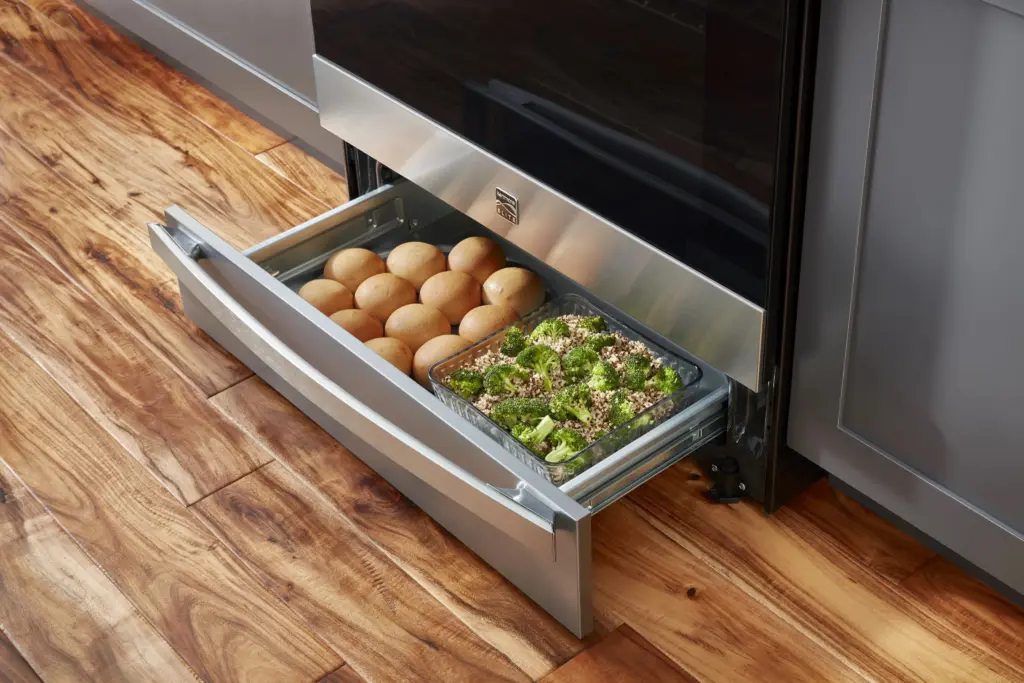
This technique is widely used in restaurants and professional kitchens and can be easily replicated at home using a warming drawer set to a low temperature.
Another lesser-known use of warming drawers is proofing dough. The consistent, gentle warmth creates an ideal environment for yeast-based doughs to rise evenly.
Many professional bakers rely on warming drawers for this purpose, particularly in cooler kitchens where room-temperature proofing may be unreliable.
Home cooks can achieve similar results by lightly covering dough and placing it in the drawer at the lowest heat setting.
In contrast, ovens equipped with storage-only drawers should be used carefully but confidently. These drawers are well-suited for holding metal cookware, baking sheets, roasting pans, and oven-safe accessories.
However, even storage drawers should not be overloaded. Excess weight can strain drawer tracks, affect alignment, and make access difficult over time. Items should be arranged neatly to allow easy opening and closing without obstruction.
Maintenance is another important consideration. Whether the drawer is for warming or storage, keeping it clean helps preserve appliance performance.
Crumbs, grease, or debris can accumulate over time, especially in warming drawers, potentially affecting airflow or creating odors.
Regular cleaning with mild, non-abrasive products ensures safe and efficient operation. For warming drawers, it is important to allow the drawer to cool completely before cleaning to avoid burns or damage.
Modern kitchen design has also contributed to the confusion surrounding oven drawers. As kitchens became more minimalist and space-efficient, storage needs increased, leading many homeowners to repurpose warming drawers for convenience.
Additionally, not all newer oven models include warming functionality, even if the drawer visually resembles older designs. This shift reflects changes in consumer demand, with many people prioritizing cabinetry and countertop appliances over built-in warming features.
Despite these trends, warming drawers remain valuable for households that frequently cook large meals or entertain guests. They provide flexibility, reduce stress, and help maintain food quality.
For those who enjoy cooking or hosting, learning to use this feature properly can significantly enhance the kitchen experience.
The widespread misunderstanding of oven drawers highlights a broader issue in modern homeownership: many appliance features go unused simply because their purpose is unclear.
Investing time in understanding how appliances function can improve safety, efficiency, and overall satisfaction. Simple steps, such as reviewing manuals or manufacturer guidelines, can prevent misuse and extend the life of costly kitchen equipment.
From a safety perspective, it is always better to assume a drawer may heat unless confirmed otherwise. Avoid storing items that could melt, burn, or release fumes when exposed to warmth.
When in doubt, use the drawer only for cookware made entirely of metal and designed to withstand heat. This cautious approach minimizes risk while allowing flexibility.
Ultimately, the drawer beneath the oven is more than just a forgotten compartment. It reflects thoughtful appliance design aimed at making cooking easier and more efficient.
Whether functioning as a warming drawer or a storage space, its value depends on how well it is understood and used. Recognizing its purpose allows homeowners to make informed choices, protect their appliances, and improve everyday cooking routines.
By reclaiming the original intent of this often-overlooked feature, home cooks can unlock a practical tool that supports better meal timing, safer kitchens, and more enjoyable dining experiences.
What was once dismissed as a simple storage drawer may, in fact, be one of the most quietly useful components of the modern kitchen.
