
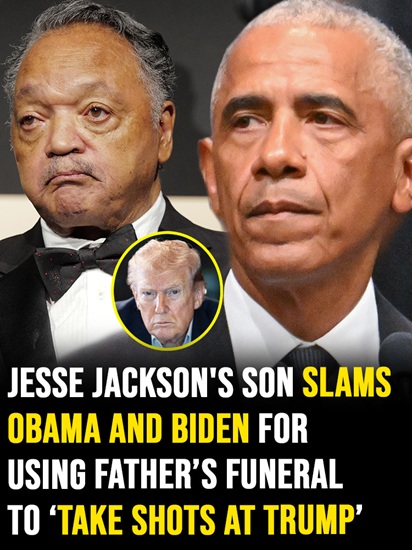
On Friday in Chicago, thousands gathered at the House of Hope to honor the life of civil rights legend Rev. Jesse L. Jackson Sr., whose decades‑long advocacy for justice moved national audiences.
The atmosphere was solemn yet celebratory, blending elements of a church service, memorial, and civic tribute to a man whose efforts reshaped American activism.
The memorial drew people from across the United States, including civil rights activists, local leaders, and ordinary citizens whose lives Jackson touched through decades of community engagement.
Many attendees braved cold temperatures to pay their respects, lining up hours before the ceremony began in the South Side’s House of Hope, an iconic Chicago church that symbolized Jackson’s lifelong service.
Observers noted the breadth of Jackson’s influence — from grassroots organizers to national policymakers — reflecting the reach of his mission for equality and civil participation.
Star‑Studded Tribute: Former Presidents and National Leaders Speak
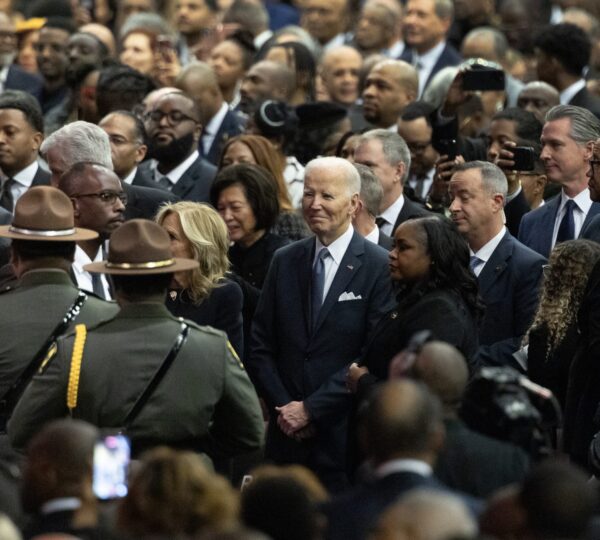
Three former U.S. presidents — Barack Obama, Joe Biden, and Bill Clinton — appeared at the public celebration of Jackson’s life, delivering tributes to his work and legacy.
Former Vice President Kamala Harris, former First Lady Jill Biden, former Secretary of State Hillary Clinton, and civil rights leaders including Rev. Al Sharpton also spoke or were in attendance.
Speeches included personal reflections on Jackson’s historic impact — from his early activism with Dr. Martin Luther King Jr. to his influence on later generations of leaders.
Obama used his remarks to honor Jackson’s courage and vision, describing the civil rights leader as a “path‑breaker” whose audacity helped open political doors for others.
He credited Jackson’s presidential campaigns in 1984 and 1988 with broadening national political participation and laying groundwork for future leaders like himself.
Obama’s Message: Democracy and Civic Responsibility
While celebrating Jackson’s life, Obama also spoke to contemporary concerns, warning that democratic institutions are facing daily challenges and assaults in current political life.

“Each day, we’re told by those in high office to fear each other and to turn on each other,” he said, without naming specific political figures.
He continued that some Americans are made to feel less valued than others, a sentiment he linked to ongoing divisions in the nation’s public life.
Many attendees interpreted these remarks as a critique of current political leadership, especially efforts seen as undermining the rule of law and civic inclusivity.
Biden’s Tribute: Personal Reflections and Broader Themes
President Joe Biden also used his eulogy to reflect on shared values with Jackson and the importance of continuing Jackson’s mission amid challenging times.
In a notable moment, Biden referenced his own childhood struggles with a stutter, telling the crowd, “I’m a hell of a lot smarter than most of you,” a remark that drew both laughter and attention.
He framed his comment in the context of overcoming adversity and the social stigma attached to speech impediments, which he said Jackson understood deeply.
Biden also suggested the nation was facing difficult challenges and that current leadership lacked shared values rooted in justice and inclusion.
Harris and Clinton: Complementary Perspectives
Former Vice President Harris echoed themes of social concern, noting she had seen many political changes and lamenting that Jackson was not present to guide current efforts.
She said she did not want to say “I told you so” but had predicted many developments — though not that they would occur without Jackson’s voice helping navigate them.
Bill Clinton took a slightly different approach, focusing more on his personal friendship with Jackson over decades rather than broader political commentary.
Clinton recalled Jackson as a steadfast ally and a person who supported him in difficult moments, emphasizing personal bonds over partisan positions.
Thousands Pay Tribute and Reflect on Legacy
Alongside formal speeches, the memorial included gospel music, personal stories, and moments of communal reflection that highlighted Jackson’s multifaceted life.
Musical performances and prayers underscored Jackson’s spiritual leadership, which intertwined with his work for social justice and human dignity across America.
Attendees shared their own Jackson experiences, recounting times he shook hands, offered prayers, stood with communities in need, and advocated for systemic change.

Commemorative posters and memorabilia were sold outside the venue, illustrating how many felt personally connected to Jackson’s long career of activism.
Relatives also spoke, including Jackson’s son Yusuf Jackson Sr., who shared personal insights into his father’s commitment to love, dignity, and community uplift.
Jackson’s Life: From Civil Rights to Political Trailblazer
Rev. Jesse Jackson’s career spanned more than six decades, marked by marches with Dr. King, global advocacy, and efforts to expand voting rights and economic opportunity for marginalized populations.
He founded the Rainbow PUSH Coalition, a major social justice organization promoting civil rights, economic equity, and political participation.
Jackson’s presidential campaigns in the 1980s helped break barriers for African American candidates and broaden participation in national politics.
His work earned him respect at home and abroad, and he remained an influential voice on issues of justice and equality until late in life.
Private Family Service and Son’s Rebuke of Political Remarks
On Saturday at the Rainbow PUSH Coalition headquarters in Chicago, Jackson’s son Jesse Jackson Jr. delivered a more intimate eulogy that sharply criticized political tones at the previous day’s service.
Jackson Jr. said he listened to “several hours of former presidents who do not know Jesse Jackson,” arguing they missed the essence of his father’s life and mission.
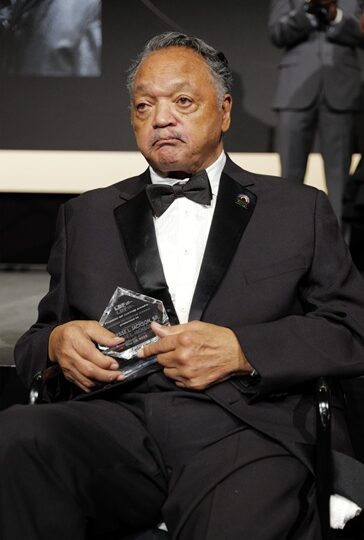
He emphasized that his father’s work was not defined by partisanship but by advocacy for the marginalized — “the disinherited, the damned, the dispossessed, the disrespected.”
Jackson Jr. highlighted that Rev. Jackson maintained a “tense relationship with the political order” throughout his life, not based on party lines but on a prophetic commitment to justice.
He said his father’s message demanded consistency and moral leadership, not Democratic or Republican solutions that sell out the very people Jackson championed.
Calls for Focus on Legacy Over Politics
Before the services, Jackson Jr. had asked that attendees refrain from injecting contemporary politics into his father’s memorial, hoping the focus would remain on Jackson’s life and legacy.
Despite this request, Jackson Jr. said he felt deeply that political commentary overshadowed the celebration of a man who devoted his life to bridging gaps and expanding rights for all.
The rebuke sparked discussion about how national figures should navigate moments of remembrance without conflating legacy with current partisan conflict.
Some commentators noted that Jackson’s life itself intersected with politics — he ran presidential campaigns and worked across party lines — making the line between tribute and political reflection complex.
Final Farewells and Burial
Later on Saturday, Jackson was laid to rest at Oak Woods Cemetery, concluding a week of public and private memorial events that honored his life’s work in Chicago.
Family members, friends, civil rights leaders, and community members gathered once more for this final farewell, sharing memories and closing the chapter on a defining American story of justice.
Many agreed that Jackson’s core message — inclusion, hope, and dignity — transcended partisanship, even as responses to the memorial’s political tones varied widely.
Enduring Impact and Civic Call to Action
As tributes continue, leaders have encouraged Americans to honor Jackson’s memory by engaging in civic life and pursuing unity, equity, and shared dignity across communities.
Rev. Jesse Jackson’s story — from civil rights marches to leadership on national and global stages — remains a touchstone for discussions about equality, democracy, and the role of advocacy in public life.
His legacy lives on through tribal advocacy groups, community leaders, and countless activists inspired by his decades of service to justice and human rights.
