
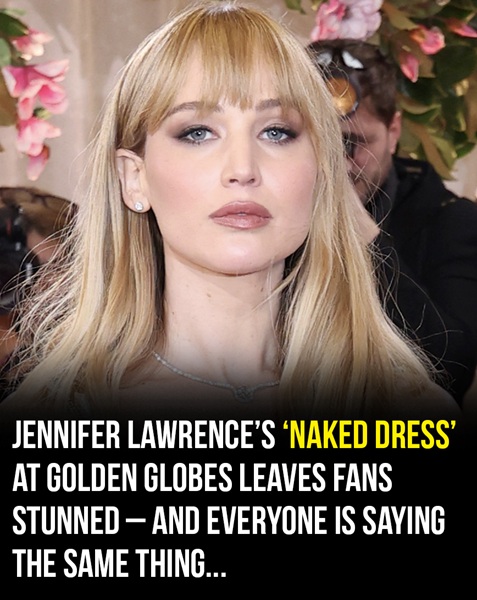
The 2026 Golden Globes arrived with the usual mixture of anticipation, glamour, and speculation, but when Jennifer Lawrence stepped onto the red carpet, the attention she commanded went far beyond the customary admiration for celebrity arrivals.
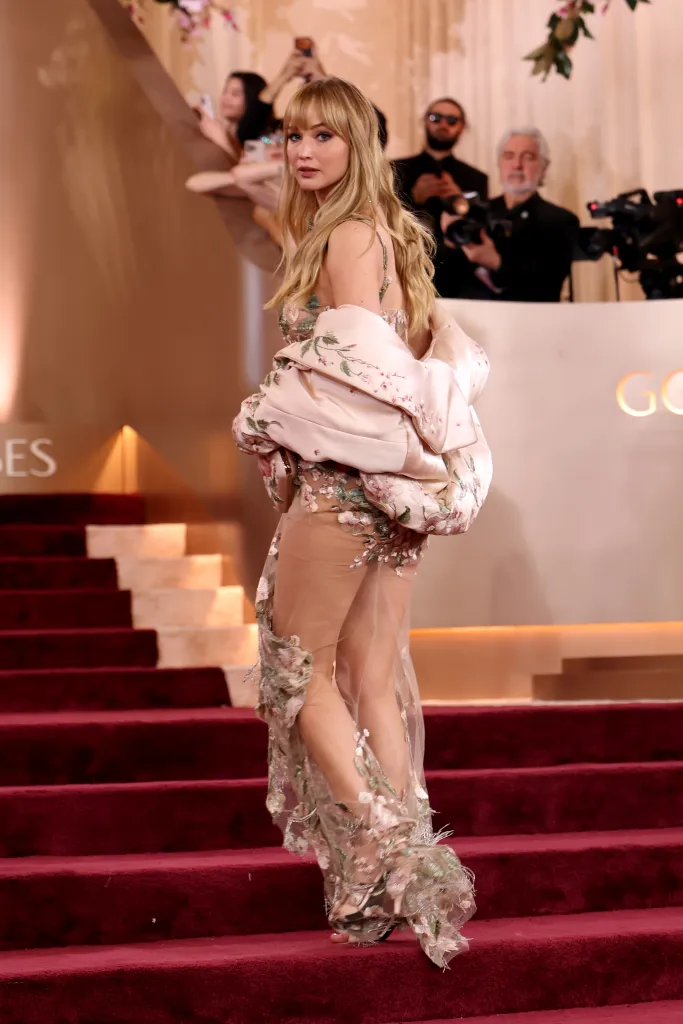
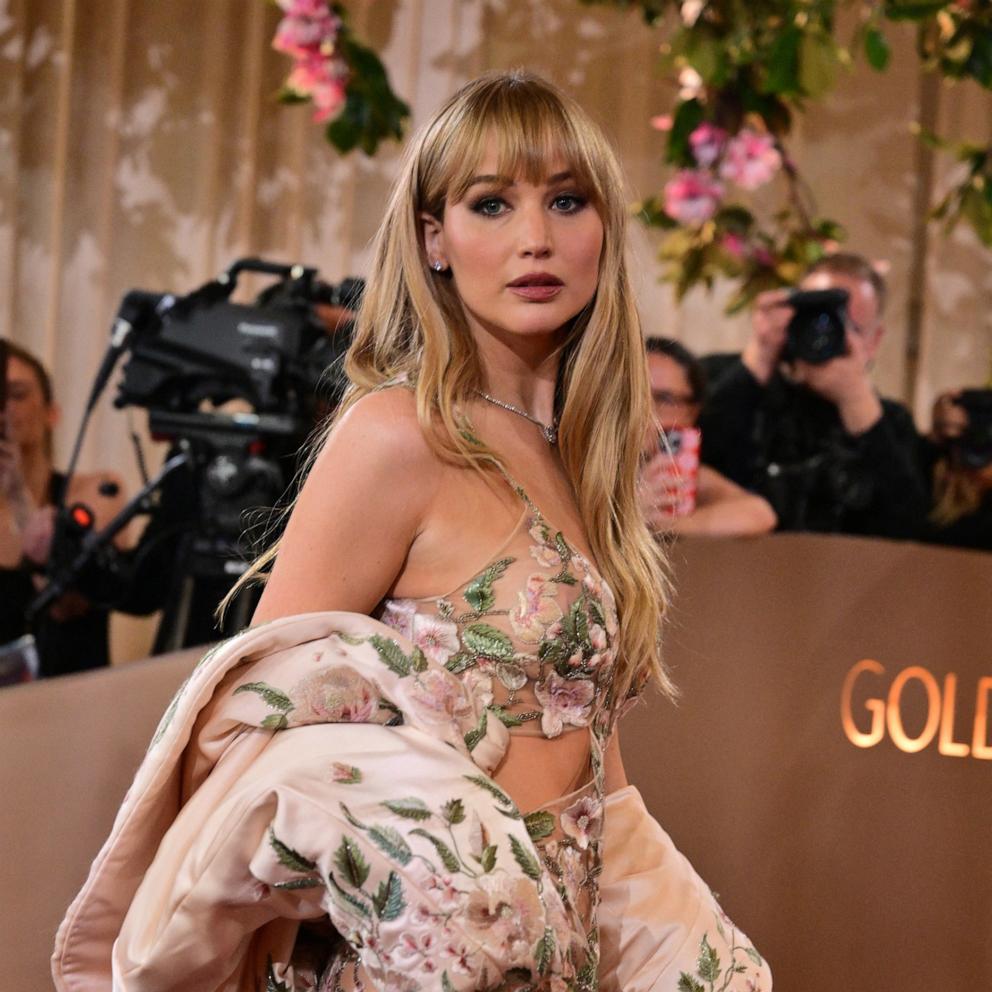
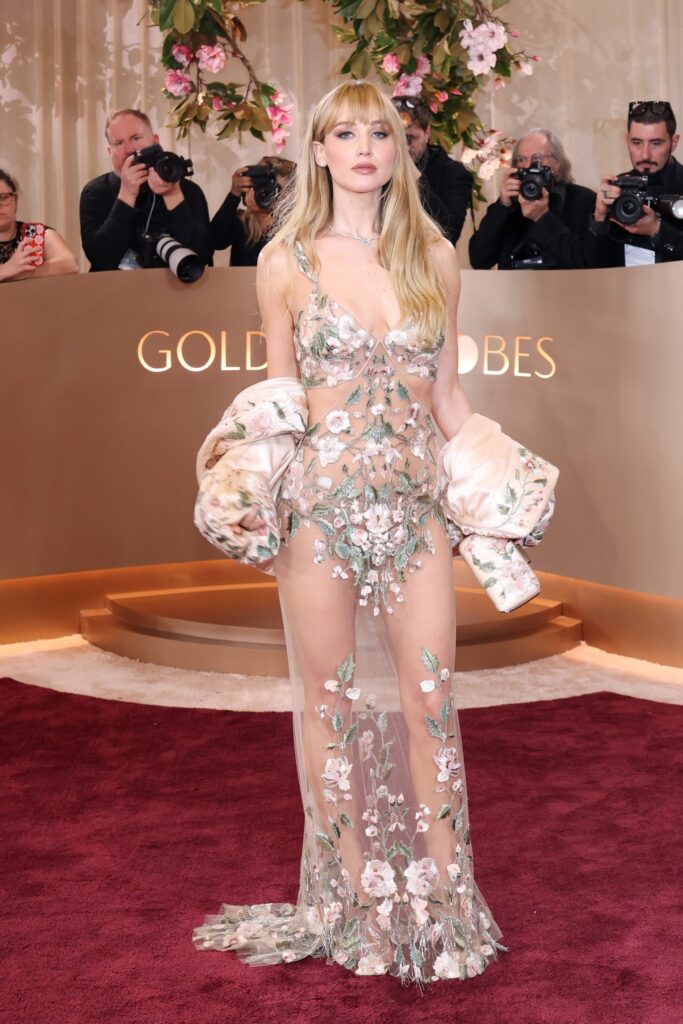
Clad in a daring, sheer, floral-embroidered gown by Givenchy, Lawrence immediately became the focal point of media coverage.
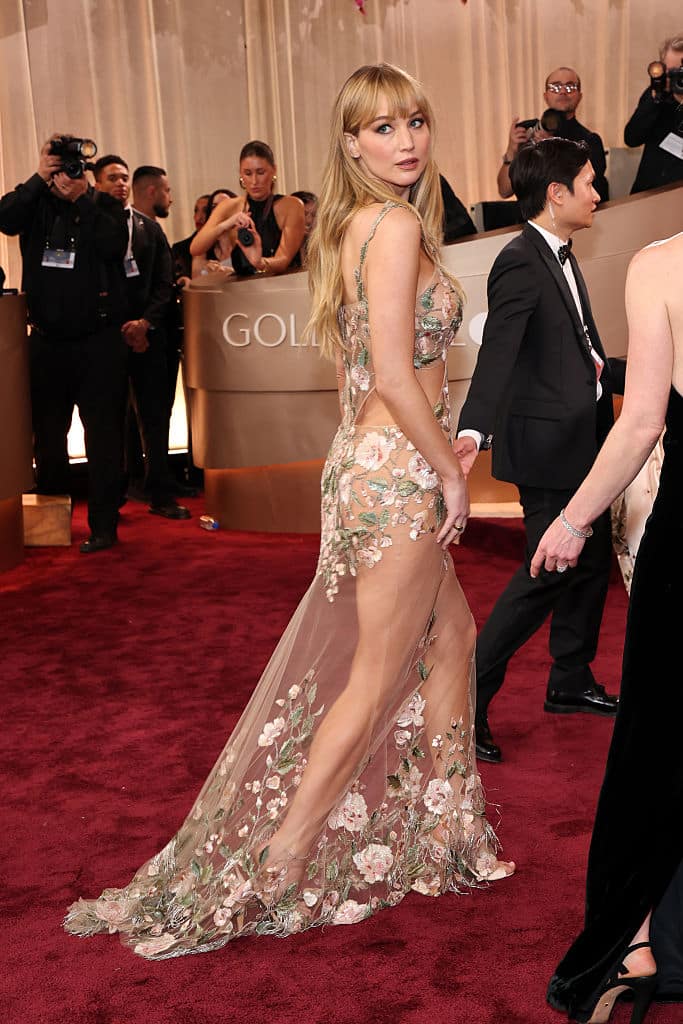
The dress, often described in headlines as “naked,” was a delicate composition of fine tulle adorned with intricately embroidered blossoms that traced over the contours of her silhouette.
Its transparency and meticulous design highlighted not only the couture craftsmanship but also Lawrence’s confidence in embracing bold fashion choices.
As photographers swarmed, flashes ignited the night sky, reflecting off the crystalline embellishments of her gown. The effect was cinematic—a live tableau of color, light, and texture that seemed almost choreographed to mirror the drama of her career itself.

Social media erupted within minutes. Twitter, Instagram, and TikTok feeds were flooded with debates ranging from admiration of the gown’s artistry to calls for more conservative red carpet attire.
Fashion critics dissected every element: the strategic embroidery placement, the complementary nude underlay, and the precise tailoring that allowed both elegance and audacity.
Hashtags such as #JenniferLawrenceGoldenGlobes2026, #GivenchyNakedDress, and #FearlessFashion began trending globally, reflecting the polarizing reception.
Amid this whirlwind, the media’s initial focus on her attire briefly overshadowed the reason Lawrence was attending: a Golden Globe nomination for her performance in Die My Love.
In this emotionally demanding film, she portrays a mother navigating the turbulent waters of postpartum depression and psychosis, a role that critics described as raw, unflinching, and among the most challenging of her career.
Lawrence’s embodiment of the character is meticulous, capturing the subtle shifts of mood, the fragility of her protagonist’s mind, and the intense internal struggles that unfold behind closed doors.
Reviews highlighted her ability to convey complex psychological layers with authenticity, a skill that has long distinguished her in Hollywood.
Journalists, aware of the juxtaposition between Lawrence’s red carpet glamour and the gravity of her performance, pressed for commentary. Lawrence responded with characteristic humor and self-awareness, addressing the media and fans with wit.
On the red carpet, she quipped that “since I was already naked, I might as well enjoy the night,” immediately diffusing tension while simultaneously owning the narrative.
Her confidence transformed what could have been mere controversy into a discussion about personal choice, artistic expression, and self-assuredness, further cementing her reputation as an actress unafraid of public scrutiny.
The Golden Globes evening itself was a study in contrasts. While the lights of Hollywood sparkled with champagne flutes and meticulously staged interviews, Lawrence’s presence reminded viewers that the glamour often conceals extraordinary dedication and craft.
Behind the sequins and couture, there lies years of preparation, emotional immersion, and an unwavering commitment to storytelling. Lawrence, now in her early thirties, has repeatedly demonstrated a capacity to balance mainstream appeal with the demands of roles that require both vulnerability and bravery.
The Red Carpet Debate: Fashion Meets Cultural Commentary
The response to Lawrence’s gown was immediate and multifaceted. Fashion analysts praised the ensemble as a masterclass in modern haute couture, pointing to the artistry involved in making a “barely-there” dress both visually stunning and structurally sound.
The embroidery, they noted, was not merely decorative; it created a sense of movement and depth, transforming Lawrence’s appearance into a living work of art.
Every step she took across the carpet revealed new details, allowing photographers and spectators to appreciate the gown’s complexity.
However, online conversations were not limited to admiration. Some commentators argued that such revealing attire challenged traditional notions of propriety for awards ceremonies.
They questioned whether the dress’s sheer design overshadowed the achievements being celebrated, prompting debates about the role of fashion in shaping public perception of female celebrities.
Simultaneously, supporters defended Lawrence’s choice, emphasizing autonomy, personal expression, and the broader cultural shift toward acceptance of bold, empowering statements.
Fans celebrated the confidence it takes to wear a gown that invites both scrutiny and admiration, noting that Lawrence’s poise underscored her status as one of Hollywood’s most self-assured personalities.
The gown also sparked reflection on historical red carpet moments. Comparisons were drawn to iconic “naked dress” appearances in past decades, situating Lawrence’s 2026 choice within a lineage of daring fashion statements that challenged societal norms, sparked conversations about body image, and redefined the relationship between celebrity and sartorial expression.
Analysts highlighted how these moments often catalyze discourse on broader issues: female empowerment, public judgment, and the intersection of artistry and personal narrative.
Balancing Glamour with Gravitas
Despite the intense focus on her attire, Lawrence’s dedication to her craft remained clear. Die My Love is a film that demands emotional and psychological investment, and her Golden Globe nomination underscores the recognition of that labor.
Colleagues, directors, and critics repeatedly emphasize her ability to inhabit complex characters, bringing authenticity and depth to stories that resonate with audiences on a profound level.
In interviews throughout the evening, Lawrence spoke candidly about her process in preparing for the role. She discussed researching postpartum mental health conditions, consulting with medical professionals and mothers with lived experience, and employing immersive techniques to ensure a nuanced performance.
Her approach balanced empathy with artistic integrity, demonstrating that high-profile recognition often reflects rigorous preparation and meticulous attention to emotional truth.
Beyond discussing her character, Lawrence touched on personal experiences with motherhood, vulnerability, and the challenges of balancing public life with private growth.
Her reflections were unflinchingly honest, revealing the courage it takes to navigate both intense emotional roles and the scrutiny of fame.
By doing so, she positioned herself as an advocate not only for nuanced storytelling in cinema but also for broader conversations about mental health, self-expression, and resilience in the public eye.
Once inside the lavish ballroom, the atmosphere shifted from the flashbulbs and debates of the red carpet to a space charged with anticipation, applause, and the weight of recognition.
Lawrence moved gracefully, her Givenchy gown still a point of fascination but now paired with her composure and the respect she commands as a multi-time award nominee and winner.
Media cameras continued to capture every detail, but the focus began to return to why she was there: her nomination for Die My Love, a role that showcased her ability to navigate deeply complex emotional landscapes.
The ceremony itself was a blend of glamour and artistry, with producers, actors, and writers sharing the stage to celebrate excellence in television and film.
When Lawrence’s category was announced, murmurs ran through the audience, punctuated by applause. Even those initially distracted by her attire now recognized the immense talent standing before them.
Critics later noted that the juxtaposition of her daring fashion choice with her commanding stage presence reinforced a key aspect of her career: Jennifer Lawrence is never defined by a single moment, whether it be sartorial or cinematic.
A Candid and Fearless Speech
Upon receiving her nomination, Lawrence took the opportunity to speak openly about the film, her character, and the broader issues represented by her work.
She highlighted the realities of postpartum mental health, describing the need for awareness, empathy, and supportive systems for mothers facing psychological challenges.
Her words were both heartfelt and educational, emphasizing that the character’s journey was rooted in real experiences and that storytelling can serve as a bridge for understanding.
She shared anecdotes from filming, recalling how she worked closely with consultants to portray postpartum depression authentically, how she rehearsed emotional sequences for weeks, and the delicate balance required to convey vulnerability without exploitation.
Her humility and transparency struck a chord, reminding audiences that acting at this level requires emotional courage, intellectual investment, and moral responsibility.
The speech also touched on the intersection of fame, personal identity, and motherhood. Lawrence spoke about her own experiences navigating life in the public eye while managing personal growth and familial responsibilities.
In doing so, she framed her award recognition as not just a personal achievement, but as a testament to the importance of advocating for stories that matter, both on and off the screen.
Media Coverage and Social Media Explosion
Immediately after her speech, social media erupted. Clips circulated rapidly, showing Lawrence’s confidence, emotional depth, and sharp humor.
Analysts noted how her presence managed to dominate multiple narratives simultaneously: fashion, advocacy, and artistry. Hashtags such as #DieMyLove, #GoldenGlobes2026, and #JenniferLawrenceSpeech trended worldwide for hours, while commentary ranged from detailed critiques of her red carpet ensemble to thoughtful discussions about the film’s portrayal of mental health.
Fan communities celebrated her dual impact: the ability to make a fashion statement while also commanding the conversation about motherhood, vulnerability, and creative risk.
Celebrities and journalists alike praised Lawrence for turning a potentially distracting fashion moment into a platform for meaningful discourse. It became evident that Lawrence’s influence extends beyond her performances; she shapes cultural conversation, fashion norms, and public understanding of complex issues.
Critical Reception of Die My Love
In the weeks leading up to the Golden Globes, critical reviews of Die My Love poured in. Critics lauded Lawrence’s performance as one of her most daring and emotionally nuanced, noting how she captured both the fragility and resilience of a mother navigating postpartum depression and psychosis.
Analysts highlighted her ability to convey the internal struggle of her character through subtle gestures, shifting expressions, and vocal nuances, demonstrating a mastery of emotional realism rarely seen in contemporary cinema.
The film itself sparked discussions across mental health forums, parenting communities, and academic circles. Many applauded Lawrence for taking on a role that foregrounds the often underrepresented experiences of postpartum women, emphasizing the value of empathetic, well-researched portrayals in mainstream media.
Her performance was recognized as both art and advocacy, showing that cinema can illuminate difficult subjects while resonating deeply with audiences.
Fashion, Confidence, and Cultural Impact
Beyond the film, Lawrence’s Givenchy gown continued to generate analysis. Fashion experts praised it for its meticulous embroidery, structural sophistication, and the way it fused avant-garde daring with classical elegance.
Publications highlighted how her ensemble embodied the tension between vulnerability and empowerment, mirroring the thematic core of her film: the coexistence of exposure and strength.
Lawrence’s confidence in wearing the gown sparked broader conversations about women’s autonomy on the red carpet. Discussions emerged about how society judges female celebrities, the ways fashion choices intersect with public perception, and the role of personal agency in shaping cultural narratives.
Her decision to embrace both artistry and audacity set a new standard for how stars can navigate visibility while maintaining authenticity.
Navigating Public Scrutiny and Advocacy
Throughout the evening and in subsequent interviews, Lawrence emphasized the importance of using her platform responsibly.
She spoke about the intersection of celebrity influence and advocacy, noting that her role in Die My Love was an opportunity to highlight societal issues and promote empathy.
She encouraged audiences to engage with the film thoughtfully, to recognize the challenges faced by mothers experiencing mental health struggles, and to support initiatives that provide resources and awareness.
Her approach exemplified a blend of professionalism, insight, and social consciousness. Lawrence consistently demonstrated that her work is not solely about awards or recognition but about contributing meaningfully to cultural discourse and encouraging positive change.
By bridging artistry and advocacy, she reinforced the role of actors as storytellers, educators, and public figures who can influence social perception through both performance and presence.
The Legacy of Fearlessness and Authenticity
Jennifer Lawrence’s appearance at the 2026 Golden Globes will be remembered not only for the striking gown or the social media debates it ignited but also for her unwavering commitment to authenticity.
By embracing both vulnerability and strength, she reminded audiences and critics alike that true artistry involves risk, emotional investment, and courage.
Her red carpet statement, combined with her compelling performance, reinforced a central tenet of her career: creativity and integrity are inseparable, and personal expression should never be compromised for comfort or conformity.
In the months following the ceremony, Lawrence’s Golden Globes moment continued to reverberate. Fashion retrospectives celebrated the gown as a landmark in couture history, while film analysis highlighted her role in shaping conversations about mental health and motherhood.
Interviews, panels, and social media discussions extended the impact, positioning Lawrence as a cultural force capable of simultaneously inspiring, challenging, and educating audiences.
