
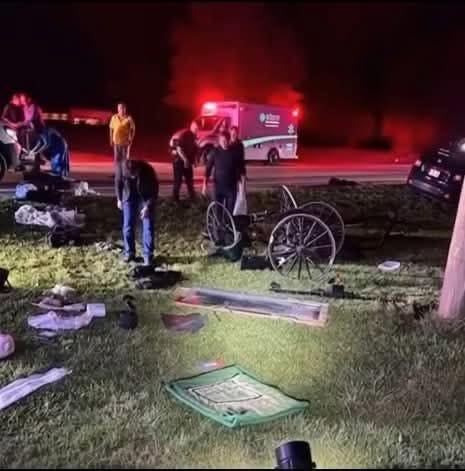
On a quiet stretch of State Road 218 outside Berne, Indiana, a routine journey home turned into a devastating scene that underscored the fragile balance between tradition and modern transportation.
Late at night, under limited visibility and minimal traffic, a horse-drawn Amish buggy carrying nine occupants moved steadily along the roadway, its pace unhurried and consistent with a centuries-old way of life.
Moments later, that calm was violently interrupted when a Jeep traveling in the same direction struck the buggy from behind, unleashing a sudden and forceful impact that shattered the wooden structure.
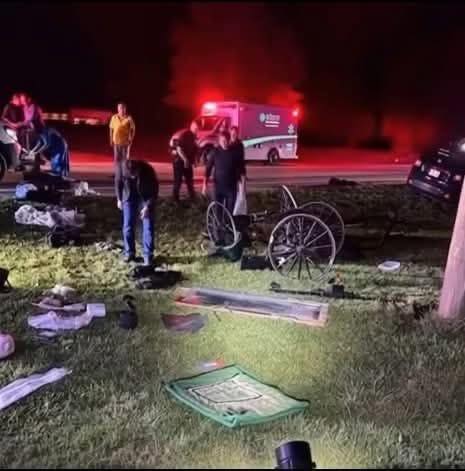
The collision splintered the buggy into fragments, scattering debris across the roadway and throwing passengers onto the pavement, transforming what had been a quiet ride into a chaotic and dangerous emergency scene.
Emergency responders were quickly dispatched after reports of a serious crash involving multiple injuries, arriving to find a scene marked by confusion, distress, and the urgent need for medical attention.
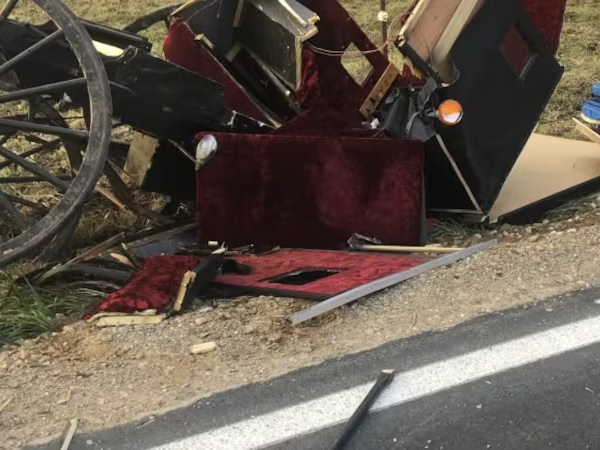
Seven of the nine occupants were injured in the crash, with most of those hurt identified as children, highlighting the vulnerability of families who rely on traditional modes of transportation in modern traffic conditions.
Paramedics worked swiftly under the glare of emergency lights, assessing injuries and stabilizing victims while coordinating transport to nearby hospitals for further treatment and evaluation.
Due to the severity of some injuries, at least one individual was airlifted by helicopter to a regional medical facility, emphasizing the seriousness of the incident and the need for rapid, advanced care.
The sound of helicopter rotors cutting through the night added to the gravity of the situation, as first responders and medical teams worked together to manage a complex and emotionally charged emergency.
Authorities secured the area to allow for a thorough investigation, temporarily closing portions of the roadway while crews documented evidence and cleared debris left behind by the crash.
Investigators began reconstructing the sequence of events, examining vehicle positions, impact points, and roadway conditions to better understand how the collision occurred.
Part of the investigation included testing the Jeep driver’s blood for potential impairment, a standard procedure in serious crashes to determine whether substances may have played a role.
Officials have not immediately released conclusions regarding fault, noting that investigations of this nature require careful analysis of all available evidence before definitive statements can be made.
The incident has once again drawn attention to the ongoing safety challenges faced by Amish communities that share public roads with faster, heavier motor vehicles.
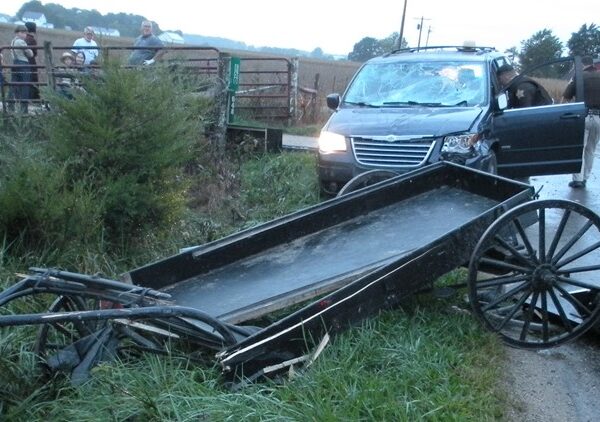
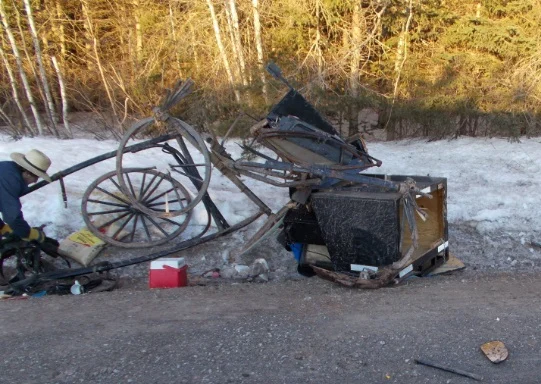
Horse-drawn buggies, typically constructed of wood and lightweight materials, offer minimal protection compared to modern automobiles designed with reinforced frames, airbags, and advanced safety systems.
Despite the use of reflective triangles and lantern-style lights intended to increase visibility, buggies can still be difficult to see at night, particularly on rural roads with limited lighting.
Drivers unfamiliar with these conditions or traveling at higher speeds may have reduced reaction time, increasing the risk of rear-end collisions such as the one that occurred on State Road 218.
For Amish families, travel by buggy is not a choice made lightly but a central part of their cultural and religious identity, rooted in values of simplicity, humility, and separation from certain modern technologies.
This reliance on traditional transportation means that daily activities, including work, school, and social visits, often involve sharing the road with vehicles traveling significantly faster.
The contrast between these two modes of travel creates an inherent risk, particularly in low-visibility conditions such as nighttime or during inclement weather.
Local communities and authorities have long been aware of these challenges, with ongoing efforts to improve safety through education, signage, and awareness campaigns targeting both buggy operators and motorists.
Even so, accidents continue to occur, serving as stark reminders of the limitations of current safety measures and the need for continued vigilance from all road users.
In the aftermath of this crash, questions have resurfaced about whether additional steps could be taken to better protect vulnerable road users without compromising cultural traditions.
Some have suggested enhanced lighting systems or improved reflective materials for buggies, while others emphasize the importance of driver awareness and responsible speed management.
Law enforcement officials often stress that motorists must remain attentive, especially in rural areas where horse-drawn vehicles are known to be present.
At the same time, community leaders within Amish populations may engage in discussions about safety practices, balancing tradition with practical measures that can reduce risk.
The crash near Berne is not an isolated event but part of a broader pattern seen in regions where Amish communities live alongside modern infrastructure.
Each incident adds to a growing body of data that researchers and policymakers can use to better understand the dynamics involved and identify effective prevention strategies.
However, beyond statistics and reports, incidents like this carry a deeply human impact, affecting families, communities, and first responders who witness the aftermath.
For those injured, recovery may involve not only physical healing but also emotional processing of a traumatic experience that unfolded in a matter of seconds.
Families must cope with the disruption to their lives, including medical care, potential long-term effects, and the emotional weight of the event.
Meanwhile, first responders often reflect on such scenes, recognizing both the importance of their role and the sobering reality of the situations they encounter.
As investigators continue their work, the focus remains on determining the exact factors that led to the collision and whether it could have been prevented.
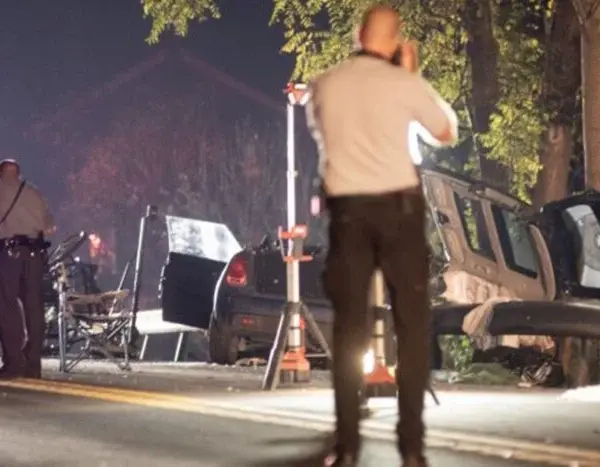
This process may involve reviewing vehicle speeds, examining driver behavior, and analyzing environmental conditions at the time of the crash.
Findings from the investigation could inform future safety recommendations or reinforce existing guidelines aimed at reducing similar incidents.
In the broader context, the crash serves as a reminder of the shared responsibility among all road users to remain alert and considerate of others.
Motorists traveling through rural areas are encouraged to anticipate the presence of slower-moving vehicles and adjust their driving accordingly.
Simple actions, such as reducing speed, maintaining a safe following distance, and using headlights appropriately, can significantly reduce the risk of collisions.
At the same time, awareness campaigns can play a crucial role in educating drivers who may be unfamiliar with the presence of horse-drawn vehicles on certain roadways.
For Amish communities, the road remains both a necessity and a risk, a space where tradition and modernity intersect in ways that are not always predictable.
Each journey carries an element of uncertainty, particularly when visibility is low and traffic conditions are less controlled.
The events on State Road 218 highlight how quickly routine can turn into emergency, and how fragile the margin of safety can be under certain conditions.
As the injured continue to receive care, attention also turns to prevention, with hopes that lessons learned from this incident can help reduce the likelihood of future tragedies.
Community discussions may emerge, bringing together residents, officials, and safety advocates to explore practical steps forward.
These conversations often reflect a shared goal: preserving cultural traditions while ensuring that those who practice them can do so as safely as possible.
In the end, the crash stands as a powerful example of the challenges that arise when different ways of life intersect on the same physical space.
It underscores the importance of awareness, respect, and responsibility in maintaining safety for everyone who uses the road.
While the investigation continues, the memory of that night remains vivid, marked by flashing lights, urgent voices, and the sound of a helicopter lifting into the darkness.
For those involved, it is a moment that will not easily be forgotten, a reminder of how quickly circumstances can change and how deeply they can affect lives.
As the community reflects on what happened, there is a renewed emphasis on caution, understanding, and the need to look out for one another on every journey.
