
In today’s fast-paced retail environment, consumers are often forced to make quick decisions, scanning shelves in a matter of seconds rather than analyzing every product in detail.
This reality places enormous influence in the hands of branding, packaging design, and visual cues, often outweighing price, quality, or detailed product information.
The arrangement of items on a shelf, their color, shape, and relative size, all subtly guide purchasing behavior. Even minor modifications in packaging — a slightly taller bottle, a marginally wider jar, or a redesigned label — can profoundly influence perception.
A recent legal dispute in the spice industry highlights just how powerful these small differences can be, and how they can carry real consequences for consumers and companies alike.
The case revolves around McCormick & Company, a longstanding giant in the seasoning market, and Watkins Incorporated, a smaller but respected competitor.

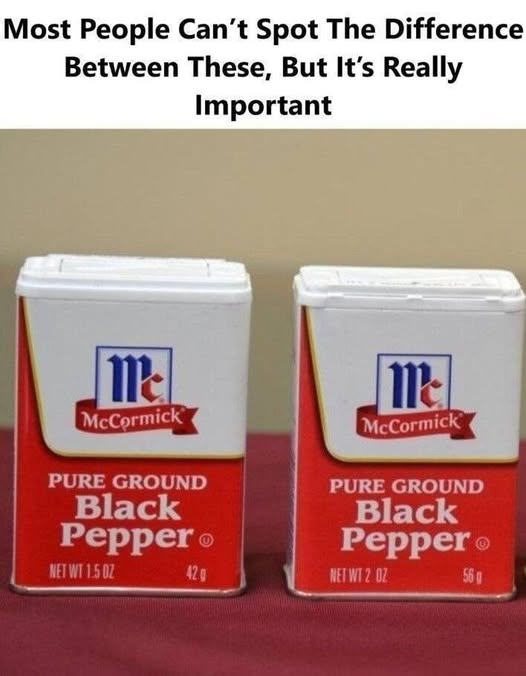
McCormick recently reduced the quantity of pepper in one of its most popular containers, shrinking the net weight from roughly eight ounces to approximately six ounces — a reduction of around twenty-five percent. Despite this significant change in content, the container’s external size and shape remained largely the same.
Watkins contends that this creates a misleading impression for shoppers. Because McCormick’s container is opaque, customers cannot see the actual amount of pepper inside.
By contrast, Watkins sells pepper in clear jars, making the contents immediately visible. In practical terms, while both brands now offer comparable quantities, McCormick’s packaging appears larger and more substantial on store shelves.
Watkins argues that this visual advantage gives McCormick an unfair edge, influencing consumer perception and potentially violating consumer protection laws. The psychological impact is important. Research in behavioral economics and marketing psychology consistently shows that consumers rely heavily on visual heuristics — mental shortcuts that simplify decision-making.
A taller jar, a wider lid, or a more prominent label can create the impression of greater quantity or value, even if the net weight is clearly printed elsewhere. Shoppers often assume that the larger container equals more product, translating directly into perceived savings or better value.
When McCormick and Watkins containers are placed side by side, the difference in packaging design can subtly nudge a consumer toward McCormick, despite the actual volume being the same or smaller.
From a legal perspective, the dispute centers on the balance between transparency and marketing strategy. McCormick maintains that the net weight of its product is clearly printed on the label, arguing that this disclosure satisfies federal labeling requirements.

The company also contends that consumers are responsible for reviewing this information before making a purchase. Watkins and consumer advocates disagree, pointing to widespread evidence that most shoppers do not closely examine small print, particularly during routine grocery trips.
Instead, they rely on visual cues and prior experiences with the brand. In their view, McCormick’s packaging exploits this behavioral tendency, making it difficult for average consumers to recognize that they are receiving less product than before.
The dispute has escalated into class action lawsuits, with plaintiffs arguing that they were misled and financially harmed by the packaging change. These legal proceedings could set a precedent not just for the spice industry, but for packaging transparency across consumer goods.
The stakes extend beyond mere ounces of pepper. At the heart of the controversy is consumer trust, a critical and often underappreciated component of brand equity. Consumers develop loyalty to brands they perceive as honest and reliable.
Even minor changes that undermine this perception can have disproportionate effects on purchasing behavior and long-term revenue. McCormick has built its reputation over more than a century, yet critics argue that practices perceived as deceptive, even subtly, can erode credibility faster than any marketing campaign can reinforce it.
Moreover, the case illustrates the growing importance of clarity in product presentation. Regulatory bodies increasingly scrutinize claims about quantity, quality, and value. Federal agencies such as the Food and Drug Administration and the Federal Trade Commission have specific rules regarding labeling accuracy, but enforcement is often reactive.
Lawsuits such as Watkins’ highlight the gap between legal compliance and consumer perception, emphasizing that a product can meet technical labeling standards while still misleading shoppers in practice. Beyond the courtroom, the implications are psychological as well as financial.

Consumers who believe they have been misled may experience frustration, distrust, and reduced brand loyalty. Companies, in turn, must weigh short-term gains from packaging strategies against potential reputational damage, class action litigation, and regulatory scrutiny.
In a marketplace increasingly influenced by online reviews, social media, and word-of-mouth, a single perceived misstep can amplify rapidly, affecting sales on a national or even global scale. Finally, this dispute underscores the evolving dynamics between large corporations and smaller competitors.
McCormick, with its extensive marketing resources, can implement packaging changes that shape perception at scale. Watkins, relying on transparency and visible content, positions itself as an advocate for informed consumer choice.
The legal battle therefore reflects not just the specific issue of pepper packaging, but a broader conversation about fairness, competition, and the ethics of marketing strategies in consumer goods. As the legal battle between McCormick and Watkins unfolds, industry experts, consumer advocates, and psychologists alike are paying close attention to the broader implications of the case.
At the core lies a fundamental question: what constitutes “misleading” packaging, and how should courts interpret consumer perception versus technical compliance? Regulatory and Legal Context Under U.S. law, the Federal Trade Commission (FTC) and the Food and Drug Administration (FDA) set standards for food labeling, including net weight disclosures.
Technically, McCormick complies with these regulations, as the net weight is clearly printed on its label. However, regulatory compliance does not necessarily insulate a company from allegations of misleading practices. Courts have previously recognized that consumer perception plays a significant role in determining whether a product is deceptive.
Precedent cases in the consumer goods sector demonstrate this principle. For instance, several class action lawsuits in the snack and beverage industries have focused on “shrinkflation” — the practice of reducing product quantity while maintaining the same packaging size or price.
Courts in these cases have often examined whether the average consumer could reasonably be misled, considering packaging, marketing claims, and visibility of the product itself.

Watkins’ argument mirrors these prior disputes: the combination of opaque packaging and unchanged container dimensions creates a plausible basis for consumer confusion.
Legal experts note that this case could have broader ramifications beyond pepper. If the courts find McCormick’s packaging to be misleading, it could prompt increased scrutiny of packaging practices across multiple product categories, from spices and condiments to cereals, snacks, and beverages.
Companies may face pressure to adopt more transparent designs, clearer labeling, and more ethical marketing practices to avoid litigation and preserve consumer trust. Consumer Psychology and Behavioral Economics Beyond the legal framework, behavioral science offers critical insight into why packaging matters so profoundly.
Studies consistently show that consumers rely heavily on heuristics — mental shortcuts — when making purchasing decisions. The size and shape of a container, the prominence of branding, and even subtle design elements influence perceived quantity and value.
For McCormick, the decision to reduce pepper quantity while keeping the jar size nearly identical may appear minor from a production standpoint, but from a psychological standpoint, it significantly shapes consumer perception. Shoppers are likely to compare containers visually rather than checking the fine print, a behavior reinforced by the fast-paced nature of grocery shopping.
This phenomenon illustrates the tension between technical disclosure (net weight) and practical transparency (what consumers actually perceive). Watkins’ use of clear containers is instructive.
By allowing the contents to be fully visible, the company aligns packaging with consumer expectations, creating trust and reinforcing brand integrity. In contrast, opaque packaging — particularly when paired with unchanged dimensions — can exploit subconscious assumptions, subtly misleading consumers about quantity and value.
Economic and Competitive Implications The financial impact of these packaging strategies is nontrivial. For consumers, a reduction in quantity translates directly into paying more per ounce, even if the shelf price remains the same.
Over time, this can erode brand loyalty and foster negative sentiment if shoppers feel deceived. For competitors, these practices create an uneven playing field.

Companies like Watkins, which prioritize transparency and consumer trust, may find themselves disadvantaged in the marketplace, even if their product quality is comparable or superior.
The legal and economic stakes are amplified in the context of class action lawsuits. Should courts rule in favor of Watkins, McCormick could face significant financial penalties, including refunds or compensation for affected consumers. Additionally, reputational damage could undermine sales, particularly in an era when consumer reviews and social media amplify customer perceptions rapidly.
Ethics and Brand Trust Beyond legality and economics lies the question of ethics. Consumer trust is one of the most valuable assets a brand can cultivate. Misleading packaging, even if technically compliant with labeling laws, risks undermining that trust. Industry analysts note that long-term brand value depends not only on marketing prowess but also on the perception of honesty and reliability.
Companies that prioritize ethical transparency, such as Watkins, may gain a competitive advantage by reinforcing consumer confidence. Ethical considerations also extend to corporate responsibility. In a marketplace where small design decisions can have outsized influence on consumer behavior, brands are increasingly expected to evaluate the broader impact of their packaging strategies.
Beyond immediate profits, the question becomes: does the packaging respect the consumer’s right to make informed choices? McCormick’s case underscores that this is no longer a peripheral issue; it is central to sustainable brand management. Broader Industry Lessons The McCormick-Watkins dispute offers important lessons for the entire consumer goods sector.
First, it highlights that visual perception is a key driver of purchasing behavior and cannot be ignored. Second, it demonstrates that legal compliance is necessary but not sufficient; companies must also consider how packaging is interpreted by everyday shoppers.
Finally, it underscores the importance of balancing profitability with transparency and ethics. In response, some industry observers predict a wave of packaging redesigns, more transparent containers, and marketing strategies explicitly aimed at reinforcing consumer trust.
Others anticipate increased regulatory oversight and litigation, particularly as consumers become more aware of subtle manipulations like shrinkflation.
The case may serve as a blueprint for how companies navigate the intersection of law, psychology, and ethics in an increasingly competitive and visually-driven retail environment.
Conclusion Ultimately, the McCormick versus Watkins case illustrates the intricate interplay between packaging, consumer perception, and legal accountability. Small design choices — an opaque jar, a slightly altered label, or unchanged dimensions — can ripple outward, affecting purchasing decisions, trust, and market dynamics.
The dispute demonstrates that in today’s crowded marketplace, transparency is not merely a legal requirement but a critical component of brand integrity.
Companies that recognize and respect this balance are likely to cultivate long-term loyalty, while those that fail risk both litigation and loss of consumer confidence.
