

The disappearance of Nancy Guthrie, 84, from Tucson, Arizona, has developed into one of the most closely monitored investigations of early 2026.
As the mother of Today co-anchor Savannah Guthrie, the case has drawn sustained national attention. However, beyond media coverage and public interest, the situation remains at its core a deeply personal family crisis unfolding alongside a complex and active criminal investigation.
This report reflects only publicly confirmed information released by law enforcement and reputable news organizations as of February 23, 2026.
It does not include speculation, online theories, or unverified claims. The purpose is to provide a factual, comprehensive, and responsible overview suitable for general publication standards.
A Routine Evening Before an Unprecedented Crisis
According to official statements from investigators, Nancy Guthrie was last seen on the evening of January 31, 2026. Earlier that day, she had spent time with family members. That evening, she was dropped off at her residence in the Catalina Foothills area of Tucson after what has been described as a normal family dinner.
The last confirmed individual to see her was her son-in-law, Tommaso Cioni, husband of her daughter Annie Guthrie. Authorities have stated that this information is based on verified timelines and interviews conducted early in the investigation.
At that point, there were no reported signs of distress or disruption. The evening appeared ordinary. No emergency calls were placed from the residence that night, and nothing publicly released suggests any immediate cause for alarm during the drop-off.
However, the situation changed rapidly the following morning.
The Welfare Check That Changed the Case
Concern arose when Nancy failed to attend a previously scheduled commitment and could not be reached by phone. Family members attempted repeated contact without success. Given her age and medical considerations, the lack of response quickly became a serious concern.
A welfare check was requested. Deputies from the Pima County Sheriff’s Department responded to the residence. Upon entering the home, they encountered evidence that significantly altered the trajectory of the situation.
Pima County Sheriff Chris Nanos later confirmed publicly that the home was treated as a crime scene. While officials have not disclosed every detail in order to protect the integrity of the investigation, they have stated clearly that evidence found inside suggested Nancy Guthrie did not leave voluntarily.
That determination marked a critical turning point. What began as a missing persons report was formally reclassified as a suspected abduction investigation.
Immediate Crime Scene Protocol
Once deputies identified indicators of possible criminal activity, standard crime scene procedures were initiated. The residence was secured to prevent contamination of evidence. Access was restricted to authorized investigative personnel only.
Crime scene technicians documented the interior condition of the home through photography, video recording, and detailed written reports. Biological and trace evidence were collected and cataloged. Materials deemed potentially relevant were sent for forensic analysis.
Sheriff Chris Nanos has described the investigation as “active and expanding,” emphasizing that early hours in such cases are critical for evidence preservation.
Authorities have not released specific descriptions of the biological evidence, nor have they publicly confirmed the quantity or type of materials recovered. Such restraint is typical in ongoing investigations, particularly those involving suspected abduction.
Early Interviews and Timeline Reconstruction
In addition to forensic work at the scene, investigators began conducting interviews immediately. These interviews included:
- Family members
- Neighbors
- Individuals who had recent contact with Nancy
- Residents in the surrounding Catalina Foothills area
Timeline reconstruction is a key element in suspected abduction cases. Detectives worked to establish a clear sequence of events from the afternoon and evening of January 31 through the morning when the welfare check was conducted.
Authorities have confirmed that Tommaso Cioni was interviewed as part of this standard process. Sheriff Nanos has publicly stated that the family has been cooperative and engaged throughout the investigation. No family member has been identified as a suspect.
The Role of the Catalina Foothills Setting
The Catalina Foothills area of Tucson is a residential community known for its hillside homes and desert landscape. Investigators expanded their efforts beyond the interior of the home to include the surrounding property and nearby terrain.
In cases involving elderly individuals, especially those initially reported missing, law enforcement typically evaluates the possibility of accidental wandering or medical disorientation. However, officials have indicated that the evidence inside the home led them to focus on potential criminal involvement rather than voluntary departure.
Search efforts in the surrounding area were conducted carefully to ensure no relevant clues were overlooked. Authorities have not publicly detailed the results of those early exterior searches.
Escalation to Federal Involvement
As investigators assessed the situation and the evidence collected, federal authorities were contacted. The FBI joined the investigation, bringing specialized resources and expertise.
Federal involvement is common in suspected kidnapping or abduction cases. The FBI can provide advanced forensic tools, digital analysis capabilities, behavioral expertise, and coordination support if the case extends beyond state lines.
Officials have emphasized that cooperation between the Pima County Sheriff’s Office and federal agents has been coordinated and professional. The investigation remains under the primary jurisdiction of the Pima County Sheriff’s Department, with federal assistance integrated into the broader effort.
No indication has been given that the case involves interstate movement at this time, but federal assistance ensures that such possibilities can be evaluated thoroughly.
Evidence Processing and Laboratory Analysis
Biological samples and physical materials collected at the scene were submitted for laboratory analysis. Forensic testing may include DNA comparison, trace fiber analysis, and other scientific methods depending on the materials recovered.
Authorities have not publicly disclosed specific laboratory findings. In high-profile investigations, evidence results are often withheld to prevent compromising the case or alerting potential suspects.
Sheriff Nanos has reiterated that the investigation is methodical and evidence-driven. Detectives are evaluating each lead carefully rather than rushing conclusions.
Surveillance Review and Digital Investigation
Law enforcement has confirmed that surveillance footage from the surrounding neighborhood has been reviewed. This includes private residential cameras and other available visual sources.
Digital investigation is a standard component of modern criminal cases. While officials have not detailed specific findings, such investigations may include:
- Review of phone communication records
- Analysis of digital device activity
- Evaluation of security system data
- Mapping of vehicle movement where available
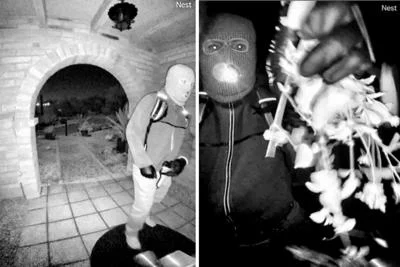
Authorities have not confirmed the existence of any video showing a suspect, nor have they released any suspect descriptions.
Public Appeal and Reward Announcement
As part of the investigation, officials announced a reward for credible information leading to Nancy Guthrie’s location. Reward announcements are designed to encourage individuals with relevant knowledge to come forward.
Law enforcement has urged anyone with direct information to contact authorities rather than post on social media. Officials have cautioned that online speculation can complicate investigations and divert resources.
The public appeal emphasizes verified communication channels and responsible reporting.
National Attention and Professional Impact
Because Nancy Guthrie is the mother of Savannah Guthrie, a prominent journalist with NBC, the case has received extensive national coverage.
Savannah Guthrie has temporarily stepped away from certain professional obligations in order to focus on her family. Public statements have expressed gratitude for support while reiterating the importance of factual reporting.
Despite the media spotlight, investigators have maintained a consistent message: the focus remains on evidence, not public pressure.
Medical Considerations and Urgency
Authorities have acknowledged that Nancy Guthrie had medical needs requiring regular care. While specific health details have not been publicly disclosed, officials have indicated that her age and health status contribute to the urgency of the investigation.
In cases involving elderly individuals, medical vulnerability increases time sensitivity. This has influenced the prioritization of resources and investigative intensity.
Officials have not confirmed whether medications were left behind or whether medical equipment was involved. Such details remain confidential unless formally released.
Status as of February 23, 2026
As of the latest official updates:
- Nancy Guthrie was last seen on January 31, 2026.
- Her home is being treated as a crime scene.
- Evidence suggests she did not leave voluntarily.
- The case is being investigated as a suspected abduction.
- The FBI is assisting local authorities.
- The family is cooperating fully.
- No arrests have been made.
- No suspects have been publicly identified.
The investigation remains active and ongoing.
As the disappearance of Nancy Guthrie entered its second and third weeks, the investigation continued to expand in both scope and complexity. Law enforcement agencies maintained a careful balance between public transparency and investigative confidentiality. While officials provided verified updates, they also emphasized the importance of protecting sensitive details that could affect evidentiary integrity or future legal proceedings.
This section outlines the investigative procedures that have been publicly confirmed, the role of forensic science, interagency coordination, and the broader operational strategy guiding the search effort as of February 23, 2026.
When deputies from the Pima County Sheriff’s Department conducted the initial welfare check at Nancy Guthrie’s residence in the Catalina Foothills area of Tucson, they encountered conditions that led investigators to formally classify the home as a crime scene.
Under established investigative protocol, once a scene is designated as potentially criminal in nature, strict preservation procedures are implemented. The property would have been secured with restricted access, and entry logs maintained to document every individual who entered or exited the site. Crime scene technicians typically photograph and document the scene extensively before any items are moved or collected.
Sheriff Chris Nanos confirmed publicly that biological and physical materials were collected from inside the residence. While authorities have not described the exact nature of these materials, it is standard practice in suspected abduction investigations to collect:
- Biological samples for DNA analysis
- Trace evidence such as fibers, hair, or residues
- Potentially disturbed household items
- Digital devices such as phones or computers
Evidence collected at a residence undergoes chain-of-custody documentation, ensuring that every transfer of material is recorded. This process protects the reliability and admissibility of evidence in court.
Officials have made it clear that not all details can be disclosed publicly while laboratory testing remains ongoing. Releasing premature or incomplete forensic information could compromise the investigation.
Forensic Analysis: Laboratory Examination and Evidence Interpretation
Once biological or trace materials are collected, they are sent to accredited forensic laboratories for examination. In cases involving suspected abduction, testing may include:
- DNA profiling
- Blood pattern analysis
- Latent fingerprint examination
- Chemical analysis of trace substances
Authorities have acknowledged that forensic testing is underway but have not released specific results. This restraint is consistent with best practices. In active investigations, public release of forensic findings occurs only when doing so will not jeopardize ongoing work.
Forensic timelines can vary depending on the complexity of the evidence and laboratory workload. High-priority cases may receive expedited processing, particularly when an elderly individual with medical needs is involved.
Investigators must interpret laboratory results within the broader investigative framework. Forensic findings alone rarely solve a case; instead, they are integrated with witness statements, digital records, and reconstructed timelines.

Timeline Reconstruction and Victimology
One of the central components of any missing persons or suspected abduction investigation is timeline reconstruction. Detectives work to account for the subject’s movements, communications, and interactions in the hours leading up to their disappearance.
In Nancy Guthrie’s case, the last confirmed sighting occurred on January 31, 2026, when she was dropped off at her home after spending time with family. That confirmed timestamp provides a critical anchor point.
From there, investigators typically analyze:
- Phone call logs
- Text messages
- Email activity
- Security system data
- Smart home device logs
- Vehicle telemetry, if applicable
Victimology—the study of the victim’s lifestyle, routines, and social connections—is another essential element. Investigators assess daily habits, known associates, medical needs, and recent changes in routine. The purpose is not to assign blame but to identify patterns that could clarify risk factors or potential motives.
Authorities have not publicly disclosed specific findings from their timeline reconstruction efforts. However, they have emphasized that the case remains active and that multiple investigative leads are being pursued.
Surveillance Review and Neighborhood Canvassing
Officials confirmed that surveillance footage from the surrounding Catalina Foothills area has been reviewed. In modern investigations, detectives often request footage from:
- Residential security systems
- Doorbell cameras
- Commercial establishments
- Traffic monitoring systems
Neighborhood canvassing is a labor-intensive but critical component of investigative work. Deputies may go door-to-door to identify witnesses who observed unusual activity, unfamiliar vehicles, or disturbances during relevant timeframes.
Sheriff Nanos has described the investigation as expanding, which typically indicates that canvassing efforts extended beyond the immediate residential block. In suspected abduction cases, investigators often widen the search radius incrementally based on emerging evidence.
Authorities have not announced whether any surveillance footage has revealed definitive leads. Public release of such information is generally avoided unless investigators believe it would directly assist in identifying a suspect or locating a missing individual.
Federal Assistance and FBI Resources
The involvement of the Federal Bureau of Investigation provides additional investigative capacity. The FBI frequently assists local agencies in suspected kidnapping cases, particularly when forensic complexity or cross-jurisdictional concerns arise.
Federal resources may include:
- Behavioral analysis specialists
- Digital forensics teams
- Geographic profiling support
- Advanced laboratory services
- National data system coordination
The FBI’s Child Abduction Rapid Deployment (CARD) team is often associated with cases involving minors; however, federal expertise extends to adult abduction investigations as well.
Authorities have emphasized that the FBI’s role is supportive and collaborative. The Pima County Sheriff’s Office remains the primary investigative authority, with federal agents contributing specialized tools and expertise.
There has been no public indication that investigators believe the case extends beyond Arizona’s jurisdiction. However, federal participation ensures that interstate coordination can occur quickly if needed.
Medical Considerations and Time Sensitivity
Officials have acknowledged that Nancy Guthrie had medical needs requiring regular care. While specific conditions have not been publicly disclosed, her age—84—naturally increases vulnerability.
In missing persons investigations involving elderly individuals, particularly those who may require medication or medical supervision, urgency is heightened. Time becomes a critical factor in both search operations and investigative prioritization.
Authorities have not confirmed whether medication was left inside the residence or whether medical devices were involved. Absent official confirmation, no assumptions should be made.
The public messaging from law enforcement has reflected concern for her well-being while avoiding speculative statements. This approach ensures accuracy while reinforcing the seriousness of the situation.
Public Communication and Information Management
High-profile investigations present unique communication challenges. Because Nancy Guthrie is the mother of Today co-anchor Savannah Guthrie, national media coverage intensified quickly.
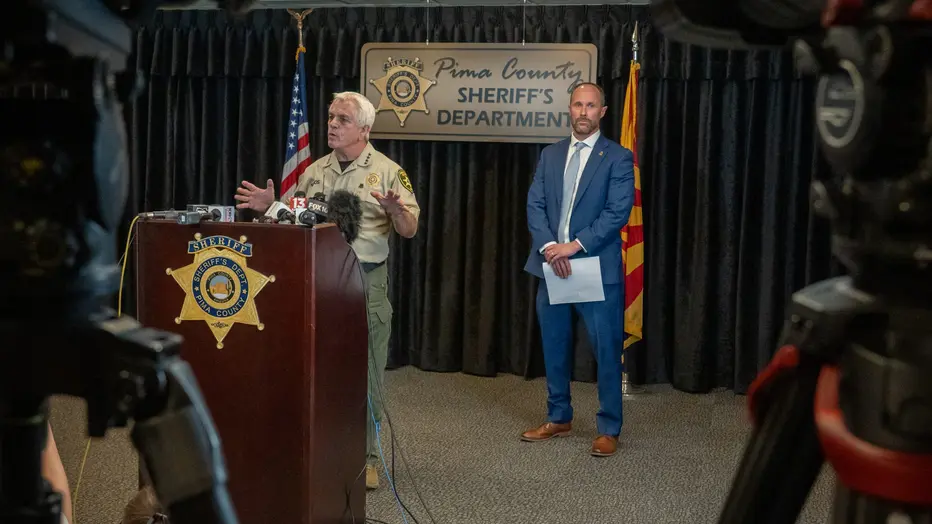
Law enforcement agencies typically designate a single spokesperson to maintain message consistency. Sheriff Chris Nanos has provided periodic updates, reinforcing that the investigation is active and that evidence suggests Nancy did not leave voluntarily.
Officials have repeatedly asked the public to rely on verified information rather than online speculation. In the digital era, rumors can circulate rapidly, potentially interfering with investigative strategy.
Responsible public communication serves several purposes:
- Encouraging credible tips
- Preventing misinformation
- Protecting investigative integrity
- Maintaining community trust
Authorities have not indicated that misinformation has directly disrupted the investigation, but cautionary messaging suggests awareness of the risk.
Reward Announcement and Tip Management
Investigators have announced a reward for credible information leading to Nancy Guthrie’s location. Reward incentives are commonly used in cases where community knowledge may play a role.

Tip lines are typically monitored by trained personnel who categorize and prioritize incoming information. In high-profile cases, tip volume can increase substantially, requiring careful triage.
Each tip is assessed for credibility, corroboration potential, and consistency with known evidence. While many tips may ultimately prove unrelated, investigators treat each submission seriously until verified.
Law enforcement has not disclosed the number of tips received or whether any have resulted in significant breakthroughs.
The Family’s Cooperation and Public Statements
Sheriff Nanos has publicly stated that Nancy Guthrie’s family has been cooperative throughout the investigation. Cooperation typically includes:
- Participating in interviews
- Providing access to relevant information
- Assisting with timeline clarification
- Supporting investigative requests
Savannah Guthrie and her sister Annie have expressed appreciation for public support while requesting privacy. In high-visibility cases, families often face both sympathy and scrutiny. Law enforcement has not identified any family member as a suspect.
Maintaining investigative objectivity is critical. Authorities have reinforced that conclusions will be based on evidence rather than public pressure.
Search Operations and Geographic Considerations
In addition to forensic and digital analysis, physical search operations are a key component of suspected abduction cases. While officials have not detailed every operational step, it is standard for law enforcement to coordinate:
- Ground search teams
- K-9 units trained in scent detection
- Aerial support when warranted
- Targeted searches based on intelligence leads
The Catalina Foothills region includes residential neighborhoods, desert terrain, and open land areas. Search planning in such environments requires careful coordination to ensure both thoroughness and safety.
Authorities have not disclosed specific search locations beyond confirming that investigative efforts are ongoing.
The Broader Impact on the Tucson Community
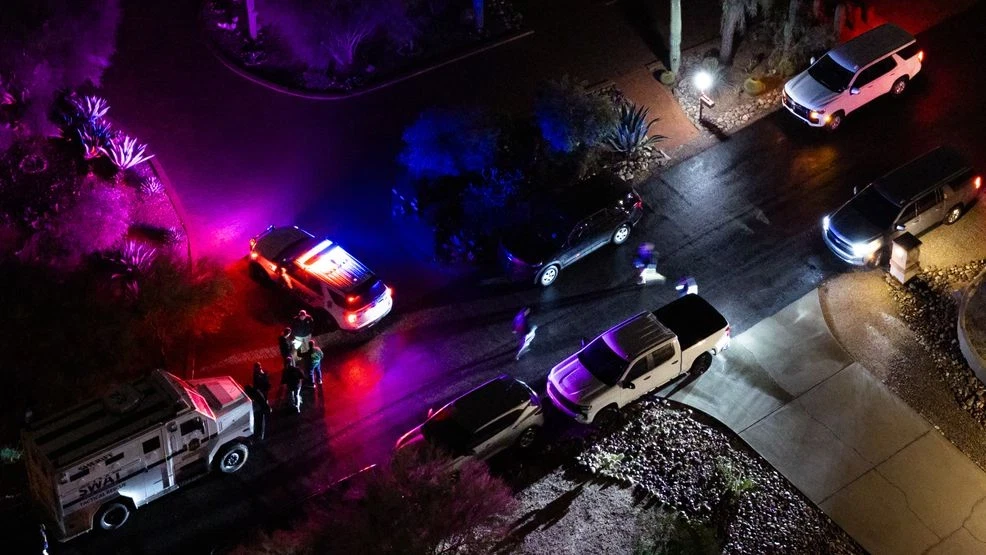
The disappearance has deeply affected the Tucson community. Increased law enforcement presence in the Catalina Foothills area has been visible, with patrol vehicles, forensic teams, and interview activity drawing attention.
Community members have organized volunteer efforts, though officials have emphasized that such activities should occur in coordination with law enforcement to avoid compromising evidence.
Public interest remains steady, and local leaders have encouraged respectful engagement while avoiding speculation.
Investigative Patience and Methodical Progress
Investigations of this nature are rarely resolved immediately. Evidence analysis, laboratory testing, digital data review, and cross-agency coordination require time.
Officials have emphasized that thoroughness is essential. Premature conclusions or incomplete disclosures could undermine eventual legal proceedings.
As of February 23, 2026:
- No arrests have been made.
- No suspects have been publicly identified.
- Forensic analysis remains ongoing.
- The investigation continues to expand.
Law enforcement leadership has maintained that every credible lead is being pursued.
Continuing Efforts and Unanswered Questions
While investigators have provided confirmed updates, many questions remain unanswered:
- What specific evidence led to the abduction classification?
- Have forensic results clarified the timeline?
- Did surveillance footage capture relevant activity?
- Is there a defined motive?
Authorities have not publicly addressed these points in detail. Such restraint reflects standard investigative practice rather than a lack of progress.
The case remains active, structured, and evidence-driven.
As the investigation into the disappearance of Nancy Guthrie continues, the case remains both legally complex and emotionally significant. By late February 2026, the matter had evolved into a sustained, high-priority operation involving local and federal authorities, forensic specialists, and coordinated community awareness efforts.
While Parts One and Two examined the confirmed timeline and investigative developments, this final section provides a broader, in-depth look at the legal standards governing suspected abduction cases, the procedural safeguards that protect investigative integrity, the role of responsible media coverage, and the path forward as authorities continue their work.
As of February 23, 2026, all publicly available information confirms that the investigation remains active, no arrests have been announced, and no suspects have been publicly identified.
The Legal Classification of Suspected Abduction Cases
When law enforcement determines that evidence suggests a person did not leave voluntarily, a missing persons report can be reclassified as a suspected abduction. In Nancy Guthrie’s case, the Pima County Sheriff’s Office publicly confirmed that physical findings at her Tucson residence led investigators to treat the situation as a potential criminal act.
Under Arizona law, unlawful imprisonment, kidnapping, or related offenses require specific evidentiary elements. However, at the investigative stage, authorities are not required to formally charge a suspect before classifying a case as suspicious or criminal in nature. Instead, they rely on physical evidence, forensic indicators, and contextual factors.
Classifying a case as suspected abduction does not mean that every detail has been conclusively proven. It indicates that investigators have found sufficient evidence to believe the disappearance may involve criminal conduct.
This distinction is important. Law enforcement must balance transparency with procedural caution. Premature legal conclusions can complicate prosecution or jeopardize future court proceedings.
Due Process and Investigative Restraint
One of the most critical aspects of high-profile investigations is adherence to due process. Even in cases that attract intense public attention, investigators must ensure that:
- Evidence is collected legally.
- Warrants are obtained when required.
- Interviews are conducted within constitutional boundaries.
- Suspect rights are preserved.
- Public statements do not prejudice potential juries.
Sheriff Chris Nanos has emphasized that the investigation is active and expanding but has refrained from disclosing detailed forensic findings. This approach reflects standard law enforcement practice.
In cases involving significant media coverage, public pressure can mount quickly. However, investigators must base decisions on verified evidence rather than speculation or commentary.
If charges are eventually filed, the prosecution would need to establish guilt beyond a reasonable doubt. Every investigative step taken now contributes to that potential future legal process.
Forensic Evidence and Court Admissibility
As discussed previously, biological and physical materials were collected from Nancy Guthrie’s home. Forensic evidence must meet strict evidentiary standards to be admissible in court.
These standards include:
- Proper chain of custody documentation.
- Laboratory accreditation.
- Scientific reliability under evidentiary rules.
- Qualified expert testimony.
If DNA, trace materials, or digital evidence play a role in the case, each piece must be processed and analyzed according to established forensic protocols.
Even strong forensic findings may require corroboration. For example, DNA evidence may establish presence but not necessarily intent or timing. Therefore, investigators integrate forensic data with digital records, witness accounts, and reconstructed timelines.
Authorities have not released laboratory results publicly, which is consistent with preserving evidentiary integrity.
Digital Evidence in Modern Investigations
In contemporary criminal investigations, digital evidence often plays a central role. While officials have not disclosed specific digital findings in this case, standard investigative procedures typically include analysis of:
- Cellular phone location data.
- Call and message logs.
- Smart home device records.
- Security system access logs.
- Vehicle GPS information, if available.
Digital evidence can help narrow timeframes and clarify movement patterns. However, such data must be obtained legally, often through court-authorized warrants.
Because digital records can be complex, analysis may require specialized technical expertise, including support from federal agencies such as the FBI.
Again, authorities have not disclosed specific results, and no conclusions should be drawn beyond publicly confirmed statements.
The Role of Federal Coordination
The involvement of the Federal Bureau of Investigation reflects the seriousness of the case. In suspected abduction matters, federal participation may provide:
- Advanced forensic laboratory capabilities.
- Behavioral analysis expertise.
- National database coordination.
- Interstate investigative support, if needed.
Although there has been no public confirmation that the case extends beyond Arizona, federal coordination ensures rapid response if cross-jurisdictional elements emerge.
Interagency cooperation is common in complex cases and does not imply any specific theory about the crime. It strengthens investigative capacity while maintaining local jurisdictional leadership.
Media Coverage and Ethical Reporting
Because Nancy Guthrie is the mother of Savannah Guthrie, co-anchor of NBC’s Today program, the case has received widespread national coverage.
Media attention can serve positive purposes:
- Raising public awareness.
- Encouraging credible tips.
- Maintaining transparency.
- Highlighting community support.
However, ethical reporting standards require that outlets distinguish between verified facts and speculation. Law enforcement has encouraged reliance on official updates rather than unverified online commentary.
High-profile cases sometimes generate internet theories, but responsible journalism focuses on confirmed information. Protecting investigative integrity ensures that public interest does not interfere with due process.
Savannah Guthrie and her family have requested privacy while cooperating with authorities. Respecting those boundaries remains essential.
Community Involvement and Responsible Support
The Tucson community, particularly residents of the Catalina Foothills area, has responded with concern and solidarity. Volunteer efforts and community outreach reflect genuine support.
Law enforcement has emphasized that all search activity should occur in coordination with investigators. Uncoordinated searches may unintentionally disturb evidence or complicate official operations.
Authorities encourage individuals with credible information to contact law enforcement directly rather than share unverified claims publicly.
Community cooperation remains one of the most important tools in missing persons investigations.
The Psychological Impact of Prolonged Uncertainty
While investigators focus on evidence, families endure emotional strain. Prolonged uncertainty can create intense psychological stress. High-profile visibility may amplify that burden.
Public statements from the Guthrie family have emphasized gratitude for support while avoiding speculation. Law enforcement has confirmed their cooperation.
Maintaining compassion and respect is crucial. Behind every investigation is a family seeking clarity and resolution.
What Remains Confirmed as of February 23, 2026
To maintain clarity and accuracy, the following points remain publicly confirmed:
- Nancy Guthrie, 84, was last seen on January 31, 2026, in Tucson, Arizona.
- Her residence was designated a crime scene.
- Authorities believe she did not leave voluntarily.
- The case is being investigated as a suspected abduction.
- The FBI is assisting local law enforcement.
- The family is cooperating fully.
- No arrests have been announced.
- No suspects have been publicly identified.
- The investigation remains active and ongoing.
No official statements have confirmed a motive, named a person of interest, or disclosed detailed forensic conclusions.
The Path Forward
Investigations of this nature proceed in stages:
- Scene stabilization and evidence collection.
- Laboratory testing and digital analysis.
- Lead development and verification.
- Coordination across agencies.
- Public communication updates.
- Potential prosecutorial review if charges are warranted.
These stages do not always unfold sequentially. Often, multiple phases occur simultaneously.
Authorities have reiterated that thorough, methodical investigation is essential. Speed cannot come at the expense of accuracy.
Legal and Procedural Possibilities
While no charges have been announced, several legal outcomes remain theoretically possible in any suspected abduction case:
- Recovery of the missing individual.
- Arrest and prosecution if criminal responsibility is established.
- Reclassification if evidence leads in a different direction.
- Continued investigation if evidence remains inconclusive.
At this stage, it would be inappropriate to speculate on outcomes. Law enforcement has not indicated a timeline for resolution.
The Importance of Evidence-Based Conclusions
Public interest can create urgency, but investigators must follow evidence wherever it leads. Responsible criminal investigations rely on:
- Scientific analysis.
- Documented interviews.
- Legally obtained records.
- Objective evaluation of findings.
Speculation can undermine public understanding and potentially affect legal proceedings.
Sheriff Chris Nanos has consistently described the investigation as active and expanding. That language indicates ongoing work rather than stagnation.
A Case Still in Motion
As February 2026 progresses, the disappearance of Nancy Guthrie remains unresolved. Detectives continue to analyze evidence, evaluate tips, and coordinate with federal partners.
There is no official confirmation of a suspect, no announced motive, and no public forensic summary beyond acknowledgment of collected materials.
The central objective remains locating Nancy Guthrie and determining the circumstances surrounding her disappearance.
