
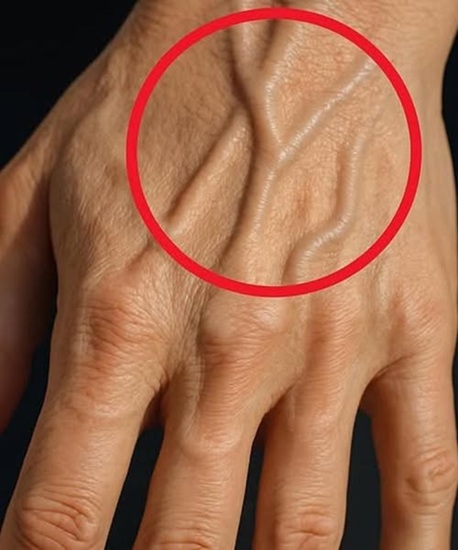
Have you ever looked at the backs of your hands and wondered why bright blue veins seem to stand out so clearly, especially in certain lighting or when your skin is stretched?
Those prominent blue veins are not random lines under your skin — they are part of the superficial venous system that lies just beneath the surface and plays a role in returning blood to the heart.
The color you see through your skin isn’t the actual blood color but rather how light penetrates tissues and reflects off veins at different depths, often making veins appear blue rather than red.
People with pale or light skin tones tend to notice their veins more because the contrast between vein color and skin is greater, making the vascular network easier to see.
Thin skin — whether from genetics, aging, or low body fat — allows veins to show more clearly because there’s less tissue between the veins and the skin surface blocking the view.
As we age, our skin naturally thins and loses elasticity, which frequently increases vein visibility on the hands, forearms, and even feet without necessarily indicating disease.

Activity level also plays a big role: when muscles contract, such as during exercise or lifting, the veins are pushed closer to the surface to accommodate increased blood flow.
This is why athletes and people who lift weights often have “pop‑out” veins — their muscle mass and cardiovascular conditioning make those vessels more visible.
Even everyday movements, such as extending your fingers or clenching a fist, can temporarily make the veins on your hands and forearms appear more pronounced.
During pregnancy, a woman’s blood volume increases significantly, which can make veins more prominent — in the hands, arms, legs, and abdomen — as the heart circulates more blood per minute.
The circulatory system adapts to this increased demand, and vein walls may dilate to handle the larger volume of blood, making them appear larger or darker.
Environmental factors such as heat exposure enlarge blood vessels in an effort to cool the body, often making veins appear more visible on the skin’s surface.
Dehydration can also play a part; when fluid levels drop, the volume beneath the skin shrinks, making veins more distinct without indicating underlying disease.

Genetics plays a significant role in how visible veins appear: some people simply inherit a vein pattern or skin structure that makes vessels show up more clearly.
Visible veins alone, in the absence of symptoms like pain or swelling, are most often a normal physical variation and not a sign of serious medical problems.
However, there are times when changes in vein appearance — especially when accompanied by discomfort — should prompt evaluation by a healthcare provider.
One such condition is varicose veins, which commonly affect the legs but can occasionally be noticeable on the hands, especially with aging or weakened connective tissue.
Varicose veins occur when vein valves weaken and allow blood to pool, causing the vein to enlarge, twist, and become more noticeable through the skin’s surface.
These veins often look rope‑like or bulged and may be accompanied by sensations of heaviness, aching pain, or a feeling of warmth around the vein.
People who spend long hours standing, have a family history of vein disease, or are overweight are more likely to develop varicose veins over time.
Varicose veins themselves are usually not dangerous, but they can cause chronic discomfort, heaviness in the limbs, itching, and cosmetic concern.

Deep underneath the skin, there are larger veins that carry much more blood; problems in these vessels can be more serious and require prompt care.
One important condition to recognize is deep vein thrombosis (DVT), where a blood clot forms in a deep vein, reducing blood flow and potentially causing dangerous complications.
Symptoms of DVT typically include persistent swelling in one limb, pain that does not improve with rest, and localized warmth or tenderness in the affected area.
Left untreated, a clot from DVT can travel to the lungs and cause a pulmonary embolism (PE), a serious and potentially life‑threatening condition that requires emergency care.
Sometimes superficial veins can also become inflamed — a condition called superficial thrombophlebitis — which can cause redness, tenderness, and swelling along the vein’s path.
Although superficial thrombophlebitis is less dangerous than DVT, it still benefits from medical evaluation to rule out deeper vein involvement or underlying triggers.
Other vascular issues like chronic venous insufficiency (CVI) develop when vein valves fail to return blood efficiently, leading to blood pooling and increased pressure in the leg veins.
Symptoms of CVI include swelling, aching, skin discoloration, and, in advanced cases, venous ulcers around the ankles that are slow to heal without treatment.

To evaluate vein health, doctors often use venous duplex ultrasound, a noninvasive imaging test that shows blood flow, vein structure, and valve function in real time.
Healthcare providers use this information to differentiate between benign visible veins and those associated with structural problems or blood flow abnormalities.
For many individuals, simple visible veins are purely cosmetic and do not require treatment, especially if there are no symptoms like pain, swelling, or skin changes.
However, a sudden change in how your veins look or feel — especially if accompanied by discomfort or inflammation — should prompt you to talk to a clinician.
Healthy lifestyle habits can support vein and circulatory health and reduce symptoms associated with vein prominence or discomfort over time.
Regular physical activity — such as walking, swimming, and gentle stretching — helps improve blood circulation and reduces pressure in superficial and deep veins.
Maintaining a healthy weight reduces strain on veins, particularly in the legs, where gravitational pressure contributes to blood pooling and increased vein visibility.
Avoiding long periods of sitting or standing without movement is important; taking short walks and flexing feet and hands improves circulation throughout the day.

Quitting smoking is essential for vascular health, as smoking damages blood vessel walls, increases inflammation, and raises the risk of clot formation and circulatory disease.
Wearing loose‑fitting clothing that does not compress veins is also helpful, as tight garments can restrict blood flow and make veins work harder to return blood to the heart.
Elevating your hands or legs periodically when resting encourages venous return, reducing swelling and helping blood move more efficiently back toward the heart.
For people with more pronounced venous symptoms, compression therapy can be beneficial, particularly for varicose veins or mild venous insufficiency.
Compression stockings apply controlled pressure that supports vein walls and valves, helping blood flow upward and decreasing discomfort and swelling.
If varicose veins become painful or interfere with daily activities, medical interventions may be considered, ranging from outpatient procedures to minimally invasive therapies.
Sclerotherapy involves injecting a solution into the vein, causing it to collapse and redirecting blood flow to healthier vessels without surgery.
Other procedures such as endovenous laser therapy (EVLT) or radiofrequency ablation use heat to seal problematic veins and improve overall venous circulation with minimal recovery time.
More extensive cases may benefit from surgical options like vein ligation and stripping, though these are typically reserved for severe or refractory vein disease after conservative measures fail.
Recovery from vein treatments varies but is generally well tolerated; most patients return to regular activities within a few days with guidance from their vascular specialist.
Backing up these treatments with supportive lifestyle changes often yields the best long‑term outcomes and helps keep venous symptoms at bay.
Nutritional habits also influence vein health; diets rich in leafy greens, berries, citrus fruits, lean proteins, and healthy fats provide antioxidants and nutrients that support vascular function.
Staying well hydrated supports proper blood volume and flow, which can help veins function efficiently and reduce excessive prominence due to dehydration.
Some supplements — such as flavonoids found in fruits — have been studied for potential benefits in supporting vein wall integrity, but always consult your doctor before starting any new supplement.
Vein prominence can be influenced by several factors beyond genetics and activity, including hormonal changes, weight gain, and conditions that affect blood volume or pressure.
For example, fluctuating hormones during menstrual cycles or pregnancy can alter blood vessel behavior, making veins appear more visible at certain times.
Certain medications and medical conditions also influence circulation and vein visibility, which is why discussing symptoms with a clinician helps ensure an accurate interpretation.
Dermatologists and vascular specialists distinguish between purely cosmetic veins and those associated with structural or flow abnormalities that benefit from clinical evaluation.
When vein changes occur suddenly, cause pain, or interfere with daily life, seeking medical advice helps rule out serious conditions and guide appropriate care.
Often, knowing what is normal versus what warrants attention gives people confidence and reduces anxiety about a body feature that many share.
Research shows that visible veins are extremely common, especially among adults who are physically active, older, or have lighter skin tones, and in most cases, they’re harmless.
Data from trusted clinics indicate that visible superficial veins and mild varicose veins affect a significant portion of adults, with prevalence increasing with age.
Even in people with varicose veins, symptoms range widely — from purely cosmetic to mildly uncomfortable — and individualized care plans reflect these differences.
Many individuals find that careful monitoring, lifestyle adjustments, and medical support when needed help them maintain vascular health without worry.
Visible blue veins may be startling at first, but understanding normal variations and signs of concern helps you make informed choices about your own body.
Veins are essential components of your circulatory system, quietly performing the critical task of returning blood to the heart even when they seem conspicuous.
Consulting a medical professional for persistent symptoms ensures that changes in your veins are evaluated accurately and that you receive appropriate guidance.
If your veins bulge, throb, or seem inflamed, your body might be signaling an underlying condition that deserves attention rather than hesitation.
Ultimately, veins that are simply visible aren’t usually harmful, but those associated with pain, swelling, or rapid changes should prompt you to seek medical advice.
Learning to distinguish between normal anatomical features and potential warning signs empowers you to take control of your vascular health.
Your veins tell a story about how your circulatory system functions — and with attentive care, that story can be one of resilience and wellbeing.
