
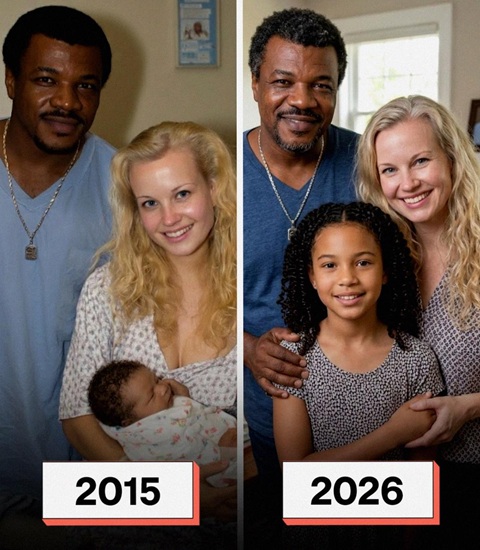
I thought it was harmless — just a school project. My daughter, Tiffany, had come home from school bubbling with excitement, a genetics kit in her backpack. She explained the assignment: swab the mouths of family members, send the samples to the lab, and learn about heredity, ancestry, and how traits are passed down. A simple, educational exercise, I had thought.
I never expected that small plastic swab would unravel the life I thought I knew.
Greg had refused immediately. “No way. Not participating,” he said, his jaw tight and hands folded over his chest. I tried to reason, to explain that it was just for school, that the results were harmless, anonymous even. But he was adamant, shaking his head. “I don’t trust these companies. They track everything. DNA is private. End of discussion.”
At first, I had let it go. I told Tiffany she could swab me and herself. We’d do her homework together, laugh about the silly trait charts, the freckles, the earlobe shapes, the dimples. I’d even helped her compare our eye colors, the curl of our hair, the shape of our noses — little things she had inherited from me. But Greg’s refusal gnawed at me. It wasn’t just a boundary; it was an absolute wall between him and the family experience, and something inside me didn’t want to accept that.
Weeks later, curiosity and a gnawing unease drove me to act. I did it behind his back. I mailed his swab along with ours. I rationalized it to myself: Tiffany deserved complete results, a full set of family DNA. I wasn’t betraying him; I was preserving the integrity of her project.
Then the results came.
I remember sitting in the kitchen, the winter sun slanting through the blinds, the kettle whistling faintly in the background. Tiffany had been at school. Greg was in the shower. I opened the email on my laptop and froze.
The first line confirmed my sanity in some way: Mother: Match. That was expected. That was safe.
The next line: Father: 0% DNA shared.
I read it again. And again. My fingers dug into the edge of the counter until my knuckles were white. My stomach turned. My mind raced, fumbling for rational explanations: lab error, mislabeling, something… anything. But then my eyes scanned down to the final line:
Biological Parent Match (Donor): 99.9%
And the name next to it hit me like a punch to the chest: Mike.

Not a stranger. Not an anonymous donor. Not some faceless mistake. Mike — Greg’s best friend, our constant presence in the household for years, the man who had celebrated promotions with us, changed Tiffany’s diapers, and lent a hand when I had cried myself through sleepless nights.
I sank into a chair, trying to process what this meant. How could this be? My mind refused to move past the shock. I was staring at undeniable proof that Greg had never been Tiffany’s biological father. That she had been conceived with the sperm of his best friend. And worse, that he had orchestrated it behind my back.
I picked up my phone with trembling hands and called the police. I wasn’t sure what I was expecting — advice, disbelief, procedural instructions. The woman on the line was professional, calm, cutting through the fog of shock that had paralyzed me.
“Ma’am, if your signature was forged for medical procedures, that’s a criminal offense. Which clinic handled your IVF?”
I gave her every detail, answering as steadily as I could manage. “I never signed for an alternative donor. Not ever.”
“Then you did the right thing by calling. We’ll contact the clinic and investigate.”
I screenshot the call log and the results, then set my phone down. Greg would be home in twenty minutes. I had to prepare myself. The knowledge was heavy, suffocating, but the worst part was knowing I could no longer act as though nothing had changed.
Three months earlier…
Tiffany had been bouncing around the kitchen like a tiny whirlwind, backpack straps askew, hair sticking out in every direction.
“Tiffany, slow down!” I laughed, catching the edge of a pile of mail that threatened to topple over. “You’re like a one-girl tornado!”
Her eyes sparkled as she held up the genetics kit. “Mom! We’re doing genetics! We have to swab our families and mail it in, like real scientists!”
“Okay, Dr. Tiffany. Shoes off, wash your hands, and we’ll see what we’re working with,” I said, still smiling.
Greg walked in then, distracted by the fridge and his phone, leaning casually against the counter. Tiffany ran to him, holding the sterile swab aloft like a trophy.
“Hey, bug. What’s all this about?” Greg asked.
“It’s my genetics project! Open up, Daddy! I need a sample from you and Mom!”
Greg looked at the swab. He looked at me. He looked at Tiffany. And then he stiffened. “No.”
Tiffany blinked. “But it’s for school, Daddy…”
“I said no,” Greg snapped. “I’m not putting my DNA into some surveillance system. End of discussion.”
I froze. I knew the line of control in our marriage, the balance of privacy, the limits we had always respected. But his voice was sharp, foreign, a knife cutting through the comfort of our home.
Tiffany’s face crumpled. Her small hands fell to her sides. “Is it because you don’t love me?”
“No, baby, of course not,” I said, stepping toward her. But Greg didn’t move. He grabbed the kit, crushed it in his hand, and tossed it into the trash. Then he left the room, leaving a silence heavy enough to press on the skin.
That night, Tiffany cried herself to sleep. And I held my heart together as I thought about the years we had spent trying to conceive — the IVF cycles, the needles, the endless waiting rooms. Greg had been there, supporting me through every appointment, but the distance had always existed between hope and despair.

And now it had grown a chasm.
That night, while Tiffany slept, Greg caught my wrist as I reached for the trash. “Promise me you won’t do anything with that kit,” he whispered.
“Greg, what are you talking about?”
“We don’t need to know everything, Sue,” he said.
I looked at him, seeing the man I had married, the man who had once been my partner in everything, now a stranger in my own kitchen. And I realized — some truths, when revealed, could not be unseen.
The swab waited in my drawer for weeks, a silent, accusatory reminder that our family was on the edge of a revelation that would change everything.
When I finally sent it, I didn’t feel sneaky or vengeful. I felt like a mother doing her duty. Tiffany deserved the truth. And I was ready to face whatever storm it would bring.
The email came back on a Tuesday. Greg was in the shower. I opened the message with trembling hands, and my world collapsed.
Greg emerged from the shower, steam curling around him like some invisible warning. I set the laptop carefully on the kitchen counter, the results still glowing on the screen, and waited for him to notice.
His eyes flicked to it, widened, and then narrowed. “Please… Sue…” His voice trembled, caught somewhere between fear and desperation.
I swallowed and took a deep breath. “Tell me why you have zero DNA in common with Tiffany.”
Greg’s hands clenched the edge of the chair, knuckles white. “She’s mine,” he said, voice low but firm.
“Yes… but not biologically. Right?” I asked, each word precise, measured.
He swallowed hard, eyes dropping to the floor. “I couldn’t give you a baby, Sue. I tried… so many times. And I failed. I was the reason we couldn’t do it.”
I felt my heart stop for a moment. “So what… what you did, then? You borrowed Mike’s… genes without asking me?”
Greg’s silence was deafening. My mind raced. Mike — my husband’s best friend, someone I had trusted completely — had been part of this? My daughter’s biological father, by design, by secret, by choice?
“Did you forge my signature at the clinic?” I asked, each word sharp, slicing through the fog of disbelief.
Greg looked up, eyes glistening with guilt. “I didn’t have a choice.”
I shook my head. “You always had a choice. You just didn’t like the ones that required honesty.”
The next morning, I drove straight to Mike and Lindsay’s house. My hands shook as I rang the bell. Lindsay answered, dressed in gray leggings, coffee in hand, eyebrows raised in concern.
“Sue? You look like you haven’t slept. What’s going on?”
“I need to talk to Mike. Now,” I said, my voice steadier than I felt.
Mike came into the hallway, his face falling when he saw me. “Sue…”
“You knew? All this time?” I demanded. “You knew the truth about my daughter?”
“I knew,” he admitted, his voice low, heavy.
Lindsay’s head snapped toward him. “Knew what?”
Mike ignored her. He met my eyes, and I could see the weight of guilt pressing down on him. “Greg was falling apart. He felt useless. He said you wanted a baby more than anything, and he couldn’t provide that. He asked for help.”
“Help?” I spat, disbelief curdling in my throat. “You call this help?”
Mike’s voice cracked. “I thought I was saving your marriage. I thought I was… giving you a gift. Something private. No one would know. Just biology.”
Lindsay shook her head, silent and judgmental. “A gentleman’s agreement? About another woman’s body? Are you kidding me?”
“You both decided we didn’t deserve the truth,” I said, voice rising, heart pounding. “You made a decision for me and my daughter without even asking us.”
Minutes later, I called the police. Not out of anger at Greg, though it simmered deep inside me. This wasn’t just betrayal — it was fraud, medical violation, and consent forgery. It was illegal. It was wrong. Tiffany deserved the truth, and I couldn’t let them take it away from her.
Greg packed his suitcase later that day, trying to smooth over the chaos he had created. “Sue…” he started, his voice pleading.
“No,” I said firmly. “We’ll answer questions at the station. You can talk to your mother if you need to, but not here. Not in my home. Not in Tiffany’s home.”
He swallowed hard, defeated, and called his mother. I overheard the silence on the speakerphone, her incredulity filling the room, before he zipped his suitcase and left. That was the moment I realized our marriage was over.

The police station was sterile, fluorescent lights buzzing softly overhead. Greg sat across from us, hands clasped, his face red and exhausted. Tiffany clung to me, holding my hand as if we could anchor each other through this storm.
“Did you submit another man’s DNA to the clinic?” the officer asked, voice calm but firm.
“Did you forge your wife’s consent?”
Greg nodded, defeated, unable to meet anyone’s gaze.
Lindsay sat nearby, arms folded, jaw tight. She didn’t speak, but I felt the solidarity in her silence. Tiffany hugged me tightly, her small frame trembling. “Mom, is he still my dad?”
I held her closer. “He’s the man who raised you. That won’t change, honey. But how we move forward? That’s what we’ll decide together.”
Greg’s calls became brief, infrequent. He never asked to come home. And I didn’t offer. I was done pretending that we could return to the life we had known. Tiffany needed stability, truth, and love — not half-truths and hidden betrayals.
Weeks later, Lindsay came over with cupcakes and a paint-by-numbers kit. Tiffany sat cross-legged on the floor, absorbed in the colors, her laughter light and genuine. “Are you mad at Uncle Mike?” she asked innocently.
Lindsay shook her head, smiling. “I’m mad that grown-ups lied. I’m mad people made selfish choices. But not at you, sweetheart. Never at you.”
I stood in the doorway, holding a dish towel I didn’t need, and watched my daughter’s shoulders relax. I realized that truth could hurt, yes, but it could also free. It could rebuild trust where deceit had broken it.
That night, Tiffany asked me again about Mike. I told her the only truth I could live with. “He’s your godfather. Nothing else. That’s how it will stay.”
Because biology can explain beginnings, but trust determines what comes next. And in that quiet kitchen, as Tiffany drifted to sleep, I knew that our family — fractured, betrayed, tested — would grow stronger. It would take time, patience, and courage. But we would move forward, grounded in truth, anchored in love.
The weeks following our visit to the police station felt like we were living in a suspended reality. Every knock at the door, every phone ring, made my heart jump. But we also had a new rhythm at home — a quiet, honest rhythm that Tiffany began to understand. She no longer asked about “Dad” in hushed tones. Instead, she started asking questions about what it meant to love, to forgive, and to rebuild.
I spent hours with her at the kitchen table, worksheets, crayons, and DNA charts spread across the surface. “Mom, can you tell me again why Uncle Mike is my godfather?” she asked one evening, her pencil hovering mid-air.
I smiled, brushing a strand of hair from her forehead. “Because he loves you. And he promised to always be there for you. That’s what a godparent does.”
“Even if he’s not my dad?”
“Even if he’s not your dad,” I confirmed. “Your dad is the one who raised you, and that’s the most important thing. Biology doesn’t define love.”
Meanwhile, the police investigation unfolded. Greg’s actions had crossed several legal lines — consent forgery, misrepresentation in medical procedures, and fraud. The officers were professional, but their presence was a constant reminder of betrayal. Every form we signed, every statement we gave, was meticulous and detailed, like we were reconstructing the truth piece by piece.
Greg was cooperative in the end, though his demeanor was a mix of shame and disbelief. He seemed smaller somehow, reduced by his own actions. During one of the interviews, the officer asked him pointedly, “Did you understand the implications of your actions?”

Greg’s eyes dropped. “I thought… I thought I was helping. I didn’t think it would hurt anyone.”
“By lying, forging documents, and putting a child at risk, you did more than hurt someone,” the officer replied. “You committed crimes.”
Mike and Lindsay were critical witnesses, recounting the “agreement” that had been made in private. They acknowledged that it had been a terrible choice, a misguided attempt at problem-solving that ignored consent and honesty.
In court, I watched Greg walk in alone, shuffling papers, looking fragile and anxious. He avoided eye contact with me and Tiffany, and I felt a quiet satisfaction knowing the truth was finally laid bare. The judge took weeks to review evidence, read witness statements, and consider the severity of Greg’s actions.
Tiffany sat on my lap during the hearings, leaning into me for comfort. She was old enough to understand some of what was happening, though I carefully shielded her from the most technical legal jargon. Instead, I explained things in terms she could grasp: “Some people make mistakes and have to be held accountable so everyone else stays safe. That’s what we’re doing here.”
When the gavel finally came down, the verdict was clear. Greg would face consequences for his violations — a combination of legal restitution, counseling, and supervised probation. Nothing could undo the betrayal, but justice was served, and Tiffany’s rights and safety were protected.
Returning home that evening felt surreal. The air smelled like rain from the storm that had passed, and for the first time in months, I felt a sense of calm. I made us dinner — simple tacos — and Tiffany helped me set the table. She smiled, lighter than she had in weeks.
“You’re smiling,” I said.
“I just feel… good,” she replied. “Like we can start over, Mom.”
We started rebuilding our lives, carefully, deliberately. We created new routines — Saturday mornings became baking days, evenings were reserved for reading together, and we even started a little garden in the backyard. Each seed we planted was a small act of growth, a symbol that life continues even after deception and heartbreak.
Lindsay became an integral part of that rebuilding. She was patient, kind, and unwavering in her support. Tiffany blossomed in her presence, finding joy and consistency that had been shaken by the previous months. We celebrated small victories — a completed school project, a sleepover at a friend’s house, a dinner without tears or tension.
One evening, while Tiffany and Lindsay painted a canvas together, she asked, “Mom, does Uncle Mike still like me?”
I laughed softly, brushing a smudge of blue paint from her cheek. “He loves you more than anything, Tiff. That will never change.”
“And Dad?” she asked quietly.
I took a deep breath. “He’s the man who raised you. That part doesn’t change either. But right now, he needs to earn our trust again, and that will take time.”
As the months passed, I realized something profound. Trust, once broken, can be rebuilt — but only with transparency, accountability, and love. Tiffany was learning this lesson naturally, and I was learning it alongside her. Our family wasn’t perfect, but it was real, and that authenticity made it stronger than any facade.
We marked our progress with small rituals: Sunday walks in the park, bedtime stories, and nightly reflections. Tiffany began writing in a journal, capturing her thoughts about school, friends, and even her feelings about her dad and the truth of her DNA. It was therapeutic, a safe way for her to process emotions that could otherwise be overwhelming.
Lindsay remained a steadfast ally. She and I shared late-night talks about parenting, integrity, and the balance between forgiveness and accountability. Her presence reminded me that family is not only defined by blood, but by loyalty, respect, and the choices we make to protect those we love.
By the time Tiffany’s next birthday rolled around, we were ready to celebrate fully. It wasn’t just a birthday — it was a milestone, a testament to resilience, honesty, and the power of rebuilding trust after profound betrayal. We decorated the house with balloons, baked a cake, and laughed as Tiffany opened her presents. The weight of past months felt lighter that day, replaced with a cautious but genuine sense of hope.
That night, as Tiffany fell asleep, I tucked her in and whispered, “We survived the storm, baby. And we’ll keep growing, together.”
She smiled in her sleep, and I knew she believed it.
I realized then that the true measure of family is not perfect beginnings, but the courage to face hard truths, the resilience to overcome betrayal, and the strength to nurture love in its most honest form. Our story, though marked by deceit and heartbreak, was ultimately about courage, accountability, and the unwavering bond between mother and child.
And as I turned off the lights and stepped into the quiet of the night, I felt a profound sense of closure. We had endured, we had acted with integrity, and most importantly, Tiffany and I had reclaimed our lives. Biology may define the start of life, but trust, love, and honesty define its meaning.
