
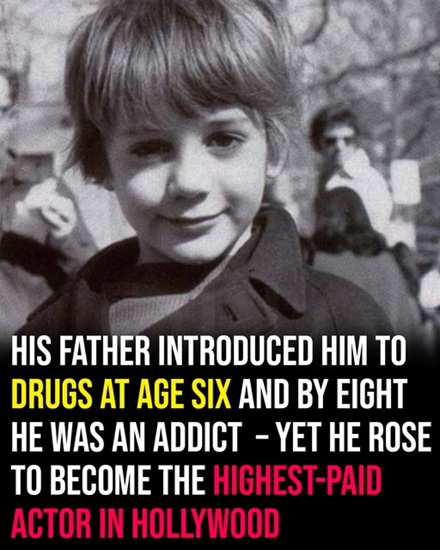
For decades, Robert Downey Jr. has stood as one of Hollywood’s most recognizable figures, his name synonymous with blockbuster success, cultural impact, and a storied career journey few could have predicted.
Born Robert John Downey Jr. on April 4, 1965, in Manhattan, New York City, he entered the world with film and performance already in his blood thanks to his creative parents.
His father, Robert Downey Sr., was a filmmaker known for underground, independent films, and his mother, Elsie Ann Ford, was an actress — both of whom shaped his early immersion in entertainment.
Growing up, Downey’s family moved frequently — from Greenwich Village and Woodstock to London and other locales — exposing him to varied artistic and cultural environments.
At just five years old, Downey made his screen debut in his father’s 1970 film Pound, launching a lifelong association with acting that would stretch across more than five decades.

Despite early promise, his childhood was complicated; Downey was exposed to drugs at a young age, including marijuana from his father, an experience he later said influenced emotional bonds and future struggles.
He has candidly recalled that using drugs with his father was framed as a form of affection — “his way of showing love” — a dynamic that complicated his growth.
As a teen, he trained in acting through performing arts programs and summer camps, building skills that would propel him into significant film work by his twenties.
Downey left high school as a teenager to pursue acting full time, embracing a path many of his peers found daunting, yet one that reflected his singular commitment to performance.
In the mid‑1980s, he began gaining significant attention with roles in films like Weird Science (1985) and Less Than Zero (1987), the latter mirroring some darker aspects of youth and excess.
His performance in Chaplin (1992) brought critical acclaim, earning him a BAFTA Award for Best Actor and an Academy Award nomination, solidifying his status as a serious talent.

Yet, even as his star rose, Downey struggled privately with drugs and alcohol, patterns that worsened through the late 1980s and into the 1990s as addiction took hold of his life.
His relationships and professional reliability began to suffer; his longtime relationship with actress Sarah Jessica Parker ended in 1991, in part due to the instability of his addiction.
By the mid‑1990s, Downey’s life had taken a darker turn, marked by multiple arrests related to substance possession, disorderly conduct, and probation violations that drained his finances and reputation.
In June 1996, police stopped him in Los Angeles for speeding and found heroin, cocaine, crack cocaine, and an unloaded .357 Magnum handgun in his vehicle, leading to significant legal consequences.
A month later, while on parole and under the influence, he wandered into a neighbor’s home and fell asleep on a bed — an incident that came to be widely publicized.
Downey pleaded no contest to the 1996 charges and received a sentence that included probation, mandatory drug testing, rehab, and continued court supervision — yet his addiction persisted.
Throughout the late 1990s, he cycled through rehab and jail; after repeatedly missing drug tests, he served six months in Los Angeles County Jail in 1997.
In 1999, he was sentenced to a three‑year term in the California Substance Abuse Treatment Facility and State Prison at Corcoran after further probation violations.

There, Downey experienced the harsh realities of incarceration, living without A‑list privileges, working low‑pay jobs, attending treatment sessions, and confronting the loss of professional opportunities.
Meanwhile, films he had completed were released without him, and he was deemed “uninsurable” by many studios, meaning producers feared hiring him due to potential unpredictability.
To make matters worse, his addiction contributed to the breakdown of his first marriage to actress Deborah Falconer, with whom he had a son, Indio, born in 1993.
Falconer filed for divorce in 2001, citing irreconcilable differences as the ongoing struggles took a toll; their separation was finalized in 2004.
In 2000, after nearly a year in incarceration and related facilities, a judge granted Downey early release based on cumulative time served, a pivotal turning point in his life.
Just one week after his release, he landed a role on the television series Ally McBeal, earning praise and a Golden Globe Award for his performance — a surprising and hopeful professional return.
Despite this success, he later admitted that period remained deeply intertwined with addiction and self‑destruction, and his recovery was far from complete.

His breakthrough into sustained sobriety began in 2003, when Downey made a conscious decision to rebuild his life, pursuing therapy, discipline, and healthier personal habits.
A crucial anchor in this transformation was his relationship with Susan Levin, a film producer whom he met on the set of Gothika in 2003 and later married in 2005.
Susan provided emotional support, stability, and structure that Downey later credited as essential to his sobriety and ability to focus on family and career success.
For years Downey struggled with relapse and setbacks, but his commitment to recovery became unwavering, aided by meditation, therapy, and a supportive network that held him accountable.
His film comeback accelerated with roles that showcased his range and renewed professionalism, including The Singing Detective (2003) and Kiss Kiss Bang Bang (2005).
Yet it was his casting as Tony Stark / Iron Man in 2008’s Iron Man that marked a definitive turning point, launching the Marvel Cinematic Universe and transforming him into a global superstar.
The gamble taken by Marvel Studios paid off enormously: Downey’s charismatic performance brought depth and complexity to the role, helping make the franchise a massive cultural phenomenon.
He would go on to reprise the role in ten Marvel films, culminating in Avengers: Endgame (2019) and grossing more than $14 billion worldwide, placing him among the highest‑grossing actors ever.

Between 2013 and 2015, Downey was named Hollywood’s highest‑paid actor, earning tens of millions per film and commanding top billing in blockbuster cinema.
Beyond the MCU, he delivered acclaimed performances in Tropic Thunder, Sherlock Holmes, Chaplin, and Oppenheimer, earning awards including an Academy Award, Golden Globes, and BAFTAs.
His role in Christopher Nolan’s Oppenheimer (2023) added further gravitas to his career, demonstrating versatility far beyond superhero fare.
Downey and Susan have built a grounded personal life, raising their children in Malibu while maintaining a commitment to family and community beyond Hollywood’s spotlight.
Despite his earlier battles, Downey has often spoken candidly about recovery, resilience, and accountability, becoming an inspiration for many facing similar struggles.
His life reflects a profound arc from early exposure to addiction and legal turmoil to disciplined recovery, professional renaissance, and personal growth.
Robert Downey Jr.’s career — from child actor to troubled star, jail inmate to Hollywood icon — remains one of the most remarkable comeback stories in entertainment history.
His journey demonstrates that even the most challenging chapters need not define one’s future, and that transformation is possible with determination, support, and self‑reflection.
