Margaret Carter had always believed that family was the cornerstone of life, an unshakable fortress in a world that often felt unpredictable and cold.
At seventy-eight, she carried herself with a quiet dignity, shaped by decades of resilience, love, and endurance.
She had weathered losses that would have fractured lesser hearts—the death of her parents in a tragic accident when she was still a young woman, the passing of close friends and neighbors, and, most devastatingly, the loss of her husband, Robert Carter, whose steady presence had been the anchor of her existence for more than forty years.
Their marriage had been a tapestry woven from shared dreams, sacrifices, and small daily rituals—a lifetime of whispered words over morning coffee, late-night walks in the garden, and the unspoken comfort of shared glances.
Robert had died peacefully in his sleep five years earlier, leaving Margaret alone in the house they had built together. She had adapted, gradually reshaping her world around routines that provided both comfort and stability: a morning spent reading the newspaper in the sunlit kitchen, afternoons tending to her modest garden, and quiet evenings with a cup of chamomile tea by the fireplace.
Her son, Paul, had become her lifeline. A devoted man in his forties, he had taken on the role of caregiver naturally, without complaint, visiting her daily and running errands, always ensuring that Margaret’s life remained as seamless as possible despite her aging body and diminishing mobility. She trusted him implicitly; after all, he was her son, and he had never given her reason to doubt him.
It was on a crisp winter afternoon that Margaret’s sense of security began to fracture in a way she could never have imagined. The sky was a pale, icy blue, with the sun hanging low and casting long, golden shafts across the snow-dusted streets.
Overnight, a light snowfall had left a delicate white blanket over her suburban neighborhood, the kind of winter beauty that might have inspired wonder in a child, but which now felt sharp and almost cutting against her cheeks. Margaret wrapped herself in the thick woolen coat Robert had given her decades ago, the one that smelled faintly of cedar and lavender—remnants of her late husband’s careful attention to detail—but even this comforting cocoon could not ward off the bite of winter.
Paul had called that morning with a cheerful tone, offering to take her out to run errands. It was a gesture he had made regularly over the past months, as Margaret’s mobility had declined and public transportation became less practical. She had been content, almost gleeful at the idea of a shared outing—a small but cherished ritual in her increasingly solitary life.
She had imagined the quiet moments in the car, the way they would discuss news articles, reminisce about family history, and share the occasional laugh. In her mind, this was how a day with family should feel: familiar, comforting, and predictable.
As they drove to the grocery store, the hum of the car engine filled the silence, mingling with the soft warmth of the heater. Outside, the snow sparkled faintly, catching the light in miniature crystals that twinkled as if the world itself were celebrating the mundane rhythm of life. Paul parked near the store entrance, helping Margaret out of the vehicle with the careful hands she had come to rely on. His smile was gentle, reassuring, and she returned it with a quiet trust that had been built over decades.

He handed her a small list of groceries, penned in neat handwriting, items meant to sustain her for the week: a loaf of whole-grain bread, fresh milk, a box of her favorite tea, crisp apples, and a selection of vegetables. “I’ll just circle around the block while you shop,” he said casually, as though nothing unusual could ever disrupt the life they had built together. Margaret nodded, her chest swelling with gratitude and comfort.
Inside the store, the atmosphere was warm and bustling, the kind of environment that Margaret had always appreciated. The smell of freshly baked bread mingled with the faint aroma of citrus-scented cleaning products, creating a strangely comforting ambiance. She moved carefully through the aisles, each step slightly stiff from arthritis but deliberate, her mind cataloging the items she needed.
Occasionally, she paused to admire the displays—perfectly arranged fruit, colorful boxes of tea, and glistening bottles of olive oil. She exchanged greetings with a familiar cashier, whose cheerful nod and quick smile felt like a small tether to the broader world.
Margaret moved slowly, savoring the familiar sensations—the rustle of plastic bags, the smooth feel of the polished fruit, the gentle chatter of shoppers nearby. Life, she thought, was built from these small, seemingly insignificant moments that formed the bedrock of normalcy. Paying at the register, she chatted briefly with a young mother about the challenges of shopping in winter, her voice warm, yet tinged with the slight tremor of age.
When she stepped back outside, the cold hit her like a physical force, stinging her cheeks and transforming her breath into tiny clouds that hung momentarily in the air before dissolving.
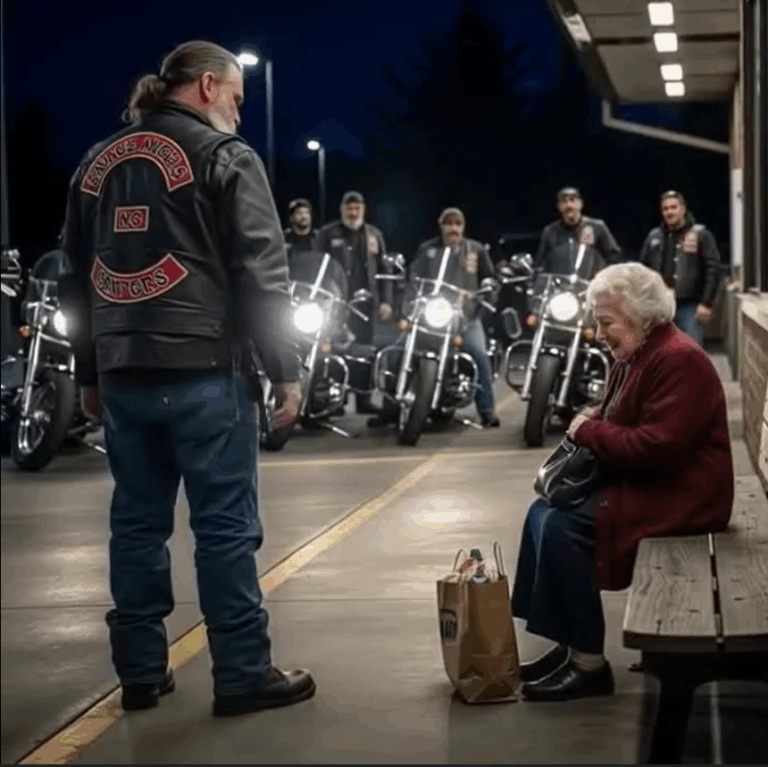
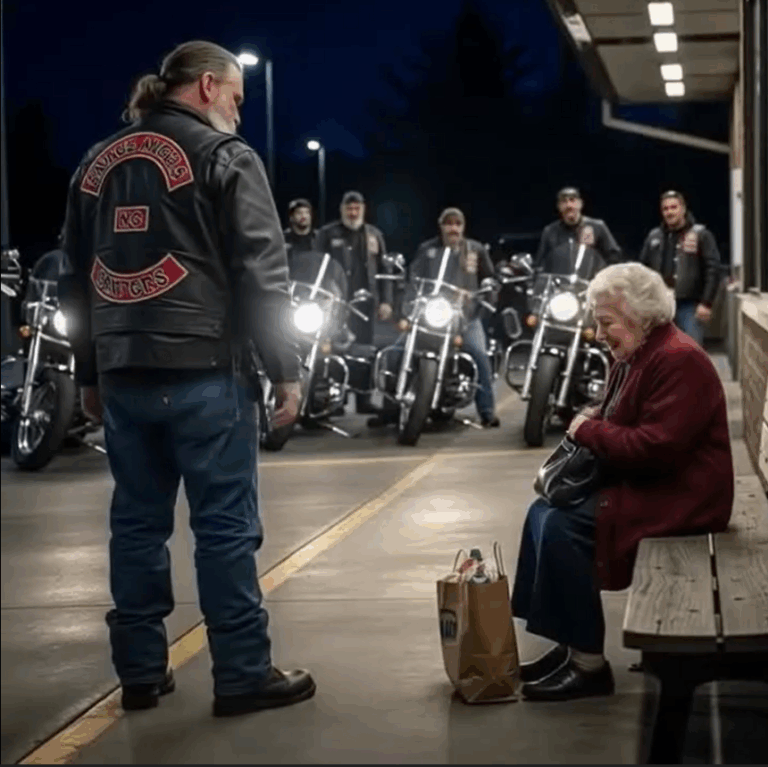
She adjusted her coat and headed to the wooden bench near the store entrance, setting her grocery bags at her feet. From this vantage point, she could see the parking lot stretched out before her, dotted with cars reflecting the pale sunlight. But Paul’s car, which she had expected to return at any moment, was gone.
At first, she assumed he had been delayed, perhaps by another errand or a brief conversation with someone he knew. Minutes passed, then tens of minutes, and unease began to replace her initial patience. She pulled out her phone, her hands trembling slightly as she dialed his number.
The call went straight to voicemail. She tried again, each attempt more desperate than the last, her chest tightening with a creeping sense of dread.
Finally, a notification appeared on the screen: a text from Paul. Her heart leapt, fragile hope igniting, only to be extinguished the instant she read the words:
“Found a nursing home for you. They’ll pick you up tomorrow.”
No explanation. No apology. Just a stark, clinical announcement that shattered her world. Margaret sank onto the bench, tears streaming down her face, the cold air mingling with her sobs. She clutched her grocery bags as if they were lifelines, her mind reeling in disbelief. Everything she had known—her home, her routines, the bond with her son—was gone in an instant. The warmth of family, the comfort of shared history, vanished like smoke in the wind.

Hours seemed to stretch endlessly as she sat frozen, the late afternoon fading into twilight. Shadows deepened across the parking lot, and the snow, which had seemed magical in the morning, now felt like a cold reminder of her isolation. Cars passed, people hurried by, absorbed in their own worlds, oblivious to her silent despair.
She felt invisible, abandoned not only by her son but by the world she had trusted. The ache of betrayal pressed heavily on her chest, each heartbeat echoing in the emptiness around her.
Then, through the silence and numbness, came a low rumble that vibrated through the asphalt. Margaret’s eyes widened as a group of motorcycles rolled into the lot, their chrome gleaming in the fading light. The riders were clad in leather, faces partially hidden by helmets and scarves, exuding a rugged toughness that might have intimidated someone younger—or more confident. She shrank slightly, unsure whether to feel fear or curiosity.
One of the bikers, a large man with a thick beard and unexpectedly gentle eyes, dismounted and approached her. There was a softness in his gaze that contrasted sharply with his imposing frame. He knelt down to her level, speaking in a calm, measured tone that cut through the fog of her panic.
“Ma’am, are you alright?” he asked.
Margaret, still shaking, struggled to find words. Her sobs choked her, her voice halting and fractured. She spoke of her son, the message, the betrayal, and the life she thought she had. She whispered her husband’s name, Robert Carter, into the cold air, her tone almost a plea.
Recognition flickered in the man’s eyes, and for a moment, the harshness of the world seemed to soften. “Wait… Robert Carter?” he asked. “Your husband helped me once—years ago—when I was just starting out. I never forgot his kindness.”
His name was Bear. And in that instant, the trajectory of Margaret’s life shifted, though she could not yet see how. The seeds of an unexpected salvation had been planted.
Bear’s gaze remained steady, calm, and reassuring. Margaret blinked through her tears, still stunned by the sheer weight of what had happened. She had imagined betrayal from strangers, from distant acquaintances perhaps, but never from Paul, her own flesh and blood. The man before her was a stranger, yet he exuded an unexpected warmth, a quiet steadiness that her son had suddenly abandoned.
“I… I don’t know what to do,” she whispered, her voice trembling with exhaustion and grief. Her fingers still clutched the grocery bags, now sagging and cold against the bench. The snowflakes falling softly around her seemed like tiny shards of glass, each one cutting deeper into her already fragile heart.
Bear nodded slowly, absorbing the full weight of her words. He motioned to the other bikers, who had dismounted and were forming a loose semi-circle, observing the scene silently.

Each one had the imposing appearance of a seasoned rider—leather jackets creased with wear, boots scuffed from countless miles—but there was no trace of menace in their eyes. Instead, there was an attentive curiosity, a willingness to step into a story that clearly was not their own, yet called for their help.
“My name is Bear,” he said gently. “I don’t know what your son is thinking, or why he would leave you like this, but you are not alone. Not tonight. Let us help you. Come with me.”
Margaret’s first instinct was hesitation. She had spent her entire life in the familiar, cozy rhythms of her suburban home, and the idea of trusting strangers—even ones who seemed kind—was alien, almost frightening.
Yet, under the crushing weight of abandonment, the notion of solitude became unbearable. She could feel the cold seeping into her bones, and the despair pressing against her chest like a physical weight. Slowly, with a shivering nod, she allowed Bear to guide her to one of the motorcycles.
The ride was nothing like she expected. Bear’s movements were careful and deliberate, the engine’s vibration strangely soothing. The streets, slick with a thin layer of ice, seemed less threatening under his skilled handling. Margaret gripped the leather straps of her seat, her heart pounding with a mixture of fear and exhilaration.
The city lights reflected off the snow and the wet asphalt, creating a kaleidoscope of fleeting colors that seemed to dance just beyond her comprehension. For the first time in hours, her mind felt less like a cage and more like a landscape slowly opening before her.
They arrived at a modest townhouse on the edge of the city, warm light spilling from the windows and the faint aroma of wood smoke and cooking food welcoming her.
Bear led her inside, and she was introduced to a few other members of the group—a middle-aged woman with a warm smile named Raven, and a quiet man named Colt, whose steady hands and careful demeanor reminded Margaret of her late husband. The house, filled with the hum of life and small comforts, immediately felt safer than the parking lot, though she remained cautious.
Raven handed Margaret a steaming cup of tea, and for the first time that day, she felt something close to relief. The warmth seeped into her fingers, her lips, and slowly into her heart. Bear sat nearby, careful not to crowd her, offering only quiet presence and occasional reassurance.
“Why are you helping me?” Margaret asked softly, curiosity and suspicion mingling in her tone. “You don’t even know me.”
Bear’s eyes softened. “Because Robert Carter helped me when I was just starting out,” he said. “He showed me kindness when the world could have ignored me. I never forgot it. And now… it seems the universe has a way of returning favors. You deserve someone who will stand with you. I can’t replace your son, but I can be here now.”
Margaret’s chest ached with both sorrow and a fragile sense of gratitude. She had always believed that family was defined by blood, but here, in this unexpected sanctuary, she was beginning to see that it could also be defined by kindness, loyalty, and respect.
Over the next few days, Bear and his group helped Margaret navigate the logistics of her son’s decision. They assisted her in rescheduling appointments, arranging her home so that it could be temporarily secured, and even accompanied her to visit a lawyer to clarify her rights.
Through it all, Margaret was struck by the patience and genuine concern of people she had never met before. They did not judge her for Paul’s actions, nor did they offer hollow platitudes. Instead, they provided practical help and emotional support, a combination that Margaret had long since learned was rare.
Each evening, as she sat by the fireplace in Bear’s townhouse, she found herself reflecting on her life in ways she had not done for years. She thought about Robert, their long marriage, and the quiet heroism of everyday choices.
She thought about Paul, and the painful reality that the people we trust most are sometimes the ones who hurt us. But she also began to feel something she had not anticipated: hope. Hope that life could still hold beauty, even after betrayal. Hope that she could find purpose, even in the twilight of her years.
Bear never pressured her to move faster than she was ready. He understood grief and shock, having witnessed both in his own family. He listened when she spoke, stayed silent when she needed reflection, and provided small gestures of care—a blanket draped over her shoulders, a gentle reminder to eat, a soft cup of herbal tea when she could barely lift her hands. Margaret began to feel, cautiously, that she was not alone.
The winter days slowly passed into early spring. With Bear’s support, Margaret began to reclaim small pieces of autonomy. She started walking in the mornings again, using the gentle guidance of Bear and Raven to venture further from the townhouse.
They introduced her to a nearby community center where seniors met for art classes, book clubs, and social lunches. Margaret was hesitant at first, fearing judgment and the awkwardness of new social circles, but the warmth of the community reminded her of what she had always known: connection can bloom in unexpected places.
One afternoon, Bear took Margaret for a ride along a scenic river trail. The sun was low, casting golden reflections across the water, and the scent of early blooms mingled with the crisp air. Margaret, helmet securely fastened, held onto Bear with a mixture of trust and exhilaration.
“I never imagined life could feel this… expansive again,” she murmured, awe in her voice. Bear nodded, understanding the layers of meaning behind her words. She was not merely speaking of physical freedom but the emotional release of being unshackled from fear and betrayal.
Through Bear and the group, Margaret began to see her situation in a new light. Paul’s rejection, while painful, had created a rupture that allowed her to redefine family on her own terms. She discovered that care, loyalty, and respect are sometimes found in those outside the bonds of blood. Her resilience, shaped over decades, was being tested in new ways, and she found herself rising to meet these challenges with quiet strength.
One evening, as Margaret sat with Bear and Raven, sipping tea and listening to the quiet hum of the city outside, she realized that life could still hold richness, even after loss. Her grief for Robert and betrayal by Paul were not erased, but they had been tempered by the unexpected kindness of strangers who became a chosen family. And in that realization, Margaret found a profound peace—a sense that she could face the coming days with courage, dignity, and an open heart.
By the end of the month, Margaret had settled into a rhythm she had not thought possible. She had her mornings for quiet reflection, afternoons filled with gentle outings, and evenings for warmth, conversation, and tea. Paul remained a shadow in her past, a reminder of the fragility of trust, but Bear and the group had filled a void she had never expected to be able to heal. She realized that life, with all its unpredictable turns, could still surprise her with grace, loyalty, and connection.
For Margaret, the winter that began in betrayal transformed into a season of renewal. Her world, once shattered, was slowly being rebuilt—not by those she had always depended on, but by the people she never expected, and by the enduring strength she had always carried within herself.
Spring had begun to gently assert itself over the city. The once-gray skies now carried a pale, forgiving blue, and the winter chill had been replaced by the crisp freshness of early mornings. Snow had melted, leaving streets glistening with dew, and the gardens that Margaret had once tended in solitude now hinted at blossoms and growth. Life, it seemed, insisted on continuing, even when heartbreak had threatened to halt it.
Margaret had grown into a new rhythm. Each morning, she rose with the sun, her movements slow but deliberate, her heart carrying a resilience that had been forged through decades of endurance.
She spent her mornings in quiet reflection, reading letters Robert had left, going through photographs, and occasionally, laughing softly at memories long past. Her afternoons were spent with Bear, Raven, and the rest of their small, motley family—a group of people who had come into her life in the most unexpected way, offering care without expectation, protection without judgment.
Bear had become more than a guardian; he was a steady presence, a bridge between Margaret’s old life and the possibilities of her new one. Each ride on his motorcycle was no longer a moment of fear, but one of exhilaration and freedom, a reminder that life could be embraced fully, even in its later chapters. Margaret discovered strength she had not realized she still possessed.
Her hands, once trembling with uncertainty, could now help in small acts of kindness—preparing meals for neighbors in need, assisting at the community center, or tending the flowers Bear and Raven had encouraged her to plant along the townhouse garden.
One particular afternoon marked a turning point. Bear suggested they visit a nearby park, a place where the river wound through budding trees and cherry blossoms were just beginning to bloom. Margaret hesitated at first. She had long associated the outdoors with solitude, with spaces empty of care.
But something in Bear’s gentle insistence encouraged her to step forward. Together, they walked along the winding paths, the soft petals brushing against Margaret’s coat. Birds sang overhead, their delicate melodies filling the spaces that grief had once dominated.
“This… this is beautiful,” she whispered, her eyes wide with wonder. “I hadn’t realized how much I missed… just… being.”
Bear nodded. “Life isn’t only about what we lose,” he said. “It’s also about what we find again, and sometimes in places we never expected.”
Margaret realized he was right. Her grief for Robert remained, like an anchor she would always carry, and Paul’s betrayal was an ache that did not vanish. But she had found something unexpected—loyalty, compassion, and connection that transcended the traditional boundaries of family. It was a reminder that life, even after immense loss, could offer new beginnings.
Over the following weeks, Margaret began participating more actively in the community. She joined an art class at the senior center, painting gentle landscapes that reflected both her memories and the life she now embraced. She shared her experiences in small, carefully worded anecdotes, teaching younger members of the class about resilience, patience, and the courage it takes to adapt to life’s unpredictable turns. Her words carried weight because they were authentic, born from decades of living, loving, and surviving.
Evenings were often spent around the communal kitchen at Bear’s townhouse. Margaret had begun to cook again, experimenting with recipes she and Robert had once cherished, while Bear and Raven prepared meals alongside her. Laughter returned to the house in small doses—quiet chuckles at minor mishaps, shared stories from past adventures, and the occasional teasing that only comes from a deep familiarity and trust. Margaret found herself looking forward to these moments, each one a gentle balm to the wounds of her past.
Then came a pivotal day that challenged Margaret in a new way. Paul called unexpectedly. His voice was cautious, almost hesitant, yet tinged with an unspoken expectation of forgiveness. He spoke of pressures at work, stress, and a sense of being overwhelmed—an attempt, perhaps, to justify the choices he had made. Margaret listened, the old instinct to protect and forgive flickering within her. But she realized she no longer needed to define her value or happiness by his actions.
“I’ve built a life now,” she said quietly, firmly. “One where I am cared for, respected, and connected. I am grateful for the time we had together, but I no longer need your approval or presence to feel whole.”
Paul hesitated, and then quietly hung up. The call left a strange mix of lingering pain and newfound liberation. Margaret understood something crucial: forgiveness did not mean returning to the same vulnerability, nor did it require dependence. She had found a stronger, more self-aware version of herself.
Spring continued to bloom, and with it, Margaret’s confidence and sense of purpose. Bear, ever patient, encouraged her to travel small distances beyond the city, to reconnect with places she had loved with Robert—the library where they had met for quiet discussions about books, the riverside bench where they had spent afternoons in reflective silence. Each step, each visit, was a reclaiming of life that had been threatened by betrayal.
Margaret’s transformation was most evident one morning when she organized a small gathering at the townhouse for neighbors and friends she had met through the community center. The table was filled with home-cooked meals, laughter echoed through the rooms, and stories were shared openly.
She watched Bear interact with others, a proud, silent witness to the life she had built anew. In that moment, Margaret felt the full force of what had seemed impossible just months earlier: she was not only surviving but thriving, with a chosen family that had filled the void left by loss and abandonment.
Bear approached her quietly, offering a warm smile. “You’ve come a long way,” he said simply. Margaret returned the smile, her eyes glistening with both joy and tears.
“Yes,” she replied softly. “And I am ready for whatever comes next.”
That evening, as the sun dipped behind the skyline and the warm hues of twilight filtered through the windows, Margaret sat in her favorite chair, sipping tea, reflecting on the journey she had taken.
She thought about Robert, about the enduring love they had shared. She thought about Paul, the pain, and the lessons that had come from his absence. And she thought about Bear, Raven, Colt, and the unexpected people who had stepped in to create a life that was richer, more vibrant, and more deeply connected than she could have ever imagined.
Margaret Carter had learned that family is not solely defined by blood, nor is security guaranteed by the familiar. It is defined by loyalty, compassion, and the courage to embrace life even after it has fractured. In the warmth of chosen bonds, in the gentle guidance of unexpected allies, and in the quiet reclamation of self-respect and autonomy, Margaret found her true sanctuary.
She had weathered betrayal, grief, and the uncertainty of a world that often seemed indifferent. And yet, through it all, she emerged not only intact but renewed, with a heart wide enough to hold love again, and a spirit strong enough to face the coming seasons with dignity, grace, and hope.
Margaret’s story, once defined by routine and quiet endurance, had transformed into a testament to resilience and the beauty of human connection. The winter that began with betrayal ended not in despair, but in a spring of rebirth—a life reclaimed, a heart mended, and a future she was eager to embrace.