
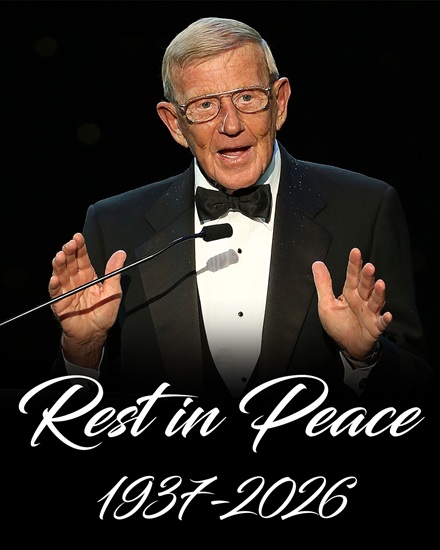
One of the most revered figures in the history of American college football, Lou Holtz, passed away on March 4, 2026, at the age of 89.
His family confirmed that he died peacefully in Orlando, Florida, surrounded by his loved ones. While the cause of death was not publicly disclosed, the legacy he leaves behind is unmistakable: a life defined by leadership, resilience, mentorship, and the transformative power of sports.
Lou Holtz was more than a football coach; he was a mentor, motivator, and moral compass whose influence extended far beyond the gridiron.
Across a career that spanned over three decades, Holtz touched the lives of thousands of players, colleagues, and fans. He demonstrated that the lessons learned in sports — discipline, teamwork, resilience, and integrity — could shape lives off the field as well.
Early Life: From Follansbee to Football Stardom
Louis Leo Holtz was born on January 6, 1937, in Follansbee, West Virginia, a small steel town in the Ohio River Valley. The industrial backdrop of his upbringing instilled in him a strong work ethic and resilience that would become hallmarks of his coaching philosophy. Lou was the youngest of five children, and his parents emphasized the importance of faith, family, and education — principles that would guide him throughout his life.

From a young age, Holtz gravitated toward sports. He excelled in football, basketball, and baseball during his high school years, but football quickly became his passion. Holtz played linebacker at Kent State University, where his leadership qualities and relentless drive stood out. He earned a degree in history and education, combining his athletic endeavors with a deep appreciation for learning and mentorship.
It was at Kent State that Holtz first demonstrated a philosophy that would define his coaching style: success is built on discipline, preparation, and unwavering belief in one’s team. Even as a player, he was known for his intensity, meticulous attention to detail, and ability to inspire those around him — traits that would later make him one of the most respected coaches in college football history.
The Beginning of a Legendary Coaching Career
Holtz began his coaching journey in 1960 as a graduate assistant at the University of Iowa, where he learned the fundamentals of coaching and team leadership. Over the next several years, he served as an assistant coach at multiple programs, including South Carolina, William & Mary, Ohio State, and Connecticut. These formative years allowed Holtz to refine his coaching philosophy, combining a deep knowledge of X’s and O’s with the ability to motivate players mentally and emotionally.
In 1969, Holtz landed his first head coaching position at William & Mary. While the program was modest in national stature, it became a testing ground for Holtz’s methods. Known for his intense preparation, attention to culture, and ability to connect personally with players, Holtz quickly began turning the team into a competitive unit. He emphasized not only winning games but also building character, instilling values of discipline, responsibility, and teamwork.
Following his tenure at William & Mary, Holtz moved to North Carolina State University in 1972. At NC State, he continued to hone his leadership style, transforming the program into a formidable competitor in the Atlantic Coast Conference (ACC). Holtz’s teams posted consistent winning records, and he gained a reputation as a coach who could turn struggling programs into nationally recognized contenders.
A Brief NFL Stint and Return to College Football
In 1976, Holtz accepted the head coaching job for the New York Jets, marking his only foray into the National Football League. The experience was challenging — the team finished with a 3–10 record — but Holtz later described it as a formative period in his career. He gained insight into the complexities of professional coaching, the pressures of managing high-profile athletes, and the importance of organizational culture. Ultimately, this experience reinforced his belief that his true calling lay in college football, where he could shape young athletes both on and off the field.
Arkansas: A National Emergence
Holtz’s arrival at the University of Arkansas in 1977 marked the beginning of his rise to national prominence. Over seven seasons, he compiled an impressive 60–21–2 record and led the Razorbacks to six consecutive bowl games. Holtz became known for his strategic acumen, motivational skills, and ability to instill confidence in his teams. One of the most notable highlights of his Arkansas tenure came in the 1978 Orange Bowl, when his team upset the top-ranked Oklahoma Sooners, a victory that announced Holtz as a master tactician and motivator on the national stage.

At Arkansas, Holtz emphasized not just winning but building a culture of accountability, unity, and resilience. His approach resonated with players, many of whom credited him with shaping their character and providing lessons that extended well beyond football.
Minnesota and the Path to Notre Dame
After Arkansas, Holtz took the head coaching position at the University of Minnesota (1984–1985). Though his tenure was brief, he made a notable impact, improving the team’s competitiveness and preparing himself for what would become the defining chapter of his career: coaching at the University of Notre Dame.
By the mid-1980s, Notre Dame’s storied football program was struggling to maintain its historical dominance. Holtz’s arrival in 1986 marked a turning point. With his proven track record of transforming programs, his motivational skill, and his unwavering emphasis on discipline and teamwork, Holtz was positioned to restore Notre Dame to national prominence.
The Notre Dame Years: Transformation and Triumph
From the outset, Holtz made an immediate impact at Notre Dame. He instilled a culture of toughness, discipline, and high expectations. His coaching philosophy was clear: every player must commit fully, work harder than anyone else, and put the team above individual accolades. Within a short time, the results spoke for themselves.
Over 11 seasons, Holtz guided Notre Dame to a remarkable 100–30–2 record, achieving 100 wins faster than nearly any coach in the program’s history. His teams became known for precision, resilience, and mental toughness — hallmarks of Holtz’s coaching ethos.
The pinnacle of Holtz’s Notre Dame career came in 1988, when the Fighting Irish went undefeated, finishing 12–0 and capturing the consensus national championship. That season included one of the most legendary games in college football history: a stunning upset over the No. 1 Miami Hurricanes. The victory solidified Holtz’s reputation as a master strategist and motivational genius, and it became a defining moment in both his career and Notre Dame’s storied football history.
Beyond victories, Holtz emphasized the importance of team identity and culture. Traditions like the “Play Like A Champion Today” sign in the locker room, the removal of player names from jerseys to emphasize team over individual, and the fostering of a family-like environment became central elements of the program. These innovations not only enhanced performance on the field but also created a lasting legacy of leadership, unity, and pride.

Lou Holtz’s influence at Notre Dame extended far beyond the numbers on the scoreboard. After the 1988 national championship, he continued to shape the program into a model of consistency, discipline, and national relevance. Holtz’s teams recorded a 23-game win streak, set a school record with nine consecutive bowl appearances, and delivered back-to-back 12-win seasons — unprecedented achievements in the program’s storied history.
Holtz’s approach to coaching was holistic. He believed that success on the field required more than talent; it demanded preparation, mental toughness, and character. He invested in his players as individuals, emphasizing academics, personal responsibility, and leadership development. Holtz was known for spending hours one-on-one with players, understanding their personal challenges, motivating them, and helping them grow both as athletes and as young men.
One notable example of Holtz’s mentorship came with Tim Brown, the 1987 Heisman Trophy winner. Holtz not only coached Brown to athletic excellence but also emphasized humility, discipline, and the importance of using his platform to inspire others. Similarly, stars like Raghib “Rocket” Ismail, Michael Stonebreaker, Aaron Taylor, and Chris Zorich credit Holtz with shaping their professional careers and personal development, highlighting his enduring influence beyond football.
Holtz also made lasting contributions to team culture and tradition. His famous mantra, “Play Like A Champion Today,” became a daily ritual for Notre Dame players, symbolizing the broader lesson that excellence in preparation and effort is the foundation of achievement. He encouraged players to remove their names from jerseys in favor of team identity, a practice designed to emphasize unity and shared responsibility over individual glory.
Challenges and Triumphs
Despite his many successes, Holtz faced challenges at Notre Dame. Maintaining high standards year after year in a pressure-filled environment required continuous innovation and adaptability. He navigated tough losses, media scrutiny, and the constant pressure of sustaining national prominence. Holtz’s ability to remain composed, motivational, and principled under these conditions earned him admiration from colleagues, players, and fans alike.
Holtz’s commitment to integrity and ethics also shaped his decision-making. He consistently prioritized the welfare of his players, emphasizing not only football performance but also academic achievement, mental health, and long-term personal growth. In an era when winning often overshadowed broader responsibilities, Holtz stood out as a leader who measured success by the total development of his athletes, both on and off the field.
Retirement and Return to Coaching: South Carolina
After leaving Notre Dame at the end of the 1996 season, Holtz briefly stepped away from coaching. He transitioned into broadcasting with CBS Sports, where his insightful analysis, humor, and storytelling quickly made him a fan favorite. Viewers appreciated Holtz not only for his tactical knowledge but also for his ability to explain complex plays in simple, engaging terms while emphasizing the character and leadership lessons embedded in sports.

Yet the call of coaching remained. In 1999, Holtz returned to the sidelines at the University of South Carolina, taking over a program that had finished 1–10 the previous season. Known for his ability to revitalize struggling teams, Holtz faced perhaps one of his greatest challenges. His first season still included growing pains, but by 2000, Holtz had orchestrated one of the most remarkable turnarounds in college football history: South Carolina posted an 8–4 record and captured the Outback Bowl, demonstrating his trademark combination of strategy, motivation, and cultural transformation.
Holtz continued at South Carolina until 2004, retiring with a career record of 249 wins, 132 losses, and 7 ties. His achievements placed him among the winningest coaches in college football history. He remains the only coach to lead six different programs to bowl games and one of the select few to guide four different teams to final Top 20 national rankings — a testament to his adaptability, vision, and consistent excellence.
Broadcasting, Writing, and Motivational Speaking
Beyond coaching, Lou Holtz became a respected voice in sports media, particularly as a college football analyst on ESPN. His insights combined tactical knowledge with life lessons, blending humor, passion, and moral guidance. He emphasized that sports serve as a microcosm for life, teaching resilience, teamwork, and ethical leadership. Holtz’s broadcasts were educational, entertaining, and inspirational, further extending his influence beyond the playing field.
Holtz also authored multiple books and became a highly sought-after motivational speaker. He traveled extensively, sharing his philosophy of leadership, character development, and personal growth. Central to his message was the idea that setbacks are opportunities, discipline is essential, and true success encompasses both achievement and integrity. Audiences ranging from corporate executives to young athletes found his lessons practical, inspiring, and applicable to life outside sports.
Faith, Family, and Personal Values
Holtz’s life was deeply rooted in faith and family. A devout Roman Catholic, he often cited his religious beliefs as the foundation for his approach to coaching, leadership, and life. Holtz consistently emphasized the importance of ethical conduct, compassion, and service to others. His faith guided decisions on and off the field, shaping a coaching philosophy that valued character as highly as victory.
Holtz was married to his beloved wife, Beth, for nearly 60 years until her passing in 2020. Their partnership reflected shared values of generosity, service, and commitment to family. Together, the Holtz family contributed extensively to educational and charitable causes, including funding campus chapel renovations at Notre Dame and establishing scholarships to support students in need. Holtz’s four children, nine grandchildren, and two great-grandchildren carry forward the legacy of faith, service, and leadership that he embodied.
Honors, Awards, and Recognition
Throughout his life, Lou Holtz received numerous accolades recognizing his contributions to football, leadership, and society:
- College Football Hall of Fame (2008): Inducted for his extraordinary achievements as a coach and mentor.
- Presidential Medal of Freedom (2020): One of the nation’s highest civilian honors, awarded in recognition of his lifelong leadership, influence, and service.
- National Coach of the Year Awards: Multiple recognitions during his career for turning around programs and achieving excellence in competition.
Yet beyond formal awards, Holtz’s true legacy lies in the thousands of individuals whose lives he touched. Players, coaches, and fans consistently describe him as a figure who inspired not only athletic excellence but personal integrity, perseverance, and commitment to community.
The Lasting Impact
Lou Holtz’s impact on college football and American sports culture is immeasurable. He redefined the role of a coach as more than a strategist, making it synonymous with mentorship, leadership, and character development. He demonstrated that football could be a tool to shape lives, teach responsibility, and instill lifelong values.

Following his death on March 4, 2026, tributes poured in from across the nation. Notre Dame, where his influence is deeply woven into the program’s identity, praised him as a transformative leader who left a permanent imprint on the university’s culture. Former players, fellow coaches, and fans celebrated his ability to inspire, motivate, and lead with both rigor and compassion.
Lou Holtz’s influence extended far beyond X’s and O’s. While his record of 249 career wins, 132 losses, and 7 ties cements him among the most successful coaches in college football history, it is his ability to shape lives, teach leadership, and instill values that defines his true legacy.
Throughout his career, Holtz emphasized that football is a vehicle for personal growth, not merely a sport. His approach combined rigorous preparation, strategic innovation, and an unwavering focus on character development. Players learned to be disciplined on the field, resilient in the face of setbacks, and accountable in their personal lives. Coaches who worked under him often describe Holtz as a mentor who exemplified leadership through example, balancing firmness with empathy and encouragement.
One of Holtz’s signature philosophies was the idea that adversity builds character. He often reminded players and colleagues that how one responds to challenges defines leadership and life success. Stories from former athletes abound: players recalling late-night meetings in which Holtz pushed them to confront weaknesses, embrace teamwork, and strive for excellence — lessons that extended far beyond football fields.
Transformative Stories from Players and Colleagues
Holtz’s mentorship left indelible marks on countless players. Raghib “Rocket” Ismail, a standout at Notre Dame, credited Holtz not only with developing his athletic skills but with teaching him the importance of humility, preparation, and ethical conduct. Tim Brown, the 1987 Heisman Trophy winner, frequently highlighted Holtz’s personal guidance, emphasizing that his approach prepared athletes for life’s challenges as much as for professional sports.
Coaches who trained under Holtz often incorporated his principles into their own programs. His leadership style — clear expectations, ethical guidance, and relentless preparation — became a model for collegiate programs across the United States. Holtz was widely regarded as a coach who built more than teams; he built communities of committed, accountable, and principled individuals.
Even rivals recognized Holtz’s influence. Opposing coaches often noted his professionalism, sportsmanship, and ability to inspire loyalty and excellence among his players. Media accounts from his tenure consistently highlighted his dual role as a strategic innovator and a moral leader, bridging the gap between athletic success and character development.
Faith, Values, and the Moral Compass of a Coach
Faith was a cornerstone of Holtz’s life and coaching philosophy. A devout Roman Catholic, he frequently spoke about the guiding role of spirituality in his decisions, leadership, and personal conduct. Holtz believed that ethical principles were inseparable from success; integrity, humility, and respect were as vital as athletic skill.
His faith was reflected in practical ways: supporting charitable causes, encouraging players to volunteer, and establishing scholarships to help students pursue higher education. Holtz and his wife Beth’s philanthropic work left a lasting imprint, particularly at Notre Dame, where their contributions funded chapel renovations and educational initiatives. Holtz consistently reminded players and colleagues that leadership is not only about victories but about serving others and creating a positive impact in the world.
Innovation, Culture, and Coaching Philosophy
Holtz’s approach to coaching emphasized culture, preparation, and accountability. He was a pioneer in creating programs where teamwork outweighed individual accolades. Practices were meticulously planned, and players were encouraged to develop mental toughness, adaptability, and strategic understanding.
Several of Holtz’s innovations became lasting traditions:
- “Play Like A Champion Today” Sign: Encouraging players to embody excellence in every action, a mantra that remains iconic at Notre Dame.
- Team Identity Over Individualism: Removing names from jerseys to reinforce collective responsibility.
- Comprehensive Player Development: Emphasizing academics, ethics, and personal growth alongside athletic training.
Holtz’s teams were known not only for technical skill but also for mental preparation. He stressed the importance of visualization, situational awareness, and decision-making under pressure, teaching players to think critically and act decisively — life skills that extended well beyond sports.
Post-Coaching Influence: Broadcasting and Speaking
After retiring from coaching, Holtz remained a prominent figure in football and leadership education. As a college football analyst on ESPN, he combined tactical expertise with life lessons, using his platform to educate fans and players alike. Holtz’s broadcasts were praised for their clarity, insight, and motivational undertone.
His motivational speaking engagements were equally impactful. Holtz shared stories from his career to teach leadership, resilience, and teamwork to audiences ranging from corporate leaders to student athletes. His philosophy was simple but profound: setbacks are opportunities, discipline creates success, and leadership requires both vision and moral grounding.
Honors, Recognition, and Lasting Reputation
Lou Holtz received numerous formal honors, reflecting both his professional success and personal integrity:
- College Football Hall of Fame (2008): Recognizing his extraordinary contributions to college football.
- Presidential Medal of Freedom (2020): Awarded for leadership, service, and lasting influence on American culture.
- Multiple National Coach of the Year Awards: Highlighting his ability to transform programs and achieve excellence.
Yet his most enduring recognition came from those whose lives he shaped. Former players, coaches, and fans consistently describe him as a mentor who taught life lessons, instilled confidence, and demonstrated the power of faith, resilience, and teamwork. Holtz’s reputation transcended sports; he became a symbol of principled leadership, ethical conduct, and personal excellence.
Tributes and Reflections
Following his death, tributes poured in from around the world. Notre Dame described Holtz as “a transformative leader whose legacy extends far beyond the football field.” Former players recounted stories of his guidance during critical moments in their lives. Colleagues lauded his ability to inspire loyalty, foster growth, and build cultures of excellence. Fans remembered him not only for victories but for the integrity, character, and mentorship he consistently demonstrated.
Closing Thoughts: More Than a Coach
Lou Holtz’s life is a testament to the enduring power of leadership, faith, and mentorship. He transformed college football not only by winning games but by creating programs that valued character, discipline, and teamwork above all else. His philosophy — that success is measured by preparation, resilience, and ethical leadership — continues to influence players, coaches, and fans across generations.
As one admirer put it, “Lou didn’t just coach football. He coached life.” That phrase encapsulates a legacy built on more than championships or statistics. Holtz taught the value of hard work, the importance of service, the strength of character, and the transformative power of faith.
Though Lou Holtz has passed, his life lessons, his innovations in coaching, and his dedication to the growth of young men and women will endure. His impact will be felt in stadiums, classrooms, and communities for generations to come. In the story of American sports, Lou Holtz will forever remain not only a coaching legend but also a timeless exemplar of leadership, integrity, and the human spirit.

