
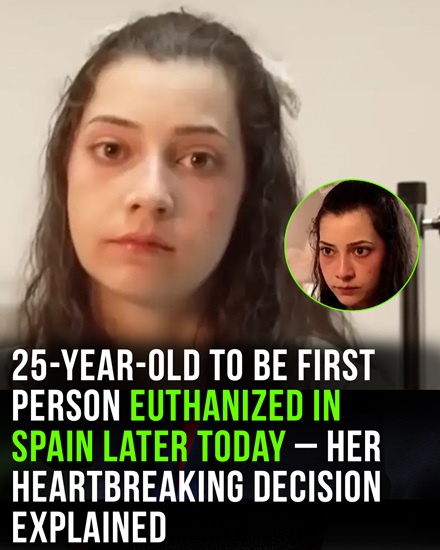
Noelia Castillo Ramos was born on November 14, 2000, in Barcelona, Spain, and grew up in a city known for its vibrant culture and social contrasts. From a young age, she faced personal and familial challenges that shaped her formative years profoundly.
Her childhood included significant interactions with social care systems, reflecting early interventions due to economic instability and emotional vulnerability.
Mental health records documented conditions such as obsessive‑compulsive disorder and borderline personality disorder, which influenced her developmental trajectory.
At age thirteen, Noelia entered social care following her family’s loss of their home. She moved through multiple foster and residential placements, each transition leaving emotional and psychological impacts that were recorded in her case files.
During her teenage years, she experienced several traumatic incidents, including exposure to violence and sexual assault. These events compounded her psychological suffering, contributing to both physical and mental health challenges documented in her medical history.

In October 2022, at the age of twenty-one, Castillo attempted suicide by jumping from a fifth-floor window. She survived but sustained irreversible spinal cord injuries, resulting in paraplegia and chronic, severe physical pain that profoundly altered her daily life.
Following the accident, she underwent intensive medical treatment and rehabilitation. Despite these efforts, her physical pain remained severe, while psychological distress continued, linked both to her trauma history and the consequences of her injury.
Medical evaluations over the subsequent years documented chronic, debilitating pain and ongoing mental health challenges. Physicians recorded her suffering as persistent, severe, and resistant to conventional therapies, establishing a medically recognized basis for her request for euthanasia.
In 2024, Castillo formally applied for medically assisted euthanasia under Spain’s Organic Law on the Regulation of Voluntary Euthanasia (LORE), enacted in 2021. The law requires a rigorous demonstration of persistent, intolerable suffering and fully informed voluntary consent.
The LORE law permits adults experiencing serious, incurable conditions to request euthanasia, provided their decision is made consciously and repeatedly, and that alternatives, such as palliative care, have been carefully considered and explored.

Noelia’s case quickly became a legal focal point, attracting national and international attention. Her father opposed the request, arguing that her mental health conditions impaired her judgment, and petitioned for further psychiatric intervention instead of euthanasia.
The legal opposition received support from Abogados Cristianos, a conservative legal association. They contested the administrative approval of her request, emphasizing potential vulnerabilities and questioning her decision-making capacity under Spanish law.
Multiple Spanish courts reviewed the case over more than 600 days, including the High Court of Justice of Catalonia, which upheld the initial approval of her euthanasia application. The courts confirmed she met all legal requirements for voluntary, informed consent.
The case subsequently reached Spain’s Supreme Court, which declined to overturn the decision. Appeals to the Constitutional Court and the European Court of Human Rights were also dismissed, confirming the legality and propriety of her request.
Throughout this period, Noelia gave interviews to media outlets in Spain, explaining her perspective. She emphasized that her decision was deeply personal, reflecting unbearable physical and psychological suffering, not intended as guidance for others in similar situations.
She described her pain as persistent and intolerable, linking both her paraplegia and trauma-related mental health conditions as central to her request. Physicians corroborated her statements, documenting chronic pain and psychological distress that remained resistant to treatment.

The Spanish legal framework for euthanasia mandates that applicants be adults with full decision-making capacity. They must demonstrate repeated, voluntary requests for assisted death and be evaluated by medical committees to ensure compliance with the law.
In Noelia’s case, a regional evaluation commission in Catalonia certified that her suffering was chronic and unbearable. Medical authorities confirmed her legal competence, observing no evidence contradicting her informed, voluntary choice for euthanasia.
Her euthanasia procedure took place on March 26, 2026, at the Sant Camil Hospital in Sant Pere de Ribes. It followed established protocols, including intravenous administration of sedatives leading to respiratory arrest without pain or distress.
According to official accounts, Noelia chose to be alone during the final moments of the procedure. Her mother was present until shortly before it began, while her father’s legal opposition concluded earlier in the day, removing further interference.
Media coverage of her passing highlighted her desire for a peaceful death after years of suffering. Journalists emphasized her autonomy, the meticulous legal process, and adherence to the stringent safeguards within Spain’s euthanasia legislation.
Noelia’s case has sparked intense public debate both in Spain and internationally. Advocates for assisted dying argue that her decision reflects the ethical principle of respecting adult autonomy in cases of unbearable, medically documented suffering.
Opponents raised ethical concerns, particularly regarding individuals with mental health conditions. They argued that additional psychiatric care, long-term therapy, and social support could offer alternative ways to alleviate suffering without resorting to euthanasia.

Religious and conservative groups also criticized the procedure, asserting that the state has a moral responsibility to protect life and provide comprehensive care, especially for vulnerable individuals who have faced trauma or mental health challenges.
Commentators emphasized broader systemic issues highlighted by her case, including gaps in mental health care, social services, and trauma support. They called for increased accessibility to psychiatric resources and crisis interventions to prevent extreme outcomes.
Since its adoption in 2021, Spain’s euthanasia law has facilitated medically assisted death for hundreds of patients. However, Noelia’s case remains one of the most prominent due to her age and the extensive legal scrutiny surrounding her capacity and consent.
Her situation prompted discussion in the Spanish Congress of Deputies, where politicians debated the implications of euthanasia law. Proponents highlighted her autonomy and legal rights, while critics emphasized safeguards for vulnerable individuals prior to authorizing assisted death.
On a societal level, the case has intensified debates about the balance between personal autonomy, chronic suffering, mental health, and ethical limits in assisted dying practices. It has contributed to evolving discourse across Europe and beyond.
Experts have emphasized that Spain’s legal process for euthanasia requires multiple layers of verification. This includes evaluation by physicians, certification of unbearable suffering, confirmation of decision-making competence, and repeated, voluntary requests from the patient.
Noelia’s application met every requirement. Regional medical authorities confirmed that her suffering was objectively chronic, intolerable, and consistent with criteria set under the Organic Law on the Regulation of Voluntary Euthanasia.
Her death at age twenty-five made her one of the youngest adults to receive legally sanctioned euthanasia in Spain. The high-profile nature of the case brought attention to assisted dying law applied in contexts involving mental health and trauma-related suffering.
Academic and legal circles continue to examine her case, considering its implications for ethical decision-making, patient autonomy, and the interface between mental health treatment and legally sanctioned euthanasia.
The case also prompted reflection on how society addresses complex psychological conditions, trauma, and disability. Observers have emphasized the need for enhanced social support, crisis intervention, and integrated mental health care systems.
Noelia’s public statements repeatedly emphasized that her choice was personal. In her last televised interview, she requested that her decision not be generalized or perceived as a recommendation for others, underscoring the individualized nature of her circumstances.
Medical boards overseeing her case confirmed that Spain’s euthanasia law was applied rigorously, ensuring every safeguard was respected, including repeated confirmation of her competence and the chronic, intolerable nature of her suffering.
Her passing has inspired sympathy, debate, and policy discussion. Advocacy groups, mental health professionals, and ethicists have all examined her case to better understand how laws, medical protocols, and personal autonomy intersect in sensitive assisted dying scenarios.
Supporters argue that the case demonstrates the legal system’s capacity to uphold adult autonomy responsibly, while critics highlight ongoing needs for preventive care, trauma support, and enhanced mental health resources to minimize future reliance on euthanasia.
Noelia’s final moments exemplified her desire to exercise control over her own life and suffering. Reports indicate that her euthanasia procedure was conducted in full accordance with medical and legal protocols, ensuring dignity and peace.
Her case has become a defining example of Spain’s euthanasia law applied under complex conditions, combining chronic physical pain, trauma-related psychological suffering, and rigorous legal oversight, illustrating the law’s application in extreme circumstances.
Ultimately, Noelia Castillo Ramos’s death on March 26, 2026, stands as a moment of both legal and ethical significance, representing the careful balance between patient autonomy, medical authority, and societal responsibility.
Her story continues to influence public discourse, legal frameworks, and ethical debate on assisted dying, emphasizing the importance of transparent processes, comprehensive care, and respect for individuals’ deeply personal decisions.
Noelia’s life and death serve as a poignant reminder of the profound challenges faced by young adults experiencing trauma and chronic suffering, and the critical role of law, ethics, and healthcare in navigating these dilemmas.
The case has already been cited in academic studies, legal commentaries, and international media analyses, highlighting the complex interplay between law, medicine, psychology, and human rights in assisted dying cases.
By following every step of Spain’s LORE law, Noelia’s case demonstrates how safeguards can be applied to respect autonomy while addressing ethical concerns, providing a reference point for future cases involving young adults and psychological suffering.
Public reflection on her death has contributed to a broader understanding of the ethical, legal, and personal dimensions of euthanasia, illustrating the need for ongoing dialogue about autonomy, mental health, and humane end-of-life care.
Noelia’s courage and clarity in expressing her decision have inspired discussions about dignity, suffering, and patient choice, reinforcing the principle that personal autonomy must be balanced with comprehensive support systems and ethical oversight.
Her story also highlights the importance of continued development of mental health services, trauma-informed care, and holistic treatment approaches to support individuals facing chronic, severe suffering in both physical and psychological domains.
In conclusion, the life and death of Noelia Castillo Ramos reflect a deeply complex interplay of personal suffering, legal scrutiny, ethical reflection, and societal debate. Her experience will remain a touchstone for discussions on euthanasia, autonomy, and human dignity in Spain and worldwide.

