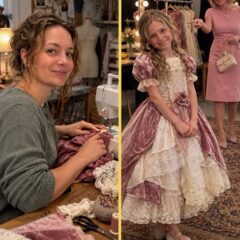
“I thought I was giving my sister something beautiful. I helped with her scarf. I watched her smile. I thought I was helping her have one last happy memory.”
She wiped her eyes.
“And now I keep thinking about that inheritance.”
I didn’t interrupt.
“I don’t know whether she understood everything she was doing. I don’t know whether you understood what you were doing. All I know is that my sister is gone.”
I looked at the box beneath her hand.
I remembered how carefully she had adjusted Alicia’s scarf on the wedding day.
I remembered her thanking me.
For a moment, I wanted to tell her that we had both done the right thing.
It would have been easier.
But I knew it wasn’t true.
“I thought I was helping too,” I said. “But I made a decision I shouldn’t have made.”
She looked at me.
“And if the hospital lets you return?”
I didn’t answer immediately.
“What happens when another patient asks you for something inappropriate? What happens when you think saying yes is the kind thing to do?”
I almost promised that I would never make another mistake.
But I had already learned that good intentions were not enough.
“I’ll ask for help before I answer,” I said.
She looked down.
“I don’t know if I believe you.”
“I understand.”
She picked up her phone, then placed it back on the table.
“I’m not deleting my complaint.”
“I know.”
For a long time, neither of us spoke.
Then she opened an email addressed to the person handling the hospital review.
She began typing.
I watched her carefully.
She explained that she had attended and helped with the wedding.
She stated that she had understood it to be a nonromantic ceremony requested by Alicia.
She also made it clear that she had no direct knowledge of whether I had expected to receive an inheritance.
She did not withdraw her concerns about the professional boundaries involved.
When she finished, she showed me the message.
I read it twice.
It wasn’t a statement declaring me innocent.
It wasn’t forgiveness.
It was simply an account of what she had personally witnessed and what she did not know.
I looked at her.
“Thank you.”
She didn’t respond.
Then she sent the email.
A few minutes later, she added a correction to her public post.
She clarified that her complaint remained in place but that she had no direct evidence that I had known about the inheritance before the wedding.
I watched her publish it.
I knew the correction wouldn’t make everyone change their minds.
But it mattered.
Before leaving, I placed the scarf and rings in her hands.
She held the box against her chest.
At the door, I turned back.
“I am sorry for what happened.”
She nodded slightly.
Then I left.
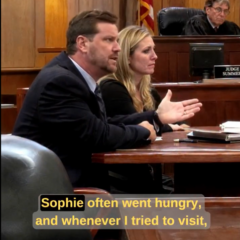
The hospital review continued for several more weeks.
During that time, I kept working at my father’s shop.
I answered questions from the review team and provided the documents they requested.
I also completed the formal refusal of Alicia’s inheritance.
I did not accept the money.
The decision meant that my financial situation remained exactly as difficult as before.
But I knew I couldn’t build my career on a gift that had become part of such a complicated situation.
Eventually, the hospital reached its decision.
Dr. Patel contacted me and asked me to attend a meeting.
I arrived early.
My hands were cold.
The review team explained that they had considered my written account, the available documents, Nora’s statement, and the circumstances surrounding the marriage.
They found no evidence that I had deliberately arranged the marriage to obtain financial benefits.