
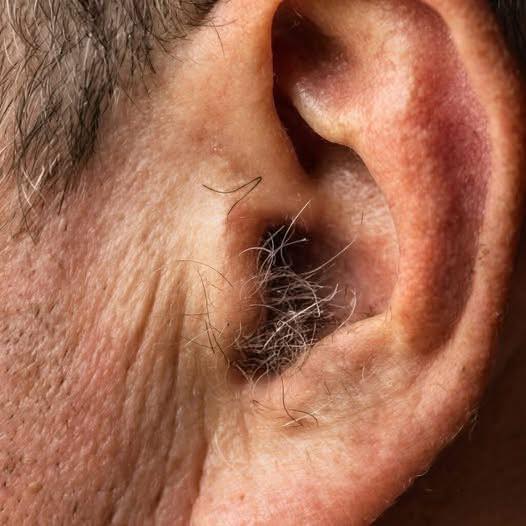
Did you know that hair growth on the ears is a completely natural part of the aging process? Many people first notice it in their fifties or sixties, and it can provoke surprise, concern, or even embarrassment.
Ear hair growth occurs due to natural changes in the body’s hormones and genetics over time. While scalp hair often thins with age, hair in the ears, nose, and eyebrows can grow thicker, reflecting the body’s uneven response to aging.
Hormones play a central role in this process. Androgens, such as testosterone and dihydrotestosterone (DHT), stimulate hair follicles in specific areas. Ear hair follicles are particularly sensitive to these hormones, which explains why men often develop more noticeable growth.
Women also experience changes in ear hair, especially after menopause. As estrogen levels decline, androgen effects become more visible, leading to thicker or longer hair in the ears, nose, and other areas where it was previously minimal.

Genetics largely determine hair density, thickness, and growth patterns. Individuals inherit specific follicle traits from their parents, which is why some men grow long ear hairs while others only experience minimal or slow development over time.
Ear hair served practical functions in the past. It helped trap dust, dirt, and small insects, providing a protective barrier for the ear canal. Although less critical today, this hair remains a natural evolutionary feature of the body.
Hair follicles do not all age in the same way. While follicles on the scalp may shrink and produce thinner hair, ear follicles remain active and may produce coarser, longer hair, a normal physiological process linked to hormonal signaling.
Many myths surround ear hair, but none are scientifically accurate. Hair growth in the ears is not a sign of poor circulation, internal organ disease, or systemic hormonal imbalance. It is entirely normal and reflects natural aging.
Trimming ear hair is optional and primarily for cosmetic purposes. Safe grooming methods include using small electric trimmers or rounded-tip scissors designed for sensitive areas. Avoid plucking or inserting sharp tools deep into the ear canal to prevent injury.

Hair does not grow back thicker after trimming. The appearance of thickness is due to blunt cut ends, not changes in follicle activity. Understanding this helps prevent unnecessary anxiety or over-plucking, which can damage follicles.
Visible ear hair is a natural marker of aging and not a flaw. It reflects the body’s resilience and continued adaptation over decades, serving as a reminder that the human body is complex and constantly evolving.
Acceptance of ear hair can improve self-esteem and reduce embarrassment. Recognizing that growth is genetically and hormonally normal allows individuals to reframe aging as a dignified, natural process rather than something to hide or fear.
Androgens continue to influence hair growth throughout life. Terminal follicles in the ears remain hormonally sensitive, gradually producing longer, coarser hairs over decades. This lifelong activity is completely normal and not a sign of pathology.
Environmental factors, including sunlight, air quality, and skin type, can slightly influence hair texture and visibility, but they do not change the genetic or hormonal mechanisms that drive ear hair growth over time.
Ear hair also retains minor sensory and protective functions. While it is no longer essential for survival, it can help detect airflow and protect delicate ear structures from small particles, a vestige of evolutionary design that persists in older adults.

Hair patterns vary among individuals. Some people notice ear hairs appearing in their early fifties, while others only observe subtle growth in their sixties or seventies. Timing and prominence depend on genetics, hormone levels, and individual aging patterns.
Men generally develop more pronounced ear hair than women due to higher androgen levels and follicle sensitivity. Women’s ear hair typically increases only after menopause when declining estrogen allows androgenic effects to dominate.
Proper grooming tools should be prioritized for safety. Rounded-tip scissors or low-speed trimmers reduce the risk of cuts, abrasions, or infections in the sensitive ear canal, preventing injury while maintaining a neat appearance.
Plucking ear hairs can cause more harm than benefit. Repeated plucking may lead to follicle damage, ingrown hairs, or scar formation. Professional trimming is safer, especially for individuals with thick or long ear hair.
Hair thickness varies between the outer ear and inner canal. Outer ear hairs tend to be longer, coarser, and more visible, while inner canal hairs remain fine and less noticeable, reflecting the variation in follicle type and local hormonal influence.
Aging does not affect all hair uniformly. While scalp hair may thin and become fragile, other areas, including ears, nose, and eyebrows, often experience thickening or increased growth. These changes are predictable and reflect the natural biology of aging.
Societal perceptions often amplify embarrassment about ear hair. Cultural jokes and stereotypes may make growth seem abnormal, but education about hormonal and genetic mechanisms helps normalize this natural sign of aging.

Understanding ear hair encourages a healthy perspective on aging. Rather than hiding or obsessing over minor changes, individuals can appreciate them as part of the body’s lifecycle and ongoing resilience, signaling vitality rather than decline.
Scientific studies confirm that hair follicles respond to androgenic stimulation differently in various regions of the body. Terminal ear hair remains hormonally responsive well into old age, while scalp follicles often shrink, leading to thinning or loss.
Regular observation and safe grooming promote hygiene and comfort. Electric trimmers, rounded scissors, or specialized ear grooming kits allow hair management without damaging the delicate ear canal or causing irritation, infections, or trauma.
Ear hair growth reflects a combination of hormonal, genetic, and evolutionary factors. Awareness and understanding of these influences prevent unnecessary anxiety, promote acceptance, and help individuals maintain confidence in their natural aging process.
In conclusion, hair growth on the ears is a normal, expected aspect of aging. It is influenced by hormones, genetics, and evolution. There is no need for concern, shame, or excessive intervention, only safe grooming and acceptance.
