
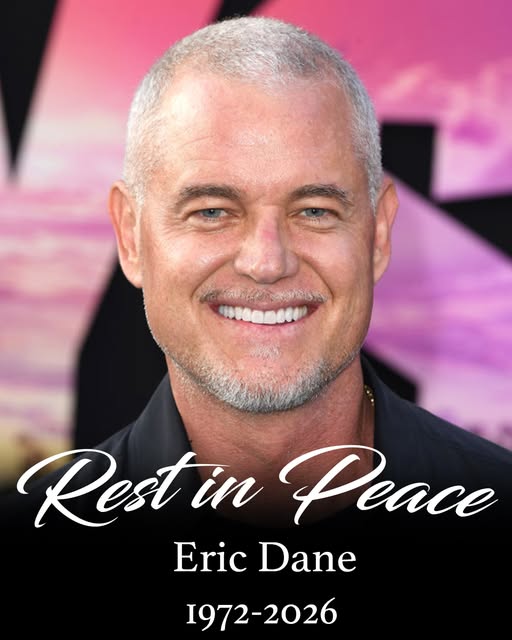
The entertainment world was deeply saddened by the passing of Eric Dane at the age of 53. Best known for his memorable roles on Grey’s Anatomy and Euphoria.
Dane built a career defined not only by charisma and screen presence, but also by emotional depth, professional dedication, and, in his final years, extraordinary courage.
His death on February 19, 2026, followed a public battle with amyotrophic lateral sclerosis (ALS), a progressive neurodegenerative disease that profoundly reshaped the last chapter of his life.
While audiences around the world came to know him as “McSteamy,” the confident and magnetic Dr. Mark Sloan, his journey to international recognition began decades earlier, rooted in both personal hardship and creative discovery.
A Childhood Shaped by Loss and Identity
Born Eric William Melvin on November 9, 1972, in San Francisco, California, Dane grew up in a city known for its cultural diversity and artistic vibrancy. He was raised alongside his younger brother in a household guided primarily by his mother, after the early and devastating loss of his father.

His father, William Melvin, was a Navy veteran and architect. When Dane was just seven years old, his father died from a self-inflicted gunshot wound. The tragedy left an indelible mark on his childhood. In later interviews, Dane reflected on how the loss forced him to confront complex emotions at an early age—grief, confusion, resilience, and a deep need for strength. Though he did not often speak at length about the pain publicly, he acknowledged that it contributed to the emotional layers he later brought to his performances.
Dane was raised in his mother’s Jewish faith and had a bar mitzvah, an experience that connected him to community, tradition, and a sense of belonging. Those early foundations—family bonds, faith, and personal resilience—remained important to him throughout his life.
Friends from his youth described him as athletic, social, and determined. He attended Sequoia High School in Redwood City, California, where he excelled in sports, particularly water polo. At that stage, acting was not yet the center of his ambitions. Like many young athletes, he initially imagined a future connected to sports or another conventional career path.
Everything changed when he appeared in a high school production of All My Sons, the classic play by Arthur Miller. Performing on stage awakened something transformative in him. The experience of embodying a character, understanding human motivations, and connecting with an audience sparked what would become a lifelong passion.
Dane later described that moment as pivotal—the realization that storytelling through performance allowed him to channel emotion in a way that felt both cathartic and purposeful.
Moving to Los Angeles: Early Struggles and Persistence
After graduating from high school, Dane made the bold decision to move to Los Angeles to pursue acting professionally. Like many aspiring actors, he began with auditions, small parts, and guest appearances, slowly building his résumé while navigating the competitive entertainment industry.
Throughout the 1990s, he appeared in guest roles on a number of popular television series. These included appearances on shows such as Saved by the Bell, The Wonder Years, Roseanne, and Married… with Children. Though these were relatively small parts, they provided invaluable experience in front of the camera and introduced him to the rhythm of television production.
Dane also pursued film work during this period. He appeared in projects that allowed him to experiment with different character types—sometimes romantic, sometimes antagonistic, often leaning into the confident persona that casting directors quickly recognized as one of his strengths.
However, like many working actors, his early years were marked by uncertainty. Roles came and went. Financial stability was not guaranteed. Success, if it was to come, would require persistence and adaptability.
Those who worked with him during this phase frequently noted his professionalism and willingness to learn. Rather than waiting passively for a breakthrough, he treated each opportunity as a stepping stone, gradually refining his craft.

The Breakthrough: Dr. Mark Sloan on Grey’s Anatomy
In 2006, Dane’s career changed dramatically when he was cast as Dr. Mark Sloan on Grey’s Anatomy. The series, created by Shonda Rhimes, had already become a cultural phenomenon, blending medical drama with complex interpersonal relationships.
Dane’s character was introduced as a renowned plastic surgeon and longtime friend of Dr. Derek Shepherd. Initially intended to appear in a short guest arc, Mark Sloan quickly captured audience attention. Confident, sharp-witted, and unapologetically charismatic, the character earned the nickname “McSteamy,” a playful counterpart to Patrick Dempsey’s “McDreamy.”
Viewer enthusiasm was immediate and overwhelming. What began as a limited role evolved into a central presence in the series. Dane became a series regular and remained a key figure for multiple seasons.
Yet what made Mark Sloan resonate went beyond charm. Over time, the character developed emotional complexity—navigating fatherhood, vulnerability, regret, and redemption. Dane’s portrayal allowed audiences to see both the swagger and the softness beneath it. He brought nuance to storylines involving mentorship, romance, and personal growth.
During his tenure on the show, Dane became a household name. Media coverage intensified. Magazine features, interviews, and red carpet appearances positioned him as one of television’s most recognizable leading men. The role elevated him to international fame and solidified his place in modern television history.
He remained on the series until 2012. His character’s departure followed a dramatic plane crash storyline that deeply affected fans. The emotional weight of that storyline marked one of the show’s most talked-about chapters and underscored the lasting impact of his performance.
Navigating Fame and Personal Life
As his professional profile rose, Dane also built a life beyond the camera. In 2004, he married actress Rebecca Gayheart. The couple welcomed two daughters, Billie and Georgia, who became the center of his world.
Dane frequently spoke about fatherhood as one of his greatest joys. Despite the demands of television production and public attention, he emphasized being present for family milestones and maintaining a grounded home life.
Like many public figures, he experienced periods of personal challenge, including public scrutiny and private struggles. Over the years, he was candid about seeking help when needed and prioritizing his health and family. That transparency would later define his approach to discussing his ALS diagnosis as well.
Expanding His Range: From Network Drama to Prestige Television
After departing Grey’s Anatomy, Dane sought roles that would expand his artistic range. He starred in the TNT drama The Last Ship, portraying Captain Tom Chandler, a naval officer navigating a global pandemic crisis. The role allowed him to shift from romantic drama to action-driven leadership, showcasing a different dimension of his screen presence.

Years later, he joined the cast of Euphoria, the HBO series known for its unflinching exploration of adolescence, addiction, and identity. As Cal Jacobs, Dane portrayed a deeply flawed and emotionally conflicted father. The role was darker, more psychologically layered, and at times unsettling.
Critics and viewers alike noted the boldness of his performance. He embraced complexity rather than likability, revealing vulnerability beneath repression and anger. For many younger viewers who had not grown up with Grey’s Anatomy, Euphoria introduced him anew—as an actor capable of reinvention and fearless storytelling.
By the time he completed work on the third season of Euphoria, Dane had demonstrated a career arc that spanned genres, audiences, and generations.
While Eric Dane had achieved widespread fame for his work on Grey’s Anatomy, The Last Ship, and Euphoria, his life took a profoundly challenging turn in 2025. In April of that year, Dane publicly revealed that he had been diagnosed with amyotrophic lateral sclerosis (ALS), a progressive and terminal neurodegenerative disease more commonly known as Lou Gehrig’s disease. The announcement came as a shock to fans worldwide, as Dane had always been viewed as a figure of vitality, strength, and resilience.
Understanding ALS and Its Impact on Dane
ALS is a rare neurological condition that attacks motor neurons—the nerve cells responsible for controlling voluntary muscle movement. As these neurons deteriorate, the brain loses the ability to initiate and control basic movements, leading to muscle weakness, loss of coordination, and, ultimately, paralysis. Over time, ALS affects not only the limbs but also the muscles involved in speech, swallowing, and breathing. While symptoms vary from person to person, the disease is relentless, and there is currently no known cure. Most patients live only two to five years after diagnosis, making Dane’s situation especially urgent.
Dane first noticed subtle changes months before his diagnosis. Weakness in his right hand was initially dismissed as fatigue or overuse—a minor inconvenience easily explained away in his busy life. However, as the weeks passed, the weakness progressed. He began to experience difficulty performing tasks that had once been effortless, from gripping a pen to navigating door handles. Friends and colleagues noticed that he occasionally favored one side of his body, a sign that prompted him to seek neurological evaluation.
Receiving the official diagnosis was devastating. Dane later described the moment as surreal, a collision between the familiar rhythms of his daily life and the reality of an illness that would fundamentally alter everything. Yet even in the face of overwhelming uncertainty, he resolved to approach his condition with courage, honesty, and purpose.
Turning Personal Challenge into Public Advocacy
Rather than retreating from the public eye, Dane transformed his diagnosis into an opportunity to raise awareness about ALS. He recognized that while he could not cure the disease for himself, he could illuminate its impact for others and contribute to efforts aimed at research, funding, and patient support.
Dane became a tireless advocate, participating in conferences, news interviews, and public panels. He worked closely with organizations such as I AM ALS, sharing his story to emphasize both the human and medical dimensions of the disease. His advocacy was notable for its authenticity; he did not shy away from describing the physical and emotional toll of ALS, nor did he dramatize his experiences. Instead, he presented a candid, nuanced picture of life with the disease—a perspective that resonated deeply with patients, caregivers, and medical professionals alike.

In September 2025, Dane was honored by the ALS Network as their Advocate of the Year. The award recognized not only his public awareness efforts but also his dedication to encouraging policy changes, supporting clinical research, and inspiring other patients to seek community and resources. Through social media and public statements, he continuously emphasized the urgency of research funding and the need for societal understanding of the disease.
Challenges in Daily Life and On-Set Adaptations
As ALS progressed, Dane faced escalating physical limitations. The once energetic and athletic actor began to experience difficulty with basic movements. Simple tasks—holding a script, opening a door, or walking—became increasingly taxing. Despite these challenges, he demonstrated remarkable determination. On the sets of Euphoria, accommodations were made to allow him to continue working. Crew members adjusted lighting, staging, and shooting schedules to minimize physical strain, ensuring he could perform while maintaining his dignity and professionalism.
Colleagues consistently praised his courage and dedication. Younger cast members, in particular, observed how he balanced the vulnerability imposed by ALS with the confidence and authority of his craft. Dane’s presence became a subtle lesson in resilience, illustrating that creativity and impact are not diminished by physical decline.
Family Support and Personal Strength
Throughout his illness, Dane’s family remained a central pillar of support. His wife, Rebecca Gayheart, provided unwavering care, often accompanying him to medical appointments and helping manage day-to-day needs. Their daughters, Billie and Georgia, though still in their teens, were involved in his care and spent as much time as possible with their father. Dane frequently expressed that his family’s love was the source of his emotional strength, motivating him to continue public advocacy even as his own health waned.
Family statements after his passing emphasized that he had approached ALS not with despair but with determination to leave a legacy of awareness, compassion, and education. Dane was reportedly gratified by the messages of support from fans and colleagues, who often shared personal stories of how his work or advocacy had impacted them.
The Final Months
By early 2026, Dane’s condition had advanced significantly. He faced increasing difficulty with mobility and speech, ultimately requiring round-the-clock care. Despite these profound challenges, he remained mentally engaged and maintained a focus on his family and his mission of advocacy.
He had planned to attend several award ceremonies and ALS-related events, but worsening symptoms prevented him from traveling. His final weeks were spent at home, surrounded by his wife, daughters, and close friends—a private circle that provided comfort and companionship in his last days. His family described these moments as bittersweet: while the decline was heartbreaking, it was also a period of deep connection, love, and reflection.
Dane’s passing on February 19, 2026, marked the end of a remarkable journey characterized not only by artistic achievement but also by courage in the face of one of the most challenging diagnoses imaginable. His life and work left an enduring imprint on both the entertainment industry and the broader ALS community.

The news of Eric Dane’s passing on February 19, 2026, reverberated throughout Hollywood, the entertainment industry, and across the world. Fans, colleagues, and industry figures united in grief, celebrating not only his artistic contributions but also his courage, compassion, and dedication to raising awareness for ALS.
Tributes from Co-Stars and Industry Colleagues
Among the first to express their grief were Dane’s co-stars from Grey’s Anatomy. Chyler Leigh, who played Dr. Lexie Grey, described his death as “devastating” in an emotional social media post, recalling the warmth, humor, and mentorship he brought to the set. She highlighted his professionalism and how he created a supportive environment for younger cast members, often offering guidance and encouragement behind the scenes.
Actress Katherine Heigl also paid tribute, reflecting on the bond shared by the cast and crew of Grey’s Anatomy. In her statement, she emphasized Dane’s ability to balance charm with emotional vulnerability, noting that his performances often illuminated the complexities of human relationships in ways that resonated deeply with audiences. Heigl also expressed admiration for Dane’s advocacy work, highlighting the courage he displayed in sharing his ALS journey publicly.
On the set of Euphoria, cast and crew shared stories of Dane’s generosity, patience, and dedication. Despite the physical challenges imposed by ALS, he continued to approach his role with meticulous attention, offering guidance to younger actors and demonstrating a commitment to authenticity in every scene. The show’s producers and writers acknowledged the profound impact he had on the series, crediting him with bringing depth and complexity to a character whose storylines dealt with sensitive and challenging themes.
Fans and Public Mourning
Fans around the world expressed grief through social media, virtual memorials, and public tributes. On platforms ranging from Twitter to Instagram, followers shared personal anecdotes about how Dane’s performances shaped their lives, inspired their creativity, or offered comfort during difficult times. Hashtags celebrating his life trended globally, with admirers commemorating both his professional achievements and his courageous fight against ALS.
Many fans emphasized that Dane’s openness about his diagnosis helped raise awareness about a disease that remains poorly understood by the general public. His willingness to share his experience humanized ALS, highlighting the daily challenges faced by those living with the condition and inspiring conversations about research, policy, and patient support. For countless individuals and families affected by ALS, Dane became a symbol of hope and resilience—a reminder that public attention can catalyze real change.
Recognition of Advocacy Efforts
Throughout his illness, Dane had used his platform to amplify the voices of ALS patients and caregivers. His advocacy contributed to increased funding for research and heightened public understanding of the disease. Organizations such as I AM ALS and the ALS Network celebrated his contributions, noting that his public engagement brought the human impact of ALS into the spotlight.
In interviews, Dane spoke candidly about the emotional and physical challenges of living with a terminal illness, while emphasizing the importance of community, medical research, and policy reform. His advocacy was not limited to awareness campaigns; he actively lobbied for legislation supporting ALS patients, attended scientific conferences, and collaborated with research institutions to encourage clinical trials and innovative treatments.
A Legacy Beyond the Screen
Dane’s legacy extends far beyond his iconic roles. While he achieved worldwide fame as Dr. Mark Sloan, Captain Tom Chandler, and Cal Jacobs, his enduring impact lies in the combination of artistic excellence, personal courage, and humanitarian engagement.
He inspired colleagues with his professionalism, mentored emerging actors, and connected with fans across generations. His portrayals brought emotional authenticity to every role, whether through the charm of a network drama, the intensity of an action series, or the complexity of a character wrestling with moral ambiguity.
Off-screen, his advocacy and public openness about ALS helped demystify a devastating illness and inspired tangible efforts toward research and support. Dane’s life story became an example of how public figures can leverage fame for social good, demonstrating that vulnerability and courage can coexist with talent and success.
Family Reflections and Private Grief
In the wake of his passing, Dane’s wife, Rebecca Gayheart, and their daughters, Billie and Georgia, shared statements celebrating his life. They described him as a devoted husband, loving father, and a man whose humor, warmth, and determination left an indelible mark on everyone around him. Gayheart emphasized the profound strength Dane demonstrated throughout his illness, both in facing personal hardship and in using his platform to help others.
The family expressed gratitude for the outpouring of support from fans and colleagues, noting that the global acknowledgment of his contributions—both as an actor and as an advocate—was a source of comfort during a profoundly difficult time.
Remembering Eric Dane
The passing of Eric Dane represents a significant loss to the entertainment community and to the world of public health advocacy. His life reflected a rare combination of artistic talent, professional integrity, and moral courage. From the early days in San Francisco to international stardom, and through the final chapter defined by his battle with ALS, Dane’s story exemplifies resilience, empathy, and the power of using one’s voice to effect change.
As fans, colleagues, and the wider public continue to celebrate his work, the memory of Eric Dane will endure not just through the roles he played, but through the lives he touched, the awareness he raised, and the inspiration he provided to confront adversity with grace, strength, and compassion. In the annals of television history, and in the hearts of those affected by ALS, his legacy remains vivid—a testament to a life lived fully, courageously, and with profound impact.
