For most of my life, I believed I was the one who needed looking after. I thought that after losing my sight, I had become the person everyone else had to worry about. I was the one who needed directions, assistance, patience, and sometimes a little extra time to do the simplest things.
I never complained about the people who helped me. I was grateful beyond words.
But deep down, I sometimes wondered whether my friends still visited because they genuinely wanted to spend time with me or because they felt responsible for making sure I wasn’t alone.
For years, I kept that fear to myself.
Then, shortly before my best friend Daniel died, I began noticing things that didn’t make sense.
Small things.
Things I initially dismissed as ordinary forgetfulness.
I had no idea that those little moments would eventually lead me to understand something about friendship that I had spent most of my life overlooking.
My name is Robert. I’m 73 years old, and six weeks ago, I buried the person who had been part of almost every important chapter of my life.
His name was Daniel.
We had known each other since second grade.
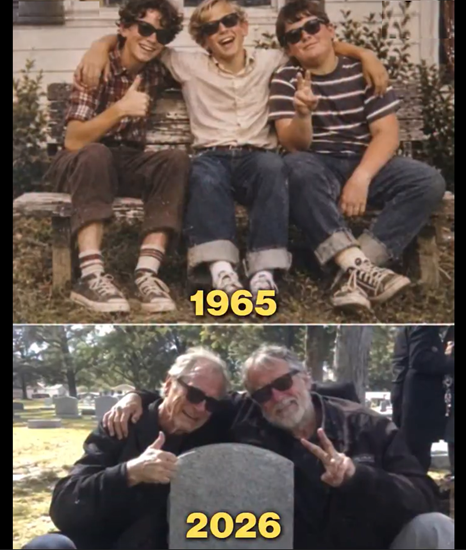
Back then, there were three of us: Daniel, Michael, and me.
We weren’t particularly special boys. We didn’t have extraordinary adventures or dream about becoming famous. We were simply three children who happened to find one another and decided, without realizing it, that we would always be friends.
We learned to ride bicycles together.
We got into trouble together.
We shared lunches, secrets, and the kind of childhood memories that become more precious as the years pass.
When one of us got hurt, the other two stayed close.
When one of us needed help, nobody had to ask twice.
We stood beside one another at our weddings, celebrated birthdays together, and watched our families grow.
Somehow, through all the changes that life brought, our friendship remained.
Sunday afternoons became our tradition.
For decades, Daniel would invite us to his house. Sometimes we sat on his porch, sometimes around his kitchen table, and sometimes we simply listened to the world outside while talking about absolutely nothing important.
Those afternoons became such a familiar part of my life that I stopped imagining a future without them.
But life had other plans.
Thirty-two years ago, when I was 41, an accident took my sight.
I still remember the confusion of those first months.
I remember waking up and reaching for things that were no longer where I expected them to be. I remember the frustration of not knowing which direction someone was standing in. I remember how difficult it was to accept that ordinary activities would suddenly require help.