

Daniel Waterman, 22, briefly emerged from a coma following a devastating car crash on Super Bowl Sunday 2025, and what he revealed during that brief window changed the course of the investigation entirely.
Waterman, originally from the Syracuse area in New York, had been riding in the passenger seat while his pregnant girlfriend, 24-year-old Leigha Mumby, drove along Interstate 95 in Flagler County, Florida, when the tragedy occurred.
According to reports, the couple had been arguing during the drive, and tensions escalated sharply in the moments just before the crash. Witnesses and investigators later noted the argument appeared unusually intense.
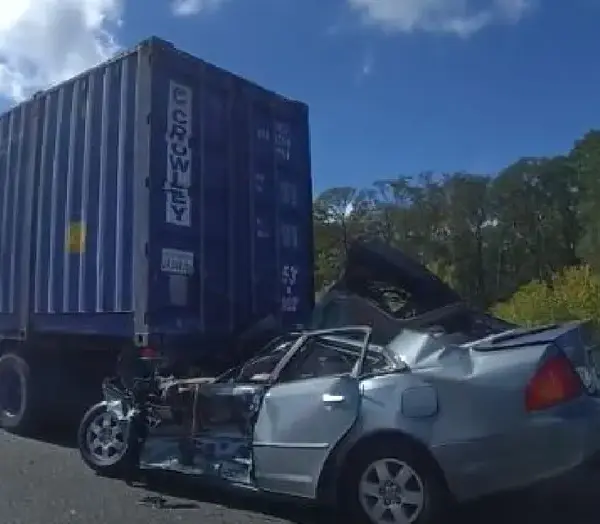
The vehicle went off the road, resulting in critical injuries for Waterman. Emergency responders arrived quickly, and he was rushed to a nearby trauma center, where doctors placed him into a medically induced coma.
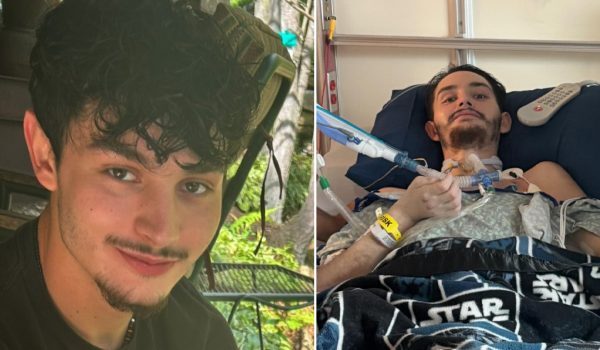
While in the coma, Daniel’s condition remained extremely fragile. Doctors indicated that even a small movement or reaction could have jeopardized his life, but miraculously he briefly regained consciousness weeks later.
During that short period of wakefulness, Waterman communicated crucial information to authorities using a whiteboard. What he revealed dramatically shifted the investigation and would later have major legal implications for Mumby.
Waterman reportedly told investigators that Mumby deliberately caused the crash. According to court documents, he stated her anger had reached a boiling point, saying, “I don’t care what happens. You’ll get what you deserve.”
Both Mumby and the couple’s unborn baby survived the crash, despite Mumby sustaining injuries herself. Her survival and condition were later documented in hospital reports and police records.
In recounting the events of the crash, Waterman explained that the argument began when Mumby informed him she was pregnant. His reaction to a text message from a woman in New York reportedly triggered further tension.
Waterman alleged that Mumby’s driving became erratic following the argument. According to his written account, he attempted to exit the vehicle to avoid harm, but the door could not be opened before the car struck a tree.
Heather Waterman, Daniel’s mother, clarified that the text message at the center of the argument was entirely innocent, describing it as a friendly exchange between two football fans. She emphasized that no affair existed.
After regaining partial consciousness, Daniel was able to communicate using a whiteboard. He provided authorities with a detailed account of the events leading to the crash, which formed the basis of Mumby’s initial arrest and charges.
Mumby told authorities she did not remember what caused the collision, according to police reports. Court documents note her statements were inconsistent in the immediate aftermath, raising questions during the preliminary investigation.
Initially, she was charged in July 2025 with reckless driving, causing serious bodily injury, and aggravated battery with a deadly weapon, reflecting the severity of the incident and the injuries sustained by Daniel Waterman.
Following Daniel’s death on October 8, 2025, authorities upgraded the charges against Mumby to vehicular homicide, according to reports from People and other verified media sources. This decision reflected the fatal consequences of the crash.
Daniel Waterman’s family is now focused on obtaining custody of the child they believe is his. Heather Waterman has publicly expressed her determination to ensure the baby is raised within their New York family environment.

“We’ll do whatever we can to bring her to us,” Heather Waterman told syracuse.com. She emphasized that Daniel wanted the child to grow up surrounded by his family, preserving a connection he valued deeply.
The crash occurred on a heavily traveled section of Interstate 95 in Flagler County. Investigators analyzed the scene thoroughly, documenting skid marks, vehicle damage, and tree impact points to reconstruct the sequence of events.
Authorities also reviewed traffic camera footage and witness statements from other drivers on the highway. These records were crucial in verifying the accounts provided by Waterman and correlating them with physical evidence at the crash site.
Daniel’s medical team noted that his injuries were extensive, including traumatic head and chest trauma, fractures, and internal bleeding. These injuries required multiple surgeries and prolonged intensive care prior to his brief period of wakefulness.
During the coma, hospital staff maintained detailed logs of Daniel’s vital signs, neurological assessments, and responses to stimuli. These records were later used by investigators to corroborate his ability to communicate credible information while conscious.
Investigators worked closely with the Flagler County Sheriff’s Office, coordinating interviews and evidence collection while Daniel remained hospitalized. The whiteboard communication played a pivotal role in clarifying key elements of the incident.

Daniel reportedly described Mumby’s demeanor leading up to the crash. He stated that she expressed anger and hostility, emphasizing that she was determined to cause him harm. His testimony became a cornerstone of the criminal case.
Heather Waterman described the emotional toll of the investigation on the family. She recalled nights spent at Daniel’s bedside, hoping for recovery, while grappling with the knowledge that the child’s father was critically injured.
Police interviewed multiple witnesses, including drivers who had been nearby at the time of the accident. Their accounts helped reconstruct the vehicle’s erratic movements and confirm Daniel’s description of Mumby’s driving immediately prior to impact.
The investigation included detailed forensic analysis of the car’s mechanical systems. Authorities ruled out vehicle malfunction as a contributing factor, focusing instead on human behavior and intent as critical to understanding the crash.
Daniel’s death on October 8, 2025, was officially attributed to complications from injuries sustained in the crash. His death certificate cited traumatic injuries to multiple body systems, consistent with investigators’ reconstructions of the accident.
Following the fatality, prosecutors sought to strengthen their case against Mumby. Upgrading charges to vehicular homicide reflected the severity of the incident and the victim’s brief, but decisive, communication implicating her in causing the crash.
Family members emphasized the significance of Daniel’s statements while awake. Heather Waterman noted that he remained coherent enough to identify key details, including Mumby’s behavior, her intent, and the sequence of events leading directly to the collision.
Child custody has become a central focus. Daniel’s parents are advocating for the child to be placed with them, citing their intimate connection to the father and the desire to provide stability and safety for the infant.
Heather Waterman told reporters that Daniel frequently spoke about wanting his child raised with love and guidance from family members. She emphasized that ensuring the baby’s welfare aligns with her late son’s wishes and values.
Legal experts note that cases involving vehicular homicide often consider victim statements prior to death. Daniel’s temporary wakefulness and detailed account provide prosecutors with substantial evidence regarding intent and recklessness.
Mumby’s defense maintains that she does not recall causing the crash. Court documents indicate that her statements have varied, and legal representatives argue that her memory of the event is limited due to trauma and medical treatment following the accident.
Investigators examined the couple’s phone records, including the text message that sparked the argument. Analysis confirmed that the message was benign, supporting Heather Waterman’s claim that Daniel had no romantic or inappropriate interactions with others.
Mental health evaluations of Mumby are part of the ongoing proceedings. Authorities have indicated that assessments will help determine state of mind at the time of the crash, informing both criminal responsibility and potential sentencing considerations.
The crash underscores the dangers of distracted or emotionally charged driving. Investigators emphasize that even minor arguments behind the wheel can escalate into life-threatening situations when combined with erratic vehicle operation.
Daniel Waterman’s brief communication from his coma illustrates the critical importance of timely witness statements. Even partial consciousness allowed him to provide vital information that may prove decisive in legal proceedings.
Public reaction to the case has been significant, with media outlets covering the tragedy extensively. Stories focus on Daniel’s heroism, Mumby’s alleged actions, and the family’s ongoing struggle to secure custody of the baby.
Local authorities in Flagler County have prioritized thorough documentation. Accident reconstruction experts, forensic analysts, and police investigators collaborated to ensure a comprehensive understanding of the crash dynamics.
The legal process includes pre-trial motions regarding evidence admissibility, victim statements, and expert testimony. Daniel’s whiteboard communications are expected to play a central role in establishing intent and sequence of events.
Family members have established support networks for the child. Extended relatives are involved in day-to-day care, emphasizing stability, emotional security, and maintaining a connection to the late father’s family.
Daniel’s brief recovery also highlighted the fragility of life following severe trauma. Medical professionals emphasize that even patients with critical injuries may retain cognitive clarity for short periods, enabling vital communication before further decline.
Prosecutors have cited Daniel’s statements as corroborating the sequence of events determined by forensic evidence. This alignment strengthens the case for vehicular homicide and supports the family’s narrative regarding Mumby’s alleged actions.
Heather Waterman described the emotional difficulty of losing her son while simultaneously advocating for her grandchild. She emphasized that her primary concern remains the welfare, safety, and upbringing of the child.
Ongoing court proceedings will address criminal charges and family custody issues separately. Legal teams anticipate hearings on intent, culpability, and the appropriate placement of the child in a stable environment.
The case has prompted public discussions about emotional regulation and driving safety. Experts note that arguments in vehicles can escalate rapidly, often with fatal consequences if control is lost, underscoring broader safety concerns.
Daniel Waterman’s story resonates with families across the country. His courage in providing statements while critically injured demonstrates the human capacity to act responsibly, even under extreme personal duress.
Forensic evidence, including vehicle impact analysis and traffic camera footage, remains central to corroborating witness and victim accounts. Investigators continue compiling a detailed timeline of the events surrounding the crash.
Mumby’s legal team continues evaluating potential defenses, including claims of impaired memory due to trauma and the influence of heightened emotional distress during the argument preceding the crash.
Daniel’s brief but crucial communication exemplifies how victim testimony, even when limited in duration, can significantly influence legal investigations and the pursuit of justice in cases involving fatal collisions.
Heather Waterman has emphasized that securing custody aligns with her late son’s wishes. She expressed hope that legal proceedings would result in a stable environment where the child could grow with familial love and care.
The case remains under active investigation, with prosecutors, police, and forensic experts coordinating closely. Ongoing updates focus on the evolving charges, evidence collection, and proceedings related to custody determinations.
This tragic event underscores the intersection of personal relationships, emotional stress, and vehicle safety. Experts advise that awareness and restraint while driving are critical to preventing similar life-altering accidents.
